Kirjojen hintavertailu. Mukana 11 627 623 kirjaa ja 12 kauppaa.

Kirjahaku

Etsi kirjoja tekijän nimen, kirjan nimen tai ISBN:n perusteella.

115 kirjaa tekijältä Giorgio Agamben

The Adventure

The Adventure

Giorgio Agamben

MIT Press
2018
sidottu
Agamben charts a journey that ranges from poems of chivalry to philosophy, from Yvain to Hegel, from Beatrice to Heidegger.An ancient legend identifies Demon, Chance, Love, and Necessity as the four gods who preside over the birth of every human being. We must all pay tribute to these deities and should not try to elude or dupe them. To accept them, Giorgio Agamben suggests, is to live one's life as an adventure-not in the trivial sense of the term, with lightness and disenchantment, but with the understanding that adventure, as a specific way of being, is the most profound experience in our human existence. In this pithy, poetic, and compelling book, Agamben maps a journey from poems of chivalry to philosophy, from Yvain to Hegel, from Beatrice to Heidegger. The four gods of legend are joined at the end by a goddess, the most elusive and mysterious of all: Elpis, Hope. In Greek mythology, Hope remains in Pandora's box, not because it postpones its fulfillment to an invisible beyond but because somehow it has always been already satisfied. Here, Agamben presents Hope as the ultimate gift of the human adventure on Earth.
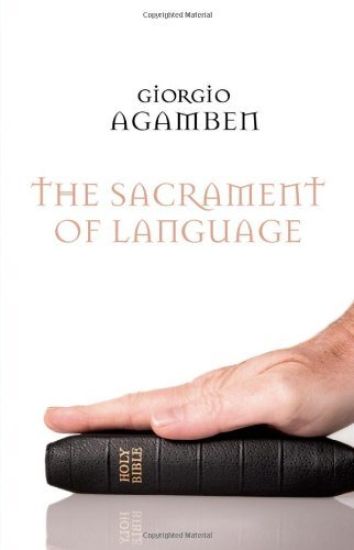
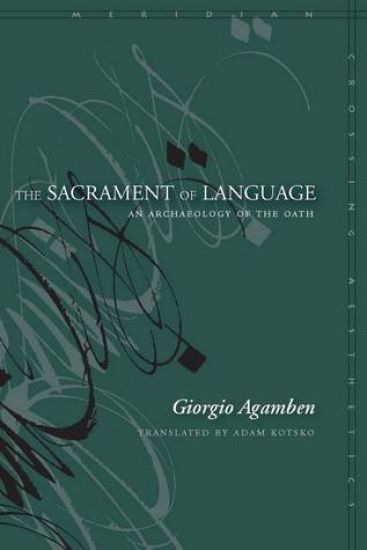
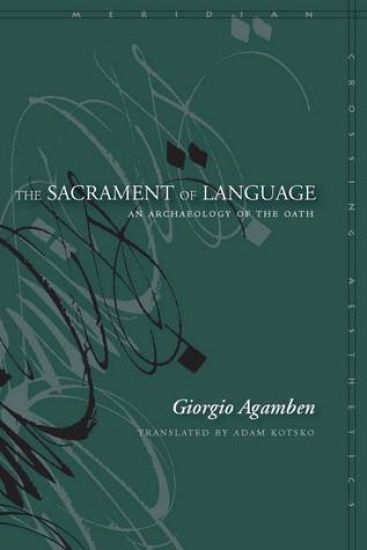
The Sacrament of Language

The Sacrament of Language

Giorgio Agamben

Polity Press
2011
sidottu
Oaths play an essential part in the political and religious history of the West as a 'sacrament of power'. Yet despite numerous studies by linguists, anthropologists and historians of law and of religion, there exists no complete analysis of the oath which seeks to explain the strategic function that this phenomenon has performed at the intersection of law, religion and politics. The oath seems to define man himself as a political animal, but what is an oath and from where does it originate? Taking this question as its point of departure, Giorgio Agamben's book develops a pathbreaking 'archaeology' of the oath. Via a firsthand survey of Greek and Roman sources which shed light on the nexus of the oath with archaic legislation, acts of condemnation and the names of gods and blasphemy, Agamben recasts the birth of the oath as a decisive event of anthropogenesis, the process by which mankind became humanity. If the oath has historically constituted itself as a 'sacrament of power', it has functioned at one and the same time as a 'sacrament of language' - a sacrament in which man, discovering that he can speak, chooses to bind himself to his language and to use it to put life and destiny at stake.
The Sacrament of Language

The Sacrament of Language

Giorgio Agamben

Polity Press
2011
nidottu
Oaths play an essential part in the political and religious history of the West as a 'sacrament of power'. Yet despite numerous studies by linguists, anthropologists and historians of law and of religion, there exists no complete analysis of the oath which seeks to explain the strategic function that this phenomenon has performed at the intersection of law, religion and politics. The oath seems to define man himself as a political animal, but what is an oath and from where does it originate? Taking this question as its point of departure, Giorgio Agamben's book develops a pathbreaking 'archaeology' of the oath. Via a firsthand survey of Greek and Roman sources which shed light on the nexus of the oath with archaic legislation, acts of condemnation and the names of gods and blasphemy, Agamben recasts the birth of the oath as a decisive event of anthropogenesis, the process by which mankind became humanity. If the oath has historically constituted itself as a 'sacrament of power', it has functioned at one and the same time as a 'sacrament of language' - a sacrament in which man, discovering that he can speak, chooses to bind himself to his language and to use it to put life and destiny at stake.
The End of the Poem

The End of the Poem

Giorgio Agamben

Stanford University Press
1999
sidottu
This book, by one of Italy's most important and original contemporary philosophers, represents a broad, general, and ambitious undertaking—nothing less than an attempt to rethink the nature of poetic language and to rearticulate relationships among theology, poetry, and philosophy in a tradition of literature initiated by Dante. The author presents "literature" as a set of formal or linguistic genres that discuss or develop theological issues at a certain distance from the discourse of theology. This distance begins to appear in Virgil and Ovid, but it becomes decisive in Dante and in his decision to write in the vernacular. His vernacular Italian reaches back through classical allusion to the Latin that was in his day the language of theology, but it does so with a difference. It is no accident that in the Commedia Virgil is Dante's guide. The book opens with a discussion of just how Dante's poem is a "comedy," and it concludes with a discussion of the "ends of poetry" in a variety of senses: enjambment at the ends of lines, the concluding lines of poems, and the end of poetry as a mode of writing this sort of literature. Of course, to have poetry "end" does not mean that people stop writing it, but that literature passes into a period in which it is concerned with its own ending, with its own bounds and limits, historical and otherwise. Though most of the essays make specific reference to various authors of the Italian literary tradition (including Dante, Polifilo, Pascoli, Delfini, and Caproni), they transcend the confines of Italian literature and engage several other literary and philosophical authors (Plato, Aristotle, the Stoics, Boethius, the Provençal poets, Mallarmé, and Hölderlin, among others).
Homo Sacer

Homo Sacer

Giorgio Agamben

Stanford University Press
1998
sidottu
The work of Giorgio Agamben, one of Italy's most important and original philosophers, has been based on an uncommon erudition in classical traditions of philosophy and rhetoric, the grammarians of late antiquity, Christian theology, and modern philosophy. Recently, Agamben has begun to direct his thinking to the constitution of the social and to some concrete, ethico-political conclusions concerning the state of society today, and the place of the individual within it. In Homo Sacer, Agamben aims to connect the problem of pure possibility, potentiality, and power with the problem of political and social ethics in a context where the latter has lost its previous religious, metaphysical, and cultural grounding. Taking his cue from Foucault's fragmentary analysis of biopolitics, Agamben probes with great breadth, intensity, and acuteness the covert or implicit presence of an idea of biopolitics in the history of traditional political theory. He argues that from the earliest treatises of political theory, notably in Aristotle's notion of man as a political animal, and throughout the history of Western thinking about sovereignty (whether of the king or the state), a notion of sovereignty as power over "life" is implicit. The reason it remains merely implicit has to do, according to Agamben, with the way the sacred, or the idea of sacrality, becomes indissociable from the idea of sovereignty. Drawing upon Carl Schmitt's idea of the sovereign's status as the exception to the rules he safeguards, and on anthropological research that reveals the close interlinking of the sacred and the taboo, Agamben defines the sacred person as one who can be killed and yet not sacrificed—a paradox he sees as operative in the status of the modern individual living in a system that exerts control over the collective "naked life" of all individuals.
Homo Sacer

Homo Sacer

Giorgio Agamben

Stanford University Press
1998
nidottu
The work of Giorgio Agamben, one of Italy's most important and original philosophers, has been based on an uncommon erudition in classical traditions of philosophy and rhetoric, the grammarians of late antiquity, Christian theology, and modern philosophy. Recently, Agamben has begun to direct his thinking to the constitution of the social and to some concrete, ethico-political conclusions concerning the state of society today, and the place of the individual within it.In Homo Sacer, Agamben aims to connect the problem of pure possibility, potentiality, and power with the problem of political and social ethics in a context where the latter has lost its previous religious, metaphysical, and cultural grounding. Taking his cue from Foucault's fragmentary analysis of biopolitics, Agamben probes with great breadth, intensity, and acuteness the covert or implicit presence of an idea of biopolitics in the history of traditional political theory. He argues that from the earliest treatises of political theory, notably in Aristotle's notion of man as a political animal, and throughout the history of Western thinking about sovereignty (whether of the king or the state), a notion of sovereignty as power over "life" is implicit.The reason it remains merely implicit has to do, according to Agamben, with the way the sacred, or the idea of sacrality, becomes indissociable from the idea of sovereignty. Drawing upon Carl Schmitt's idea of the sovereign's status as the exception to the rules he safeguards, and on anthropological research that reveals the close interlinking of the sacred and the taboo, Agamben defines the sacred person as one who can be killed and yet not sacrificed-a paradox he sees as operative in the status of the modern individual living in a system that exerts control over the collective "naked life" of all individuals.
The Man Without Content

The Man Without Content

Giorgio Agamben

Stanford University Press
1999
sidottu
In this book, one of Italy's most important and original contemporary philosophers considers the status of art in the modern era. He takes seriously Hegel's claim that art has exhausted its spiritual vocation, that it is no longer through art that Spirit principally comes to knowledge of itself. He argues, however, that Hegel by no means proclaimed the "death of art" (as many still imagine) but proclaimed rather the indefinite continuation of art in what Hegel called a "self-annulling" mode. With astonishing breadth and originality, the author probes the meaning, aesthetics, and historical consequences of that self-annulment. In essence, he argues that the birth of modern aesthetics is the result of a series of schisms—between artist and spectator, genius and taste, and form and matter, for example—that are manifestations of the deeper, self-negating yet self-perpetuating movement of irony. Through this concept of self-annulment, the author offers an imaginative reinterpretation of the history of aesthetic theory from Kant to Heidegger, and he opens up original perspectives on such phenomena as the rise of the modern museum, the link between art and terror, the natural affinity between "good taste" and its perversion, and kitsch as the inevitable destiny of art in the modern era. The final chapter offers a dazzling interpretation of Dürer's Melancholia in the terms that the book has articulated as its own. The Man Without Content will naturally interest those who already prize Agamben's work, but it will also make his name relevant to a whole new audience—those involved with art, art history, the history of aesthetics, and popular culture.
The Time That Remains

The Time That Remains

Giorgio Agamben

Stanford University Press
2005
sidottu
In The Time That Remains, Agamben seeks to separate the Pauline texts from the history of the Church that canonized them, thus revealing them to be "the fundamental messianic texts of the West." He argues that Paul's letters are concerned not with the foundation of a new religion but rather with the "messianic" abolition of Jewish law. Situating Paul's texts in the context of early Jewish messianism, this book is part of a growing set of recent critiques devoted to the period when Judaism and Christianity were not yet fully distinct, placing Paul in the context of what has been called "Judaeo-Christianity." Agamben's philosophical exploration of the problem of messianism leads to the other major figure discussed in this book, Walter Benjamin. Advancing a claim without precedent in the vast literature on Benjamin, Agamben argues that Benjamin's philosophy of history constitutes a repetition and appropriation of Paul's concept of "remaining time." Through a close reading and comparison of Benjamin's "Theses on the Philosophy of History" and the Pauline Epistles, Agamben discerns a number of striking and unrecognized parallels between the two works.
The Time That Remains

The Time That Remains

Giorgio Agamben

Stanford University Press
2005
pokkari
In The Time That Remains, Agamben seeks to separate the Pauline texts from the history of the Church that canonized them, thus revealing them to be "the fundamental messianic texts of the West." He argues that Paul's letters are concerned not with the foundation of a new religion but rather with the "messianic" abolition of Jewish law. Situating Paul's texts in the context of early Jewish messianism, this book is part of a growing set of recent critiques devoted to the period when Judaism and Christianity were not yet fully distinct, placing Paul in the context of what has been called "Judaeo-Christianity." Agamben's philosophical exploration of the problem of messianism leads to the other major figure discussed in this book, Walter Benjamin. Advancing a claim without precedent in the vast literature on Benjamin, Agamben argues that Benjamin's philosophy of history constitutes a repetition and appropriation of Paul's concept of "remaining time." Through a close reading and comparison of Benjamin's "Theses on the Philosophy of History" and the Pauline Epistles, Agamben discerns a number of striking and unrecognized parallels between the two works.
The Open

The Open

Giorgio Agamben

Stanford University Press
2003
pokkari
The end of human history is an event that has been foreseen or announced by both messianics and dialecticians. But who is the protagonist of that history that is coming—or has come—to a close? What is man? How did he come on the scene? And how has he maintained his privileged place as the master of, or first among, the animals? In The Open, contemporary Italian philosopher Giorgio Agamben considers the ways in which the "human" has been thought of as either a distinct and superior type of animal, or a kind of being that is essentially different from animal altogether. In an argument that ranges from ancient Greek, Christian, and Jewish texts to twentieth-century thinkers such as Heidegger, Benjamin, and Kojève, Agamben examines the ways in which the distinction between man and animal has been manufactured by the logical presuppositions of Western thought, and he investigates the profound implications that the man/animal distinction has had for disciplines as seemingly disparate as philosophy, law, anthropology, medicine, and politics.
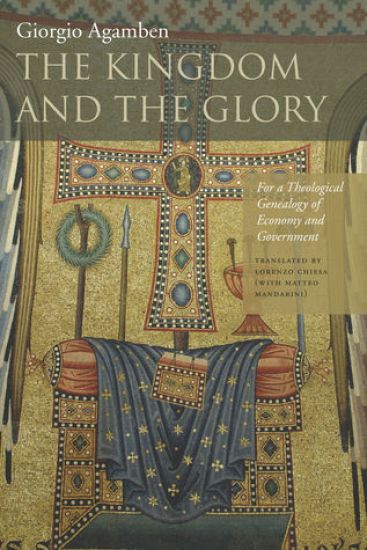
The Kingdom and the Glory

The Kingdom and the Glory

Giorgio Agamben

Stanford University Press
2011
sidottu
Why has power in the West assumed the form of an "economy," that is, of a government of men and things? If power is essentially government, why does it need glory, that is, the ceremonial and liturgical apparatus that has always accompanied it? In the early centuries of the Church, in order to reconcile monotheism with God's threefold nature, the doctrine of Trinity was introduced in the guise of an economy of divine life. It was as if the Trinity amounted to nothing more than a problem of managing and governing the heavenly house and the world. Agamben shows that, when combined with the idea of providence, this theological-economic paradigm unexpectedly lies at the origin of many of the most important categories of modern politics, from the democratic theory of the division of powers to the strategic doctrine of collateral damage, from the invisible hand of Smith's liberalism to ideas of order and security. But the greatest novelty to emerge from The Kingdom and the Glory is that modern power is not only government but also glory, and that the ceremonial, liturgical, and acclamatory aspects that we have regarded as vestiges of the past actually constitute the basis of Western power. Through a fascinating analysis of liturgical acclamations and ceremonial symbols of power—the throne, the crown, purple cloth, the Fasces, and more—Agamben develops an original genealogy that illuminates the startling function of consent and of the media in modern democracies. With this book, the work begun with Homo Sacer reaches a decisive point, profoundly challenging and renewing our vision of politics.
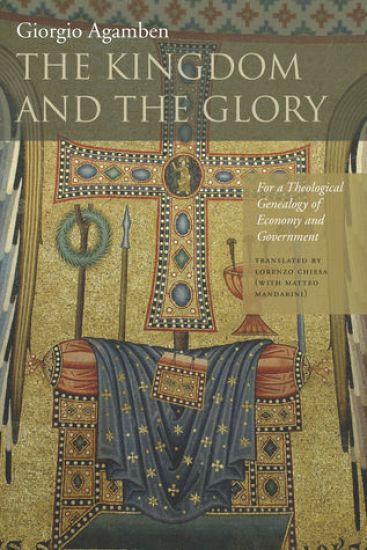
The Kingdom and the Glory

The Kingdom and the Glory

Giorgio Agamben

Stanford University Press
2011
pokkari
Why has power in the West assumed the form of an "economy," that is, of a government of men and things? If power is essentially government, why does it need glory, that is, the ceremonial and liturgical apparatus that has always accompanied it? In the early centuries of the Church, in order to reconcile monotheism with God's threefold nature, the doctrine of Trinity was introduced in the guise of an economy of divine life. It was as if the Trinity amounted to nothing more than a problem of managing and governing the heavenly house and the world. Agamben shows that, when combined with the idea of providence, this theological-economic paradigm unexpectedly lies at the origin of many of the most important categories of modern politics, from the democratic theory of the division of powers to the strategic doctrine of collateral damage, from the invisible hand of Smith's liberalism to ideas of order and security. But the greatest novelty to emerge from The Kingdom and the Glory is that modern power is not only government but also glory, and that the ceremonial, liturgical, and acclamatory aspects that we have regarded as vestiges of the past actually constitute the basis of Western power. Through a fascinating analysis of liturgical acclamations and ceremonial symbols of power—the throne, the crown, purple cloth, the Fasces, and more—Agamben develops an original genealogy that illuminates the startling function of consent and of the media in modern democracies. With this book, the work begun with Homo Sacer reaches a decisive point, profoundly challenging and renewing our vision of politics.
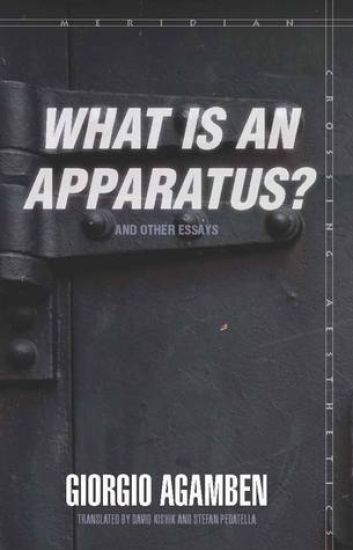
"What Is an Apparatus?" and Other Essays

"What Is an Apparatus?" and Other Essays

Giorgio Agamben

Stanford University Press
2009
sidottu
The three essays collected in this book offer a succinct introduction to Agamben's recent work through an investigation of Foucault's notion of the apparatus, a meditation on the intimate link of philosophy to friendship, and a reflection on contemporariness, or the singular relation one may have to one's own time. "Apparatus" (dispositif in French) is at once a most ubiquitous and nebulous concept in Foucault's later thought. In a text bearing the same name ("What is a dispositif?") Deleuze managed to contribute its mystification, but Agamben's leading essay illuminates the notion: "I will call an apparatus," he writes, "literally anything that has in some way the capacity to capture, orient, determine, intercept, model, control, or secure the gestures, behaviors, opinions, or discourses of living beings." Seen from this perspective, Agamben's work, like Foucault's, may be described as the identification and investigation of apparatuses, together with incessant attempts to find new ways to dismantle them. Though philosophy contains the notion of philos, or friend, in its very name, philosophers tend to be very skeptical about friendship. In his second essay, Agamben tries to dispel this skepticism by showing that at the heart of friendship and philosophy, but also at the core of politics, lies the same experience: the shared sensation of being. Guided by the question, "What does it mean to be contemporary?" Agamben begins the third essay with a reading of Nietzsche's philosophy and Mandelstam's poetry, proceeding from these to an exploration of such diverse fields as fashion, neurophysiology, messianism and astrophysics.
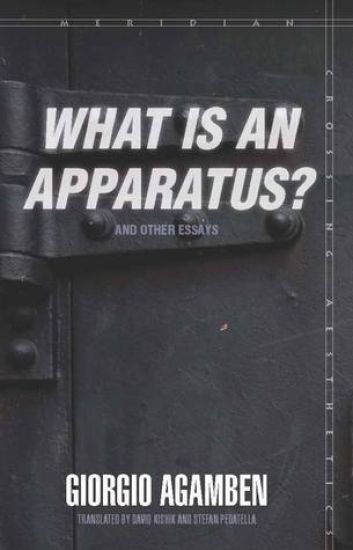
"What Is an Apparatus?" and Other Essays

"What Is an Apparatus?" and Other Essays

Giorgio Agamben

Stanford University Press
2009
pokkari
The three essays collected in this book offer a succinct introduction to Agamben's recent work through an investigation of Foucault's notion of the apparatus, a meditation on the intimate link of philosophy to friendship, and a reflection on contemporariness, or the singular relation one may have to one's own time. "Apparatus" (dispositif in French) is at once a most ubiquitous and nebulous concept in Foucault's later thought. In a text bearing the same name ("What is a dispositif?") Deleuze managed to contribute its mystification, but Agamben's leading essay illuminates the notion: "I will call an apparatus," he writes, "literally anything that has in some way the capacity to capture, orient, determine, intercept, model, control, or secure the gestures, behaviors, opinions, or discourses of living beings." Seen from this perspective, Agamben's work, like Foucault's, may be described as the identification and investigation of apparatuses, together with incessant attempts to find new ways to dismantle them. Though philosophy contains the notion of philos, or friend, in its very name, philosophers tend to be very skeptical about friendship. In his second essay, Agamben tries to dispel this skepticism by showing that at the heart of friendship and philosophy, but also at the core of politics, lies the same experience: the shared sensation of being. Guided by the question, "What does it mean to be contemporary?" Agamben begins the third essay with a reading of Nietzsche's philosophy and Mandelstam's poetry, proceeding from these to an exploration of such diverse fields as fashion, neurophysiology, messianism and astrophysics.
The Sacrament of Language

The Sacrament of Language

Giorgio Agamben

Stanford University Press
2010
sidottu
This book is a continuation of Giorgio Agamben's investigation of political theory, which began with the highly influential volume Homo Sacer: Sovereign Power and Bare Life. Having already traced the roots of the idea of sovereignty, sacredness, and economy, he now turns to a perhaps unlikely topic: the concept of the oath. Following the Italian scholar Paolo Prodi, Agamben sees the oath as foundational for Western politics and undertakes an exploration of the roots of the phenomenon of the oath in human experience. He rejects the common idea that the oath finds its origin in religion, arguing instead that the oath points toward a particular response to the experience of language, a response that gave birth to both religion and law as we now know them. This book is important not only for readers of Agamben or of continental philosophy more broadly, but for anyone interested in questions relating to the relationships among religion, law, and language.
The Sacrament of Language

The Sacrament of Language

Giorgio Agamben

Stanford University Press
2010
pokkari
This book is a continuation of Giorgio Agamben's investigation of political theory, which began with the highly influential volume Homo Sacer: Sovereign Power and Bare Life. Having already traced the roots of the idea of sovereignty, sacredness, and economy, he now turns to a perhaps unlikely topic: the concept of the oath. Following the Italian scholar Paolo Prodi, Agamben sees the oath as foundational for Western politics and undertakes an exploration of the roots of the phenomenon of the oath in human experience. He rejects the common idea that the oath finds its origin in religion, arguing instead that the oath points toward a particular response to the experience of language, a response that gave birth to both religion and law as we now know them. This book is important not only for readers of Agamben or of continental philosophy more broadly, but for anyone interested in questions relating to the relationships among religion, law, and language.
Nudities

Nudities

Giorgio Agamben

Stanford University Press
2010
sidottu
Encompassing a wide range of subjects, the ten masterful essays gathered here may at first appear unrelated to one another. In truth, Giorgio Agamben's latest book is a mosaic of his most pressing concerns. Take a step backward after reading it from cover to cover, and a world of secret affinities between the chapters slowly comes into focus. Take another step back, and it becomes another indispensable piece of the finely nuanced philosophy that Agamben has been patiently constructing over four decades of sustained research. If nudity is unconcealment, or the absence of all veils, then Nudities is a series of apertures onto truth. A guiding thread of this collection—weaving together the prophet's work of redemption, the glorious bodies of the resurrected, the celebration of the Sabbath, and the specters that stroll the streets of Venice—is inoperativity, or the cessation of work. The term should not be understood as laziness or inertia, but rather as the paradigm of human action in the politics to come. Itself the result of inoperativity, Nudities shuttles between philosophy and poetry, philological erudition and unexpected digression, metaphysical treatise and critique of modern life. And whether the subject at hand is personal identity or the biometric apparatus, the slanderer or the land surveyor, Kafka or Kleist, every page bears the singular imprint of one of the most astute philosophers of our time.
Nudities

Nudities

Giorgio Agamben

Stanford University Press
2010
pokkari
Encompassing a wide range of subjects, the ten masterful essays gathered here may at first appear unrelated to one another. In truth, Giorgio Agamben's latest book is a mosaic of his most pressing concerns. Take a step backward after reading it from cover to cover, and a world of secret affinities between the chapters slowly comes into focus. Take another step back, and it becomes another indispensable piece of the finely nuanced philosophy that Agamben has been patiently constructing over four decades of sustained research. If nudity is unconcealment, or the absence of all veils, then Nudities is a series of apertures onto truth. A guiding thread of this collection—weaving together the prophet's work of redemption, the glorious bodies of the resurrected, the celebration of the Sabbath, and the specters that stroll the streets of Venice—is inoperativity, or the cessation of work. The term should not be understood as laziness or inertia, but rather as the paradigm of human action in the politics to come. Itself the result of inoperativity, Nudities shuttles between philosophy and poetry, philological erudition and unexpected digression, metaphysical treatise and critique of modern life. And whether the subject at hand is personal identity or the biometric apparatus, the slanderer or the land surveyor, Kafka or Kleist, every page bears the singular imprint of one of the most astute philosophers of our time.
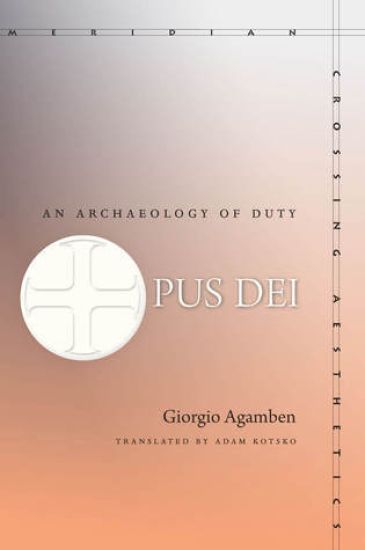
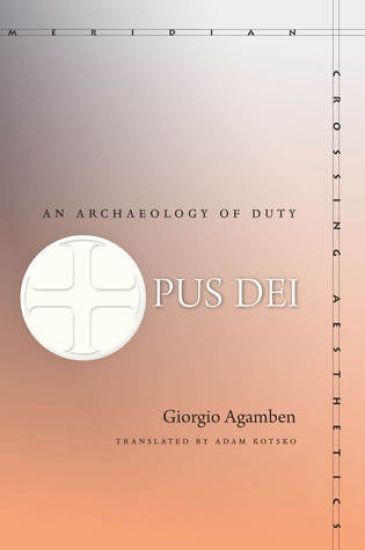
Opus Dei

Opus Dei

Giorgio Agamben

Stanford University Press
2013
sidottu
In this follow-up to The Kingdom and the Glory and The Highest Poverty, Agamben investigates the roots of our moral concept of duty in the theory and practice of Christian liturgy. Beginning with the New Testament and working through to late scholasticism and modern papal encyclicals, Agamben traces the Church's attempts to repeat Christ's unrepeatable sacrifice. Crucial here is the paradoxical figure of the priest, who becomes more and more a pure instrument of God's power, so that his own motives and character are entirely indifferent as long as he carries out his priestly duties. In modernity, Agamben argues, the Christian priest has become the model ethical subject. We see this above all in Kantian ethics. Contrasting the Christian and modern ontology of duty with the classical ontology of being, Agamben contends that Western philosophy has unfolded in the tension between the two. This latest installment in the study of Western political structures begun in Homo Sacer is a contribution to the study of liturgy, an extension of Nietzsche's genealogy of morals, and a reworking of Heidegger's history of Being.
Opus Dei

Opus Dei

Giorgio Agamben

Stanford University Press
2013
pokkari
In this follow-up to The Kingdom and the Glory and The Highest Poverty, Agamben investigates the roots of our moral concept of duty in the theory and practice of Christian liturgy. Beginning with the New Testament and working through to late scholasticism and modern papal encyclicals, Agamben traces the Church's attempts to repeat Christ's unrepeatable sacrifice. Crucial here is the paradoxical figure of the priest, who becomes more and more a pure instrument of God's power, so that his own motives and character are entirely indifferent as long as he carries out his priestly duties. In modernity, Agamben argues, the Christian priest has become the model ethical subject. We see this above all in Kantian ethics. Contrasting the Christian and modern ontology of duty with the classical ontology of being, Agamben contends that Western philosophy has unfolded in the tension between the two. This latest installment in the study of Western political structures begun in Homo Sacer is a contribution to the study of liturgy, an extension of Nietzsche's genealogy of morals, and a reworking of Heidegger's history of Being.