Kirjojen hintavertailu. Mukana 12 390 323 kirjaa ja 12 kauppaa.

Kirjahaku

Etsi kirjoja tekijän nimen, kirjan nimen tai ISBN:n perusteella.

5 kirjaa tekijältä Giorgio Riello

Back in Fashion

Back in Fashion

Giorgio Riello

Yale University Press
2020
sidottu
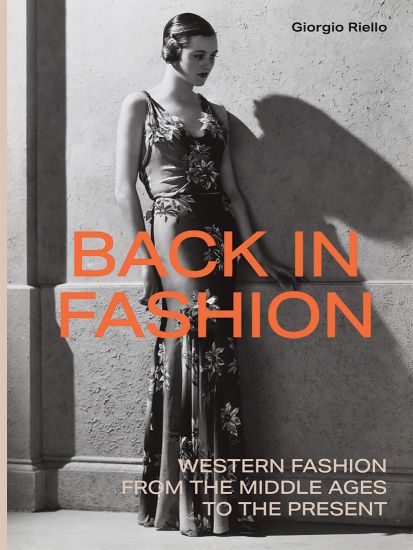
An engaging survey from the Middle Ages to the present, presenting fashion as a complex process that reflects economic, social, and political changes This engaging volume tells the history of Western fashion, exploring how and why it has influenced people’s attitudes, actions, and beliefs since the Middle Ages. Back in Fashion focuses on themes specific to particular periods—such as the significance of medieval sumptuary laws that limited expenditure on clothing; the use of black in early modern Europe; the role of sports on clothing in contemporary times; and the rise of luxury in the new millennium. Author Giorgio Riello investigates how fashion has shaped and continues to characterize Western societies, impacting the lives of millions of people and their relationship to the economy and politics. Making a masterful case for why fashion history demands academic consideration on par with other more traditional histories, Riello presents fashion as a complex and constantly evolving force that not only reflects but drives cultural transformation.
Cotton

Cotton

Giorgio Riello

Cambridge University Press
2015
pokkari
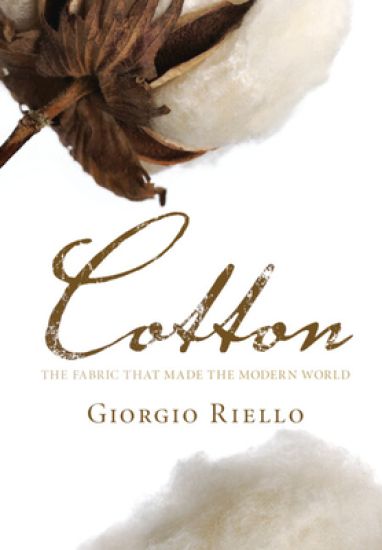
Today's world textile and garment trade is valued at a staggering $425 billion. We are told that under the pressure of increasing globalisation, it is India and China that are the new world manufacturing powerhouses. However, this is not a new phenomenon: until the industrial revolution, Asia manufactured great quantities of colourful printed cottons that were sold to places as far afield as Japan, West Africa and Europe. Cotton explores this earlier globalised economy and its transformation after 1750 as cotton led the way in the industrialisation of Europe. By the early nineteenth century, India, China and the Ottoman Empire switched from world producers to buyers of European cotton textiles, a position that they retained for over two hundred years. This is a fascinating and insightful story which ranges from Asian and European technologies and African slavery to cotton plantations in the Americas and consumer desires across the globe.
Luxury

Luxury

Peter McNeil; Giorgio Riello

Oxford University Press
2016
sidottu
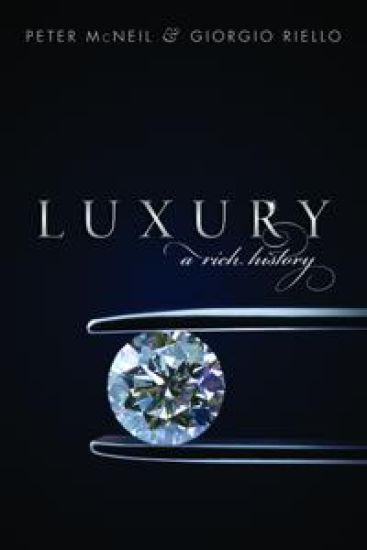
We live in a world obsessed by luxury. Long-distance airlines compete to offer first-class sleeping experiences and hotels recommend exclusive suites where you are never disturbed. Luxury is a rapidly changing global industry that makes the headlines daily in our newspapers and on the internet. More than ever, luxury is a pervasive presence in the cultural and economic life of the West - and increasingly too in the emerging super-economies of Asia and Latin America. Yet luxury is hardly a new phenomenon. Today's obsession with luxury brands and services is just one of the many manifestations that luxury has assumed. In the middle ages and the Renaissance, for example, luxury was linked to notions of magnificence and courtly splendour. In the eighteenth century luxury was at the centre of philosophical debates over its role in shaping people's desires and oiling the wheels of commerce. And it continues to morph today, with the growth of the global super-rich and increasing wealth polarization. From palaces to penthouses, from couture fashion to lavish jewellery, from handbags to red wine, from fast cars to easy money, Peter McNeil and Giorgio Riello present the first ever global history of luxury, from the Romans to the twenty-first century: a sparkling and ever-changing story of extravagance, excess, novelty, and indulgence.
The Global Lives of Things

The Global Lives of Things

Anne Gerritsen; Giorgio Riello

Routledge
2015
sidottu
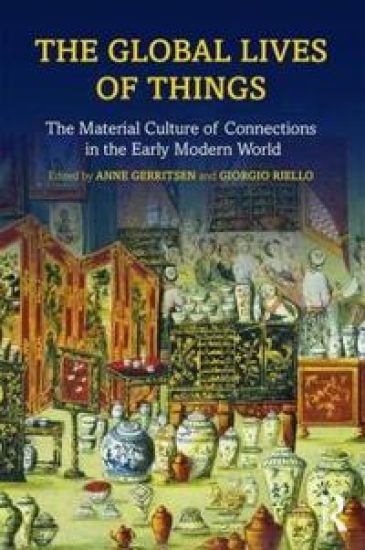
The Global Lives of Things considers the ways in which ‘things’, ranging from commodities to works of art and precious materials, participated in the shaping of global connections in the period 1400-1800. By focusing on the material exchange between Asia, Europe, the Americas and Australia, this volume traces the movements of objects through human networks of commerce, colonialism and consumption. It argues that material objects mediated between the forces of global economic exchange and the constantly changing identities of individuals, as they were drawn into global circuits. It proposes a reconceptualization of early modern global history in the light of its material culture by asking the question: what can we learn about the early modern world by studying its objects? This exciting new collection draws together the latest scholarship in the study of material culture and offers students a critique and explanation of the notion of commodity and a reinterpretation of the meaning of exchange. It engages with the concepts of ‘proto-globalization’, ‘the first global age’ and ‘commodities/consumption’. Divided into three parts, the volume considers in Part One, Objects of Global Knowledge, in Part Two, Objects of Global Connections, and finally, in Part Three, Objects of Global Consumption. The collection concludes with afterwords from three of the leading historians in the field, Maxine Berg, Suraiya Faroqhi and Paula Findlen, who offer their critical view of the methodologies and themes considered in the book and place its arguments within the wider field of scholarship. Extensively illustrated, and with chapters examining case studies from Northern Europe to China and Australia, this book will be essential reading for students of global history.
The Global Lives of Things

The Global Lives of Things

Anne Gerritsen; Giorgio Riello

Routledge
2015
nidottu
The Global Lives of Things considers the ways in which ‘things’, ranging from commodities to works of art and precious materials, participated in the shaping of global connections in the period 1400-1800. By focusing on the material exchange between Asia, Europe, the Americas and Australia, this volume traces the movements of objects through human networks of commerce, colonialism and consumption. It argues that material objects mediated between the forces of global economic exchange and the constantly changing identities of individuals, as they were drawn into global circuits. It proposes a reconceptualization of early modern global history in the light of its material culture by asking the question: what can we learn about the early modern world by studying its objects? This exciting new collection draws together the latest scholarship in the study of material culture and offers students a critique and explanation of the notion of commodity and a reinterpretation of the meaning of exchange. It engages with the concepts of ‘proto-globalization’, ‘the first global age’ and ‘commodities/consumption’. Divided into three parts, the volume considers in Part One, Objects of Global Knowledge, in Part Two, Objects of Global Connections, and finally, in Part Three, Objects of Global Consumption. The collection concludes with afterwords from three of the leading historians in the field, Maxine Berg, Suraiya Faroqhi and Paula Findlen, who offer their critical view of the methodologies and themes considered in the book and place its arguments within the wider field of scholarship. Extensively illustrated, and with chapters examining case studies from Northern Europe to China and Australia, this book will be essential reading for students of global history.