Kirjojen hintavertailu. Mukana 11 470 151 kirjaa ja 12 kauppaa.

Kirjahaku

Etsi kirjoja tekijän nimen, kirjan nimen tai ISBN:n perusteella.

78 kirjaa tekijältä Giuseppe Verdi

Seven Verdi Librettos

Seven Verdi Librettos

Giuseppe Verdi

WW Norton Co
1977
nidottu
Exact translations and corresponding original texts of the librettos for Rigoletto, Il Trovatore, La Traviata, Un Ballo in Maschero, Aida, Otello, and Falstaff, representing major achievements of each of Verdi's significant creative periods
Verdi's opera Rigoletto

Verdi's opera Rigoletto

Giuseppe Verdi

Alpha Edition
2019
pokkari
This book has been considered by academicians and scholars of great significance and value to literature. This forms a part of the knowledge base for future generations. So that the book is never forgotten we have represented this book in a print format as the same form as it was originally first published. Hence any marks or annotations seen are left intentionally to preserve its true nature.
Il Trovatore

Il Trovatore

Giuseppe Verdi

University of Chicago Press
2017
nidottu
Based on Verdi's autograph score and an examination of important secondary sources, including contemporary manuscript copies and performing parts, this edition of Il trovatore identifies and resolves numerous ambiguities of harmony, melodic detail, text, and phrasing that have marred previous scores. Scholars and performers alike will find a wealth of information in the critical apparatus to inform their research and interpretations.
Messa da Requiem

Messa da Requiem

Giuseppe Verdi

University of Chicago Press
2016
nidottu
This edition of Messa da Requiem is based on Verdi's autograph score and other authentic sources. The appendixes include two pieces from the compositional history of the Requiem: an early version of the Libera me, composed in 1869 as part of a collaborative work planned as a memorial to Rossini; and the Liber scriptus, which in the original score of the Manzoni memorial Requiem was composed as a fugue in G minor. The introduction to the score discusses the work's genesis, instrumentation, and problems of notation, while the critical commentary discusses the editorial decisions and traces the complex compositional history of the Requiem.
Le Trouvère: Opera in Four Acts by Salvadore Cammarano, French Translation by Émilien Pacini
The first publication of Le trouv re in full score, and the first of Verdi's French operas to appear in The Works of Giuseppe Verdi series. By the time Le trouv re premiered at the Paris Op ra in 1857, Giuseppe Verdi had first-hand knowledge of the unique demands of French theater. He had adapted his earlier work I Lombardi alla prima crociata (La Scala, 1843) as J rusalem in 1847, and in 1855 he composed Les V pres siciliennes, especially for the Op ra. Il trovatore, set in Spain against the backdrop of civil unrest, was especially suited to Parisian tastes, which required spectacular performances with plenty of choreography. Verdi expanded the score with a four-part ballet in the third act and rewrote the ending, where he introduced a reprise of his celebrated "Miserere," which is first heard at the start of the fourth act. By all accounts, the resulting work displayed extraordinary musical and dramatic efficacy and, after a successful premiere, Le trouv re remained in the Op ra repertory through the opening decades of the twentieth century. There is no extant autograph manuscript for Le trouv re. This critical edition is based primarily on a manuscript full score used at the premiere and during rehearsals, preserved at the Biblioth que de l'Op ra in Paris. Editor David Lawton's introduction to this edition discusses the origins, rehearsals, and reception of Le trouv re, the numerous sources preserved in French, Belgian, Italian, and British archives, and performance issues including staging, vocal style, and orchestral considerations.
La Traviata

La Traviata

Giuseppe Verdi

University of Chicago Press
2018
nidottu
I complain bitterly of the editions of my last operas, made with such little care, and filled with an infinite number of errors. Giuseppe Verdi The University of Chicago Press, in collaboration with Casa Ricordi, has undertaken to publish the first critical edition of the complete works of Giuseppe Verdi. The series, based exclusively on original sources, is the only one to present authentic versions of all of the composer's works; together with his operas, the critical edition presents his songs, his choral music and sacred pieces, and his string quartet and other instrumental works. The Works of Giuseppe Verdi will be an invaluable standard reference work a necessary acquisition for all music libraries and a joy to own for all lovers of opera. The new series of study scores presents an adaptation of each critical edition that provides scholars with an affordable and portable option for exploring Verdi's oeuvre. The study scores have been designed to distinguish editors' marks from Verdi's own notations while remaining clear enough for use in performance. The introduction to each score discusses the work's sources, composition, and performance history, as well as performance practices, instrumentation, and problems of notation. The newest editions of the study scores examine two of Verdi's three-act operas: La traviata and Rigoletto.
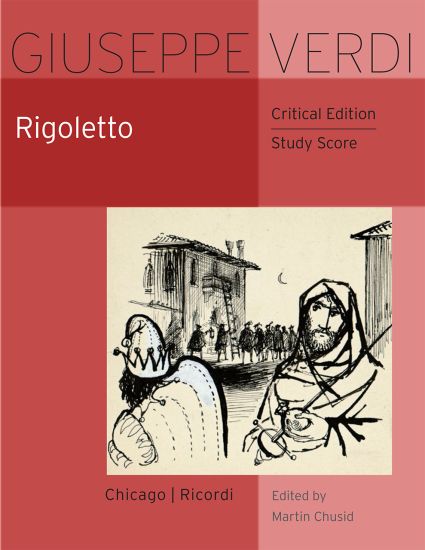
Rigoletto

Rigoletto

Giuseppe Verdi

University of Chicago Press
2018
nidottu
I complain bitterly of the editions of my last operas, made with such little care, and filled with an infinite number of errors. Giuseppe Verdi The University of Chicago Press, in collaboration with Casa Ricordi, has undertaken to publish the first critical edition of the complete works of Giuseppe Verdi. The series, based exclusively on original sources, is the only one to present authentic versions of all of the composer's works; together with his operas, the critical edition presents his songs, his choral music and sacred pieces, and his string quartet and other instrumental works. The Works of Giuseppe Verdi will be an invaluable standard reference work a necessary acquisition for all music libraries and a joy to own for all lovers of opera. The new series of study scores presents an adaptation of each critical edition that provides scholars with an affordable and portable option for exploring Verdi's oeuvre. The study scores have been designed to distinguish editors' marks from Verdi's own notations while remaining clear enough for use in performance. The introduction to each score discusses the work's sources, composition, and performance history, as well as performance practices, instrumentation, and problems of notation. The newest editions of the study scores examine two of Verdi's three-act operas: La traviata and Rigoletto.
Messa da Requiem for the Anniversary of the Death of Manzoni, 22 May 1874
Messa da Requiem is the fourth work to be published in The Works of Giuseppe Verdi. Following the strict requirements of the series, this edition is based on Verdi's autograph and other authentic sources, and has been reviewed by a distinguished editorial board—Philip Gossett (general editor), Julian Budden, Martin Chusid, Francesco Degrada, Ursula Günther, Giorgio Pestelli, and Pierluigi Petrobelli. It is available as a two-volume set: a full orchestral score and a critical commentary. The appendixes include two pieces from the compositional history of the Requiem: an early version of the Libera me, composed in 1869 as part of a collaborative work planned as a memorial to Rossini; and the Liber scriptus, which in the original score of the Manzoni memorial Requiem was composed as a fugue in G minor. The score, which has been beautifully bound and autographed, is printed on high-grade paper in an oversized format. The introduction to the score discusses the work's genesis, instrumentation, and problems of notation. The critical commentary, printed in a smaller format, discusses the editorial decisions and traces the complex compositional history of the Requiem.
Luisa Miller

Luisa Miller

Giuseppe Verdi

University of Chicago Press
1991
sidottu
Luisa Miller, a milestone in the maturation of Verdi's style, is the fifth work to be published in The Works of Giuseppe Verdi. Following the strict requirements of the series, this edition is based on Verdi's autograph and other authentic sources, and has been reviewed by a distinguished editorial board—Philip Gossett (general editor), Julian Budden, Martin Chusid, Francesco Degrada, Ursula Günter, Giorgio Pestelli, and Pierluigi Petrobelli. It is available as a two-volume set: a full orchestral score and a critical commentary. The newly set score is printed on acid-free paper and beautifully bound in an oversized format. The introduction to the score discusses the work's genesis, sources, and performance history as well as performance practice, instrumentation, and problems of notation. The critical commentary discusses editorial decisions and identifies the sources of alternate readings of the music and libretto.
La traviata

La traviata

Giuseppe Verdi

University of Chicago Press
1997
sidottu
"La traviata" was initially far from a success, Verdi declared its 1853 premiere a "fiasco," and later reworked parts of five pieces in the first two acts, retaining the original setting for the rest. The first performance of the new version in 1854 was a tremendous success, and the opera was quickly taken up by theatres around the world. This critical edition presents the 1854 version as the main score, and also makes available the full score and the original 1853 settings of the revised pieces. For this text Fabrizio della Seta used the composer's autograph and many secondary sources, but also Verdi's previously unknown sketches. These sketches helped corroborate the original readings and illuminate the work's compositional stages. A detailed critical commentary discusses source problems and anbiguities.
Macbeth

Macbeth

Giuseppe Verdi

University of Chicago Press
2006
sidottu
Verdi had a special fondness for Macbeth, and the first version of his opera based on Shakespeare's play is arguably the most important work of his formative years. But dissatisfied with the work of his librettist, Francesco Maria Piave, Verdi reworked the text himself and lavished the score with particular attention. The premiere in Florence in 1847 was a great success, but for the Paris premiere in 1865, Verdi made substantial changes, adding dances and an entirely new aria, duet, chorus, and death scene. Clearly, he intended that Macbeth II supersede the earlier version, and today the "Paris" version is the one generally performed.Published in three volumes, this critical edition of Macbeth is the only one based entirely on autograph sources. Containing the later version as the principal score, it is the first edition to consult the composer's manuscripts of the revised pieces, preserved at the Bibliothèque Nationale in Paris. An appendix contains the earlier movements, and David Lawton provides a wide-ranging introduction to the opera's complex history. This critical edition of Macbeth includes here for the first time Verdi's preferred text—the version he set to music—as well as his own stage directions and thus offers the most vivid and dramatic reading to date.
Attila

Attila

Giuseppe Verdi

University of Chicago Press
2013
muu
Verdi's "Attila", his ninth opera, had its premiere at Venice's Teatro La Fenice in March 1846. Based on the German play Attila, King of the Huns, the libretto has its own storied history: as Verdi fell seriously ill before the work's completion, the main librettist moved permanently to Madrid, leaving the last act of Attila only a sketch. It was then that Verdi called upon Francesco Maria Piave, the librettist for two of his earlier works, who at the composer's behest scratched plans for a large choral finale and decided instead to concentrate on the dramatic roles of the protagonists. In the years since Attila has become one of Verdi's most popular and oftstaged early works. The composer's inimitable vitality, soaring arcs of melody, grand choruses, and passion are here amply apparent. This critical edition, based on Verdi's autograph full score preserved at the British Library, restores the opera's original text and accurately reflects the composer's colorful and elaborate musical setting, while Helen Greenwald's masterly introduction discusses the opera's origins, sources, and performance questions, and her critical commentary details editorial problems and their solutions.
Falstaff

Falstaff

Giuseppe Verdi

Dover Publications Inc.
2014
nidottu
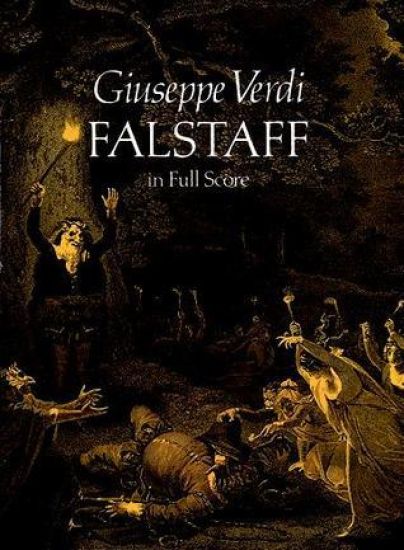
Giuseppe Verdi's Falstaff. Full score.Complete and unabridged, this reproduction of the original G. Ricordi score presents Verdi's last great work.
Aida

Aida

Giuseppe Verdi

Overture Publishing
2011
nidottu
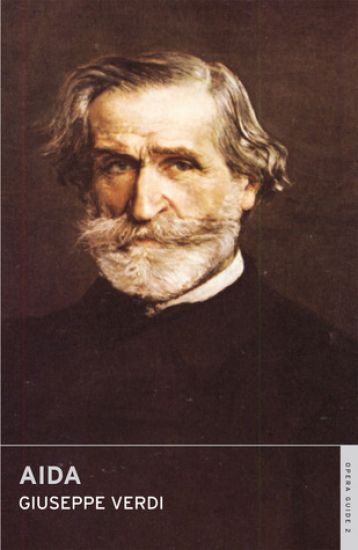
Aida is, for most of us, the quintessence of Ancient Egypt, but it is certainly not just for archaeologists. Michael Rose points out that it is really about patriotism – an issue of burning importance to Verdi and his contemporaries. Music critic William Mann reflects that even a short look at the score reveals subtleties that repay careful listening. And Verdi’s own letters show the germs of the opera grow from suggestion to creation.Contents: Verdi’s ‘Egyptian business’, Michael Rose; ‘Aida’ – Text and Music, William Mann; The Genesis of ‘Aida’, Roger Parker; Aida: Libretto by Antonio Ghislanzoni; Aida: English version by Edmund Tracey
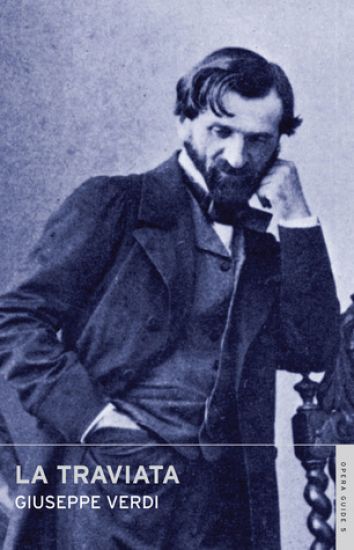
La Traviata

La Traviata

Giuseppe Verdi

Overture Publishing
2011
nidottu
In this guide, Julian Budden reviews the difficulties that faced the management that had commissioned La Traviata and how, in some previously unpublished letters, Verdi fought their views on casting the leading lady. Denis Arnold contributes a musical commentary. April FitzLyon discusses the social background of the 'lady of the camellias' in fact, fiction and on the stage, and Nicholas John compares the libretto with the play to show how skilfully it was adapted for the operatic stage.
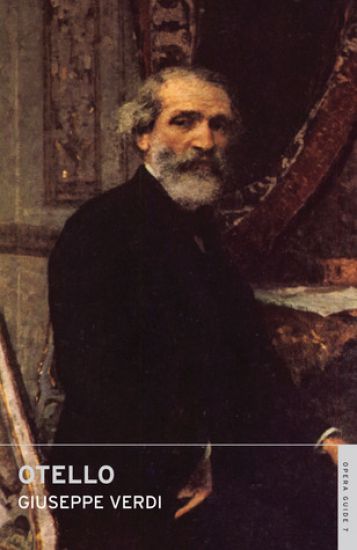
Otello (Othello)

Otello (Othello)

Giuseppe Verdi

Overture Publishing
2011
nidottu
Winton Dean relates how Otello came into being as much because of the persistence of Verdi’s publisher as of the composer’s lifelong passion for Shakespeare, and the collaboration of the brilliant poet Arrigo Boito. Benedict Sarnaker argues that this magnificent large-scale opera rivals Shakespeare in intensity and profundity. William Weaver’s lively review of Shakespeare on the Italian stage in the last century enables us to make a wholly fresh appraisal of Verdi’s stature as a dramatist. The libretto itself is a masterpiece, and Andrew Porter has also translated the third-act revision which Verdi came to prefer and which has not been performed outside France before the 1981 ENO production.Contents: ‘Otello’: The Background, Winton Dean; ‘Otello’: Drama and Music Benedict Sarnaker; Verdi, Shakespeare and the Italian Audience, William Weaver; Otello: Libretto by Arrigo Boito; Otello: English Translation by Andrew Porter