Kirjojen hintavertailu. Mukana 11 717 486 kirjaa ja 12 kauppaa.

Kirjahaku

Etsi kirjoja tekijän nimen, kirjan nimen tai ISBN:n perusteella.

11 kirjaa tekijältä Glanmor Williams

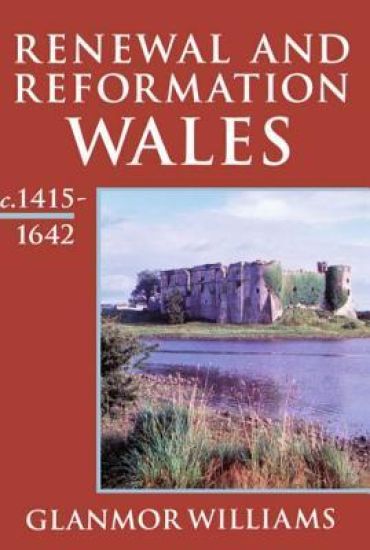
Renewal and Reformation

Renewal and Reformation

Glanmor Williams

Oxford University Press
1993
nidottu
This is the first comprehensive history of the two decisive centuries which followed the defeat of Owain Glyndwr in 1415. The fifteenth century was a time of resilience and recovery from the Rebellion, and one which saw the emergence of ruling gentry families, whose power, and that of the monarchy, was confirmed by the Tudor Act of Union, 1536-43. This was an age of outstanding personalities and achievements as impressive as they were diverse: Owain Glyndwr, Henry Tudor, John Dee, Robert Devereux, William Morgan, Matthew Gough, and Robert Mansell. Throughout, the Welsh remained prouder and more conscious of their national identity than has usually been thought.
Recovery, Reorientation, and Reformation

Recovery, Reorientation, and Reformation

Glanmor Williams

Oxford University Press
1987
sidottu
This is the first comprehensive account of the two decisive centuries in Welsh history which followed the defeat of Owain Glyn Dwr in 1415. In the process, surprising features emerge. The fifteenth century, the `Cinderella' of Welsh history, is seen as one of resilience and recovery from the protracted and destructive Glyn Dwr rebellion, and of the emergence of ruling gentry families, natives and settlers. The Tudor Act of Union in 1536-43 swept away the outmoded lumber of medieval times and reorientated the country. It confirmed strikingly royal authority and gentry domination but along lines that had long been anticipated. The Renaissance and the Reformation posed not only perils but opportunities. Responding to the challenge with vigour and imagination, Welsh scholars and patriots met with marked,if not complete, success. The Welsh remained prouder and more conscious of their Welshness than has usually been thought. This was an age of outstanding personalities and achievements, as impressive as they were diverse: Owain Glyn Dwr and Henry Tudor; Guto'r Glyn and John Dee; William Herbert and Robert Devereux; Sion Cent and William Morgan; Mathew Gough and Robert Mansel. Particular attention is given to the literature of the age, Welsh and English, prose and verse, to illustrate all aspects of a robust, colourful, and formative era.
G.T.Clark

G.T.Clark

Glanmor Williams

University of Wales Press
1998
sidottu
Written to coincide with the centenary of his death, this is a biography of G.T. Clark, who combined a successful career as an industrialist with pioneering contributions to medieval history and archaeology.
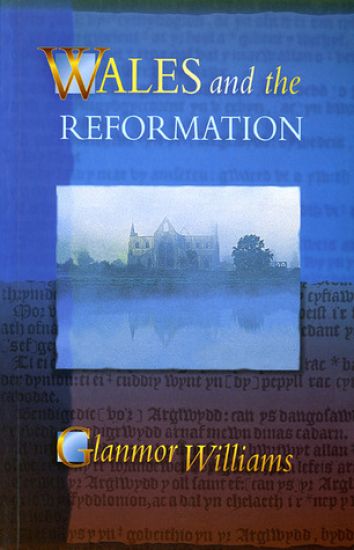
Wales and the Reformation

Wales and the Reformation

Glanmor Williams

University of Wales Press
1999
nidottu
Wales and the Reformation is the first full-length study of one of the most significant phases in the history of Wales. Such neglect is surprising given the formative part played by the Reformation in shaping the subsequent destinies of Wales and its people. What is less surprising is that Sir Glanmor Williams has now remedied this deficiency with a work of scholarship that is magisterial in content and polished in style.In the sixteenth century the Roman Church which, for centuries, had regulated religion in Wales was ousted and replaced by a state-established Church, of which the monarch was constituted Supreme Head. It soon became obvious to a small group of intellectuals and reformers that the use of English to impose modifications to traditional worship and belief upon a mainly Welsh-speaking populace would be unlikely to succeed among the mass of the people. From mid-century onwards, therefore, there were determined attempts both to secure adherence to reformed doctrine and to safeguard the native cultural inheritance by means of Welsh translations of the Bible, Prayer Book, and other literature.The translation of the Bible into Welsh was probably the key factor in retaining the native language; it ensured the success of Welsh literature, tied the clergy to Welsh culture, and inspired confidence in the continuance of Welsh nationhood. Slow though progress was in many respects the indispensable translations were achieved and the Welsh were set on the road to becoming a fervent Protestant nation.The switch of allegiance from Rome was neither simple nor straightforward; it provoked great upheaval and confusion, in which secular concerns and material interests became entangled with cultural and devotional consequences. In "Wales and the Reformation" Glanmor Williams succeeds in unfolding this complex story in a lucid and readable fashion.
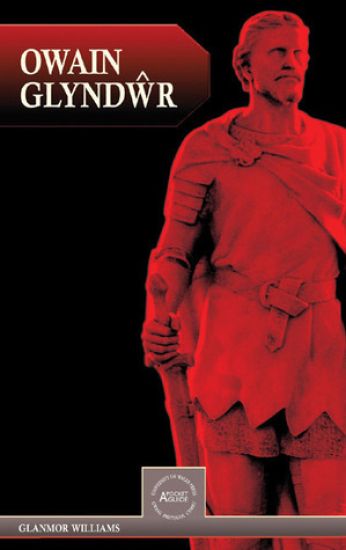
Owain Glyndwr

Owain Glyndwr

Glanmor Williams

University of Wales Press
2005
nidottu
Offers a brief, attractively written account of Owain Glyndwr (1359-1415) and his Rebellion (1400-1415), one of the most exciting and romantic episodes in the history of Wales.