Noted for its stunning plumage and haunting cries, the common loon is an iconic symbol of nature in the Granite State. Once a familiar site on local ponds and lakes, by the early twentieth century their numbers had dwindled due to human activity. By the 1970s less than two hundred remained. It was only with the formation of the Loon Preservation Committee in 1975 by pioneer conservationist Rawson Wood that the plight of loons in New Hampshire changed for the better. Author Glenn Knoblock, in collaboration with leading experts from the organization, reveals the sometimes-mysterious nature of this beloved bird, its presence throughout the state's history, the threats it faces today and the extensive efforts to recover the population.The Loon Preservation Committee is the only organization in New Hampshire working directly on their behalf. A portion of the proceeds of the sales of this book will go directly to the organization to fund ongoing conservation efforts.
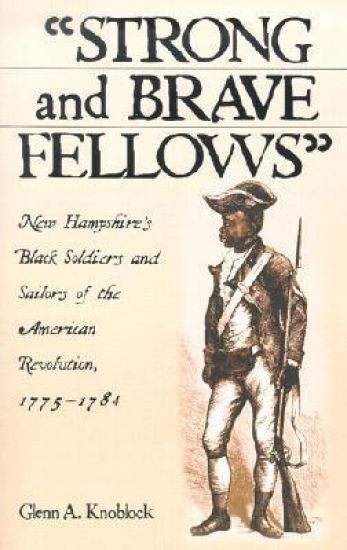
New Hampshire, despite its small size, played a significant role in the American Revolution. The deeds of the state's soldiers and other notable citizenry have been well documented but the contributions of the black population have never been fully explored until now. The largest part of this book consists of the service records of all known black soldiers with ties to New Hampshire: 139 who served in New Hampshire's forces, 34 who served in New Hampshire and another colony's forces, and 51 who served in another colony's forces but lived in New Hampshire at some point in their lives. The work also provides information on life for blacks in New Hampshire before, during and after the American Revolution, and information on campaigns and engagements that blacks from New Hampshire were known to have taken part in.
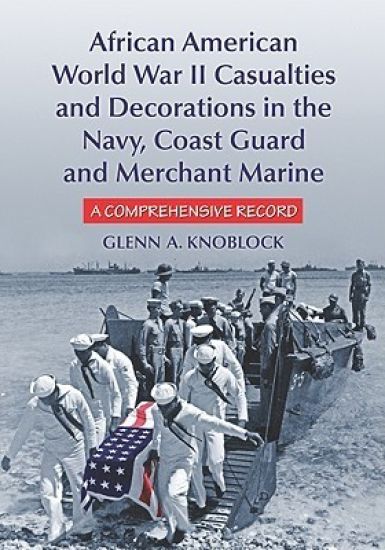
This book is an account of the 2,445 African American men who were killed or wounded or decorated during World War II in the Navy, Coast Guard, and Merchant Marine. Because of the nature of the military's racial policies, most of these men served either in the Steward's Branch or in subordinate positions. As a result, the role of these fighting men has largely been ignored. This book attempts to rectify this oversight, documenting each man lost with groupings primarily by ship and by shore service, as well as separate chapters for those lost at Pearl Harbor and those who died in the explosion at Port Chicago, an incident which accounted for about 20 percent of all deaths among African American seamen during the war. Information of a more personal nature about each man is often included, highlighted by input from surviving black veterans as well as recollections from several families whose sons, fathers, and brothers were lost in the war. Also featured are several African Americans who were decorated posthumously for acts of bravery and heroism during their service, including Navy Cross winners Dorie Miller, William Pinckney and Leonard Roy Harmon.
This book chronicles the development of metal truss and related bridges in Maine, New Hampshire and Vermont from the 1860s to 1940: the various types and their inventors, historical changes in the highway and railroad networks that caused these bridges to be built, the rise of state bridge-building agencies, developments in the field of civil engineering, and preservation trends. While many notable metal bridges of the past are discussed in the context of these topics, the book's main focus is a detailed account of the remaining historic bridges.
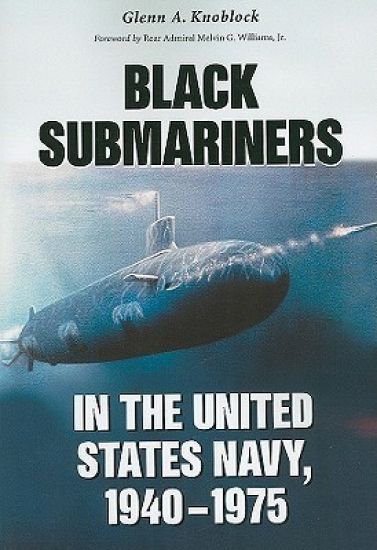
For as long as an American naval force has existed, black sailors have served it with bravery, distinction, and little or no recognition. They have since earned praise for service in the American Revolution, the War of 1812, and the Civil War, and more recently, they were integral to the development of the U.S. Submarine Service. Their roles limited by segregation, black submariners nonetheless were a key element of the "Silent Service" throughout World War II. With desegregation came expanded opportunities, and black submariners witnessed the birth and evolution of the nuclear-powered submarine, and some of the tensest moments of the Cold War. These men paved the way for those who followed--their contributions deserve recognition, and their stories deserve to be told. This exploration of the role of African American submariners chronicles their service from World War II through the Cold War era. An historical overview of black sailors and the evolution of the Steward's Branch, to which black sailors were eventually restricted, precede descriptions of becoming a steward and a submariner, and of life as a submariner during World War II. An account of black submariners in post-war service during desegregation, the development of the nuclear submarine, and throughout the Cold War follows. Oral histories of more than fifty black submariners who served in World War II and post-war form the heart of the book. Photographs of the men profiled, including wartime photographs, complement the text. Appendices outline the naval steward rating system, list all black submarine stewards serving in World War II, top stewards by number of war patrols, and those lost or killed during wartime service. Rear Admiral Melvin G. Williams, Jr., submarine fleet commander and son of one of the men profiled, provides a foreword.
Evidence of the early history of African Americans in New England is found in the many old cemeteries and burial grounds in the region, often in hidden or largely forgotten locations. This unique work covers the burial sites of African Americans--both enslaved and free--in each of the New England states, and uncovers how they came to their final resting places. The lives of well known early African Americans are discussed, including Venture Smith and Elizabeth Freeman, as well as the lives of many ordinary individuals--military veterans, business men and women, common laborers and children. The author's examination of burial sites and grave markers reveals clues that help document the lives of black New Englanders from the 1640s to the early 1900s.
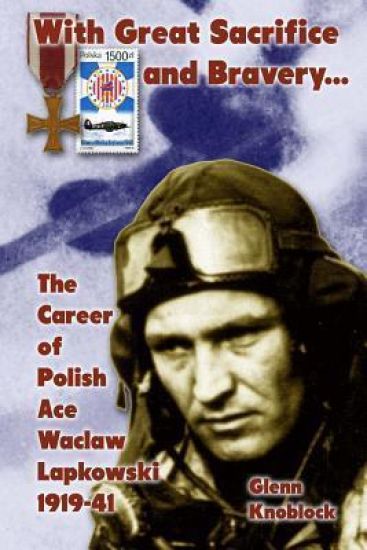
Merriam Press World War 2 Biography Series While Waclaw Lapkowski was an experienced pilot who became one of Poland's aces during the war, his early demise, like that of so many others, has relegated his achievements to the back pages of history, making them nearly forgotten. It is the author's hope that, in some small way, this work will help preserve the memory of a little known pilot who fought, not only for his own country, but also for France and England during the early, dark days of World War II. The second reason for producing this work is the unique use of official combat and operations reports from the Royal Air Force (RAF). Many of those who are interested in World War II aviation and fighter aces have read the biographies, and first-hand accounts of air combat contained within, of such men as Douglas Bader, Witold Urbanowicz, Adolph Galland, and Gregory "Pappy" Boyington, to name just a few. But what of those "aces" that did not survive to tell their story? How are they to be remembered? In the case of those who served with the RAF, the answer is, in part, through the use of official combat reports and related documents. While these official RAF and Polish Air Force (PAF) records do not sound particularly exciting, a glance at the surviving records quickly proves otherwise. Indeed, the title of this book consists of a borrowed phrase from one such report, and is a small example of the many dramatic events recorded within, often in the pilot's own words. While these reports have been an important source for many works on the RAF and PAF and its achievements during the war, never before, to the author's knowledge, have official combat reports been presented to the reading public in their original form. Though not originally intended for public view, they nonetheless make for exciting and informative reading and will be of interest not only to those with a passing interest in World War II aviation, but to the serious student as well. While the author was unable to obtain combat reports for all of Lapkowski's flights, those that were procured for September 1940 and June 1941 are of particular interest as they highlight all of the "kills" that he made while serving in the RAF. What the author found out, from the official combat reports, and various published sources, uniquely combined with available archaeological artifacts, was fascinating. What emerged from the records is a story worth telling. Waclaw Lapkowski, though not famous like such other Polish aces as Stanislaw Skalski, Jan Zumbach, or Urbanowicz, had an interesting and distinguished career. He was in the thick of battle at the outset of the war, when Germany invaded Poland on September 1, 1939, and saw subsequent service during the Battle of France and the Battle of Britain in 1940. He achieved air victories in two out of three of these campaigns, and is one of only a handful of men, less than 150 in number, who served in all three campaigns. To borrow a phrase from the British, Waclaw Lapkowski truly was one of "The Few," men whose skill and bravery helped stem the tide of German aggression and made Allied victory possible, at the cost of their own lives. Contents Acknowledgments Introduction The Source-Combat Report Form F The German Invasion of Poland, September 1939 The Battle of France, May-June 1940 The Battle of Britain, August-September 1940 Shot Down over London, September 1940 Cross-Channel Operations, January-May 1941 Achieving Ace Status, June 1941 Final Flight, July 1941 Battle of Britain Revisited Awards for Distinguished Action by Polish Pilots Biographies of Polish Pilots Waclaw Lapkowski's Combat Claims Bibliography 5 illustrations 30 photos 18 combat reports Pilot's flight log
This work offers a new and comprehensive account of the fastest and most beautiful sailing ships ever built. It explores the quest for speed on the seas from the early 1800s through the fast-paced times of the 1850s spurred on by the California Gold Rush of 1849. Not only are the career details of such noted ships as the Flying Cloud and Challenge discussed in detail, but they are also put in context with the times in which they operated. Their builders in East Coast states from Maine to Florida are discussed in detail, as are the men, and a woman in one instance, who commanded and manned these ships. The book documents the roles that owners and shipping agents played, what kinds of cargo the ships carried worldwide and the unusual trades in which they participated.
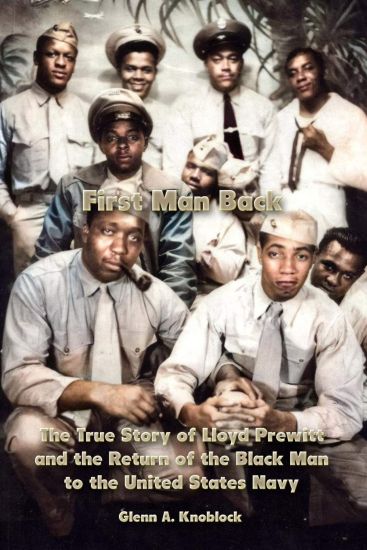
Merriam Press Military Memoir. For 14 years, from 1919 to 1933, the US Navy stopped recruiting Blacks, and worked to phase out those who still remained, their duties taken over mostly by Filipinos. When, in 1933, Blacks were finally allowed back into the Navy, Lloyd Prewitt was one of the first to volunteer. His dedicated service, from 1933 to 1955, proved that Black sailors could perform whatever was asked of them in peacetime and combat, and paved the way for future generations of Black sailors. 33 photos.
This work tells the full story of the weapons, including fighter-planes, tanks, ships, and guns, that America produced during the war to defeat the Axis powers, and how they were "sold" to those at home through the countless advertisements that appeared in popular magazines. Though well-known companies such as General Motors, Ford, Kelvinator, and B.F. Goodrich, and a whole host of others, could no longer sell their products to consumers, they instead turned their factories towards supplying the Arsenal of Democracy. In order to keep their names in the public spotlight, these companies advertised in great detail the weapons they were building; Cadillac touted its efforts in supplying components for Sherman tanks and P-38 Lightning fighters, Ford no longer built cars in Detroit, but B-24 Liberator bombers and Jeeps, while the home appliance company Kelvinator built aircraft components and flame-throwers. The story behind these advertisements, many of them stunning visuals which are here reproduced in color, is a unique aspect of World War II history that will both surprise and delight.
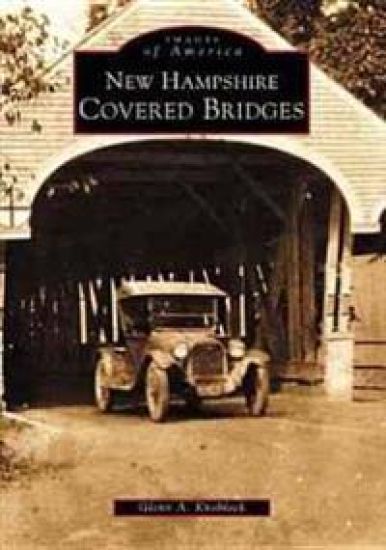
New Hampshire once had nearly four hundred covered bridges, most of which unfortunately are no longer in existence. Some of them were railroad bridges and, although often viewed as charming relics of the past, all of these bridges were actually vital links in New Hampshire's transportation system. Covered bridges were used to cross most of New Hampshire's large rivers, including the Connecticut, Merrimack, Mascoma, Contoocook, Pemigewasset, and Ashuelot. New Hampshire Covered Bridges is a photographic study of the state's enclosed wooden spans that date from as far back as 1827. The book contains rare photographs of historic bridges that no longer exist, as well as pictures of many that still stand today. The images are accompanied by detailed information about the design and construction of covered bridges and the men who built them. Each bridge has its own life story. Some have defied floods and hurricanes and still stand; others have fallen victim to nature or arson or the demands of modern transportation.
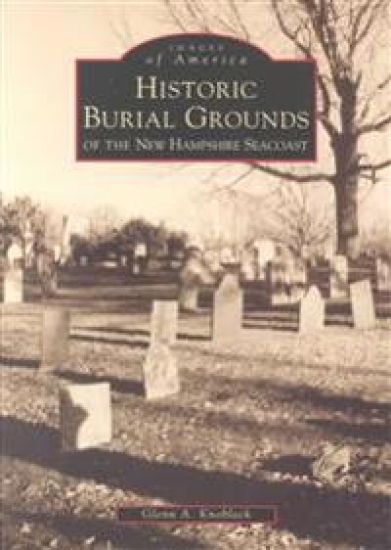
Historic Burial Grounds of the New Hampshire Seacoast, a photographic study of Colonial Era-burial grounds, uncovers the fascinating history of the area from the 1680s to 1810. These early cemeteries are a direct link to our past, and yet very little has been done to preserve their history through photographs. By understanding how, why, and by whom these gravestones were made, the symbolism they portray can be understood, and we will gain a clearer understanding of the ways in which our ancestors lived and died. The burial grounds and the gravestones within them have often been called open air museums. They contain some of the oldest works of art found in the area; some gravestones are more than 300 years old. Through the author's collection of photographs, one can see the entire range of images present in the area's old burial grounds, including grinning skulls and crossbones, heavenly cherubs, and epitaphs that tell magnificent tales. This collection is a must for anyone interested in local history, genealogy, or colonial-era art.
First used to gauge New England's ever-changing weather, now viewed as American folk art, historic weathervanes have been a part of the region's skyline for more than three centuries. Focusing on examples that can still be seen in public, this comprehensive study of the development of the weathervane describes changes in form and function from colonial times to the present, and also documents the histories of weathervane makers throughout New England.