Kirjojen hintavertailu. Mukana 11 627 220 kirjaa ja 12 kauppaa.

Kirjahaku

Etsi kirjoja tekijän nimen, kirjan nimen tai ISBN:n perusteella.

12 kirjaa tekijältä Glenn Adamson

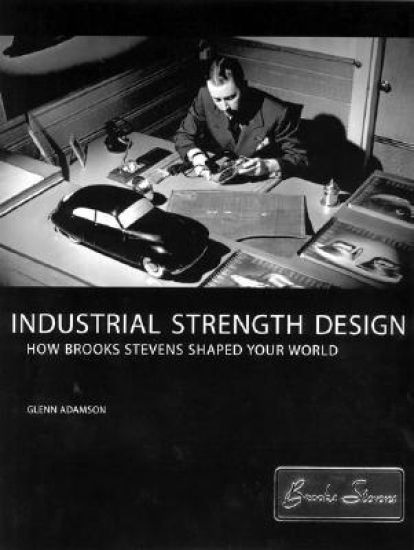
Industrial Strength Design

Industrial Strength Design

Glenn Adamson

MIT Press
2005
pokkari
The first publication documenting the work of Brooks Stevens, one of America's most influential twentieth-century designers.Industrial Strength Design: How Brooks Stevens Shaped Your World is a long overdue introduction to the work of visionary industrial designer Brooks Stevens (1911-1995). Believing that an industrial designer "should be a businessman, an engineer, and a stylist, in that order," Stevens created thousands of ingenious and beautiful designs for industrial and household products-including a clothes dryer with a window in the front, a wide-mouthed peanut butter jar, and the Oscar Mayer Wienermobile. ("There's nothing more aerodynamic than a wiener," he explained.) He invented a precursor to the SUV by turning a Jeep into a station wagon after World War II, and streamlined steam irons so that they resembled aircraft. It was Brooks Stevens who, in 1954, coined the phrase "planned obsolescence," defining it as "instilling in the buyer the desire to own something a little newer, a little better, a little sooner than is necessary." This concept has since been blamed for everything from toasters that stop working to today's throwaway culture, but Stevens was simply recognizing the intentionally ephemeral nature of a designer's work. Asked once to name his favorite design, he replied, "none, because every one would have to be restudied for the tastes of tomorrow."This book, which accompanied an exhibit at the Milwaukee Art Museum (the repository for Stevens's papers), includes 250 illustrations of designs by Stevens and his firm, many in color. Glenn Adamson, exhibition curator, contributes detailed studies of individual designs. John Heskett, Kristina Wilson, and Jody Clowes contribute interpretive essays. Also included are a description of the Brooks Stevens Archive and several key writings by Brooks Stevens.
The Invention of Craft

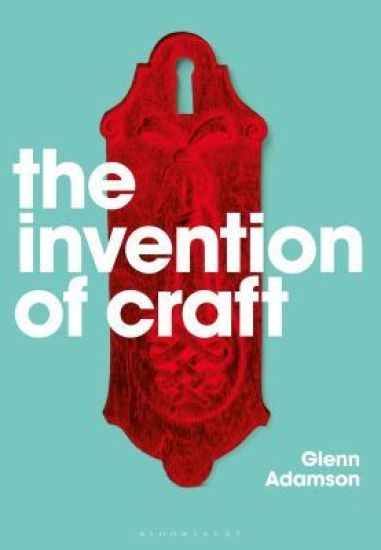
The Invention of Craft

Glenn Adamson

Bloomsbury Visual Arts
2018
nidottu
Glenn Adamson's last book, Thinking Through Craft, offered an influential account of craft's position within modern and contemporary art. Now, in his engaging sequel, The Invention of Craft, his theoretical discussion of skilled work is extended back in time and across numerous disciplines.Adamson searches out the origins of modern craft, locating its emergence in the period of the industrial revolution. He demonstrates how craft was invented as industry's "other", a necessary counterpart to ideas of progress and upheaval. In the process, the magical and secretive culture of artisans was gradually dominated through division and explication. This left craft with an oppositional stance, a traditional or anti-modern position. The Invention of Craft ranges widely across media, from lock-making, wood-carving and iron-casting to fashion, architecture and design. It also moves back and forth between periods, from the 18th century to the present day, demonstrating how contemporary practice can be informed through the study of modern craft in its moment of invention.
Thinking through Craft

Thinking through Craft

Glenn Adamson

Bloomsbury Visual Arts
2018
nidottu
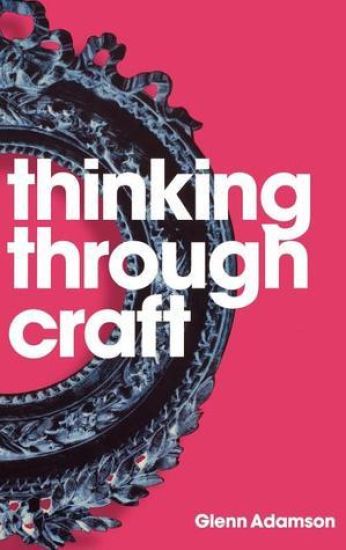
Co-published in Association with the Victoria and Albert Museum, LondonThis book is a timely and engaging introduction to the way that artists working in all media think about craft. Workmanship is key to today's visual arts, when high ‘production values' are becoming increasingly commonplace. Yet craft's centrality to contemporary art has received little serious attention from critics and historians. Dispensing with clichéd arguments that craft is art, Adamson persuasively makes a case for defining craft in a more nuanced fashion. The interesting thing about craft, he argues, is that it is perceived to be 'inferior' to art. The book consists of an overview of various aspects of this second-class identity - supplementarity, sensuality, skill, the pastoral, and the amateur. It also provides historical case studies analysing craft's role in a variety of disciplines, including architecture, design, contemporary art, and the crafts themselves. Thinking Through Craft will be essential reading for anyone interested in craft or the broader visual arts.
The Craft Reader

The Craft Reader

Glenn Adamson

Bloomsbury Visual Arts
2018
nidottu
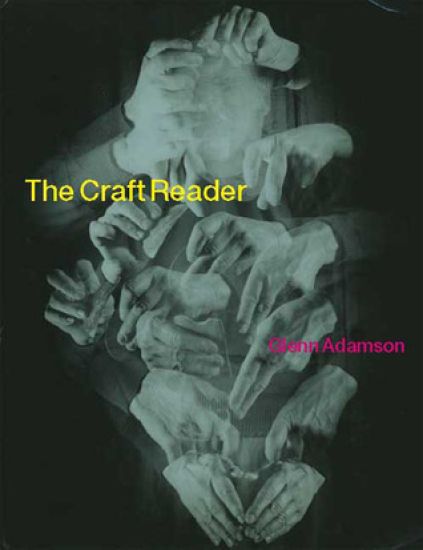
From the canonical texts of the Arts and Crafts Movement to the radical thinking of today's "DIY" movement, from theoretical writings on the position of craft in distinction to Art and Design to how-to texts from renowned practitioners, from feminist histories of textiles to descriptions of the innovation born of necessity in Soviet factories and African auto-repair shops...The Craft Reader presents the first comprehensive anthology of writings on modern craft.Covering the period from the Industrial Revolution to today, the Reader draws on craft practice and theory from America, Europe, Asia and Africa. The world of craft is considered in its full breadth -- from pottery and weaving, to couture and chocolate-making, to contemporary art, architecture and curation. The writings are themed into sections and all extracts are individually introduced, placing each in its historical, cultural and artistic context.Bringing together an astonishing range of both classic and contemporary texts, The Craft Reader will be invaluable to any student or practitioner of Craft and also to readers in Art and Design.AUTHORS INCLUDE:Theodor Adorno, Anni Albers, Amadou Hâmpaté Bâ, Charles Babbage, Roland Barthes, Andrea Branzi, Alison Britton, Rafael Cardoso, Johanna Drucker, Charles Eames, Salvatore Ferragamo, Kenneth Frampton, Alfred Gell, Walter Gropius, Tanya Harrod, Martin Heidegger, Patrick Heron, Bernard Leach, Esther Leslie, W. R. Lethaby, Lucy Lippard, Adolf Loos, Karl Marx, William Morris, Robert Morris, László Moholy-Nagy, Stefan Muthesius, George Nakashima, Octavio Paz, Grayson Perry, M. C. Richards, John Ruskin, Raphael Samuel, Ellen Gates Starr, Debbie Stoller, Alexis de Tocqueville, Lee Ufan, Frank Lloyd Wright
Fewer, Better Things

Fewer, Better Things

Glenn Adamson

Bloomsbury Publishing PLC
2019
nidottu
Things matter. So why are we losing touch with them?From the former director of the Museum of Arts and Design in New York comes a timely and passionate case for the role of the well-designed object in the digital age. In this delightful exploration of craft in its many forms, curator and scholar Glenn Adamson explores how raw materials, tools, design and technique come together to produce objects of beauty and utility. A thoughtful meditation on the value of care and attention in an age of disappearing things, Fewer, Better Things invites us to reconnect with the physical world and its objects.
Objects: USA 2020

Objects: USA 2020

Glenn Adamson

Monacelli Press
2020
sidottu
Objects: USA 2020 hails a new generation of artist-craftspeople by revisiting a groundbreaking event that redefined American art. In 1969, an exhibition opened at the Smithsonian Institution that redefined American art Objects: USA 2020 united a cohort of artists inventing new approaches to art-making by way of craft media. Subsequently touring to twenty-two museums across the country, where it was viewed by over half a million Americans, and then to eleven cities in Europe, the exhibition canonized such artists as Anni Albers, Sheila Hicks, Wharton Esherick, Wendell Castle, and George Nakashima, and introduced others who would go on to achieve widespread art-world acclaim, including Dale Chihuly, Michele Oka Doner, J. B. Blunk, and Ron Nagle. Objects: USA 2020 revisits this revolutionary exhibition and its accompanying catalog - which has become a bible of sorts to curators, gallerists, dealers, craftspeople, and artists - by pairing fifty participants from the original exhibition with fifty contemporary artists representing the next generation of practitioners to use - and upend - the traditional methods and materials of craft to create new forms of art. Published to coincide with an exhibition of the same title at the renowned gallery R & Company, and featuring essays by some of the foremost authorities on craft at the intersection of art, including Glenn Adamson, curator and former director of the Museum of Arts & Design; James Zemaitis, curator and former head of twentieth-century design at Sotheby's; and Lena Vigna, curator of exhibitions at the Racine Art Musuem; an interview with Paul J. Smith, the cocurator of Objects: USA 2020 is an essential art historical reference that traces how craft was elevated to the status of museum-quality art, and sets its trajectory forward.
Gaetano Pesce

Gaetano Pesce

Glenn Adamson

Monacelli Press
2023
sidottu
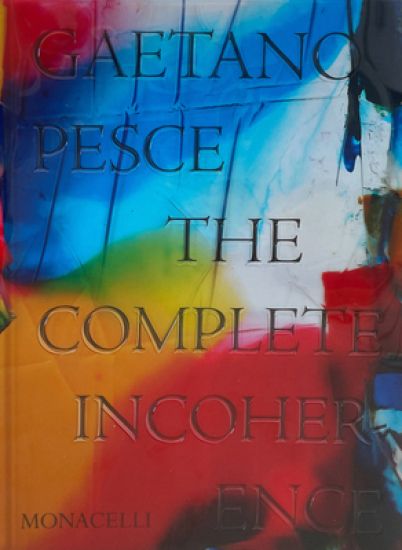
The definitive volume on the late Gaetano Pesce’s incomparable life and career, as told in the artist-designer’s own words In a category all his own, Gaetano Pesce (1939-2024) was widely considered one of the most important, and elusive, creative figures of the last half century. Bridging numerous key art and design movements, while never belonging to any of them, Pesce’s singular practice was steadfastly provocative, defying convention, utility, and good taste. Glenn Adamson, the acclaimed curator and writer, conducted the wide-ranging interview with Pesce on which this book is based, drawing out new stories and insights, as well as providing an introduction that thoroughly contextualizes Pesce’s unique position in contemporary art and design. As postmodern design has become increasingly desirable, interest in Pesce has grown with renewed exhibition activity and critical attention, and his work has become even more valuable and collectible. In this long overdue summary co-published with Salon 94, Pesce looks back at his incomparable and wildly inventive career, recounting his life and practice in his own words.
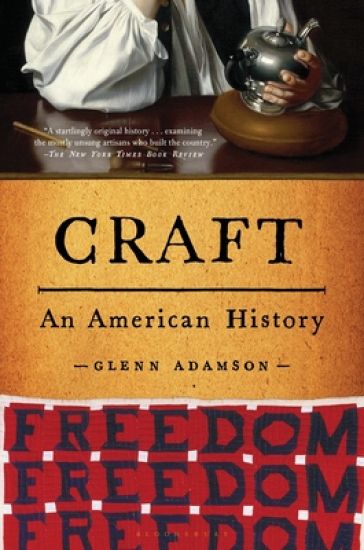
Craft

Craft

Glenn Adamson

Bloomsbury Publishing USA
2021
sidottu
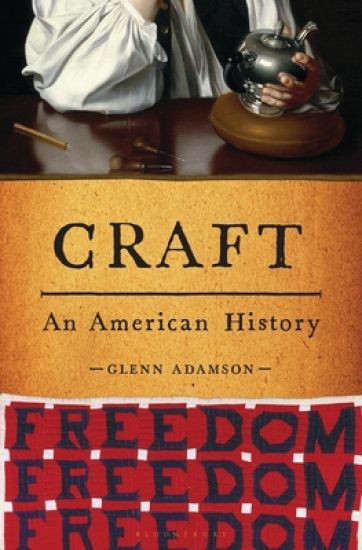
A groundbreaking and endlessly surprising history of how artisans created America, from the nation's origins to the present day. At the center of the United States' economic and social development, according to conventional wisdom, are industry and technology-while craftspeople and handmade objects are relegated to a bygone past. Renowned historian Glenn Adamson turns that narrative on its head in this innovative account, revealing makers' central role in shaping America's identity. Examine any phase of the nation's struggle to define itself, and artisans are there-from the silversmith Paul Revere and the revolutionary carpenters and blacksmiths who hurled tea into Boston Harbor, to today's "maker movement." From Mother Jones to Rosie the Riveter. From Betsy Ross to Rosa Parks. From suffrage banners to the AIDS Quilt. Adamson shows that craft has long been implicated in debates around equality, education, and class. Artisanship has often been a site of resistance for oppressed people, such as enslaved African-Americans whose skilled labor might confer hard-won agency under bondage, or the Native American makers who adapted traditional arts into statements of modernity. Theirs are among the array of memorable portraits of Americans both celebrated and unfamiliar in this richly peopled book. As Adamson argues, these artisans' stories speak to our collective striving toward a more perfect union. From the beginning, America had to be-and still remains to be-crafted.
Thinking through Craft

Thinking through Craft

Glenn Adamson

BLOOMSBURY PUBLISHING PLC
2007
sidottu
Co-published in Association with the Victoria and Albert Museum, London This book is a timely and engaging introduction to the way that artists working in all media think about craft. Workmanship is key to today's visual arts, when high 'production values' are becoming increasingly commonplace. Yet craft's centrality to contemporary art has received little serious attention from critics and historians. Dispensing with cliched arguments that craft is art, Adamson persuasively makes a case for defining craft in a more nuanced fashion. The interesting thing about craft, he argues, is that it is perceived to be 'inferior' to art. The book consists of an overview of various aspects of this second-class identity - supplementarity, sensuality, skill, the pastoral, and the amateur. It also provides historical case studies analysing craft's role in a variety of disciplines, including architecture, design, contemporary art, and the crafts themselves. Thinking Through Craft will be essential reading for anyone interested in craft or the broader visual arts.
The Craft Reader

The Craft Reader

Glenn Adamson

BLOOMSBURY PUBLISHING PLC
2009
sidottu
From the canonical texts of the Arts and Crafts Movement to the radical thinking of today's "DIY" movement, from theoretical writings on the position of craft in distinction to Art and Design to how-to texts from renowned practitioners, from feminist histories of textiles to descriptions of the innovation born of necessity in Soviet factories and African auto-repair shops...The Craft Reader presents the first comprehensive anthology of writings on modern craft. Covering the period from the Industrial Revolution to today, the Reader draws on craft practice and theory from America, Europe, Asia and Africa. The world of craft is considered in its full breadth -- from pottery and weaving, to couture and chocolate-making, to contemporary art, architecture and curation. The writings are themed into sections and all extracts are individually introduced, placing each in its historical, cultural and artistic context. Bringing together an astonishing range of both classic and contemporary texts, The Craft Reader will be invaluable to any student or practitioner of Craft and also to readers in Art and Design. AUTHORS INCLUDE: Theodor Adorno, Anni Albers, Amadou Hampate Ba, Charles Babbage, Roland Barthes, Andrea Branzi, Alison Britton, Rafael Cardoso, Johanna Drucker, Charles Eames, Salvatore Ferragamo, Kenneth Frampton, Alfred Gell, Walter Gropius, Tanya Harrod, Martin Heidegger, Patrick Heron, Bernard Leach, Esther Leslie, W. R. Lethaby, Lucy Lippard, Adolf Loos, Karl Marx, William Morris, Robert Morris, Laszlo Moholy-Nagy, Stefan Muthesius, George Nakashima, Octavio Paz, Grayson Perry, M. C. Richards, John Ruskin, Raphael Samuel, Ellen Gates Starr, Debbie Stoller, Alexis de Tocqueville, Lee Ufan, Frank Lloyd Wright
Dysfunctional

Dysfunctional

Glenn Adamson

Norma,Editions
2019
sidottu
Must form still follow function, as Martin Gropius, Le Corbusier, and their followers proclaimed? Dysfunctional invites a reconsideration of the conventional relationship between artistic expression and functionality. In an exhibition organised by the Carpenters Workshop Gallery in the stunning setting of the Ca'd'Oro in Venice, site-specific works by 17 established and emerging artists explore the boundaries of art, architecture, and design. These contemporary artists draw on the rich heritage of Venetian craftsmanship and the museum's exceptional collection of Italian masterpieces to create a meaningful dialogue about the 20th century mantra of form following function. With work located in the realm between craft and art, each of the artists in the show challenges preconceptions about what is beautiful and what is useful, what is historical, and what is modern. Included here are site-specific installations and furniture-sculpture by Nacho Carbonell, Studio Drift, Vincent Dubourg and Virgil Abloh, organic benches by Wendell Castle and Mathieu Lehanneur, and inhabited clocks by Maarten Baas, among others.
Craft

Craft

Glenn Adamson

BLOOMSBURY PUBLISHING USA
2022
nidottu
New York Times Book Review Editors' Choice A groundbreaking and endlessly surprising history of how artisans created America, from the nation's origins to the present day. At the center of the United States' economic and social development, according to conventional wisdom, are industry and technology-while craftspeople and handmade objects are relegated to a bygone past. Renowned historian Glenn Adamson turns that narrative on its head in this innovative account, revealing makers' central role in shaping America's identity. Examine any phase of the nation's struggle to define itself, and artisans are there-from the silversmith Paul Revere and the revolutionary carpenters and blacksmiths who hurled tea into Boston Harbor, to today's "maker movement." From Mother Jones to Rosie the Riveter. From Betsy Ross to Rosa Parks. From suffrage banners to the AIDS Quilt. Adamson shows that craft has long been implicated in debates around equality, education, and class. Artisanship has often been a site of resistance for oppressed people, such as enslaved African-Americans whose skilled labor might confer hard-won agency under bondage, or the Native American makers who adapted traditional arts into statements of modernity. Theirs are among the array of memorable portraits of Americans both celebrated and unfamiliar in this richly peopled book. As Adamson argues, these artisans' stories speak to our collective striving toward a more perfect union. From the beginning, America had to be-and still remains to be-crafted.