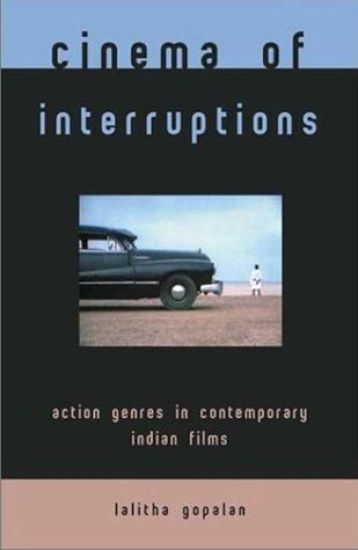
Cinema of Interruptions: Action Genres in Contemporary Indian Cinema
Gopalan Lalitha
BFI Publishing
2002
nidottu
A framework for understanding the distinctiveness of Indian cinema as a national cinema within a global context dominated by Hollywood is proposed by this book. With its sudden explosions into song-and-dance sequences, half-time intermissions and heavy traces of censorship, Indian cinema can be identified as a "Cinema of Interruptions". To the uninitiated viewer, brought up on the seamless linear plotting of Hollywood narrative, this unfamiliar tendency towards digression may appear random and superfluous, yet this book argues that such devices assist in the construction of a distinct visual and narrative time-space. In the hands of imaginative directors, the conventions of Indian cinema become opportunities for narrative play and personal expression in such films as "Sholay" (1975), "Nayakan" (1987), "Parinda" (1989), "Hathyar" (1981) and "Hey Ram!" (1999). "Cinema of Interruptions" places commercial Indian film within a global system of popular cinemas, but also points out its engagement with the dominant genre principles implemented by Western film. By focusing on the action-genre work of leading contemporary directors J.P. Dutta, Mani Rutnam, and Vidhu Vinod Chopra, brazen national style is shown to interact with international genre films to produce a hybrid form that reworks the gangster film, the western and the avenging woman genre. Central to this study is the relationship Indian cinema shares with its audience, and an understanding of the pleasures it offers the cinephile. In articulating this bond the book presents not only a fresh framework for understanding popular Indian cinema but also a contribution to film genre studies.