Kirjojen hintavertailu. Mukana 11 364 312 kirjaa ja 12 kauppaa.

Kirjahaku

Etsi kirjoja tekijän nimen, kirjan nimen tai ISBN:n perusteella.

97 kirjaa tekijältä Gordon L. Rottman

US Army Special Forces 1952–84

US Army Special Forces 1952–84

Gordon L. Rottman

Osprey Publishing
1985
nidottu
From its very inception the United States Army Special Forces has been enmeshed in controversy, its mission misunderstood to varying degrees, and its very existence opposed by some of the Army hierarchy.Nevertheless it continues to serve in a highly specialised role in all manner of differing conditions. There can be few better qualified to chronicle the history of this unique organisation than former Special Forces Group weapons specialist Gordon Rottman, whose expert knowledge is clearly evident in this authoritative text.This volume also contains 12 full page colour plates by one of the world's most respected military artists, Ron Volstad.
Warsaw Pact Ground Forces

Warsaw Pact Ground Forces

Gordon L. Rottman

Osprey Publishing
1987
nidottu
While much has been published on the armed forces of the USSR during the 1980s, surprisingly little is available on the forces supplied by the other member nations of the Warsaw Pact.Rivalling the size of the United States Army, the combined ground forces of the six non-Soviet Warsaw Pact countries totalled over 775,000 active troops, with almost two million ground forces reserves. This book examines the history, organization and uniforms of the often overlooked DDR, Czechoslovak, Polish, Bulgarian, Hungarian and Romanian forces at the end of the Cold War.
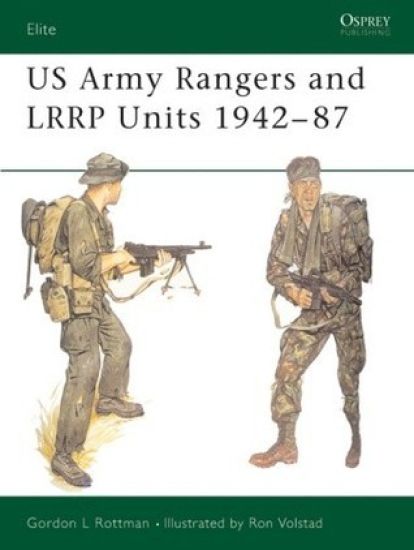
US Army Rangers & LRRP Units 1942–87

US Army Rangers & LRRP Units 1942–87

Gordon L. Rottman

Osprey Publishing
1987
nidottu
Ranger - the very word conjures up visions of small, highly trained units executing lightning-fast raids on an unexpecting enemy. It is also synonymous with high esprit de corps and excellence at arms.The US Army Rangers provide units of well-disciplined soldiers who possess the knowledge and courage to operate on their own, deep behind enemy lines. Gordon L. Rottman explores the history of these unique troops, starting with the original 'Rogers' Rangers' company of 1756, whose daring operations and deep penetrations of enemy-held country laid down the pattern for all subsequent Ranger units to follow.
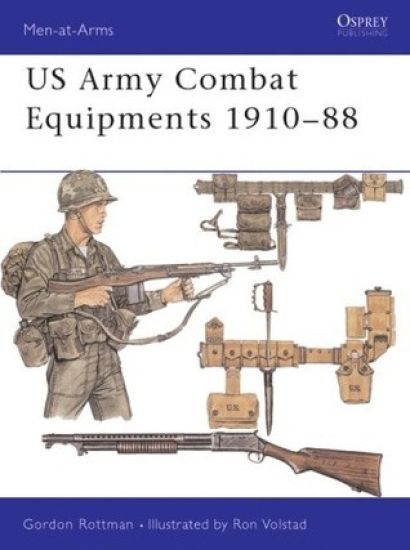
US Army Combat Equipments 1910–88

US Army Combat Equipments 1910–88

Gordon L. Rottman

Osprey Publishing
1989
nidottu
Whether referred to as web gear, TE-21, TA50, LBE or LCE, the American soldier's individual combat equipment was seldom praised – except by its developers.Nevertheless, it has always been, and will continue to be an essential part of the fighting man's burden. With the aid of plenty of contemporary photographs, diagrams, and eight full page colour plates by Osprey veteran Ron Volstad, Gordon Rottman's text unearths a wealth of information on the changing nature of US combat equipments from 1910-1988.
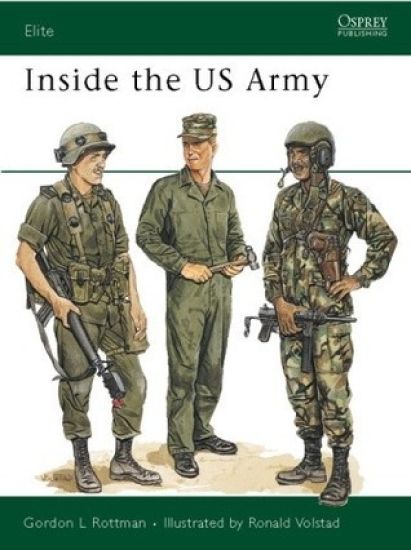
Inside the US Army

Inside the US Army

Gordon L. Rottman

Osprey Publishing
1988
nidottu
When conscription was eliminated in the early 1970s, the US Army found itself with a very different kind of soldier.While the personality of the Army remained the same, the organization of its higher levels of command and combat formations, and the internal structure of its units underwent major changes under the 'Army of Excellence' program of the 1980s.This book explores the US Army of the late 80s, including the training methods, weapon systems, Reserve Components, organization and uniforms of one of the world's most potent fighting forces. The text is illustrated with numerous photographs and eight colour plates.
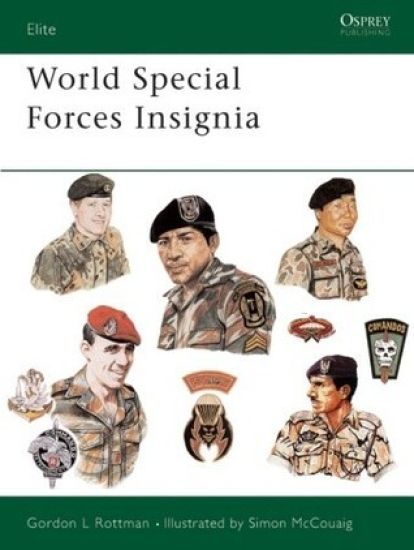
World Special Forces Insignia

World Special Forces Insignia

Gordon L. Rottman

Osprey Publishing
1989
nidottu
There exists among the world's armies a proliferation of special forces groups.Today's smaller armies, especially those of developing nations, demand maximum efficiency in force structure and employment. Mountain, jungle, arctic and desert areas require special purpose units trained, conditioned, and equipped to master these environments.This volume by ex-weapons specialist in the US 7th Special Forces Group, Gordon L. Rottman, details the insignia of a myriad of special forces groups from all parts of the globe, from Portugal's Commando Regiment to the North Yemen 'Al Mithalaat' Brigade. A wealth of illustrations and photographs accompany the text, including 12 full page colour plates by Simon McCouaig.
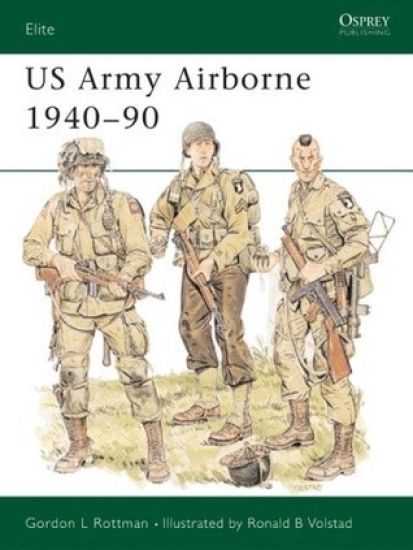
US Army Airborne 1940–90

US Army Airborne 1940–90

Gordon L. Rottman

Osprey Publishing
1990
nidottu
The first 50 years of the US Army airborne arm is a story of continuing battles with the nation's enemies, of battles within the Army's hierarchy, of change, and of adaptation.This comprehensive, illustrated volume tracks this history, highlighting the airborne soldier's uncanny ability to adapt and be flexible over the years. Focusing on the motivation and ésprit de corps this attitude fostered within these units, this is an engaging survey of how the airborne army changed in the years between 1940 and 1990.The first class pairing of Gordon L. Rottman and Ron Volstad bring to life the history of these remarkable troops.
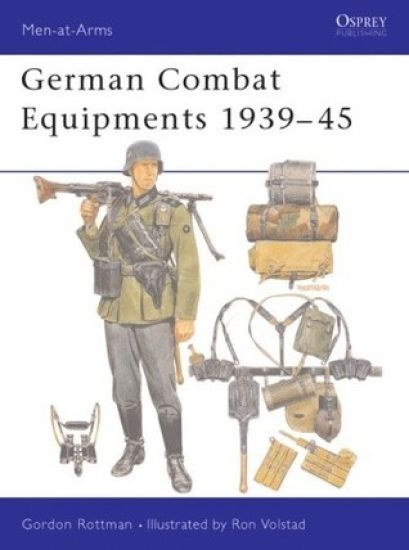
German Combat Equipments 1939–45

German Combat Equipments 1939–45

Gordon L. Rottman

Osprey Publishing
1991
nidottu
The field equipment of the German Army in World War II was closely related to that used throughout World War I and earlier.It was of relatively light weight, ruggedly constructed, well designed, functional, and generally of a high quality, though this deteriorated in the later war years. A high degree of design standardisation was maintained in most categories of equipment, though materials and their colours often varied widely. There were also many different specialisations for the various arms of service as well as theatres of combat, such as the Afrikakorps in the Western Desert.This thorough and illustrated guide investigates all manner of German combat equipments throughout World War II, from belt buckles to magazine pouches.
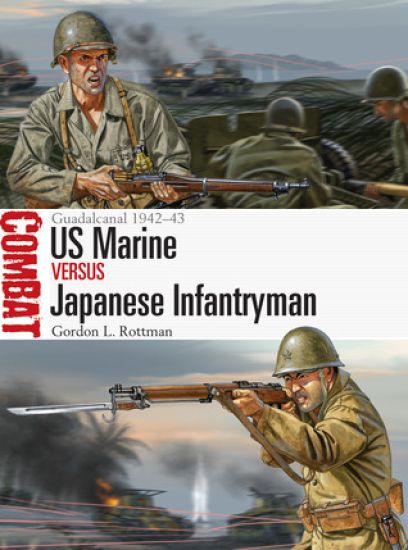
US Marine vs Japanese Infantryman

US Marine vs Japanese Infantryman

Gordon L. Rottman

Osprey Publishing
2014
nidottu
The brutal fighting between US Marines and Japanese infantry on the island of Guadalcanal in many ways came to typify the island-hopping war in the Pacific.This book not only explores the differing tactics and equipment used by the two combatants but also shows how the challenges of fighting in inhospitable tropical jungles impacted on soldiers on the ground, as combatants had to deal not only with their determined opponents but also the twin issues of disease and stretched supply lines.Written by a former special forces veteran with extensive knowledge of jungle warfare, this fully illustrated book lifts the veil on one of the most pivotal and ferocious close combat duels of World War II.
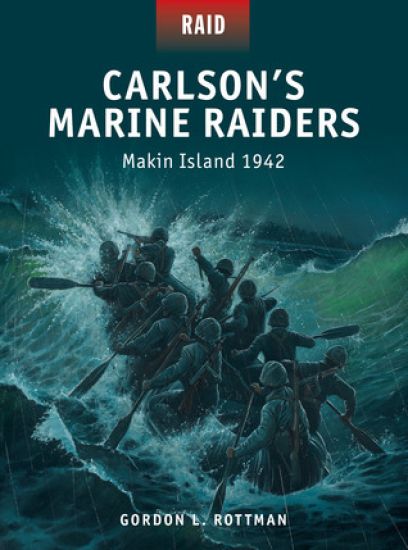
Carlson’s Marine Raiders

Carlson’s Marine Raiders

Gordon L. Rottman

Osprey Publishing
2014
nidottu
On August 17–18, 1942, 211 men of the US Marine Corps’ 2nd Raider Battalion conducted a daring amphibious raid on the Japanese-occupied Makin Island in the South Pacific. This ambitious but flawed operation was intended to divert Japanese reinforcements bound for Guadalcanal, over 1,000 miles to the southwest, in the wake of the US landings there ten days earlier; the Raiders were to destroy the seaplane base and radio station, take prisoners, and collect intelligence. Although yielding limited results, it was to be an invaluable test of the innovative training and tactics employed by the Raiders, and a crucial boost to national morale at this difficult stage in the war. Featuring specially commissioned full-colour artwork and expert analysis, this gripping account of the fateful Makin Raid tells the whole story, from the plan’s conception to its troubled execution and aftermath.
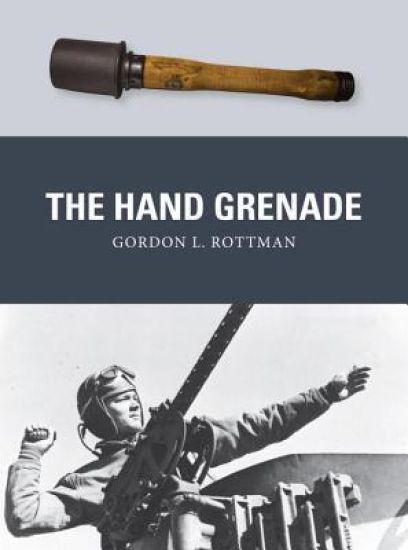
The Hand Grenade

The Hand Grenade

Gordon L. Rottman

Osprey Publishing
2015
nidottu
Allowing the user to inflict damage on his opponent within throwing range without leaving cover, the portable, lethally efficient hand grenade is a ubiquitous weapon of modern warfare, and has now found its way into law-enforcement arsenals too. Featuring specially commissioned full-colour artwork and an array of revealing photographs of grenades in use and in close-up, this engaging study explores and assesses the origins, development, combat use, and lasting legacy of the formidable military hand grenade.
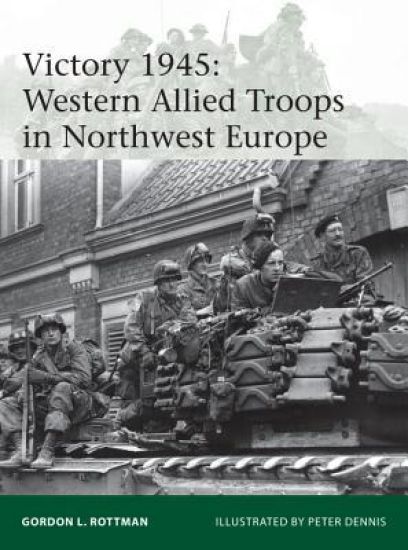
Victory 1945

Victory 1945

Gordon L. Rottman

Osprey Publishing
2015
nidottu
Even when Western Allied troops gained a foothold in Normandy, World War II in Europe was far from over. The route to Germany’s interior and the Nazis final surrender was long, arduous and blood-stained.The Wehrmacht’s stubborn resistance and the shocking losses suffered by US, British, Canadian and ‘Free European’ troops meant that the Allies had to adapt and refine small-unit tactics, battle-drills, and their use of weapons and munitions. The troops who finally met up with the Red Army in Germany were a very different fighting force to the one that struggled up the beaches of northern France. This book offers a comprehensive guide to the late-war Allied troops, exploring their uniforms, equipment, organization and tactics.With emphasis on lessons learned since D-Day, detailed description and accurate colour pictures illustrate the means by which the Allied troops on the ground evolved to the point of winning the war on the Western Front.
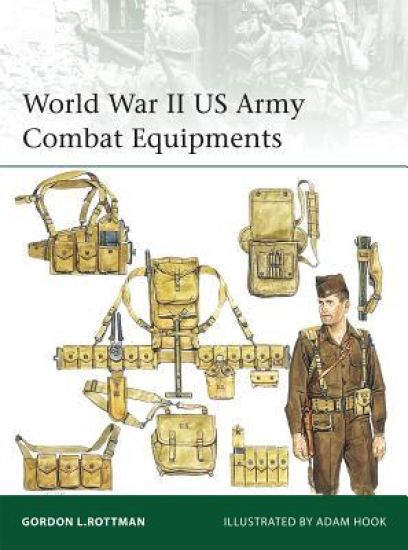
World War II US Army Combat Equipments

World War II US Army Combat Equipments

Gordon L. Rottman

Osprey Publishing
2016
nidottu
Belts, ammo pouches and bags, weapons holsters and cases, canteens, mess and first aid kit, packs, tools and bivouac equipment - a comprehensive illustrated guide to exactly what the World War II GI carried on the battlefield.A soldier’s “web gear” is as important to his ability to live and fight on the battlefield as are his clothing and weapons. In World War II the US Army issued equipment items that had originated in 1910, though modified and augmented in the 1920s and 1930s, and again during the war itself as a result of combat experience.This book describes and illustrates the great majority of the personal equipment provided for infantry riflemen, GIs armed with other weapons and their ammunition-bearers, officers, and medics. In addition to the web gear itself it covers canteens, mess kit, and first aid items; weapons-related and other specialist items; the long struggle to produce a practical backpack; bivouac and shelter gear, and the most commonly carried tools. The text also explains the basics of materials, colors, markings, nomenclature, and weights for the guidance of collectors.It is illustrated with wartime photos and color close-ups, and the wide-ranging color plates specially prepared for this book offer more than 130 images.
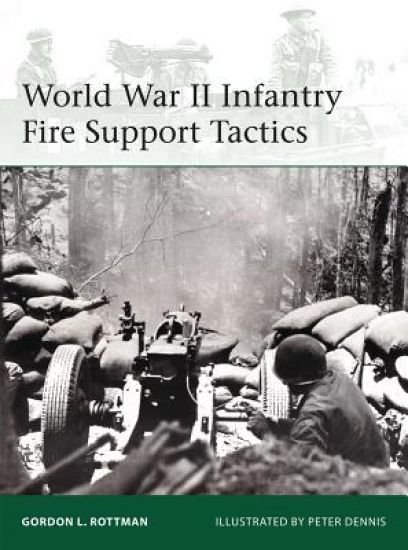
World War II Infantry Fire Support Tactics

World War II Infantry Fire Support Tactics

Gordon L. Rottman

Osprey Publishing
2016
nidottu
As infantry units advanced across Europe the only support they could rely on from day to day was that provided by the heavy weapons of their own units.While thundering tanks struck fear into the hearts of their enemies it was the machine guns, mortars and light cannon that proved to be most important, causing the majority of casualties suffered during World War II. Common principles were shared across units but the wide variety of weapons available to the different armies altered the way they were used in battle.Focusing on the US, British, German and Soviet troops, this title offers a comprehensive guide to infantry fire support tactics used through World War II. Combat reports are complemented by specially commissioned artwork to show the way in which tactics varied, and highlight how developments obliged opposing armies to review their own methods.
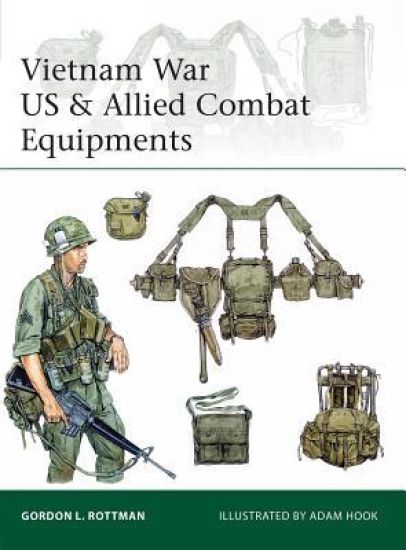
Vietnam War US & Allied Combat Equipments

Vietnam War US & Allied Combat Equipments

Gordon L. Rottman

Osprey Publishing
2017
nidottu
A complete illustrated guide to everything that Vietnam-era American GIs and their allies carried into battle including all the belts, pouches and packs.Over the eight years of the Vietnam War, US forces used three major types of equipment sets, with numerous modifications for particular circumstances. Different equipments were also used by Special Forces, the South Vietnamese, and other allied ground troops. Written by a Special Forces veteran of the conflict, Vietnam War US & Allied Combat Equipments offers a comprehensive examination of the gear that US and allied soldiers had strapped around their bodies, what they contained, and what those items were used for.Fully illustrated with photographs and artwork detailing how each piece of equipment was used, this book will fascinate enthusiasts of military equipment and is an ideal reference guide for re-enactors, modellers and collectors of Vietnam War memorabilia.
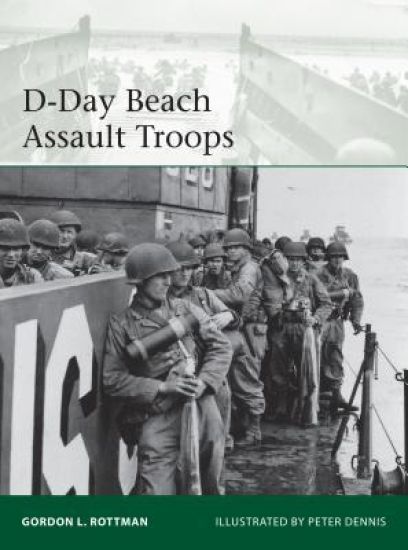
D-Day Beach Assault Troops

D-Day Beach Assault Troops

Gordon L. Rottman

Osprey Publishing
2017
nidottu
In the early hours of June 6, 1944, the first of over 150,000 Allied soldiers stormed five beaches in Normandy against fierce German resistance. They were specially trained and task-organized in a range of different landing teams depending on their means of transport, their tasks, and the resistance they anticipated. The first assault infantry were accompanied by tankers, combat engineers, and other specialist personnel, to breach German obstacles, knock out defensive positions, and to defend and prepare the beaches for the follow-on waves. On some beaches the plans worked, on others they were disrupted by bad weather, faulty timing, or enemy fire, with consequences that varied from survivable confusion to absolute carnage. This is an in-depth study of the uniforms, equipment, weapons, passage, landings, and tactics of US, British and Canadian assault units during the period from before H-Hour on June 6 to dawn on June 7.
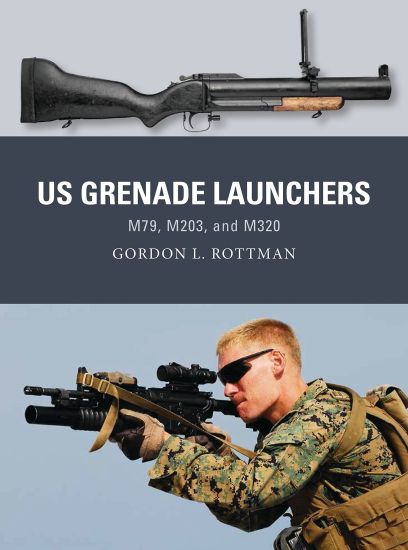
US Grenade Launchers

US Grenade Launchers

Gordon L. Rottman

Osprey Publishing
2017
nidottu
In an effort to provide the US infantryman with more firepower to cover the range gap between the hand grenade and the light mortar, the 40mm M79 grenade launcher – a shoulder-fired, single-shot weapon – entered service with US forces in 1961.Reliable, easy to use, and lethally effective, the M79 soon became an iconic symbol of the Vietnam War and had a profound influence on small-unit tactics. As the Vietnam conflict continued, it was joined on the front line by experimental models such as the magazine-fed T148E1, as well as two launchers intended to be fitted under the barrel of the new M16 assault rifle: Colt’s XM148 and AAI Corporation’s M203. The M203 remains in US Army service today, while the US Marine Corps now also fields the M32 multiple grenade launcher – like the M79, a standalone weapon. Featuring full-colour artwork, this is the story of the rugged and formidable grenade launchers that equipped the United States and its allies in Vietnam and beyond from the 1960s to the present day.
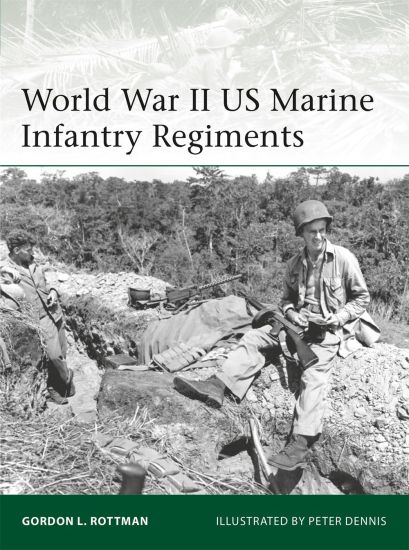
World War II US Marine Infantry Regiments

World War II US Marine Infantry Regiments

Gordon L. Rottman

Osprey Publishing
2018
nidottu
From Guadalcanal to Okinawa, US Marines formed the tip of the spear as Allied forces sought to push the Japanese back to their Home Islands.The United States Marine Corps came into its own in the Pacific Islands campaign against Japan in World War II. This fascinating study tracks the deployments of the various Marine divisions throughout the war and explains their composition, but also goes deeper, to detail the individual regiments – the focus of the marines' identity and pride. It explains the organization of the Marine infantry regiment and its equipment, and how they evolved during the war.The marine infantryman's evolving uniforms, field equipment and weapons are illustrated throughout using specially commissioned artwork and detailed descriptions to produce a fitting portrait of the US military’s elite fighting force in the Pacific.
Vietnam War Booby Traps

Vietnam War Booby Traps

Gordon L. Rottman

Osprey Publishing
2020
nidottu
During the Vietnam War, the Viet Cong were frequently unable to hold their own in stand-up fights against US and allied forces who were superior in strength, firepower, mobility, and logistics. They relied instead on traditional guerrilla warfare tactics including small-scale hit- and-run attacks, ambushes, terrorist actions, and precision attacks against bases. These included one of the oldest of guerrilla weapons – the boobytrap.Booby traps could be made in large numbers in village workshops and jungle camps using locally available materials as well as modern munitions. The VC were adept at making booby traps ‘invisible’ in the varied terrain of Vietnam, often emplacing them in locations and surroundings totally unexpected by their enemies. Booby traps could be incredibly simple or startlingly complex and ingenious, ranging from pointed sticks to command-detonated submerged floating river mines. Besides a wide variety of booby traps, they also used land and water mines, both contact/pressure-detonated and command-detonated. Between January 1965 and June 1970 11 percent of US troop deaths in action and 17 percent of injuries were by caused booby traps and mines.This fascinating title explores not only the wide variety of booby traps employed by the Viet Cong, but also their various uses in halting, stalling, or locating an enemy, and the many evolutions these traps underwent in order to retain the element of surprise. Written by a Vietnam veteran with first-hand experience of such traps, this is an engaging look at one of the most frightening aspects of guerrilla warfare.
World War II River Assault Tactics

World War II River Assault Tactics

Gordon L. Rottman

Osprey Publishing
2013
nidottu
On the major European and Russian fronts throughout World War II, the challenge of crossing rivers under fire was absolutely central to any advance.The Panzers that crossed the Meuse at Sedan in May 1940 cut the French Army in two. The Wehrmacht’s ability to cross the great rivers of the western USSR was vital to the lightning advances of Operation Barbarossa in 1941, and in 1943–45 the Red Army had to drive the Germans back from a succession of river lines during their advance to the Reich, culminating in the Vistula and Oder lines.With World War II armies dependent on heavy mechanized equipment, the function which rivers played became essential for soldiers in all sides of the war. World War II River Assault Tactics details the methods, means and analysis of specific successes and failures.Featuring a wealth of wartime photos, particularly from German sources, and full-colour plates illustrating tactical scenarios, the subject is brought to life.