Kirjojen hintavertailu. Mukana 11 627 064 kirjaa ja 12 kauppaa.

Kirjahaku

Etsi kirjoja tekijän nimen, kirjan nimen tai ISBN:n perusteella.

6 kirjaa tekijältä Gordon M. Shepherd

Foundations of the Neuron Doctrine

Foundations of the Neuron Doctrine

Gordon M. Shepherd

Oxford University Press Inc
2015
sidottu
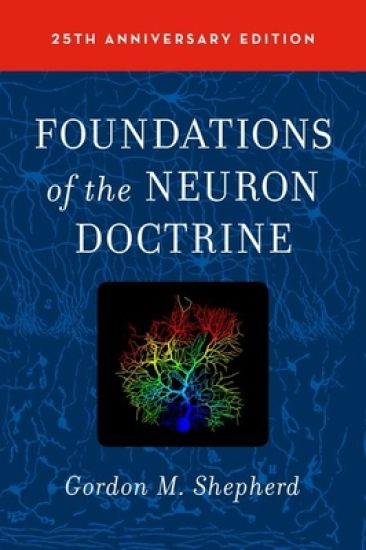
The neuron doctrine, first formulated in 1891, states that the brain is constructed of individual neurons, organized into functioning circuits that mediate behavior. Above all else, this is the main concept that underlies all of modern neuroscience. This 25th Aniversary Edition of The Foundations of the Neuron Doctrine explains how this theory was the product of an explosion of histological studies and vigorous debates near the end of the nineteenth century by an extraordinary group of scientists, most importantly the leading figure of the time, Santiago Ramon y Cajal of Spain, and includes the foremost nervous system investigators of many countries, such as Albrecht Kolliker, Sigmund Freud, Wilhelm His, August Forel, Fritdjof Nansen and Gustav Retzius. The neuron doctrine explains how these eminent scientists used a selective nerve cell stain invented by Camillo Golgi of Italy and followed him in describing the fabulous branching patterns of nerve cells, providing strong evidence that the cells interact as individual units to form circuits. This work also describes how this view was opposed by Golgi, who maintained that the nerve cells form syncytial networks. Studies in the 1950s appeared resoundingly to confirm the nerve cell as an individual unit, as embodied in the neuron doctrine, which became the basis for the rise of concepts of normal and disordered neural function in the remaining 20th century. This 25th Anniversary Edition concludes by discussing how recent studies are showing a much greater degree of complexity in neuronal organization, so that the debate of neuron versus network is again coming to the fore of neuroscience research. Unique to this anniversary edition is the inclusion of commentaries by distinguished leaders in the neurosciences on the continuing relevance of the neuron doctrine for modern studies of the brain at all levels, from genes and molecules to microcircuits, neural networks, and behavior.
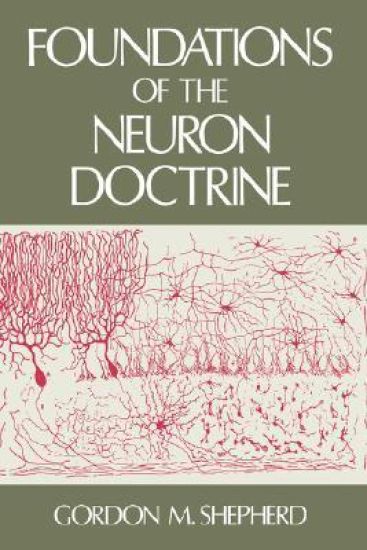
Foundations of the Neuron Doctrine

Foundations of the Neuron Doctrine

Gordon M. Shepherd

Oxford University Press Inc
1992
sidottu
For a century, the neuron doctrine has been the basis for our concepts of nervous organization and brain function, stating that the cell theory applies to the nervous system. Santiago Ramon y Cajal, Spain's greatest scientist, was its main architect; his main tool being a capricious nerve cell stain discovered by Camillo Golgi. This book reviews the original papers on which the neuron doctrine was based, showing that the evidence came from such contributors as Albrecht Kolliker, Sigmund Freud, Wilhelm His, August Forel, Fritdjof Nansen and Gustav Retzius. Many questions were raised which remain relevant today. Electron microscopical studies in the 1950s appeared to confirm the classical doctrine but subsequent studies revealed unsuspected complexities. This book reviews the new studies against the classical work and suggests new directions for revising our concept of the neuron as a basis for the functional organization of the nervous system.
Neurobiology

Neurobiology

Gordon M. Shepherd

Oxford University Press Inc
1994
nidottu
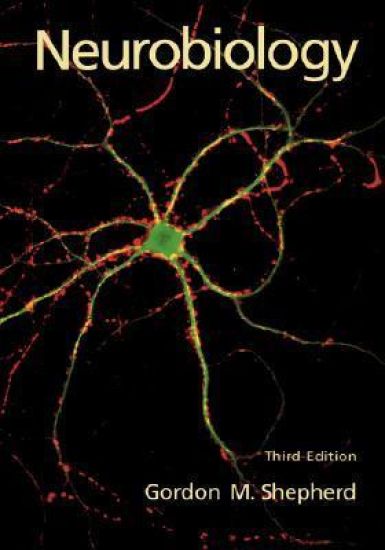
This widely used and highly praised textbook has been extensively revised to reflect the most exciting research across the entire range of neuroscience. A new feature is an introductory discussion of the mechanisms of gene regulation, while the superfamily of molecules responsible for membrane signalling is given new emphasis as a unifying theme throughout molecular and cellular neurobiology. The roles of these molecules in impulse conduction and synaptic transmission are fully explained, and illustrated by computer models. For the first time in a neurobiology text, these mechanisms can be explored by using a state-of-the-art interactive computer program provided with an accompanying tutorial handbook. In the sections dealing with neural systems, the comparative approach continues to be used to illustrate general principles. Students learn about the progress being made toward a molecular basis for sensory perception and new methods for revealing the neural activity underlying sensory and motor functions are described. There is an emphasis on the plasticity of both sensory and the motor circuits in mediating functions that reflect the effects of activity or recovery from injury. Central systems continue to be featured as the culmination of neural evolution. These include the systems vital for all animals, such as sleeping, feeding and reproduction, as well as the systems for language, emotion and higher cognitive functions that reach their peak in humans. There is special emphasis on recent work on memory, contrasting the mechanisms for short-term working memory and long-term memory and summarizing the present understanding of the mechanisms of long-term potential. The twin themes of organizational levels and comparative systems help bring together the vast range of studies and provides a conceptual framework that unifies the field of neurobiology. As in previous editions, the text contnues to draw on the advantages of having a single author. In addition, leaders in a number of specialties have assisted the author, so that the text represents the most up-to-date views of current research on the nervous system.
Neurogastronomy

Neurogastronomy

Gordon M. Shepherd

Columbia University Press
2011
sidottu
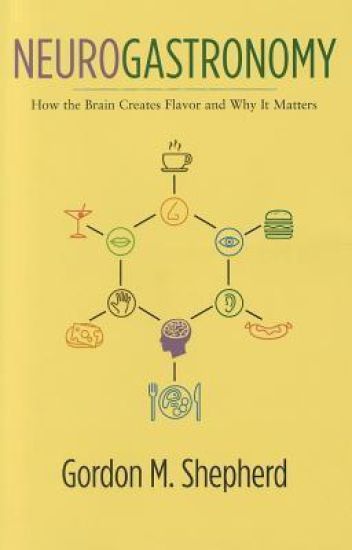
Leading neuroscientist Gordon M. Shepherd embarks on a paradigm-shifting trip through the "human brain flavor system," laying the foundations for a new scientific field: neurogastronomy. Challenging the belief that the sense of smell diminished during human evolution, Shepherd argues that this sense, which constitutes the main component of flavor, is far more powerful and essential than previously believed. Shepherd begins Neurogastronomy with the mechanics of smell, particularly the way it stimulates the nose from the back of the mouth. As we eat, the brain conceptualizes smells as spatial patterns, and from these and the other senses it constructs the perception of flavor. Shepherd then considers the impact of the flavor system on contemporary social, behavioral, and medical issues. He analyzes flavor's engagement with the brain regions that control emotion, food preferences, and cravings, and he even devotes a section to food's role in drug addiction and, building on Marcel Proust's iconic tale of the madeleine, its ability to evoke deep memories. Shepherd connects his research to trends in nutrition, dieting, and obesity, especially the challenges that many face in eating healthily. He concludes with human perceptions of smell and flavor and their relationship to the neural basis of consciousness. Everyone from casual diners and ardent foodies to wine critics, chefs, scholars, and researchers will delight in Shepherd's fascinating, scientific-gastronomic adventures.
Neurogastronomy

Neurogastronomy

Gordon M. Shepherd

Columbia University Press
2013
pokkari
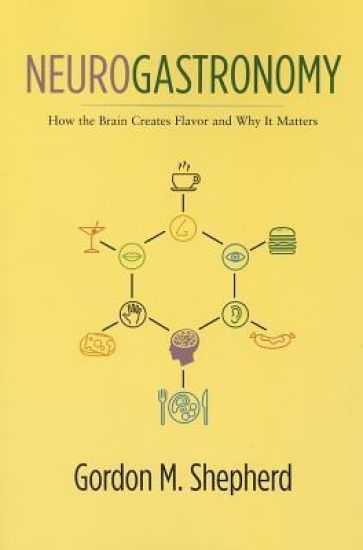
Leading neuroscientist Gordon M. Shepherd embarks on a paradigm-shifting trip through the "human brain flavor system," laying the foundations for a new scientific field: neurogastronomy. Challenging the belief that the sense of smell diminished during human evolution, Shepherd argues that this sense, which constitutes the main component of flavor, is far more powerful and essential than previously believed. Shepherd begins Neurogastronomy with the mechanics of smell, particularly the way it stimulates the nose from the back of the mouth. As we eat, the brain conceptualizes smells as spatial patterns, and from these and the other senses it constructs the perception of flavor. Shepherd then considers the impact of the flavor system on contemporary social, behavioral, and medical issues. He analyzes flavor's engagement with the brain regions that control emotion, food preferences, and cravings, and he even devotes a section to food's role in drug addiction and, building on Marcel Proust's iconic tale of the madeleine, its ability to evoke deep memories. Shepherd connects his research to trends in nutrition, dieting, and obesity, especially the challenges that many face in eating healthily. He concludes with human perceptions of smell and flavor and their relationship to the neural basis of consciousness. Everyone from casual diners and ardent foodies to wine critics, chefs, scholars, and researchers will delight in Shepherd's fascinating, scientific-gastronomic adventures.