Kirjojen hintavertailu. Mukana 11 244 527 kirjaa ja 12 kauppaa.

Kirjahaku

Etsi kirjoja tekijän nimen, kirjan nimen tai ISBN:n perusteella.

47 kirjaa tekijältä Gordon Williamson

The Waffen-SS Handbook 1933-1945

The Waffen-SS Handbook 1933-1945

Gordon Williamson

Sutton Publishing Ltd
2005
nidottu
Originating in Hitler's personal bodyguard, the Waffen-SS (armed SS) was expanded as a fourth branch of the Wehrmacht and became regarded as the tough elite of the German armed forces. Known as Hitler's 'Asphalt Soldiers' they fought on all the main battle-fronts, but most notably in the East against the Soviet Union and in Normandy following 'Overlord'. By the war's end the Waffen-SS could boast almost forty field divisions manned by nearly one million troops. Gordon Williamson describes the organisation, equipment, tactics and personalities of the Waffen-SS in the Second World War. A chronology outlines the major events in the history of the Waffen-SS from the founding of its forerunner, the SS-Verfugungstruppe, until May 1945. The author has travelled to Germany to interview numerous surviving former Waffen-SS soldiers and corresponded with many others, obtaining first-hand accounts of their wartime experiences. The handbook is illustrated with a rich selection of previously unpublished photographs, predominantly from private collections, ranging from studio posed shots to previously unpublished candid snaps and from battlefield pictures to war correspondent action shots.
Companion to the Waffen-SS, 1939-1945

Companion to the Waffen-SS, 1939-1945

Gordon Williamson

The History Press Ltd
2010
nidottu
Originating in Hitler’s personal bodyguard, the Waffen-SS was expanded as a fourth branch of the Wermacht and became regarded as the tough elite of the German Armed Forces. Known as Hitler’s ‘Asphalt Soldiers’ they fought on all main battle-fronts, but most notably in the East against the Soviet Union. Gordon Williamson describes the organisation, equipment, tactics and personalities of the Waffen-SS in the Second World War. The author has travelled to Germany to interview numerous surviving Waffen-SS soldiers and corresponded with many others, obtaining first-hand accounts of their wartime experiences.
German Military Police Units 1939–45

German Military Police Units 1939–45

Gordon Williamson

Osprey Publishing
1989
nidottu
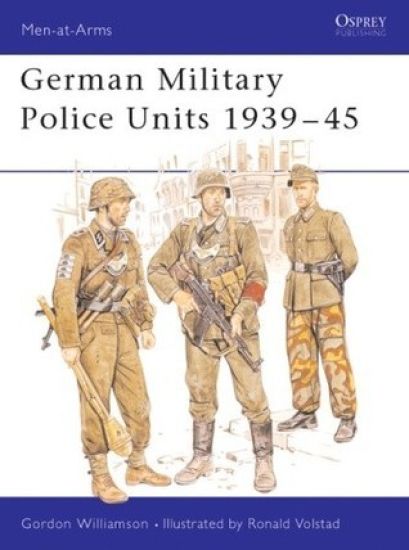
The military policeman must be one of the least appreciated yet most indispensable military figures in modern history.In the mobile warfare of the 20th century no army could keep its vital supply routes open without the military policeman. This book documents the organisation, uniforms and insignia of the many and varied German military police units of World War II.Alongside illustrations throughout, Gordon Williamson discusses their duties, including traffic control; maintaining military order and discipline; collection and escorting prisoners of war; prevention of looting; disarming civilians; checking captured enemy soldiers for documents; collection of fallen enemy propaganda leaflets and providing street patrols in occupied areas.
Hitler's Navy

Hitler's Navy

Gordon Williamson

Osprey Publishing
2022
sidottu
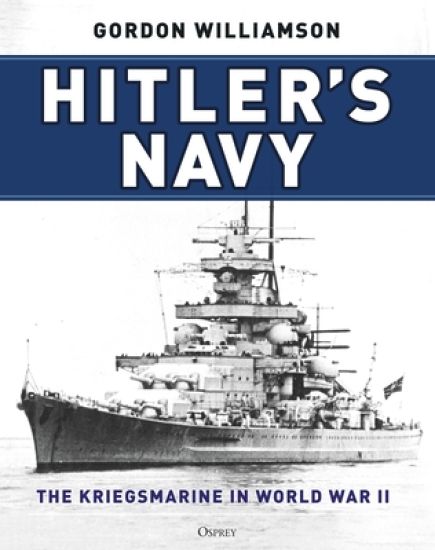
A complete illustrated study of the German Kriegsmarine throughout World War II.Hamstrung at first by the terms of the Treaty of Versailles, during the 1930s, the German Navy underwent a programme of rearmament in defiance of the restrictions, building modern warships under limitations which forced technological innovation. Submarines were strictly prohibited by the treaty, and yet, following years of covert development, they became one of the Kriegsmarine’s most deadly weapons. Blooded in the Spanish Civil War, the surface ships of the Kriegsmarine went on to play a crucial role in the opening salvoes of World War II during the invasions of Poland and Norway, although serious losses here set back plans for the invasion of Britain, and by the end of the war, only a handful of surface vessels remained to be divided up among the Allies. From the beginning of the war, but especially after the fall of France, the dreaded and extraordinarily successful U-boats stalked the Atlantic, threatening vital British shipping convoys and choking off the lifeline of munitions and supply from the US. Once Italy and Japan entered the war, German naval operations expanded to the Mediterranean and the Indian Ocean. This highly illustrated volume is a comprehensive study of the German Navy throughout the war, from pocket battleships to torpedo boats.
U-Boats at War in 100 Objects, 1939-1945

U-Boats at War in 100 Objects, 1939-1945

Gordon Williamson

Frontline Books
2020
sidottu
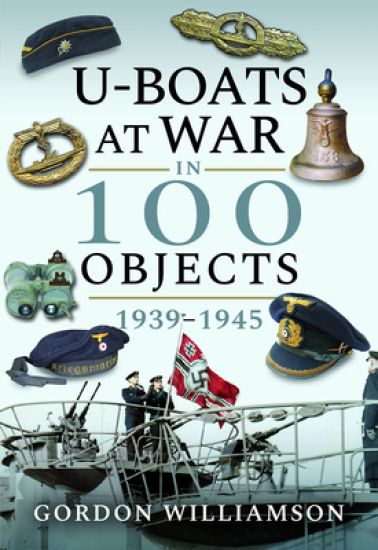
'The only thing that ever really frightened me during the war was the U-boat peril,' wrote Winston Churchill in his history of the Second World War. 'I was even more anxious about this battle than I had been about the glorious air fight called the Battle of Britain." In reality, the Kriegsmarine had been woefully unprepared for the war into which it was thrown. The Command-in-Chief of submarines, Karl Donitz, himself a verteran U-boat captain from the First World War, felt that he could bring Britain to its knees with a fleet of 300 U-Boats. But when war broke out, he had just twenty-four available for operational use. Despite this, the U-Boat arm scored some incredible successes in the early part of the war, raising the status of the submarine commanders and crews to that of national heroes in the eyes of the German people. The 'Grey Wolves' had become super-stars. Small wonder then that the U-Boat war has fascinated students of military history ever since. This book, using a carefully selected range of both wartime images and colour images of surviving U-boat memorabilia from private collections, describes 100 iconic elements of the U-Boat service and its campaigns. The array of objects include important individuals and the major U-Boat types, through to the uniforms and insignias the men wore. The weapons, equipment and technology used are explored, as are the conditions in which the U-boat crews served, from cooking facilities and general hygiene down to the crude toilet facilities. Importantly, the enemy that they faced is also covered, examining the ship-borne and airborne anti-submarine weaponry utilised against the U-boats. The U-Boats began the war, though small in number, more than a match for the Allies and created carnage amongst merchant shipping as well as sinking several major warships. The pace of technological development, however, failed to match that of Allied anti-submarine warfare weaponry and the U-Bootwaffe was ultimately doomed to defeat but not before, at one point, coming close to bringing Britain to its knees.
Kettenhund!

Kettenhund!

Gordon Williamson

Fonthill Media
2014
sidottu
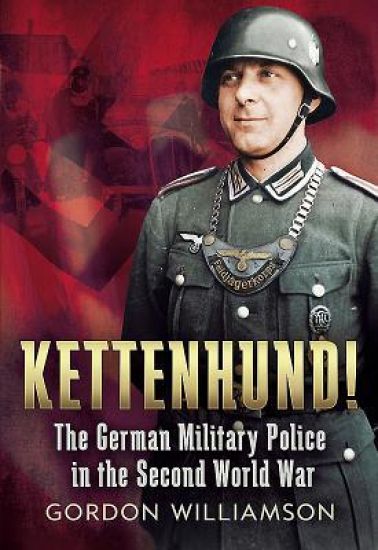
In almost every army in the World, the Military Police rank amongst those who are least liked by other soldiers despite the essential duties that they carry out, often being amongst the first in and last out in any theatre of war. In the German armed forces, however, opinions of the military police were often those of fear as much as dislike, so great were the powers held by these troops. Germany created a plethora of different branches of what were termed 'Ordnungstruppe' - Troops for Maintaining Order. Many wore a distinctive metal gorget plate on a chain around the neck, leading to their pejorative nickname 'Kettenhund' or Chain Dogs. Despite certainly being involved in often brutal treatment of partisans and other unfortunates who fell into their grasp, their skills were sufficiently appreciated by the allies that on Germany's surrender, a number of military police units of the Wehrmacht were allowed to remain in post under allied control to assist in controlling the vast number of now disarmed German troops. Kettenhund!The German Military Police in the Second World War, using primarily previously unpublished photographic material from private sources, provides a detailed study of the organisation of these units and the distinctive uniforms and insignia they wore.
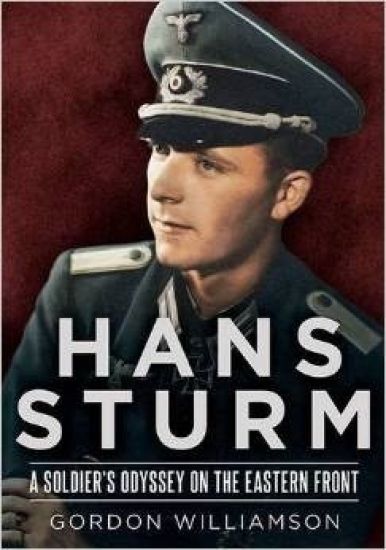
Hans Sturm

Hans Sturm

Gordon Williamson

Fonthill Media
2015
sidottu
There are many biographies of former soldiers of the German Wehrmacht, many of whom had fascinating stories to tell, and several of whom were highly decorated. Few, however, can match Hans Sturm in his astonishing rise from a mere private in an infantry regiment, thrown into the bloody maelstrom of the Eastern Front, to becoming a glorified war hero whose role brought him into direct regular contact with Prominenten of the Third Reich. This young man's fearless heroism in combat earned him some of Germany's highest military awards, and yet he was pugnaciously outspoken about bullying and injustice. From striking a member of the feared Sicherheitsdienst in defence of a Jewish woman to refusing to wear a decoration he felt was tainted by its encouragement of inhumane treatment of enemy partisans, Sturm repeatedly stuck to his moral values no matter what the risk. But even when the war was finally over, his travails did not end: he was held in a number of Soviet labour camps, before finally being released in 1953. Hans Sturm: A Soldier's Odyssey on the Eastern Front is an engaging reconstruction of events based on exchanges of correspondence and reminiscences between the author and Hans Sturm himself. It vividly portrays not only a German soldier's experience on the Eastern Front, but the intriguing trajectories that success in the battlefield yielded for him at home under the Nazi regime.
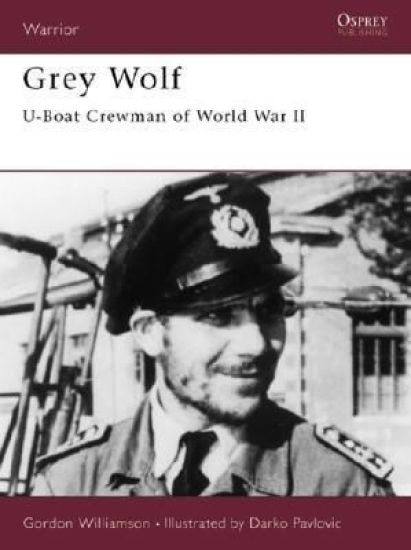
Grey Wolf

Grey Wolf

Gordon Williamson

Osprey Publishing
2001
nidottu
There have been few military formations in history which have elicited such mixed reactions as the U-Boat Waffe of Hitler's Kriegsmarine. Often seen by those seamen who suffered the predations of Grossadmiral Donitz's "Grey Wolfs" as some sort of sadistic monsters, the men of the U-boat arm in fact fought a war which saw a remarkable level of old-fashioned chivalry. This title takes us into the life of a typical World War II German navy U-boat crewman, serving on a type VIIc U-boat. It charts his recruitment, training, service conditions and combat experiences from 1939 to the war's end - and includes some surprising tales of how such sailors were deployed in the final days of the war.
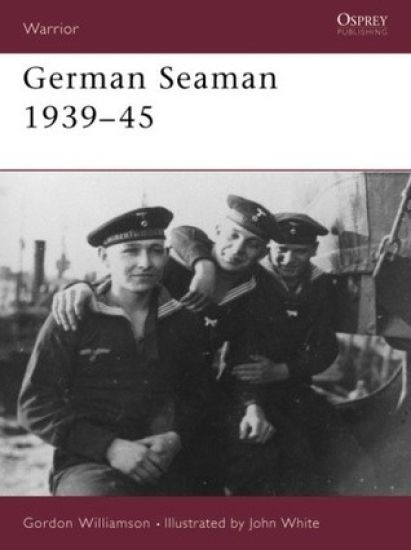
German Seaman 1939–45

German Seaman 1939–45

Gordon Williamson

Osprey Publishing
2001
nidottu
When re-armament came after World War I, the German Navy was forced to build anew, so the Reichsmarine and its successor, the Kriegsmarine, found itself in possession of some of the most modern, powerful and technically advanced vessels in the world. Germany was very selective in picking her sailors and the quality of manpower skill levels was thus very high. This volume charts the recruitment, training, service conditions and combat experiences of a typical World War II German sailor, focusing on the main branches of the Navy - the Coastal Craft (Minesweepers, S-Boats), the Destroyers, the Cruisers, the Capital Ships, the Coastal Artillery and the tiny but fascinating "Miscellaneous" units such as the "K-Verband" (Naval Commandos) -as well as the last ditch effort units thrown into action as Infantry in the final days of the war.
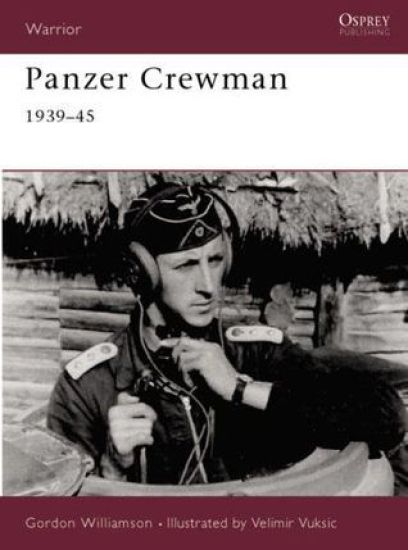
Panzer Crewman 1939–45

Panzer Crewman 1939–45

Gordon Williamson

Osprey Publishing
2002
nidottu
In World War II the Panzer spearheaded every major battle, compaign or battle from the invasions of Poland and France in the "Blitzkrieg", to the last great counter-offensive in the Ardennes. Germany's Panzer crews fought on every front and along the way had earned a formidable reputation for elan in the attack and steadfastness in defence. This book charts the recruitment, training, service conditions and combat experience of a typical World War II German tank crewman, serving on various fronts - from the scorching heat of the Western Desert to the frozen tundra of the Eastern Front. It features unpublished photographs which have come from two main sources - private collectors and Panzer veterans themselves.
World War II German Battle Insignia

World War II German Battle Insignia

Gordon Williamson

Osprey Publishing
2002
nidottu
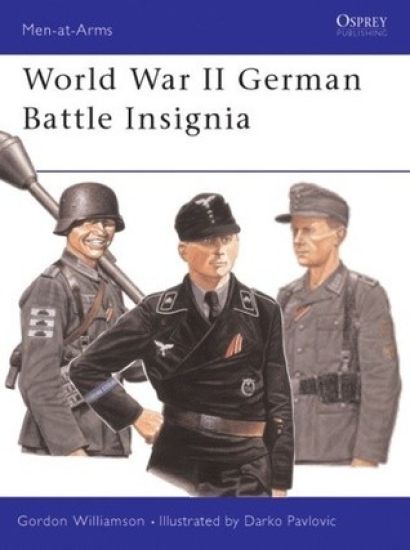
One of the unique features of German armed forces uniforms in World War II was the number and range of insignia, both of metal and cloth, which were worn on combat uniforms. These were officially awarded to mark a man's participation in particular campaigns and battles, his length of front line service, or particular achievements. This book lists, explains, describes and illustrates in detail the arm shields, cuff titles, medals, and battle badges worn by the German Army, Luftwaffe and Waffen-SS ground troops from 1939-45, including a number of rare and controversial insignia.
U-boats of the Kaiser's Navy

U-boats of the Kaiser's Navy

Gordon Williamson

Osprey Publishing
2002
nidottu
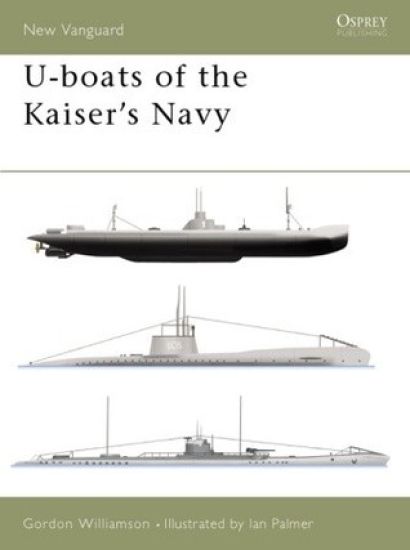
As was the case in World War II, one of the greatest threats to Britain during World War I was the German U-Boat menace. Gordon Williamson traces the development of the U-Boat from the Brandtaucher, designed by Wilhelm Bauer, the father of the German submarine arm, in 1850, through to the commissioning of Germany's first U-Boat to go into service, the U-1, in 1906. All of the main types of World War I U-Boat are then covered. The operational history of the U-Boat service is also covered in some depth. Included are details of the campaigns in the Atlantic and Mediterranean, along with the slow build-up of anti-submarine measures by the allies.
Kriegsmarine U-boats 1939–45 (1)

Kriegsmarine U-boats 1939–45 (1)

Gordon Williamson

Osprey Publishing
2002
nidottu
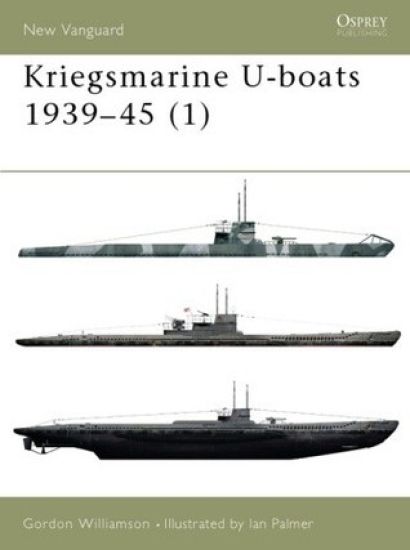
This, the first of two volumes on Germany's World War II U-boats, traces their development through: the early U-boats of the Kaiser's navy; the prohibition on Germany having U-boats following the Armistice in 1918 and the subsequent Treaty of Versailles; the secret development of U-boats using a "cover-firm" in Holland; and culminating in the formation of the 1st U-boat Flotilla in 1935 with the modern Type II. The operational history section includes examples from the classes Type VIIA, Type VIIB, VIID, VIIE and VIIF before concentrating on the mainstay of the U-boat arm, the Type VIIC. Comparisons are also made with the standard Allied submarines, their strength and weakness and U-boat tactics.
Kriegsmarine U-boats 1939–45 (2)

Kriegsmarine U-boats 1939–45 (2)

Gordon Williamson

Osprey Publishing
2002
nidottu
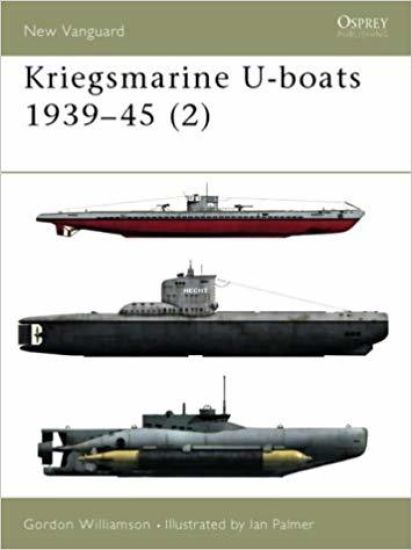
This title follows on from Volume I and charts the continuing development of the U-boat in German service. This includes the development of the Type IX as a long range 'cruiser' intended for solo operations in distant waters. Also covered is the revolutionary Type XXI, conceived of in 1942 and launched in April 1944, the first true submarine rather than submersible, whose arrival was just too late to influence the war. Other vessels included are the Type XXIII, small and armed with only two torpedoes but technically highly advanced, and the Type X minelayers. These were rarely used in their intended role and were more often used as supply boats.
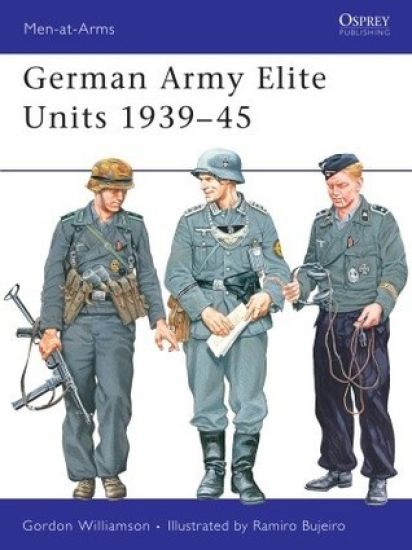
German Army Elite Units 1939–45

German Army Elite Units 1939–45

Gordon Williamson

Osprey Publishing
2002
nidottu
A number of German regiments and divisions, including the famous 21 Panzer Division and the Panzer Lehr Division, were considered "elite". This status was usually marked by the award of a special badge or another uniform distinction. This title looks at these special uniform distinctions, along with the organization, most important actions and leading personalities of the most famous regiments and divisions of the World War II Wehrmacht.
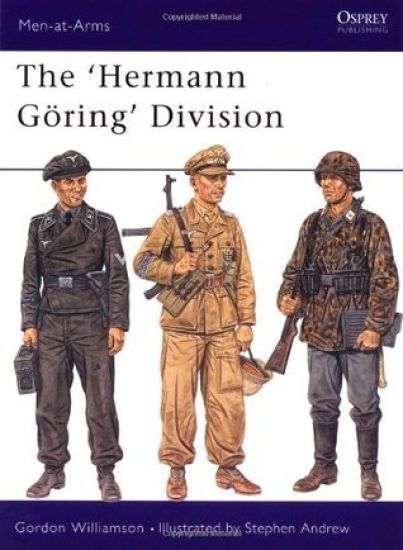
The Hermann Göring Division

The Hermann Göring Division

Gordon Williamson

Osprey Publishing
2003
nidottu
The unit named after the Reichsmarschall started out as a Prussian Police regiment under Goring's control during the period of consolidation of Nazi power. With the outbreak of war it became a ground combat unit of his Luftwaffe; and was steadily increased in size and equipment until it became an armoured division, and by 1945 - nominally - a "Parachute Armoured Corps" of two-division strength. This work describes the organization, battle history and uniforms of this crack unit.
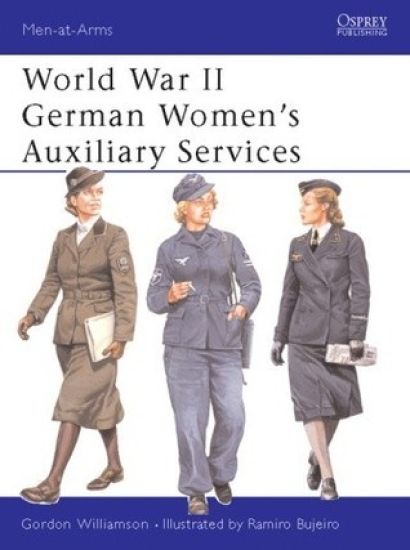
World War II German Women’s Auxiliary Services

World War II German Women’s Auxiliary Services

Gordon Williamson

Osprey Publishing
2003
nidottu
In Nazi Germany the place of women was in the home as wife and mother. German women we taught that their duty in life was to have as many children as possible and look after their husband. However, with the war taking men away to fight women were needed as workers. A number of women served in Germany's auxiliarty services which supported the Wehrmacht in World War II. This book looks at the organisation, duties, and special uniforms of these women who who served with all four armed services, and several other organisations, under the Third Reich.
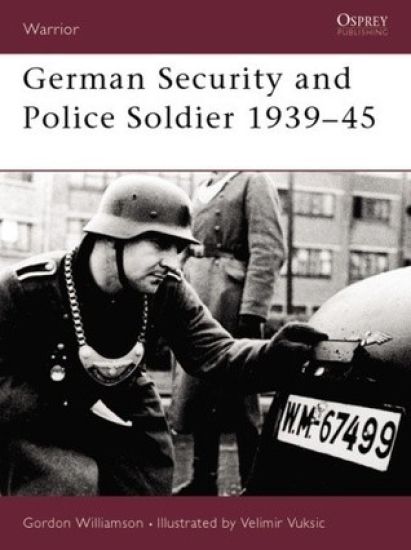
German Security and Police Soldier 1939–45

German Security and Police Soldier 1939–45

Gordon Williamson

Osprey Publishing
2002
nidottu
The security units of the Third Reich were many and diverse, yet often an oversimplified view is projected of these organizations. This title provides a detailed and informed picture of the variety of operations and duties, as well as the motivation and behaviour of the men involved. It charts the experiences of typical World War II security forces and police soldiers - from the routine of military traffic duty, to combating partisans and resistance fighters. It covers the military police of the armed forces proper and the Waffen-SS, the combat units of the German State Police, the SD Sicherheitsdienst, the Schutzmannschaft units and the extreme and dreaded anti-partisan units "Dirlewanger" and "Kaminski".
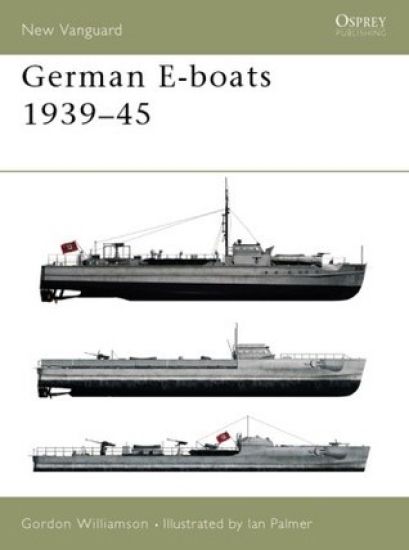
German E-boats 1939–45

German E-boats 1939–45

Gordon Williamson

Osprey Publishing
2002
nidottu
By the outbreak of World War II, Germany had done much to replace the Kaiser's High Seas Fleet, which was scuttled following the German surrender at the end of World War I. Forced to build her fleet anew, although small, the Kriegsmarine possessed some of the most modern and technically innovative warships in existence. Although the heavy units of the fleet were too small in number to pose much of a threat to huge fleets such as the Royal Navy, Germany was particularly well served by her Navy's smaller vessels, in particular two specific branches - the U-Boats and the S-Boats. Known to the allies as the E-Boats (E being indicative of 'Enemy'), they performed sterling duties in both the Black Sea and the English Channel, where they became a particular scourge. Their achievements can also be gauged by the high number of successful commanders who were decorated with the Knight's Cross of the Iron Cross, in recognition of the tonnage they had sunk.
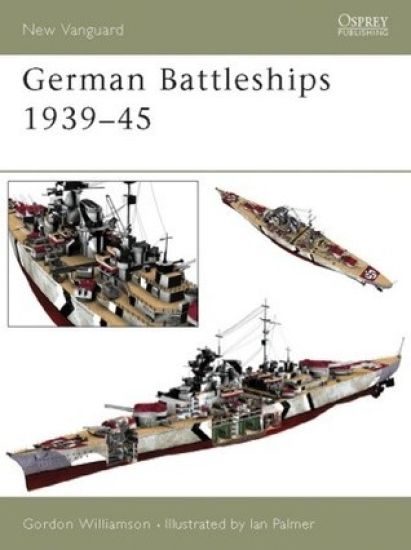
German Battleships 1939–45

German Battleships 1939–45

Gordon Williamson

Osprey Publishing
2003
nidottu
This series covers the capital ships of the German Navy of World War II, this volume examines the design, development and operational use of the battleships used by the Kriegsmarine. The "Schlesien" and "Schleswig-Holstein" were used mostly as training ships until the end of the war when they took part in bombardment of Soviet troop movements in East Prussia. Bismarck's short but glorious career and Tirpitz's lonely vigil in Norway's distant fjords until sunk by RAF bombers using the massive "Tallboy" bombs are also covered.