

Kirjahaku
Etsi kirjoja tekijän nimen, kirjan nimen tai ISBN:n perusteella.
10 kirjaa tekijältä Gottfried Martin

First published in 1961, An Introduction to General Metaphysics presents Gottfried Martin’s careful study of many of the passages in Plato and Aristotle which deal with metaphysical problems and in particular with the Platonic Theory of Ideas. He has traced the development of the theory both in early works and in late works such as the Parmenides and the Sophistes; and with equal care he has studied the relative passages in Aristotle’s Metaphysics. He has quoted many of these passages at length and has offered a careful account and analysis of the progress of Plato’s thought. He has also discussed in a very interesting way the main passages relative to Aristotle’s criticism of Plato’s Theory of Ideas. This book is a must read for any student of Greek Philosophy and Philosophy in general.

First published in 1961, An Introduction to General Metaphysics presents Gottfried Martin’s careful study of many of the passages in Plato and Aristotle which deal with metaphysical problems and in particular with the Platonic Theory of Ideas. He has traced the development of the theory both in early works and in late works such as the Parmenides and the Sophistes; and with equal care he has studied the relative passages in Aristotle’s Metaphysics. He has quoted many of these passages at length and has offered a careful account and analysis of the progress of Plato’s thought. He has also discussed in a very interesting way the main passages relative to Aristotle’s criticism of Plato’s Theory of Ideas. This book is a must read for any student of Greek Philosophy and Philosophy in general.






Keine ausführliche Beschreibung für "Wilhelm von Ockham" verfügbar.
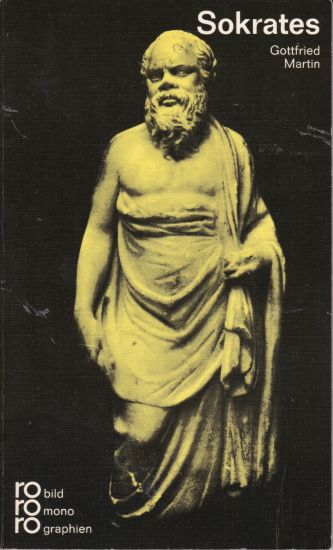
Sokrates nimmt ein Wort auf, das die Athener von ihm sagten und charakterisiert sich selbst damit: ?Unergründlich bin ich und ich bringe es dahin, daß die Menschen nicht mehr weiter wissen?. Dies Wort ist mit griechischer Treffsicherheit geprägt und nicht leicht zu übersetzen. Schleiermacher gibt folgende Übersetzung: ?Wisse dann, dem ist so. Verrate mich aber nicht damit gegen die andern, denn es weiß niemand von mir, Freund, daß ich diese Kunst besitze. Da es nun die Leute nicht wissen: so sagen sie mir auch dieses zwar nicht nach, wohl aber, daß ich der wunderlichste aller Menschen wäre und alle in Verwirrung brächte. Gewiß hast du das auch gehört?? (?Theaitetos? 149 a / IV, 113.)