Kirjojen hintavertailu. Mukana 11 244 527 kirjaa ja 12 kauppaa.

Kirjahaku

Etsi kirjoja tekijän nimen, kirjan nimen tai ISBN:n perusteella.

3 kirjaa tekijältä Govind Gopakumar

Installing Automobility

Installing Automobility

Govind Gopakumar

MIT Press
2020
pokkari
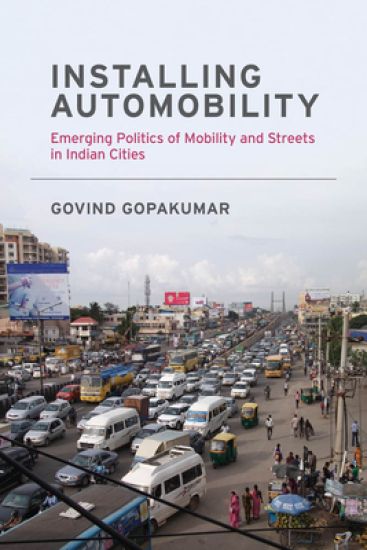
An examination of the process of prioritizing private motorized transportation in Bengaluru, a rapidly growing megacity of the Global South.Automobiles and their associated infrastructures, deeply embedded in Western cities, have become a rapidly growing presence in the mega-cities of the Global South. Streets once crowded with pedestrians, pushcarts, vendors, and bicyclists are now choked with motor vehicles, many of them private automobiles. In this book, Govind Gopakumar examines this shift, analyzing the phenomenon of automobility in Bengaluru (formerly known as Bangalore), a rapidly growing city of about ten million people in southern India. He finds that the advent of automobility in Bengaluru has privileged the mobility needs of the elite while marginalizing those of the rest of the population. Gopakumar connects Bengaluru's burgeoning automobility to the city's history and to the spatial, technological, and social interventions of a variety of urban actors. Automobility becomes a juggernaut, threatening to reorder the city to enhance automotive travel. He discusses the evolution of congestion and urban change in Bengaluru; the "regimes of congestion" that emerge to address the issue; an "infrastructurescape" that shapes the mobile behavior of all residents but is largely governed by the privileged; and the enfranchisement of an "automotive citizenship" (and the disenfranchisement of non-automobile-using publics). Gopakumar also finds that automobility in Bengaluru faces ongoing challenges from such diverse sources as waste flows, popular religiosity, and political leadership. These challenges, however, introduce messiness without upsetting automobility. He therefore calls for efforts to displace automobility that are grounded in reordering the mobility regime, relandscaping the city and its infrastructures, and reclaiming streets for other uses.
Transforming Urban Water Supplies in India
The absence of water supply infrastructure is a critical issue that affects the sustainability of cities in the developing world and the quality of life of millions of people living in these cities. Urban India has probably the largest concentration of people in the world lacking safe access to these infrastructures.This book is a unique study of the politics of water supply infrastructures in three metropolitan cities in contemporary India – Bangalore, Chennai and Kochi. It examines the process of change in water supply infrastructure initiated by notable Public Private Partnership’s efforts in these three cities to reveal the complexity of state-society relations in India at multiple levels – at the state, city and neighbourhood levels. Using a comparative methodology, the book develops as understanding of the changes in the production of reform water policy in contemporary India and its reception at the sub-national (state) level. It goes on to examine the governance of regimes of water supply in Bangalore, Chennai and Kochi, and evaluates the role of the partnerships in reforming water supply. The book is a useful contribution to studies on Urban Development and South Asian Politics.
Transforming Urban Water Supplies in India
The absence of water supply infrastructure is a critical issue that affects the sustainability of cities in the developing world and the quality of life of millions of people living in these cities. Urban India has probably the largest concentration of people in the world lacking safe access to these infrastructures.This book is a unique study of the politics of water supply infrastructures in three metropolitan cities in contemporary India – Bangalore, Chennai and Kochi. It examines the process of change in water supply infrastructure initiated by notable Public Private Partnership’s efforts in these three cities to reveal the complexity of state-society relations in India at multiple levels – at the state, city and neighbourhood levels. Using a comparative methodology, the book develops as understanding of the changes in the production of reform water policy in contemporary India and its reception at the sub-national (state) level. It goes on to examine the governance of regimes of water supply in Bangalore, Chennai and Kochi, and evaluates the role of the partnerships in reforming water supply. The book is a useful contribution to studies on Urban Development and South Asian Politics.