Kirjojen hintavertailu. Mukana 11 342 296 kirjaa ja 12 kauppaa.

Kirjahaku

Etsi kirjoja tekijän nimen, kirjan nimen tai ISBN:n perusteella.

7 kirjaa tekijältä Graeme Morton

Weather, Migration and the Scottish Diaspora
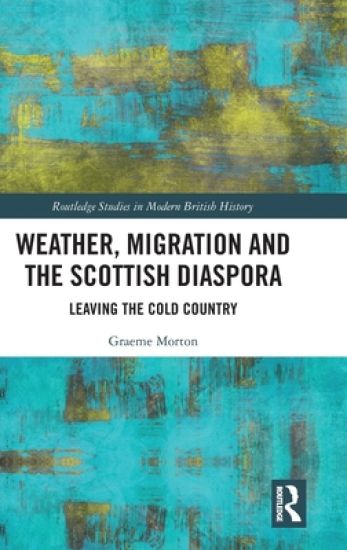
Why did large numbers of Scots leave a temperate climate to live permanently in parts of the world where greater temperature extreme was the norm? The long nineteenth century was a period consistently cooler than now, and Scotland remains the coldest of the British nations. Nineteenth-century meteorologists turned to environmental determinism to explain the persistence of agricultural shortage and to identify the atmospheric conditions that exacerbated the incidence of death and disease in the towns. In these cases, the logic of emigration and the benefits of an alternative climate were compelling. Emigration agents portrayed their favoured climate in order to pull migrants in their direction. The climate reasons, pressures and incentives that resulted in the movement of people have been neither straightforward nor uniform. There are known structural features that contextualize the migration experience, chief among them being economic and demographic factors. By building on the work of historical climatologists, and the availability of long-run climate data, for the first time the emigration history of Scotland is examined through the lens of the nation’s climate. In significant per capita numbers, the Scots left the cold country behind; yet the ‘homeland’ remained an unbreakable connection for the diaspora.
Weather, Migration and the Scottish Diaspora

Weather, Migration and the Scottish Diaspora

Graeme Morton

TAYLOR FRANCIS LTD
2022
nidottu
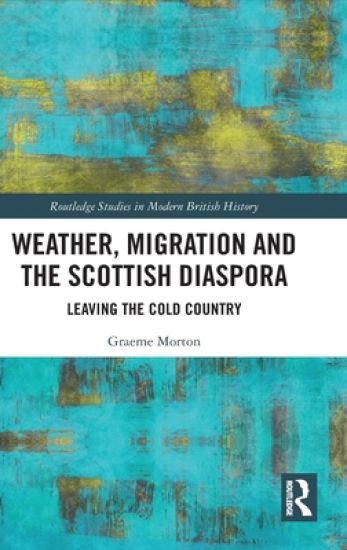
Why did large numbers of Scots leave a temperate climate to live permanently in parts of the world where greater temperature extreme was the norm? The long nineteenth century was a period consistently cooler than now, and Scotland remains the coldest of the British nations. Nineteenth-century meteorologists turned to environmental determinism to explain the persistence of agricultural shortage and to identify the atmospheric conditions that exacerbated the incidence of death and disease in the towns. In these cases, the logic of emigration and the benefits of an alternative climate were compelling. Emigration agents portrayed their favoured climate in order to pull migrants in their direction. The climate reasons, pressures and incentives that resulted in the movement of people have been neither straightforward nor uniform. There are known structural features that contextualize the migration experience, chief among them being economic and demographic factors. By building on the work of historical climatologists, and the availability of long-run climate data, for the first time the emigration history of Scotland is examined through the lens of the nation’s climate. In significant per capita numbers, the Scots left the cold country behind; yet the ‘homeland’ remained an unbreakable connection for the diaspora.
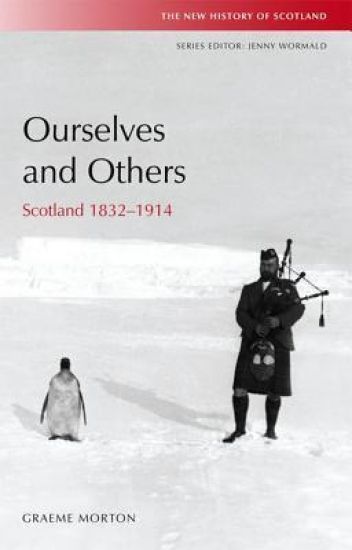
Ourselves and Others

Ourselves and Others

Graeme Morton

Edinburgh University Press
2012
sidottu
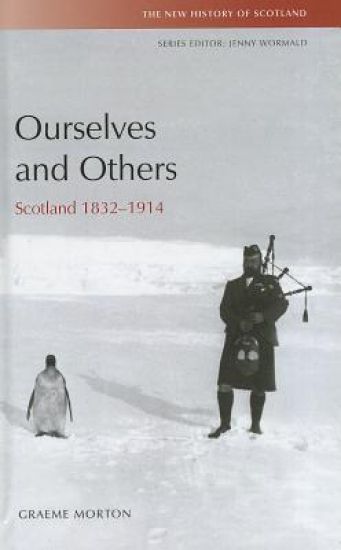
What did it mean to be a Scot in an age marked by the movement of people and the flow of information? This revised and updated volume of the "New History of Scotland" series explores a period of intense identity formation in Scotland. Examining the 'us and them' mentality, it delivers an account of the blended nature of Scottish society through the transformations of the industrial era from 1832 to 1914. Alongside the history of Scotland's national identity, and its linked political and social institutions, is an account of the changing nature of society within Scotland and the relentless eddy of historical developments from home and away. Where previous histories of this period have focused on industry, this book will take a closer look at the people that helped to form Scottish national identity. Graeme Morton shows that identity was a key element in explaining Industrial Scotland, charting the interplay between the micro and the macro and merging the histories of the Scots and the Scottish nation. Key features: popular and well-liked student series; completely updated and revised with new research; and, charts the birth of modern Scottish identity.
Ourselves and Others

Ourselves and Others

Graeme Morton

Edinburgh University Press
2012
nidottu
What did it mean to be a Scot in an age marked by the movement of people and the flow of information? This revised and updated volume of the "New History of Scotland" series explores a period of intense identity formation in Scotland. Examining the 'us and them' mentality, it delivers an account of the blended nature of Scottish society through the transformations of the industrial era from 1832 to 1914. Alongside the history of Scotland's national identity, and its linked political and social institutions, is an account of the changing nature of society within Scotland and the relentless eddy of historical developments from home and away. Where previous histories of this period have focused on industry, this book will take a closer look at the people that helped to form Scottish national identity. Graeme Morton shows that identity was a key element in explaining Industrial Scotland, charting the interplay between the micro and the macro and merging the histories of the Scots and the Scottish nation. Key features: popular and well-liked student series; completely updated and revised with new research; and, charts the birth of modern Scottish identity.
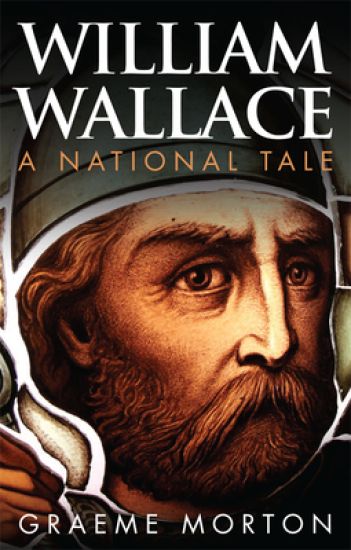
William Wallace

William Wallace

Graeme Morton

Edinburgh University Press
2014
sidottu
A deconstruction of the national biography and mythology of William WallaceFreed from the historian's bedrock of empiricism by a lack of corroborative sources, the biography of this short-lived late-medieval patriot has long been incorporated into the ideology of nationalism. It is to explain this assimilation, and to deconstruct the myriad ways that Wallace's biography has been endlessly refreshed as a national narrative, over many generations, that forms this investigation.William Wallace: A National Tale examines the elision of Wallace's after-life into narrative ascendency, dominating the ideology and politics of nationalism in Scotland. This narrative is conceptualised as the national tale, a term taken out of its literary moorings to scrutinise how the personal biography of a medieval patriot has been evoked and presented as the nation's biography over seven centuries of time. Through the verse of Blind Hary, the romance of Jane Porter, to the historical imaginations of Braveheart and Brave, Scotland's national tale has been forged. This is a fresh, engaging and timely exploration into Wallace's hold over Scotland's national mythology.Key FeaturesReappraises William Wallace as a national figureBrings Wallace into the 2014 debateExplores Wallace variously as: A Protestant; A Scottish Chief; A Romantic Hero; a Hollywood HeroExamines Scotland's obsession with the need for a national hero
William Wallace

William Wallace

Graeme Morton

Edinburgh University Press
2014
nidottu
This book investigates the impact of the ever-changing story of William Wallace on Scottish national identity. Freed from the historian's bedrock of empiricism by a lack of corroborative sources, the biography of this short-lived late-medieval patriot has long been incorporated into the ideology of nationalism. It is to explain this assimilation, and to deconstruct the myriad ways that Wallace's biography has been endlessly refreshed as a national narrative, over many generations, that forms this investigation. William Wallace: A National Tale examines the elision of Wallace's after-life into narrative ascendency, dominating the ideology and politics of nationalism in Scotland. This narrative is conceptualised as the national tale, a term taken out of its literary moorings to scrutinise how the personal biography of a medieval patriot has been evoked and presented as the nation's biography over seven centuries of time. Through the verse of Blind Harry, the romance of Jane Porter, to the historical imaginations of Braveheart and Brave, Scotland's national tale has been forged. This is a fresh, engaging and timely exploration into Wallace's hold over Scotland's national mythology. It reappraises William Wallace as a national figure. It explores Wallace variously as: A Protestant, A Scottish Chief, A Romantic Hero, and a Hollywood Hero. It examines Scotland's obsession with the need for a national hero.
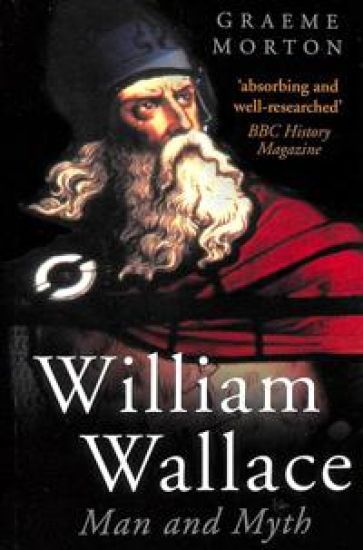
William Wallace: Man and Myth

William Wallace: Man and Myth

Graeme Morton

The History Press Ltd
2004
nidottu
Based on original research, Graeme Morton examines both the contemporary sources available on William Wallace's life and the way the Wallace myth has been constructed, communicated and appropriated from his death in 1305 right up to the present day.