This book provides a broad and yet in-depth overview on migration and crime. It includes classic pieces from different disciplines (such as criminal justice, sociology, psychology and political science) that examine a variety of topics (such as hate crimes, organized crime, trafficking, victimization issues, reporting issues, policing and incarceration issues and conceptual paradigms) in a variety of locations (such as the USA, Israel, Europe, Japan and Jamaica) with both qualitative and quantitative methodologies.
Punishment occupies a central place in our lives and attitudes. We suffer a profound ambivalence about its moral consequences. Persons who have been punished or are liable to be punished have long objected to the legitimacy of punishment. We are all objects of punishment, yet we are also its users. Our ambivalence is so profound that not only do we punish others, but we punish ourselves as well. We view those who submit too willingly to punishment as "obedient" verging on the groveling coward, and we view those who resist punishment as "disobedient," rebels. In The Punishment Response Graeme Newman describes the uses of punishment and how these uses change over time.Some argue that punishment promotes discrimination and divisiveness in society. Others claim that it is through punishment that order and legitimacy are upheld. It is important that punishment is understood as neither one nor the other; it is both. This point, simple though it seems, has never really been addressed. This is why Newman claims we wax and wane in our uses of punishment; why punishing institutions are clogged by bureaucracy; why the death penalty comes and goes like the tide.Graeme Newman emphasizes that punishment is a cultural process and also a mechanism of particular institutions, of which criminal law is but one. Because academic discussions of punishment have been confined to legalistic preoccupations, much of the policy and justification of punishment have been based on discussions of extreme cases. The use of punishment in the sphere of crime is an extreme unto itself, since crime is a minor aspect of daily life. The uses of punishment, and the moral justifications for punishment within the family and school have rarely been considered, certainly not to the exhaustive extent that criminal law has been in this outstanding work.
Punishment occupies a central place in our lives and attitudes. We suffer a profound ambivalence about its moral consequences. Persons who have been punished or are liable to be punished have long objected to the legitimacy of punishment. We are all objects of punishment, yet we are also its users. Our ambivalence is so profound that not only do we punish others, but we punish ourselves as well. We view those who submit too willingly to punishment as "obedient" verging on the groveling coward, and we view those who resist punishment as "disobedient," rebels. In The Punishment Response Graeme Newman describes the uses of punishment and how these uses change over time.Some argue that punishment promotes discrimination and divisiveness in society. Others claim that it is through punishment that order and legitimacy are upheld. It is important that punishment is understood as neither one nor the other; it is both. This point, simple though it seems, has never really been addressed. This is why Newman claims we wax and wane in our uses of punishment; why punishing institutions are clogged by bureaucracy; why the death penalty comes and goes like the tide.Graeme Newman emphasizes that punishment is a cultural process and also a mechanism of particular institutions, of which criminal law is but one. Because academic discussions of punishment have been confined to legalistic preoccupations, much of the policy and justification of punishment have been based on discussions of extreme cases. The use of punishment in the sphere of crime is an extreme unto itself, since crime is a minor aspect of daily life. The uses of punishment, and the moral justifications for punishment within the family and school have rarely been considered, certainly not to the exhaustive extent that criminal law has been in this outstanding work.
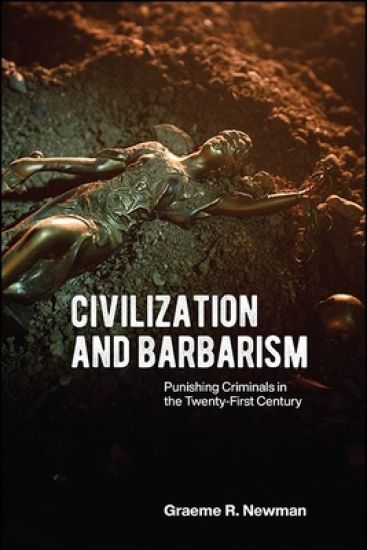
Challenges the established corrections paradigm and argues for replacing mass incarceration with a viable and more humane alternative.The practice of mass incarceration has come under increasing criticism by criminologists and corrections experts who, nevertheless, find themselves at a loss when it comes to offering credible, practical, and humane alternatives. In Civilization and Barbarism, Graeme R. Newman argues this impasse has arisen from a refusal to confront the original essence of punishment, namely, that in some sense it must be painful. He begins with an exposition of the traditional philosophical justifications for punishment and then provides a history of criminal punishment. He shows how, over time, the West abandoned short-term corporal punishment in favor of longer-term incarceration, justifying a massive bureaucratic prison complex as scientific and civilized. Newman compels the reader to confront the biases embedded in this model and the impossibility of defending prisons as a civilized form of punishment. A groundbreaking work that challenges the received wisdom of "corrections," Civilization and Barbarism asks readers to reconsider moderate corporal punishment as an alternative to prison and, for the most serious offenders, forms of incapacitation without prison.The book also features two helpful appendixes: a list of debating points, with common criticisms and their rebuttals, and a chronology of civilized punishments.
Challenges the established corrections paradigm and argues for replacing mass incarceration with a viable and more humane alternative.The practice of mass incarceration has come under increasing criticism by criminologists and corrections experts who, nevertheless, find themselves at a loss when it comes to offering credible, practical, and humane alternatives. In Civilization and Barbarism, Graeme R. Newman argues this impasse has arisen from a refusal to confront the original essence of punishment, namely, that in some sense it must be painful. He begins with an exposition of the traditional philosophical justifications for punishment and then provides a history of criminal punishment. He shows how, over time, the West abandoned short-term corporal punishment in favor of longer-term incarceration, justifying a massive bureaucratic prison complex as scientific and civilized. Newman compels the reader to confront the biases embedded in this model and the impossibility of defending prisons as a civilized form of punishment. A groundbreaking work that challenges the received wisdom of "corrections," Civilization and Barbarism asks readers to reconsider moderate corporal punishment as an alternative to prison and, for the most serious offenders, forms of incapacitation without prison.The book also features two helpful appendixes: a list of debating points, with common criticisms and their rebuttals, and a chronology of civilized punishments.
This book, written by two leading authorities in the field, provides a systematic application of concepts of situational crime prevention to internet and e-commerce crime, exploring ways in which concepts of crime prevention developed in other contexts can be fruitfully applied in this new environment. Their argument is that situational crime prevention works, and is ideally suited to proving the means of developing measures to combat rapidly growing e-commerce crime. Chapters in the book seek to identify the specific opportunities and transactions in which crime can occur in the e-commerce environment, and the different kinds of information which are crime targets --identified as intellectual property, intelligence, information systems and services of various kinds (banking, purchasing etc). Consumer products are also examined with a view to identifying the elements that make them particularly vulnerable to theft.
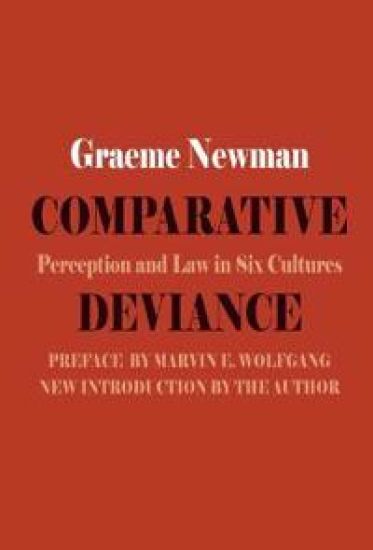
"Comparative Deviance" represents a systematic attempt to survey public perceptions of deviant behavior cross-culturally: in India, Indonesia, Iran, Italy, Yugoslavia and the United States. There is extensive diversity in both law and perception concerning such deviances as taking drugs, homosexuality, and abortion, yet there is evidence for a basically invariant structure in perception of deviance across all cultures. Within the countries studied in this volume, Geraeme Newman discovers that the strength of religious belief and urban rural background accounted for major differences in the perception of deviance - when differences were identified.Contrary to popular academic opinion in the United States, Newman finds that those countries with the most liberal laws on deviance (i.e., the least punitive sanctions) are also those highly economically developed and least totalitarian (United States and Italy). But when public opinion is considered, the public favors harsher punishments than the law provides. In contrast, in the developing countries of India, Iran and Indonesia, where penal sanctions are more severe, public opinion is much more liberal. The crucial question is the role criminal law plays in the process of modernization: whether law is a stable cultural influence, round which public opinion wavers in a startling fashion, depending on the stage of modernization.These findings challenge many assumptions of conflict theory in sociology, of cultural relativism in anthropology, and of ethical relativism in moral philosophy. All findings are examined in relation to research on modernization, social development, and the evolution of law. These fundamental issues are thus important to many different disciplines across the board.
"Comparative Deviance" represents a systematic attempt to survey public perceptions of deviant behavior cross-culturally: in India, Indonesia, Iran, Italy, Yugoslavia and the United States. There is extensive diversity in both law and perception concerning such deviances as taking drugs, homosexuality, and abortion, yet there is evidence for a basically invariant structure in perception of deviance across all cultures. Within the countries studied in this volume, Geraeme Newman discovers that the strength of religious belief and urban rural background accounted for major differences in the perception of deviance - when differences were identified.Contrary to popular academic opinion in the United States, Newman finds that those countries with the most liberal laws on deviance (i.e., the least punitive sanctions) are also those highly economically developed and least totalitarian (United States and Italy). But when public opinion is considered, the public favors harsher punishments than the law provides. In contrast, in the developing countries of India, Iran and Indonesia, where penal sanctions are more severe, public opinion is much more liberal. The crucial question is the role criminal law plays in the process of modernization: whether law is a stable cultural influence, round which public opinion wavers in a startling fashion, depending on the stage of modernization.These findings challenge many assumptions of conflict theory in sociology, of cultural relativism in anthropology, and of ethical relativism in moral philosophy. All findings are examined in relation to research on modernization, social development, and the evolution of law. These fundamental issues are thus important to many different disciplines across the board.
This book analyzes the expanding crime opportunities created by the Internet and e-commerce, and it explains how concepts of crime prevention developed in other contexts can be effectively applied in this new environment. The authors note that the Internet and associated e-commerce constitute a lawless "wild frontier" where users of the Internet can anonymously exploit and victimize other users without a high risk of being detected, arrested, prosecuted, and punished. For acquisitive criminals who seek to gain money by stealing it from others, e-commerce through the Internet enables them to "hack" their way into bank records and transfer funds for their own enrichment. Computer programs that are readily available for download on the Web can be used to scan the Web for individual computers that are vulnerable to attack. By using the Internet addresses of other users or using another person's or organization's computers or computing environment, criminals can hide their trails and escape detection. After identifying the multiple opportunities for crime in the world of e-commerce, the book describes specific steps that can be taken to prevent e-commerce crime at particular points of vulnerability. The authors explain how two aspects of situational crime prevention can prevent Internet crime. This involves both a targeting of individual vulnerabilities and a broad approach that requires partnerships in producing changes and modifications that can reduce or eliminate criminal opportunities. The authors apply the 16 techniques of situational crime prevention to the points of vulnerability of the e-commerce system. The points of vulnerability are identified and preventive measures are proposed. In discussing the broad approach of institutionalized and systemic efforts to police e-commerce, the book focuses on ways to increase the risks of detection and sanctions for crime without undue intrusions on the freedom and privacy of legitimate Internet and e-commerce users.