Kirjojen hintavertailu. Mukana 11 244 527 kirjaa ja 12 kauppaa.

Kirjahaku

Etsi kirjoja tekijän nimen, kirjan nimen tai ISBN:n perusteella.

14 kirjaa tekijältä Graham Connah

Forgotten Africa

Forgotten Africa

Graham Connah

Routledge
2004
sidottu
Forgotten Africa introduces the general reader and beginning student to Africa's past, emphasizing those aspects only known or best known from archaeological and related evidence. It covers four million years of history across the continent, examining important aspects of Africa's momentous human story. Graham Connah is concerned to raise public awareness, both inside and outside Africa, to this frequently overlooked and often forgotten subject.Forgotten Africa examines: * human origins,* the material culture of hunter gatherers* the beginnings of African farming, the development of metallurgy* the emergence of distinctive artistic traditions* the growth of cities and states* the expansion of trading networks * the impact of European and other external contacts.The result is a fascinating and important story told in a straightforward and readable manner.
Forgotten Africa

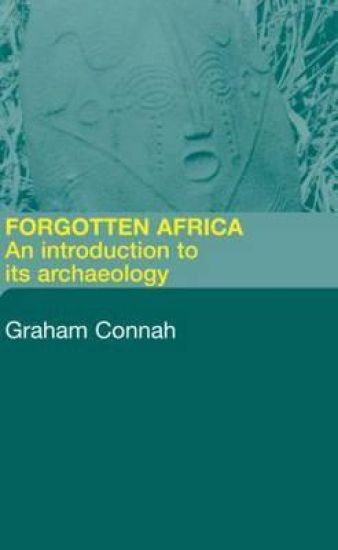
Forgotten Africa

Graham Connah

Routledge
2004
nidottu
Forgotten Africa introduces the general reader and beginning student to Africa's past, emphasizing those aspects only known or best known from archaeological and related evidence. It covers four million years of history across the continent, examining important aspects of Africa's momentous human story. Graham Connah is concerned to raise public awareness, both inside and outside Africa, to this frequently overlooked and often forgotten subject.Forgotten Africa examines: * human origins,* the material culture of hunter gatherers* the beginnings of African farming, the development of metallurgy* the emergence of distinctive artistic traditions* the growth of cities and states* the expansion of trading networks * the impact of European and other external contacts.The result is a fascinating and important story told in a straightforward and readable manner.
Three Thousand Years in Africa

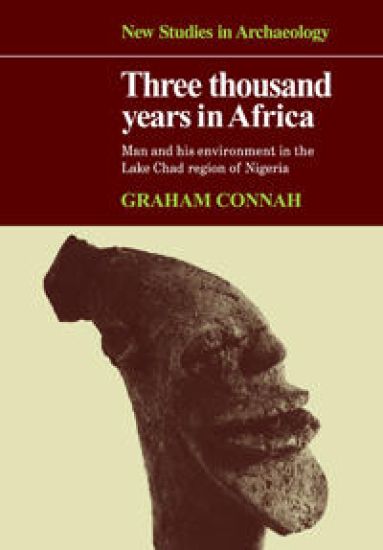
Three Thousand Years in Africa

Graham Connah

Cambridge University Press
2009
pokkari
The Lake Chad region of Nigeria is an extreme environment: virtually treeless sand and a broiling clay plain in the fierce heat of the dry season, then much of it inundated and impassable in the wet season as whole areas turn into shallow lakes or marsh. Yet even this hostile landscape and climate have sustained human communities in continuous occupation for some three hundred years. Professor Connah traces the story of human adaptation to and exploitation of this unusual environment from prehistoric to modern times. He presents a natural history of Man in the region, based largely on archaeological data but drawing also on written evidence, ethnography and oral tradition to reconstruct human history and experience in this largely unknown area. This ecological approach therefore cuts across the conventional boundaries between academic disciplines and the book is intended for students of African history as well as of archaeology. It provides too the historical context in which modern development programmes for the region can be set and to some extent judged. The book is amply and well illustrated.
Writing about Archaeology

Writing about Archaeology

Graham Connah

Cambridge University Press
2010
pokkari
In this book, Graham Connah offers an overview of archaeological authorship: its diversity, its challenges, and its methodology. Based on his own experiences, he presents his personal views about the task of writing about archaeology. The book is not intended to be a technical manual. Instead, Connah aims to encourage archaeologists who write about their subject to think about the process of writing. He writes with the beginning author in mind, but the book will be of interest to all archaeologists who plan to publish their work. Connah's overall premise is that those who write about archaeology need to be less concerned with content and more concerned with how they present it. It is not enough to be a good archaeologist. One must also become a good writer and be able to communicate effectively. Archaeology, he argues, is above all a literary discipline.
Writing about Archaeology

Writing about Archaeology

Graham Connah

Cambridge University Press
2010
sidottu
In this book, Graham Connah offers an overview of archaeological authorship: its diversity, its challenges, and its methodology. Based on his own experiences, he presents his personal views about the task of writing about archaeology. The book is not intended to be a technical manual. Instead, Connah aims to encourage archaeologists who write about their subject to think about the process of writing. He writes with the beginning author in mind, but the book will be of interest to all archaeologists who plan to publish their work. Connah's overall premise is that those who write about archaeology need to be less concerned with content and more concerned with how they present it. It is not enough to be a good archaeologist. One must also become a good writer and be able to communicate effectively. Archaeology, he argues, is above all a literary discipline.
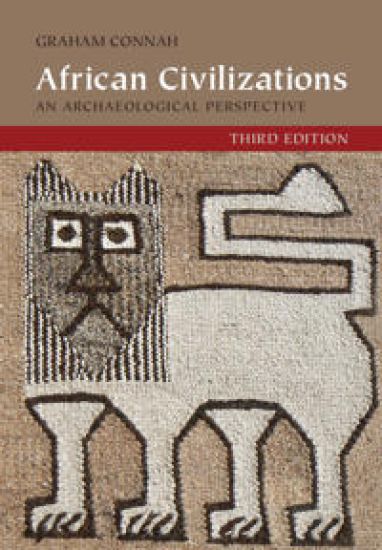
African Civilizations

African Civilizations

Graham Connah

Cambridge University Press
2015
sidottu
This new revised edition of African Civilizations re-examines the physical evidence for developing social complexity in Africa over the last six thousand years. Unlike the two previous editions, it is not confined to tropical Africa but considers the whole continent. Graham Connah focuses upon the archaeological research of two key aspects of complexity, urbanism and state formation, in ten main areas of Africa: Egypt, North Africa, Nubia, Ethiopia, the West African savanna, the West African forest, the East African coast and islands, the Zimbabwe Plateau, parts of Central Africa and South Africa. The book's main concern is to review the available evidence in its varied environmental settings, and to consider possible explanations of the developments that gave rise to it. Extensively illustrated, including new maps and plans, and offering an extended list of references, this is essential reading for students of archaeology, anthropology, African history, black studies and social geography.
African Civilizations

African Civilizations

Graham Connah

Cambridge University Press
2015
pokkari
This new revised edition of African Civilizations re-examines the physical evidence for developing social complexity in Africa over the last six thousand years. Unlike the two previous editions, it is not confined to tropical Africa but considers the whole continent. Graham Connah focuses upon the archaeological research of two key aspects of complexity, urbanism and state formation, in ten main areas of Africa: Egypt, North Africa, Nubia, Ethiopia, the West African savanna, the West African forest, the East African coast and islands, the Zimbabwe Plateau, parts of Central Africa and South Africa. The book's main concern is to review the available evidence in its varied environmental settings, and to consider possible explanations of the developments that gave rise to it. Extensively illustrated, including new maps and plans, and offering an extended list of references, this is essential reading for students of archaeology, anthropology, African history, black studies and social geography.
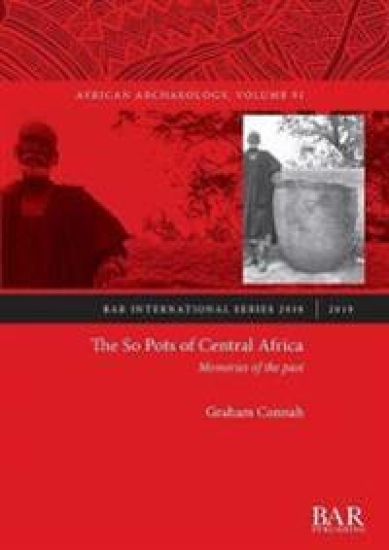
The So Pots of Central Africa

The So Pots of Central Africa

Graham Connah

BAR Publishing
2019
nidottu
African Archaeology, Volume 91This book is an original study of very large pots in parts of Chad, Cameroon and Nigeria. Found in excavations and surface fieldwork, they have been attributed to the So, a group of pre-Islamic inhabitants of the area before the sixteenth century AD, who have become mythologised as giants. Originally for burial, in some cases the pots have been dug up by villagers and reused: for brewing beer or as dye pits for indigo cloth. The book focuses on a group of these pots that survived until the late twentieth century in villages in a small part of Borno, north-eastern Nigeria. With the passage of time and terrorist activities in the region, their fate is now unknown and the photographs from 1963 to 1993 reproduced in this book have become a major archive of an unusual pottery group.
From Cambridge to Lake Chad: Life in archaeology 1956–1971
This book is about how the author became an archaeologist at a time when opportunities for employment were rare and how he worked as a field researcher in West Africa and wrote about his work there. It traces his archaeological training and employment at Cambridge and his practical experience on British excavations and explains how he became one of the pioneers of Nigerian archaeology during a decade in that country. It is not so much a study of the archaeology that was done, as an account of how it was done; its circumstances, organization, and economic and social and cultural context. As a result, it is both a professional and personal account, for these two aspects of life were inseparably intertwined, his wife Beryl becoming an integral part of the story. Other archaeologists and many non-archaeologists also feature in the account. The period in Nigeria from 1961 to 1971 included the Nigerian Civil War from 1967 to 1970, when archaeological work continued with difficulty. Both circumstances and preference meant that the author always worked with a labour team of Nigerians and with Nigerian assistants, of whom few had any experience in archaeology and none had any formal training; there were no postgraduates or others from outside the country. Success in excavations in Benin City, in the south of the country, and in Borno, in its far north-east, was as much the achievement of those Nigerians as it was the author’s.