Kirjojen hintavertailu. Mukana 11 244 527 kirjaa ja 12 kauppaa.

Kirjahaku

Etsi kirjoja tekijän nimen, kirjan nimen tai ISBN:n perusteella.

30 kirjaa tekijältä Graham Harman

Graham Harman Reader, The - Including previously unpublished essays
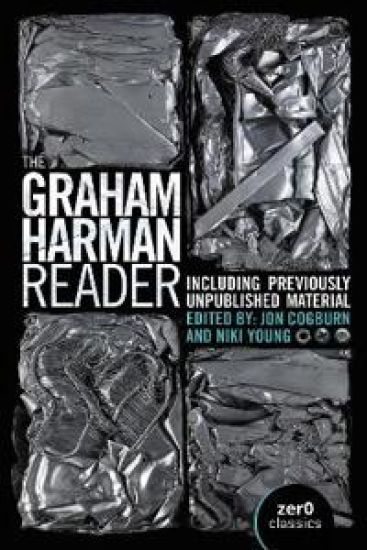
The Graham Harman Reader is the essential compendium of shorter works by one of the most influential philosophers of the twenty-first century. The writings in this volume are split into seven chapters. The first concerns Harman's resistance to both downward and upward reductionism. The second chapter contains works that develop the specific fourfold structure of Object-Oriented Ontology. In the third, we find Harman's novel arguments for why causal relations between two entities can only be indirect. The fourth chapter discusses why aesthetics deserves to be called first philosophy. The fifth chapter contains Harman's underrated contributions to ethics and politics, and the sixth deals with epistemology, mind, and science. A concluding seventh chapter contains several previously unpublished writings not available anywhere else. Written in Harman's typical clear and witty style, the /Reader/ is an essential resource for veteran readers of Harman and newcomers alike.
Object-Oriented Ontology

Object-Oriented Ontology

Graham Harman

Pelican
2018
nidottu
What is reality, really?Are humans more special or important than the non-human objects we perceive?How does this change the way we understand the world?We humans tend to believe that things are only real in as much as we perceive them, an idea reinforced by modern philosophy, which privileges us as special, radically different in kind from all other objects. But as Graham Harman, one of the theory's leading exponents, shows, Object-Oriented Ontology rejects the idea of human specialness: the world, he states, is clearly not the world as manifest to humans. At the heart of this philosophy is the idea that objects - whether real, fictional, natural, artificial, human or non-human - are mutually autonomous. In this brilliant new introduction, Graham Harman lays out the history, ideas and impact of Object-Oriented Ontology, taking in everything from art and literature, politics and natural science along the way.Graham Harman is Distinguished Professor of Philosophy at SCI-Arc, Los Angeles. A key figure in the contemporary speculative realism movement in philosophy and for his development of the field of object-oriented ontology, he was named by Art Review magazine as one of the 100 most influential figures in international art.
Bruno Latour

Bruno Latour

Graham Harman

Pluto Press
2014
pokkari
Bruno Latour, the French sociologist, anthropologist and long-established superstar in the social sciences is revisited in this pioneering account of his ever-evolving political philosophy. Breaking from the traditional focus on his metaphysics, most recently seen in Harman's book Prince of Networks, the author instead begins with the Hobbesian and even Machiavellian underpinnings of Latour's early period encountering his shift towards Carl Schmitt then finishing with his final development into the Lippmann / Dewey debate. Harman brings these twists and turns into sharp focus in terms of Latour's personal political thinking. Along with Latour's most important articles on political themes, the book chooses three works as exemplary of the distinct periods in Latour's thinking: The Pasteurization of France, Politics of Nature, and the recently published An Inquiry Into Modes of Existence, as his conception of politics evolves from a global power struggle between individuals, to the fabrication of fragile parliamentary networks, to just one mode of existence among many others.
Quentin Meillassoux

Quentin Meillassoux

Graham Harman

Edinburgh University Press
2015
nidottu
Offers an in depth study of the emerging French philosopher Quentin Meillassoux. In this expanded edition of his landmark 2011 work on Meillassoux, Graham Harman covers new materials not published at the time of the first edition. Along with Meillassoux's startling book on Mallarme's poem 'Un coup de des jamais n'abolira le hasard', Harman discusses several new English articles by Meillassoux, including his controversial April 2012 Berlin lecture with its critique of 'subjectalism'. Freshly called to a professorship at the Sorbonne, Meillassoux's star has continued to rise. This expanded edition of the first book on Meillassoux remains the best introduction to one of Europe's most promising thinkers.
Quentin Meillassoux

Quentin Meillassoux

Graham Harman

Edinburgh University Press
2015
sidottu
In this expanded edition of his landmark 2011 work on Meillassoux, Graham Harman covers new materials not available to the Anglophone reader at the time of the first edition. Along with Meillassoux's startling book on Mallarme's poem 'Un coup de des jamais n'abolira le hasard,' Harman discusses several new English articles by Meillassoux, including his controversial April 2012 Berlin lecture and its critique of 'subjectalism'.Freshly called to a professorship at the Sorbonne, Meillassoux's star has continued to rise. This expanded edition of the only book on Meillassoux remains the best introduction to one of Europe's most promising thinkers.
Tool-Being

Tool-Being

Graham Harman

Open Court Publishing Co ,U.S.
2002
pokkari
In this work, the author explains Heidegger's tool-analysis and then extends it beyond Heidegger's narrower theory of human practical activity to create an ontology of objects themselves.
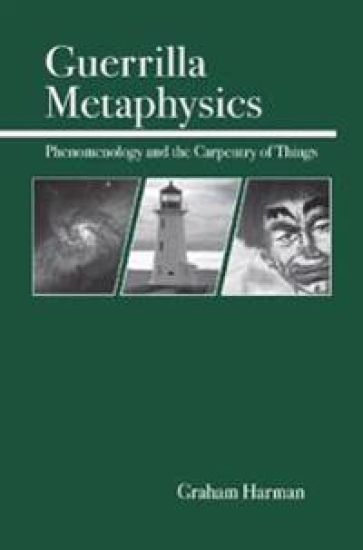
Guerrilla Metaphysics

Guerrilla Metaphysics

Graham Harman

Open Court Publishing Co ,U.S.
2005
pokkari
In Guerrilla Metaphysics, Graham Harman develops further the object-oriented philosophy first proposed in Tool-Being. Today’s fashionable philosophies often treat metaphysics as a petrified relic of the past, and hold that future progress requires an ever further abandonment of all claims to discuss reality in itself. Guerrilla Metaphysics makes the opposite assertion, challenging the dominant "philosophy of access" (both continental and analytic) that remains quarantined in discussions of language, perception, or literary texts. Philosophy needs a fresh resurgence of the things themselves?not merely the words or appearances themselves. Once these themes are adapted to the needs of an object-oriented philosophy, what emerges is a brand new type of metaphysics?a "guerrilla metaphysics."
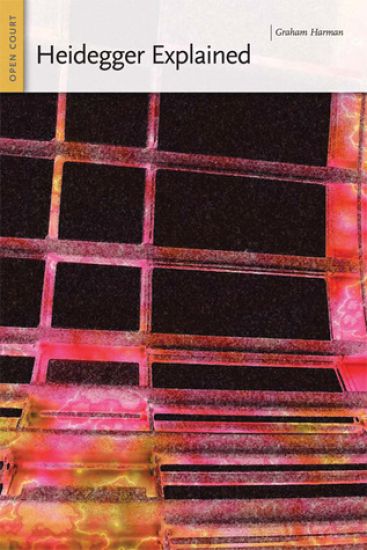
Heidegger Explained

Heidegger Explained

Graham Harman

Open Court Publishing Co ,U.S.
2007
pokkari
Martin Heidegger’s (1889-1976) influence has long been felt not just in philosophy, but also in such fields as art, architecture, and literary studies. Yet his difficult terminology has often scared away interested readers lacking an academic background in philosophy. In this new entry in the Ideas Explained series, author Graham Harman shows that Heidegger is actually one of the simplest and clearest of thinkers. His writings and analyses boil down to a single powerful idea: being is not presence. In any human relation with the world, our thinking and even our acting do not fully exhaust the world. Something more always withdraws from our grasp. As Harman shows, Heidegger understood that human beings are not lucid scientific observers staring at the world and describing it, but instead are thrown into a world where light is always mixed with shadow. The book concludes with a comprehensible discussion of the philosopher’s notoriously opaque concept of the fourfold.
Immaterialism

Immaterialism

Graham Harman

Polity Press
2016
sidottu
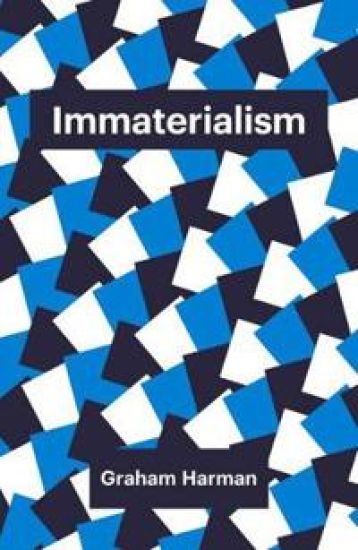
What objects exist in the social world and how should we understand them? Is a specific Pizza Hut restaurant as real as the employees, tables, napkins and pizzas of which it is composed, and as real as the Pizza Hut corporation with its headquarters in Wichita, the United States, the planet Earth and the social and economic impact of the restaurant on the lives of its employees and customers? In this book the founder of object-oriented philosophy develops his approach in order to shed light on the nature and status of objects in social life. While it is often assumed that an interest in objects amounts to a form of materialism, Harman rejects this view and develops instead an “immaterialist” method. By examining the work of leading contemporary thinkers such as Bruno Latour and Levi Bryant, he develops a forceful critique of ‘actor-network theory’. In an extended discussion of Leibniz’s famous example of the Dutch East India Company, Harman argues that this company qualifies for objecthood neither through ‘what it is’ or ‘what it does’, but through its irreducibility to either of these forms. The phases of its life, argues Harman, are not demarcated primarily by dramatic incidents but by moments of symbiosis, a term he draws from the biologist Lynn Margulis. This book provides a key counterpoint to the now ubiquitous social theories of constant change, holistic networks, performative identities, and the construction of things by human practice. It will appeal to anyone interested in cutting-edge debates in philosophy and social and cultural theory.
Immaterialism

Immaterialism

Graham Harman

Polity Press
2016
nidottu
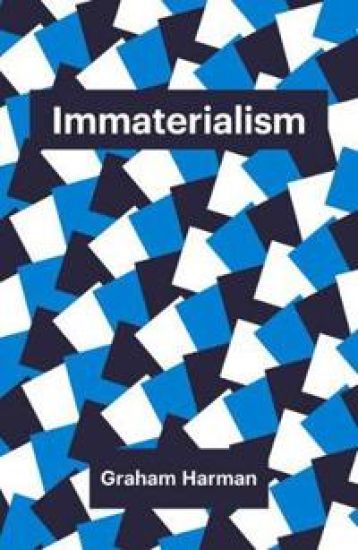
What objects exist in the social world and how should we understand them? Is a specific Pizza Hut restaurant as real as the employees, tables, napkins and pizzas of which it is composed, and as real as the Pizza Hut corporation with its headquarters in Wichita, the United States, the planet Earth and the social and economic impact of the restaurant on the lives of its employees and customers? In this book the founder of object-oriented philosophy develops his approach in order to shed light on the nature and status of objects in social life. While it is often assumed that an interest in objects amounts to a form of materialism, Harman rejects this view and develops instead an “immaterialist” method. By examining the work of leading contemporary thinkers such as Bruno Latour and Levi Bryant, he develops a forceful critique of ‘actor-network theory’. In an extended discussion of Leibniz’s famous example of the Dutch East India Company, Harman argues that this company qualifies for objecthood neither through ‘what it is’ or ‘what it does’, but through its irreducibility to either of these forms. The phases of its life, argues Harman, are not demarcated primarily by dramatic incidents but by moments of symbiosis, a term he draws from the biologist Lynn Margulis. This book provides a key counterpoint to the now ubiquitous social theories of constant change, holistic networks, performative identities, and the construction of things by human practice. It will appeal to anyone interested in cutting-edge debates in philosophy and social and cultural theory.
Art and Objects

Art and Objects

Graham Harman

Polity Press
2019
sidottu
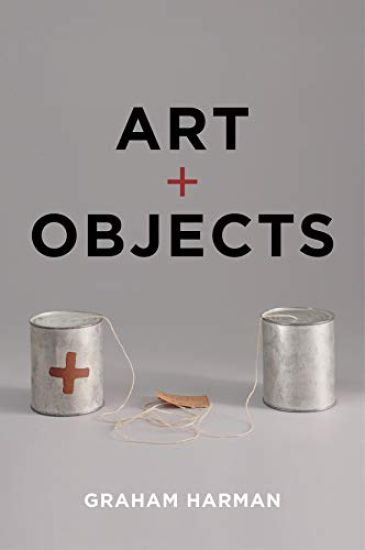
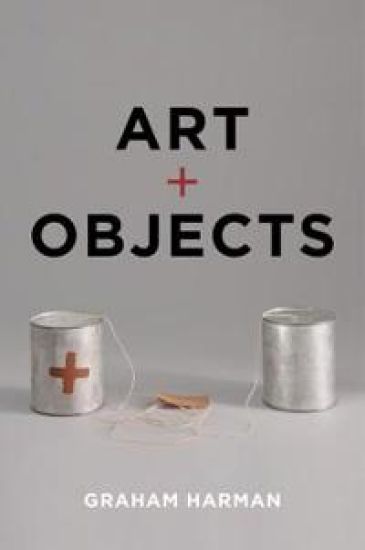
In this book, the founder of object-oriented ontology develops his view that aesthetics is the central discipline of philosophy. Whereas science must attempt to grasp an object in terms of its observable qualities, philosophy and art cannot proceed in this way because they don't have direct access to their objects. Hence philosophy shares the same fate as art in being compelled to communicate indirectly, allusively, or elliptically, rather than in the clear propositional terms that are often taken – wrongly – to be the sole stuff of genuine philosophy. Conceiving of philosophy and art in this way allows us to reread key debates in aesthetic theory and to view art history in a different way. The formalist criticism of Greenberg and Fried is rejected for its refusal to embrace the innate theatricality and deep multiplicity of every artwork. This has consequences for art criticism, making pictorial content more important than formalism thinks but less entwined with the social sphere than anti-formalism holds. It has consequences for art history too, as the surrealists, David, and Poussin, among others, gain in importance. The close link between aesthetics and ontology also invites a new periodization of modern philosophy as a whole, and the habitual turn away from Kant’s thing-in-itself towards an increase in philosophical "immanence" is shown to be a false dawn. This major work will be of great interest to students and scholars of philosophy, aesthetics, art history and cultural theory.
Art and Objects

Art and Objects

Graham Harman

Polity Press
2019
nidottu
In this book, the founder of object-oriented ontology develops his view that aesthetics is the central discipline of philosophy. Whereas science must attempt to grasp an object in terms of its observable qualities, philosophy and art cannot proceed in this way because they don't have direct access to their objects. Hence philosophy shares the same fate as art in being compelled to communicate indirectly, allusively, or elliptically, rather than in the clear propositional terms that are often taken – wrongly – to be the sole stuff of genuine philosophy. Conceiving of philosophy and art in this way allows us to reread key debates in aesthetic theory and to view art history in a different way. The formalist criticism of Greenberg and Fried is rejected for its refusal to embrace the innate theatricality and deep multiplicity of every artwork. This has consequences for art criticism, making pictorial content more important than formalism thinks but less entwined with the social sphere than anti-formalism holds. It has consequences for art history too, as the surrealists, David, and Poussin, among others, gain in importance. The close link between aesthetics and ontology also invites a new periodization of modern philosophy as a whole, and the habitual turn away from Kant’s thing-in-itself towards an increase in philosophical "immanence" is shown to be a false dawn. This major work will be of great interest to students and scholars of philosophy, aesthetics, art history and cultural theory.
Speculative Realism

Speculative Realism

Graham Harman

Polity Press
2018
sidottu
On April 27, 2007, the first Speculative Realism (SR) workshop was held at Goldsmiths, University of London, featuring four young philosophers whose ideas were loosely allied. Over the ensuing decade, the ideas of SR spread from philosophy to the arts, architecture, and numerous disciplines in the humanities and social sciences. SR has been arguably the most influential new current in continental philosophy since the works of Gilles Deleuze and Félix Guattari found their second wind in the 1990s. But what is SR? This book is the first general overview by one of its original members, focusing on the aesthetic, ethical, ontological, and political themes of greatest importance to the movement. Graham Harman provides a balanced but critical assessment of his original SR colleagues – Ray Brassier, Iain Hamilton Grant, and Quentin Meillassoux – along with a clear summary of his own Object-Oriented Ontology (OOO). A number of central philosophical questions tie the four chapters together: What exactly is "correlationism," the chief enemy of SR? What are the stakes of philosophical realism, and is such realism better served by mathematics and the natural sciences, or by a broader model of cognitive activity that includes aesthetics? This book covers both the historical and conceptual development of the movement, providing a first-rate introduction for students, aided by helpful end-of-chapter study questions chosen by Harman himself. SR, Harman shows, is a vital and fast-developing field in contemporary philosophy.
Speculative Realism

Speculative Realism

Graham Harman

Polity Press
2018
nidottu
On April 27, 2007, the first Speculative Realism (SR) workshop was held at Goldsmiths, University of London, featuring four young philosophers whose ideas were loosely allied. Over the ensuing decade, the ideas of SR spread from philosophy to the arts, architecture, and numerous disciplines in the humanities and social sciences. SR has been arguably the most influential new current in continental philosophy since the works of Gilles Deleuze and Félix Guattari found their second wind in the 1990s. But what is SR? This book is the first general overview by one of its original members, focusing on the aesthetic, ethical, ontological, and political themes of greatest importance to the movement. Graham Harman provides a balanced but critical assessment of his original SR colleagues – Ray Brassier, Iain Hamilton Grant, and Quentin Meillassoux – along with a clear summary of his own Object-Oriented Ontology (OOO). A number of central philosophical questions tie the four chapters together: What exactly is "correlationism," the chief enemy of SR? What are the stakes of philosophical realism, and is such realism better served by mathematics and the natural sciences, or by a broader model of cognitive activity that includes aesthetics? This book covers both the historical and conceptual development of the movement, providing a first-rate introduction for students, aided by helpful end-of-chapter study questions chosen by Harman himself. SR, Harman shows, is a vital and fast-developing field in contemporary philosophy.
Architecture and Objects

Architecture and Objects

Graham Harman

UNIVERSITY OF MINNESOTA PRESS
2022
sidottu
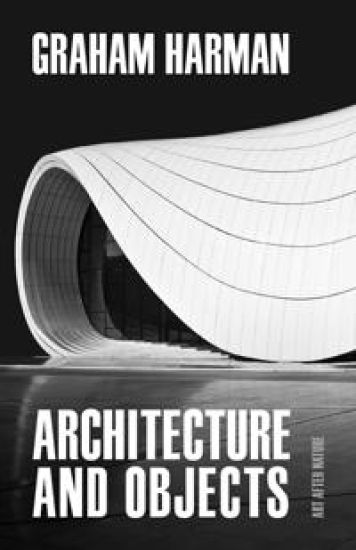
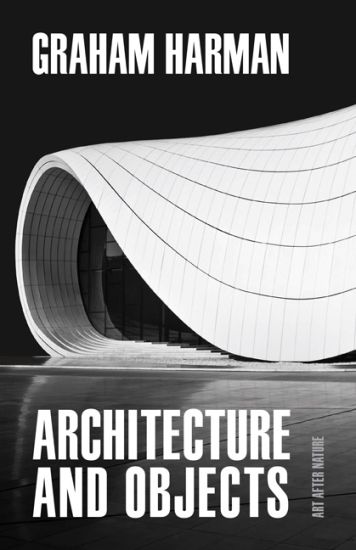
Thinking through object-oriented ontology-and the work of architects such as Rem Koolhaas and Zaha Hadid-to explore new concepts of the relationship between form and function Object-oriented ontology has become increasingly popular among architectural theorists and practitioners in recent years. Architecture and Objects, the first book on architecture by the founder of object-oriented ontology (OOO), deepens the exchange between architecture and philosophy, providing a new roadmap to OOO’s influence on the language and practice of contemporary architecture and offering new conceptions of the relationship between form and function. Graham Harman opens with a critique of Heidegger, Derrida, and Deleuze, the three philosophers whose ideas have left the deepest imprint on the field, highlighting the limits of their thinking for architecture. Instead, Harman contends, architecture can employ OOO to reconsider traditional notions of form and function that emphasize their relational characteristics-form with a building’s visual style, function with its stated purpose-and constrain architecture’s possibilities through literalism. Harman challenges these understandings by proposing de-relationalized versions of both (zero-form and zero-function) that together provide a convincing rejoinder to Immanuel Kant’s dismissal of architecture as “impure.”Through critical engagement with the writings of Peter Eisenman and fresh assessments of buildings by Rem Koolhaas, Frank Gehry, and Zaha Hadid, Architecture and Objects forwards a bold vision of architecture. Overcoming the difficult task of “zeroing” function, Harman concludes, would place architecture at the forefront of a necessary revitalization of exhausted aesthetic paradigms.
Architecture and Objects

Architecture and Objects

Graham Harman

UNIVERSITY OF MINNESOTA PRESS
2022
nidottu
Thinking through object-oriented ontology-and the work of architects such as Rem Koolhaas and Zaha Hadid-to explore new concepts of the relationship between form and function Object-oriented ontology has become increasingly popular among architectural theorists and practitioners in recent years. Architecture and Objects, the first book on architecture by the founder of object-oriented ontology (OOO), deepens the exchange between architecture and philosophy, providing a new roadmap to OOO’s influence on the language and practice of contemporary architecture and offering new conceptions of the relationship between form and function. Graham Harman opens with a critique of Heidegger, Derrida, and Deleuze, the three philosophers whose ideas have left the deepest imprint on the field, highlighting the limits of their thinking for architecture. Instead, Harman contends, architecture can employ OOO to reconsider traditional notions of form and function that emphasize their relational characteristics-form with a building’s visual style, function with its stated purpose-and constrain architecture’s possibilities through literalism. Harman challenges these understandings by proposing de-relationalized versions of both (zero-form and zero-function) that together provide a convincing rejoinder to Immanuel Kant’s dismissal of architecture as “impure.”Through critical engagement with the writings of Peter Eisenman and fresh assessments of buildings by Rem Koolhaas, Frank Gehry, and Zaha Hadid, Architecture and Objects forwards a bold vision of architecture. Overcoming the difficult task of “zeroing” function, Harman concludes, would place architecture at the forefront of a necessary revitalization of exhausted aesthetic paradigms.