Kirjojen hintavertailu. Mukana 12 016 292 kirjaa ja 12 kauppaa.

Kirjahaku

Etsi kirjoja tekijän nimen, kirjan nimen tai ISBN:n perusteella.

9 kirjaa tekijältä Graham Phillips

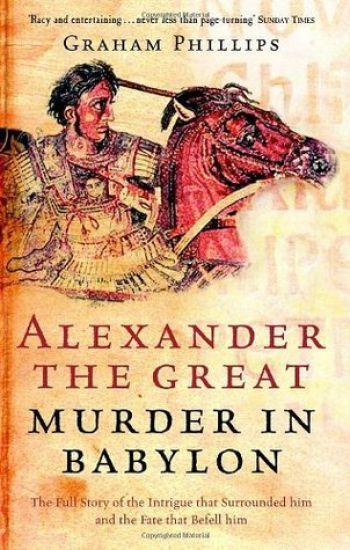
Alexander The Great

Alexander The Great

Graham Phillips

Virgin Books
2005
pokkari
MURDER IN BABYLON is a real-life historical detective story: a true tale of murder and mystery that has remained untold for over two thousand years.Recreating the scene of the crime to reveal eight suspects, each with the motive and opportunity to have assassinated the king. Graham Phillips uncovers a maze of intrigue, power-play and romantic tragedy that led inevitably towards Alexander's death. Ultimately, in a dramatic twist in the tale, the murderer is finally unveiled.
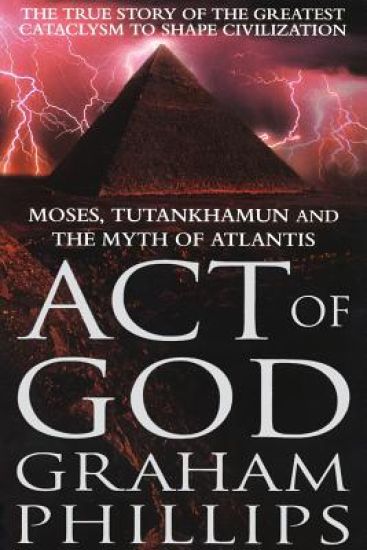
Act Of God

Act Of God

Graham Phillips

Pan Books
2014
pokkari
This extraordinary book reveals a historical mystery which overturns Ancient Egyptian chronology and uncovers what may be the real explanation of the Atlantis myth.The excavation of a mysterious Egyptian tomb in the early twentieth century holds the key to one of the greatest disasters to strike humankind. Strangely sealed, this was a tomb constructed to keep someone - or something - out. Acclaimed writer-detective Graham Phillips uncovers the evidence that links a chain of extraordinary events. The findings in this cursed Pharoah's tomb, new evidence from the polar icecaps which overturns ancient chronology, together with the eruption of a volcano more powerful than the Nagasaki bomb, proves that the biblical parting of the Red Sea and plagues of Egypt could be accurate accounts of real events. As a result there could be a real, and totally believable, explanation for the perennial myth of Atlantis.
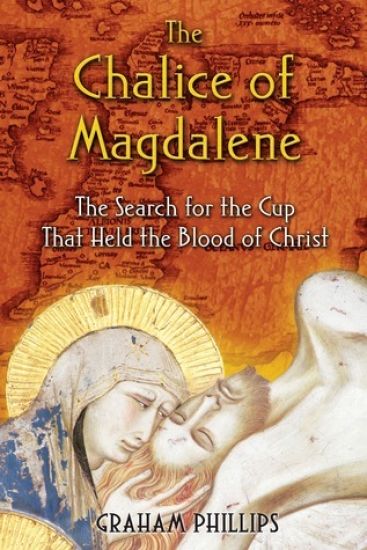
The Chalice of Magdalene

The Chalice of Magdalene

Graham Phillips

Bear Company
2004
nidottu
The popular Arthurian stories of the Middle Ages depict the Holy Grail as Christ's cup from the last supper which was believed to have been endowed with miraculous healing powers and the ability to give eternal life to whomever drank from it. A much earlier tradition however claimed the Grail was the vessel used by Mary Magdalene to collect Christ's blood when he appeared to her after rising from the tomb. While many vessels were claimed to have been the true Grail there was only one thought to have been the chalice used by Mary. From Jesus' empty tomb where it remained for almost 400 years this holy relic known as the Marian Chalice was taken to Rome by the mother of the first Christian emperor Constantine the Great. It was then smuggled from Rome in 410 C.E. according to the fifth-century historian Olympiodorus to save it from the barbarians who sacked the city. Well into the Middle Ages legend persisted that it had been taken to safety in Britain the last outpost of Roman civilization in Western Europe. This journey to England and what happened to the Chalice there is the focus of this book.Graham Phillips's research uncovers the secret legacy of an ancient noble family over generations and a trail of clues hidden in the English countryside that lead to a mysterious grotto a forgotten attic and the lost chalice. In tracing the relic Phillips offers the inside story behind an astonishing adventure that results in the identification of the historical King Arthur and the location of one of the most powerful symbols in Western tradition. Originally published as The Search for the Grail by Century.
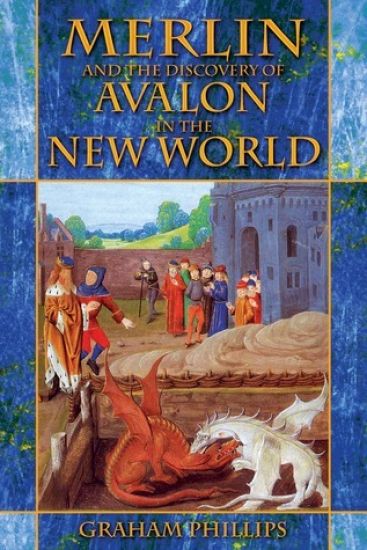
Merlin and the Discovery of Avalon in the New World
The first book to present the true identity of the mythic figure Merlin - Uncovers historical evidence that the legend of Merlin was based on the life of a real man - Reveals that Avalon, Merlin's final resting place, was an island in the United States The legendary figure Merlin is known throughout the world as the wizard of Camelot who was counselor to King Arthur and helped that monarch create the Round Table. Through the course of a 20-year investigation Graham Phillips has uncovered evidence that this famous story was based on the life of an actual historical figure: the son of a Roman consul who became the last of the Romans to rule Britain in the fifth century A.D. Furthermore, the evidence reveals that he died and was buried in what is now the United States. According to legend, Merlin ended his life on the mystical island of Avalon. A 1500-year-old saga tells how Merlin left Britain on a boat bound for a mysterious island to the west. The places described in Merlin's voyage, Phillips argues, would only have been seen by someone who had journeyed to the New World. For example, the island where boiling fountains bubble from the ground could be the geysers of Iceland, and the island with rivers of ice, the glaciers of Greenland. During his research Phillips discovered that a site believed to be Merlin's grave was found by the first British settlers in North America: a secret location said to have been preserved in the works of William Shakespeare and the coded writings of the Freemasons. Phillips follows a trail of historical clues that leads ultimately to a mysterious New England tomb. Here a final encrypted message not only reveals the whereabouts of Merlin's grave but contains evidence that Merlin's descendants still survive and, through a merger with the Spencer family of Princess Diana, may once again ascend the British throne.
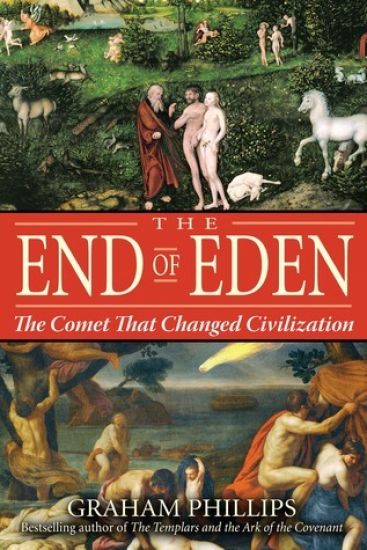
The End of Eden

The End of Eden

Graham Phillips

Bear Company
2007
nidottu
In the year 2024, the comet 12P/Pons-Brooks is due to pass near Earth again for the first time in 3,500 years. In 1500 B.C., Earth passed through this comet's tail, and in the decade following, cultures the world over began to exhibit significant aggressive tendencies. Civilisations in India, the Middle East, China, Japan, Europe, and Central America suddenly abandoned their peaceful ways and devoted themselves with uncharacteristic fervour to making war on their neighbours and fighting among themselves. But this was not the only effect that is linked to this celestial event. Sudden outbreaks of monotheism, the worship of a single god, and a new idea at the time, occurred simultaneously in locales spread widely throughout the world. Most of these monotheistic religions represented their god symbolically as a circle with a series of lines extending below, resembling a simple drawing of a comet.In "The End of Eden", Graham Phillips chronicles the sudden shifts in social demeanour and religious philosophy that swept the world in the wake of 12P/Pons-Brooks.He contends that debris in the comet's tail contaminated the atmosphere with a chemical known to cause aggressive behaviour, and that after little more than a decade, worldwide hostility abruptly abated. He, also, explores how the appearance of a celestial body that outshone the moon would have been interpreted as a significant religious event.
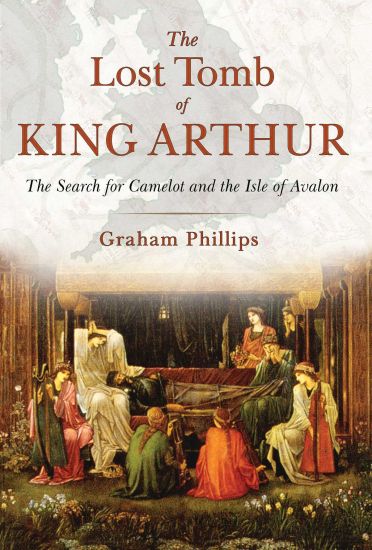
The Lost Tomb of King Arthur

The Lost Tomb of King Arthur

Graham Phillips

Bear Company
2016
pokkari
One of the most enigmatic figures in world history, King Arthur has been the subject of many fantastical tales over the past 1500 years, leading many scholars to regard him and his fabled city of Camelot simply as myth. But, as Graham Phillips shows through a wealth of literary and scientific evidence, King Arthur was a real man, Camelot a real place, and the legendary Excalibur a real sword - and Phillips has located them all. The culmination of 25 years of research, including new translations of primary source material, this book provides the necessary evidence to allow King Arthur to finally be accepted as the authentic British king he was.
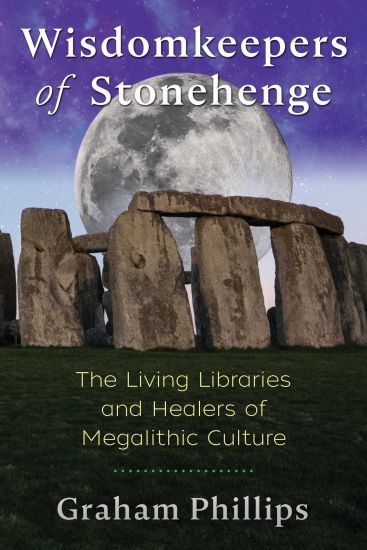
Wisdomkeepers of Stonehenge

Wisdomkeepers of Stonehenge

Graham Phillips

Bear Company
2019
pokkari
Reveals how Stonehenge was an extraordinary astronomical calendar used in the cultivation of ingredients for long-forgotten botanical cures Stonehenge is just one of thousands of stone circles erected throughout Britain and Ireland for over three millennia from 3,000 BC on. How did this building tradition survive for so long, over such a large area and with such complexity and uniformity, when the people of the British Isles lived in separate, isolated communities and left no evidence of a central leadership or obvious communication network? Graham Phillips argues that these stone circles are evidence of an astonishing system of healthcare and preservation of ancient medical knowledge that held together a society scattered across the British Isles. With stones aligned to the sun, moon, and certain stars, these ancient monuments enabled the precise timings necessary for the cultivation of medicinal plants. He explains how the megalithic priesthood possessed medical knowledge well beyond their time and may even have discovered a cure for cancer. Furthermore, because they had no form of writing, the megalithic people developed phenomenal memory techniques to preserve their knowledge over many generations, resulting in a class of wisdomkeepers that were not only healers but the living libraries of their culture. Drawing upon the latest discoveries from recent archaeological excavations and overlooked historical source material, Phillips reveals that the megalithic culture survived far longer than previously thought and that the people who held it together were an enigmatic shamanic sect ultimately called the Druids. Uncovering the secrets of ancient megalithic culture and the purpose of their enigmatic stone circles, Phillips contends that all the evidence has now been gathered to unlock the secrets encoded in the stones--and perhaps discover remedies for diseases still uncured by modern medicine today.
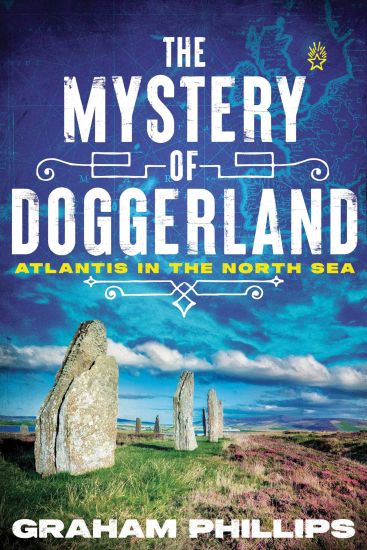
The Mystery of Doggerland

The Mystery of Doggerland

Graham Phillips

INNER TRADITIONS BEAR AND COMPANY
2023
pokkari
A scientific exploration of the advanced ancient civilization known as Doggerland or Fairland that disappeared 5,000 years ago. New marine archaeological evidence has revealed the remains of a large land mass to the north of Britain that hosted an advanced civilization 1,000 years before the recognized “first” civilizations of ancient Egypt, Mesopotamia, or India. Remembered in Celtic legends as Tu-lay, and referred to by geologists as Doggerland or Fairland, this civilization began at least as early as 4000 BC but was ultimately destroyed by rising sea levels, huge tsunamis, and a terrible viral epidemic released from melting permafrost during a cataclysmic period of global warming. Exploring the latest archaeological findings and recent scientific analysis of Doggerland’s underwater remains, Graham Phillips shows that this ancient culture had sophisticated technology and advanced medical knowledge. He looks at evidence detected with remote sensing and seismic profiling of many artificial structures, complex settlements, gigantic earthworks, epic monoliths, and huge stone circles dated to more than 5,500 years ago, preserved beneath the ground and on the ocean floor. He examines evidence of Doggerland’s high-temperature technology, showing how its people were able to melt solid rock to create vitrified structures far stronger than concrete, a technique that modern science cannot replicate. He looks at the small part of the Fairland land mass that still exists: Fair Isle, a tiny island some 45 miles north of the Orkney Islands of Scotland. Phillips shows how, when Fairland sank beneath the waves around 3100 BC, its last survivors traveled by boat to settle in the British Isles, where they established the megalithic culture that built Stonehenge. Revealing the vast archaeological evidence in support of the existence of Doggerland, as well as its threads of influence in early cultures around the world, Phillips also shows how the fate of this sophisticated ancient culture is a warning from history: the cataclysmic events that happened to the first civilizations could happen again as the world heats up.
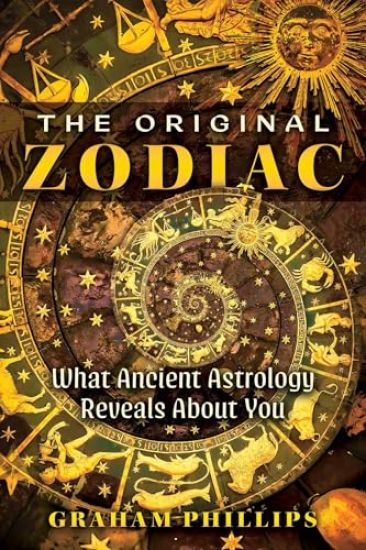
The Original Zodiac

The Original Zodiac

Graham Phillips

INNER TRADITIONS BEAR AND COMPANY
2025
pokkari
Discover the world’s earliest known system of astrology• Explores ancient Mesopotamian astrology, which originated with those who created Göbekli Tepe, and details the system’s eighteen zodiac signs• Shares the author’s decades-long research to decipher the meanings and characteristics behind each of the original eighteen signs• Shows how the original zodiac can enrich and expand our understanding of astrology, personal relationships, and our sense of self and destinyToday the zodiac is divided into twelve signs through which the sun appears to travel in a year. A person’s sign can influence their personality, physical characteristics, and fate. However, in ancient Mesopotamia, the first zodiac was divided into eighteen signs different from the Western and Vedic systems in use today. The Original Zodiac reveals, for the first time in over 4,000 years, this earliest form of astrology.The original Mesopotamian zodiac offered very different birth signs, including the Serpent, Swan, Crane, Horse, Wolf, and Eagle. This zodiac was recorded on a clay tablet that is now housed in the British Museum, cataloged as BM 86378, but there is no written record of how these signs were interpreted. Now, after decades of intensive research, Graham reveals the meanings of these mysterious signs and their relevance for our times. To determine what traits might be shared by those born in each sign of the original zodiac, Graham comprehensively surveyed hundreds of volunteers from diverse backgrounds. He measured each participant’s likes, dislikes, hobbies, habits, employment, health information, and other pertinent aspects of their lives and identities. Not intended to replace or challenge our traditional understanding of astrology, this book offers an original system to enrich our current knowledge.Unveiling the earliest known system of astrology discovered in the world, this book reveals, for the first time in millennia, the personality, character, and destiny of those born in each of its enigmatic signs.