Kirjojen hintavertailu. Mukana 12 379 734 kirjaa ja 12 kauppaa.

Kirjahaku

Etsi kirjoja tekijän nimen, kirjan nimen tai ISBN:n perusteella.

26 kirjaa tekijältä Graham Priest, Markus Gabriel

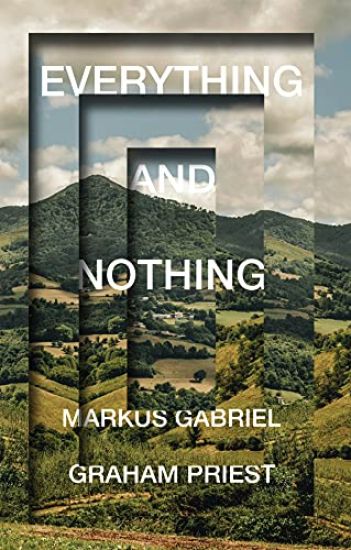
Everything and Nothing

Everything and Nothing

Graham Priest; Markus Gabriel

JOHN WILEY AND SONS LTD
2022
sidottu
Is it possible for reality as a whole to be part of itself? Can the world appear within itself without thereby undermining the consistency of our thought and knowledge-claims concerning more local matters of fact? This is a question on which Markus Gabriel and Graham Priest disagree. Gabriel argues that the world cannot exist precisely because it is understood to be an absolutely totality. Priest responds by developing a special form of mereology according to which reality is a single all-encompassing whole, everything, which counts itself among its denizens. Their disagreement results in a debate about everything and nothing: Gabriel argues that we experience nothingness once we overcome our urge to contain reality in an all-encompassing thought, whereas Priest develops an account of nothing according to which it is the ground of absolutely everything. A debate about everything and nothing, but also a reflection on the very possibility of metaphysics.
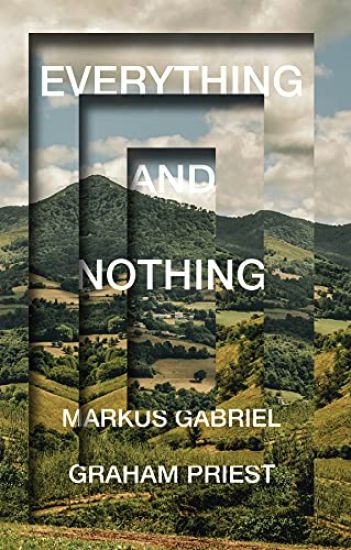
Everything and Nothing

Everything and Nothing

Graham Priest; Markus Gabriel

JOHN WILEY AND SONS LTD
2022
nidottu
Is it possible for reality as a whole to be part of itself? Can the world appear within itself without thereby undermining the consistency of our thought and knowledge-claims concerning more local matters of fact? This is a question on which Markus Gabriel and Graham Priest disagree. Gabriel argues that the world cannot exist precisely because it is understood to be an absolutely totality. Priest responds by developing a special form of mereology according to which reality is a single all-encompassing whole, everything, which counts itself among its denizens. Their disagreement results in a debate about everything and nothing: Gabriel argues that we experience nothingness once we overcome our urge to contain reality in an all-encompassing thought, whereas Priest develops an account of nothing according to which it is the ground of absolutely everything. A debate about everything and nothing, but also a reflection on the very possibility of metaphysics.
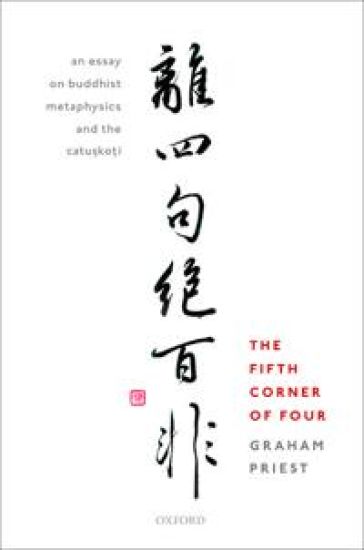
The Fifth Corner of Four

The Fifth Corner of Four

Graham Priest

Oxford University Press
2020
nidottu
Graham Priest presents an exploration of Buddhist metaphysics, drawing on texts which include those of Nãgãrjuna and Dõgen. The development of Buddhist metaphysics is viewed through the lens of the catu?ko?i. At its simplest, and as it appears in the earliest texts, this is a logical/ metaphysical principle which says that every claim is true, false, both, or neither; but the principle itself evolves, assuming new forms, as the metaphysics develops. An important step in the evolution incorporates ineffability. Such things make no sense from the perspective of a logic which endorses the principles of excluded middle and non-contradiction, which are standard fare in Western logic. However, the book shows how one can make sense of them by applying the techniques of contemporary non-classical logic, such as those of First Degree Entailment, and Plurivalent Logic. An important issue that emerges as the book develops is the notion of non-duality and its transcendence. This allows many of the threads of the book to be drawn together at its end. All matters are explained, in as far as possible, in a way that is accessible to those with no knowledge of Buddhist philosophy or contemporary non-classical logic.
The Fifth Corner of Four

The Fifth Corner of Four

Graham Priest

Oxford University Press
2018
sidottu
Graham Priest presents an exploration of Buddhist metaphysics, drawing on texts which include those of Nãgãrjuna and Dõgen. The development of Buddhist metaphysics is viewed through the lens of the catu?ko?i. At its simplest, and as it appears in the earliest texts, this is a logical/ metaphysical principle which says that every claim is true, false, both, or neither; but the principle itself evolves, assuming new forms, as the metaphysics develops. An important step in the evolution incorporates ineffability. Such things make no sense from the perspective of a logic which endorses the principles of excluded middle and non-contradiction, which are standard fare in Western logic. However, the book shows how one can make sense of them by applying the techniques of contemporary non-classical logic, such as those of First Degree Entailment, and Plurivalent Logic. An important issue that emerges as the book develops is the notion of non-duality and its transcendence. This allows many of the threads of the book to be drawn together at its end. All matters are explained, in as far as possible, in a way that is accessible to those with no knowledge of Buddhist philosophy or contemporary non-classical logic.
One

One

Graham Priest

Oxford University Press
2016
nidottu
Graham Priest presents an original exploration of philosophical questions concerning the one and the many. He covers a wide range of issues in metaphysics--including unity, identity, grounding, mereology, universals, being, intentionality, and nothingness--and deploys the techniques of paraconsistent logic in order to offer a radically new treatment of unity. Priest brings together traditions of Western and Asian thought that are usually kept separate in academic philosophy: he draws on ideas from Plato, Heidegger, and Nagarjuna, among other philosophers.
Towards Non-Being

Towards Non-Being

Graham Priest

Oxford University Press
2016
sidottu
Towards Non-Being presents an account of the semantics of intentional language--verbs such as 'believes', 'fears', 'seeks', 'imagines'. Graham Priest tackles problems concerning intentional states which are often brushed under the carpet in discussions of intentionality, such as their failure to be closed under deducibility. Priest's account draws on the work of the late Richard Routley (Sylvan), and proceeds in terms of objects that may be either existent or non-existent, at worlds that may be either possible or impossible. Since Russell, non-existent objects have had a bad press in Western philosophy; Priest mounts a full-scale defence. In the process, he offers an account of both fictional and mathematical objects as non-existent. The book will be of central interest to anyone who is concerned with intentionality in the philosophy of mind or philosophy of language, the metaphysics of existence and identity, the philosophy or fiction, the philosophy of mathematics, or cognitive representation in AI. This updated second edition adds ten new chapters to the original eight. These further develop the ideas of the first edition, reply to critics, and explore new areas of relevance. New topics covered include: conceivability, realism/antirealism concerning non-existent objects, self-deception, and the verb to be.
Towards Non-Being

Towards Non-Being

Graham Priest

Oxford University Press
2016
nidottu
Towards Non-Being presents an account of the semantics of intentional language--verbs such as 'believes', 'fears', 'seeks', 'imagines'. Graham Priest tackles problems concerning intentional states which are often brushed under the carpet in discussions of intentionality, such as their failure to be closed under deducibility. Priest's account draws on the work of the late Richard Routley (Sylvan), and proceeds in terms of objects that may be either existent or non-existent, at worlds that may be either possible or impossible. Since Russell, non-existent objects have had a bad press in Western philosophy; Priest mounts a full-scale defence. In the process, he offers an account of both fictional and mathematical objects as non-existent. The book will be of central interest to anyone who is concerned with intentionality in the philosophy of mind or philosophy of language, the metaphysics of existence and identity, the philosophy or fiction, the philosophy of mathematics, or cognitive representation in AI. This updated second edition adds ten new chapters to the original eight. These further develop the ideas of the first edition, reply to critics, and explore new areas of relevance. New topics covered include: conceivability, realism/antirealism concerning non-existent objects, self-deception, and the verb to be.
Logic

Logic

Graham Priest

Oxford University Press
2017
nidottu
Logic is often perceived as having little to do with the rest of philosophy, and even less to do with real life. In this lively and accessible introduction, Graham Priest shows how wrong this conception is. He explores the philosophical roots of the subject, explaining how modern formal logic deals with issues ranging from the existence of God and the reality of time to paradoxes of probability and decision theory. Along the way, the basics of formal logic are explained in simple, non-technical terms, showing that logic is a powerful and exciting part of modern philosophy. In this new edition Graham Priest expands his discussion to cover the subjects of algorithms and axioms, and proofs in mathematics. ABOUT THE SERIES: The Very Short Introductions series from Oxford University Press contains hundreds of titles in almost every subject area. These pocket-sized books are the perfect way to get ahead in a new subject quickly. Our expert authors combine facts, analysis, perspective, new ideas, and enthusiasm to make interesting and challenging topics highly readable.
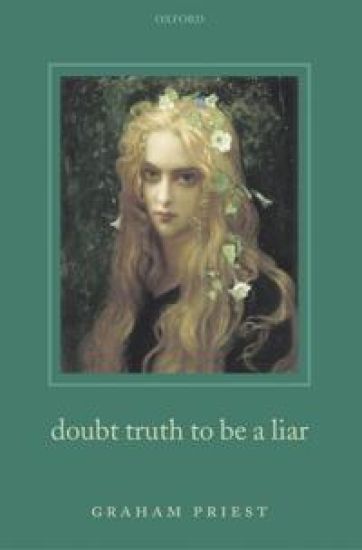
Doubt Truth to be a Liar

Doubt Truth to be a Liar

Graham Priest

Oxford University Press
2008
nidottu
The Law of Non-Contradiction has been high orthodoxy in Western philosophy since Aristotle. The so-called Law has been the subject of radical challenge in recent years by dialetheism, the view that some contradictions are indeed true. Many philosophers have taken the Law to be central to many of our most important philosophical concepts. In Doubt Truth to be a Liar, Graham Priest mounts the case against this. Starting with an analysis of Aristotle on the Law, he discusses the nature of truth, or rationality, or negation, and of logic itself, and argues that the Law is inessential to all of these things. The book takes off from Priest's earlier book, In Contradiction (a second edition of which is also published by OUP), developing its themes largely without recourse to formal logic. The book is required reading for anyone who wishes to understand dialetheism; (especially) for anyone who wishes to continue to endorse the old Aristotelian orthodoxy; and more generally, for anyone who wishes to understand the role that contradiction plays in our thinking.
Beyond the Limits of Thought

Beyond the Limits of Thought

Graham Priest

Clarendon Press
2002
nidottu
Graham Priest presents a new, expanded edition of his highly original exploration of the nature and limits of thought. Drawing on recent developments in the field of logic, Priest shows that the description of such limits leads to contradiction, and argues that these contradictions are in fact true. Beginning with an analysis of the way in which these limits arise in pre-Kantian philosophy, Priest goes on to illustrate how the nature of these limits was theorized by Kant and Hegel. He offers new interpretations of Berkeley's master argument for idealism and Kant on the antinomies. He explores the paradoxes of self-reference, and provides a unified account of the structure of such paradoxes. The book goes on to trace the theme of the limits of thought in modern philosophy of language, including discussions of the ideas of Wittgenstein and Derrida. The second edition includes new chapters on Heidegger and Nagarjuna, as well as reflections on reactions to the first edition. This clear, provocative, and systematic work offers a radically different approach to philosophy and logic.
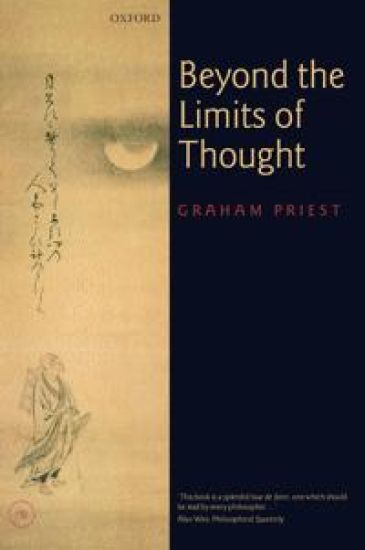
Beyond the Limits of Thought

Beyond the Limits of Thought

Graham Priest

Clarendon Press
2002
sidottu
Graham Priest presents an expanded edition of his exploration of the nature and limits of thought. Embracing contradiction and challenging traditional logic, Priest engages with issues across philosophical borders, from the historical to the modern, from Eastern to Western, and from the continental to the analytic. He has added new chapters on European and Indian philosophy, and reflections on responses to the book.
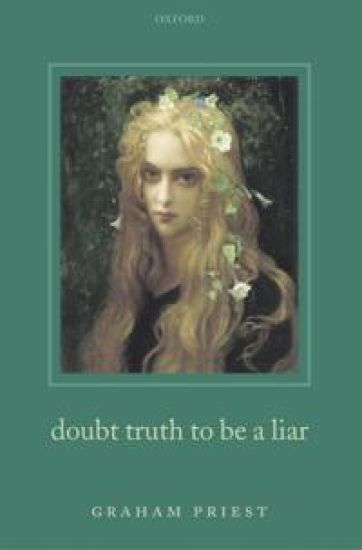
Doubt Truth to be a Liar

Doubt Truth to be a Liar

Graham Priest

Clarendon Press
2005
sidottu
Dialetheism is the view that some contradictions are true. This is a view which runs against orthodoxy in logic and metaphysics since Aristotle, and has implications for many of the core notions of philosophy. Doubt Truth to Be a Liar explores these implications for truth, rationality, negation, and the nature of logic, and develops further the defence of dialetheism first mounted in Priest's In Contradiction, a second edition of which is also available.
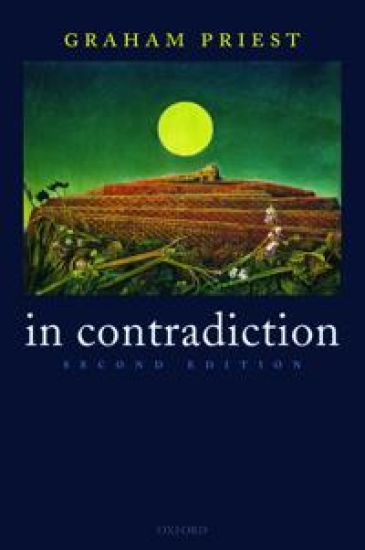
In Contradiction

In Contradiction

Graham Priest

Clarendon Press
2006
sidottu
In Contradiction advocates and defends the view that _ there are true contradictions (dialetheism), a view that _ flies in the face of orthodoxy in Western philosophy since_ Aristotle. The book has been at the centre of the _ controversies surrounding dialetheism ever since its first_ publication in 1987. This second edition of the book _ substantially expands upon the original in various ways, and also contains the author's reflections on developments over the last two decades. Further aspects of dialetheism are _ discussed in the companion volume, Doubt Truth to be a _ Liar, also published by Oxford University Press in 2006.
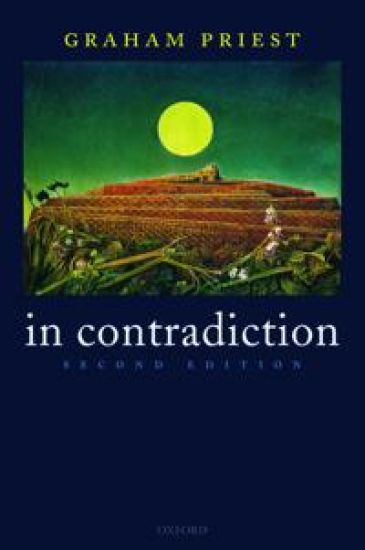
In Contradiction

In Contradiction

Graham Priest

Clarendon Press
2006
nidottu
In Contradiction advocates and defends the view that there are true contradictions (dialetheism), a view that flies in the face of orthodoxy in Western philosophy since Aristotle. The book has been at the centre of the controversies surrounding dialetheism ever since its first publication in 1987. This second edition of the book substantially expands upon the original in various ways, and also contains the author's reflections on developments over the last two decades. Further aspects of dialetheism are discussed in the companion volume, Doubt Truth to be a Liar, also published by Oxford University Press.
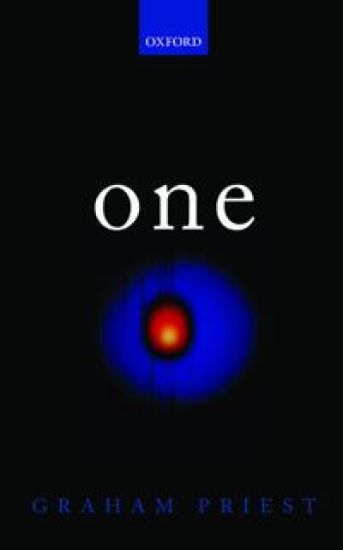
One

One

Graham Priest

Oxford University Press
2014
sidottu
Graham Priest presents an original exploration of philosophical questions concerning the one and the many. He covers a wide range of issues in metaphysics--including unity, identity, grounding, mereology, universals, being, intentionality, and nothingness--and deploys the techniques of paraconsistent logic in order to offer a radically new treatment of unity. Priest brings together traditions of Western and Asian thought that are usually kept separate in academic philosophy: he draws on ideas from Plato, Heidegger, and Nagarjuna, among other philosophers.
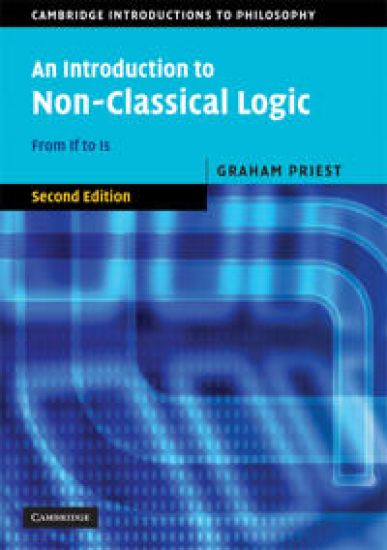
An Introduction to Non-Classical Logic

An Introduction to Non-Classical Logic

Graham Priest

Cambridge University Press
2008
pokkari
This revised and considerably expanded 2nd edition brings together a wide range of topics, including modal, tense, conditional, intuitionist, many-valued, paraconsistent, relevant, and fuzzy logics. Part 1, on propositional logic, is the old Introduction, but contains much new material. Part 2 is entirely new, and covers quantification and identity for all the logics in Part 1. The material is unified by the underlying theme of world semantics. All of the topics are explained clearly using devices such as tableau proofs, and their relation to current philosophical issues and debates are discussed. Students with a basic understanding of classical logic will find this book an invaluable introduction to an area that has become of central importance in both logic and philosophy. It will also interest people working in mathematics and computer science who wish to know about the area.
An Introduction to Non-Classical Logic

An Introduction to Non-Classical Logic

Graham Priest

Cambridge University Press
2008
sidottu
This revised and considerably expanded 2nd edition brings together a wide range of topics, including modal, tense, conditional, intuitionist, many-valued, paraconsistent, relevant, and fuzzy logics. Part 1, on propositional logic, is the old Introduction, but contains much new material. Part 2 is entirely new, and covers quantification and identity for all the logics in Part 1. The material is unified by the underlying theme of world semantics. All of the topics are explained clearly using devices such as tableau proofs, and their relation to current philosophical issues and debates are discussed. Students with a basic understanding of classical logic will find this book an invaluable introduction to an area that has become of central importance in both logic and philosophy. It will also interest people working in mathematics and computer science who wish to know about the area.
Mathematical Pluralism

Mathematical Pluralism

Graham Priest

Cambridge University Press
2024
pokkari
Mathematical pluralism is the view that there is an irreducible plurality of pure mathematical structures, each with their own internal logics; and that qua pure mathematical structures they are all equally legitimate. Mathematical pluralism is a relatively new position on the philosophical landscape. This Element provides an introduction to the position.
Mathematical Pluralism

Mathematical Pluralism

Graham Priest

Cambridge University Press
2024
sidottu
Mathematical pluralism is the view that there is an irreducible plurality of pure mathematical structures, each with their own internal logics; and that qua pure mathematical structures they are all equally legitimate. Mathematical pluralism is a relatively new position on the philosophical landscape. This Element provides an introduction to the position.
Capitalism--its Nature and its Replacement

Capitalism--its Nature and its Replacement

Graham Priest

Taylor Francis Ltd
2021
nidottu
In this third decade of the 21st century, deep problems plague our world. Many people lack adequate nutrition, health care, and education, because–while there is enough wealth for everyone to meet these basic needs–most of it is tightly controlled by precious few. Global warming causes droughts, floods, rising sea levels, and soon the forced migrations of millions of people. In this book, philosopher Graham Priest explains why we find ourselves in this situation, defines the nature of the problems we face, and explains how we might solve and move beyond our current state. The first part of this book draws on Buddhist philosophy, Marx’s analysis of capitalism, and their complementary role in explaining our present crisis and the events that led us here. In the second part of the book, Priest turns to the much harder question of how one might go about creating a more rational and humane world. Here, he draws again on Buddhist and Marxist ideas as well as some key aspects of anarchist thought. His discussion of the need for bottom-up control of production, power, ideology, and an emerging awareness of our interdependence is a must-read for anyone who cares about the future of the planet and our latent capacity to care for each other. Key FeaturesExplains the necessary elements of Marxist, Buddhist, and anarchist thought–no background knowledge of political theory or Buddhism is necessaryShows how Buddhist and Marxist notions of persons are complementaryConvincingly shows capitalism’s role in creating current socio-economic problemsProvides an analysis of the corrosiveness of top-down power structures and why they should be eliminated in a post-capitalist stateDiscusses capitalism’s role in war, environmental degradation, and race and gender-based oppressionThe Open Access version of this book, available at http://www.taylorfrancis.com, has been made available under a Creative Commons Attribution (CC-BY) 4.0 license.