Kirjojen hintavertailu. Mukana 11 244 527 kirjaa ja 12 kauppaa.

Kirjahaku

Etsi kirjoja tekijän nimen, kirjan nimen tai ISBN:n perusteella.

35 kirjaa tekijältä Graham Robson

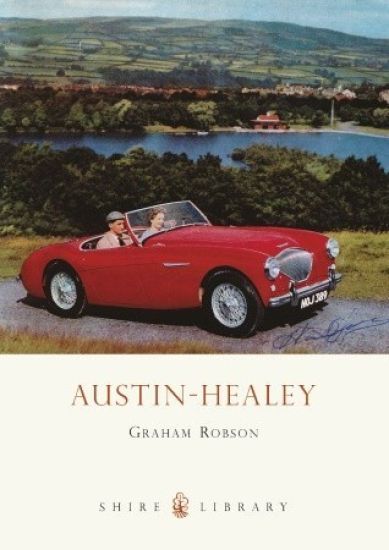
Austin-Healey

Austin-Healey

Graham Robson

Shire Publications
2010
nidottu
Born in 1952, the Austin-Healey 100 soon took the UK and US markets by storm. A beautiful, brutish car, it was what many sporting motorists had been waiting for, and at a relatively affordable price. Following the 100, was the 3000 - a car as successful on the rally stage as it was loved on the open road, and the Sprite - which recreated the market for the cheap 'everyman's' sports car. Graham Robson, an authority on the British motor industry, presents a concise history of Austin-Healey, and the marque's success on road and track. Illustrated throughout, it is an ideal introduction for all lovers of this quintessentially British sports car.
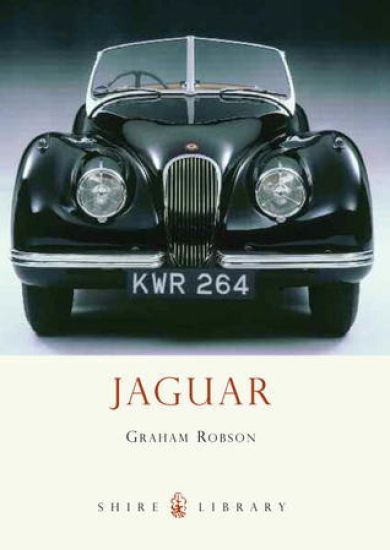
Jaguar

Jaguar

Graham Robson

Shire Publications
2012
nidottu
Sir William Lyons enjoyed a seemingly unstoppable rise to fame and fortune in the motor industry, and the Jaguar brand that he introduced became world-famous. Yet it did not happen overnight. In the 1920s he was in Blackpool, styling motorcycle sidecars, and in the 1930s in Coventry developing the SS motor car, with the stand-alone Jaguar company not appearing until 1945. The company's success was aided by the amazing new XK engine of 1948, by motor racing success at Le Mans, and by the stunning styling of cars like the XK120, the Mk 2 saloons and the extraordinary E-Type. Graham Robson here explores the history of the Jaguar company and its many classic marques.
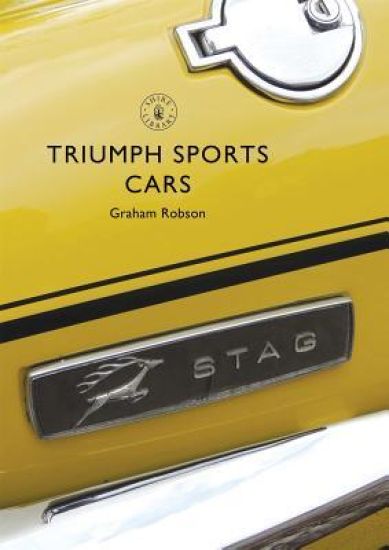
Triumph Sports Cars

Triumph Sports Cars

Graham Robson

Shire Publications
2017
nidottu
In the 1950s and 1960s, British sports car ruled the road, and their charge was led by Triumphs. From the TR2, its first modern sports car, Triumph went on to produce a host of classic sports designs such as the Spitfire, GT, and Stag, as well as more TR models, ending with the TR7 in the late 1970s. These represented the epitome of the contemporary classic British sports car. Fast, nimble, and gorgeous to behold, Triumphs offered the everyday motorist an exhilarating drive at a price that they could afford. Popular both in the UK and the US, the Triumph range helped define the entire genre, with sports cars today like the Mazda MX-5 having their roots in models like the Stag. Illustrated throughout and written by acclaimed motoring writer and historian Graham Robson, this book guides the reader through the history of this classic British marque from its heyday in the 1960s and 1970s through to its eventual demise in the 1980s.
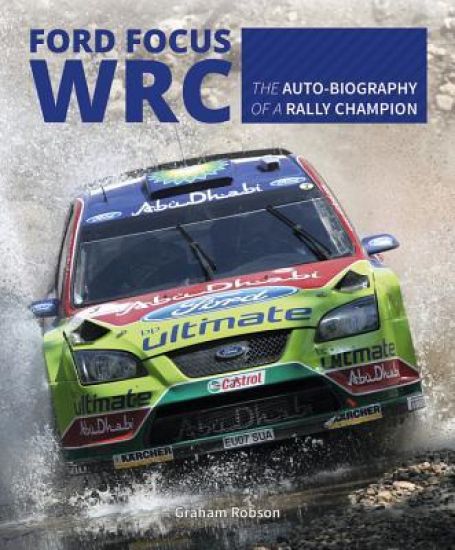
Ford Focus Wrc

Ford Focus Wrc

Graham Robson

Veloce Publishing Ltd
2017
sidottu
When world rallying introduced a new formula for ‘World Rally Cars,’ Ford needed a completely new car to meet the new rules. Malcolm Wilson’s M-Sport organisation, then small but soon to expand considerably, was contracted to do the job, completed the design in less than a year, and spent the next 12 years campaigning this turbocharged four-wheel-drive car all round the world. Working from state-of-the-art premises at Dovenby Hall, near Cockermouth, in Cumbria, M-Sport built a total of no fewer than 97 Focus WRCs, which were always competitive at World level, this being proved by the fact that they won 44 World Championship events. In that time, stellar drivers such as Colin McRae, Carlos Sainz, Markko Märtin, Marcus Grönholm and Mikko Hirvonen all added to the mystique of an ultra-professional organisation, along with substantial support, and sponsorship, from the drinks giant Martini, the oil company BP (and its major subsidiary Castrol), and the state of Abu Dhabi. In building up its own in-house technical expertise, M-Sport not only engineered and developed the entire car on behalf of Ford, but gradually took over development (and eventually manufacture) of the 300bhp 2.0-litre turbocharged engine, and led the design of the complex four-wheel-drive transmissions provided, at first, by Xtrac, and later by Ricardo. M-Sport’s reputation within the sport of rallying was such that, when the regulations once again changed, the company was immediately able to produce a new-generation Fiesta WRC, and continue with its winning ways.
Cortina

Cortina

Graham Robson

Veloce Publishing Ltd
2017
nidottu
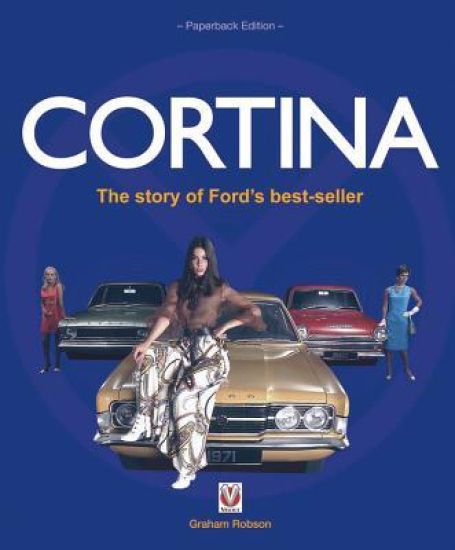
In the 1960s the Cortina was an entirely new type of British car – light yet strong, cheap to buy, and yet roomy. It established a new class of car - the 'Cortina Class' - and Ford's rivals had to rush to compete. Not only was the Cortina the first, it was the best, too; a fascinating, ever-evolving project, around which Ford-Europe's planning always revolved. This book gives all the facts, figures, images and legends of the Cortina story. With over 180 colour and black and white photos this is the fascinating story of an incredibly successful car.
Ford Escort Mk1

Ford Escort Mk1

Graham Robson

Veloce Publishing Ltd
2017
nidottu
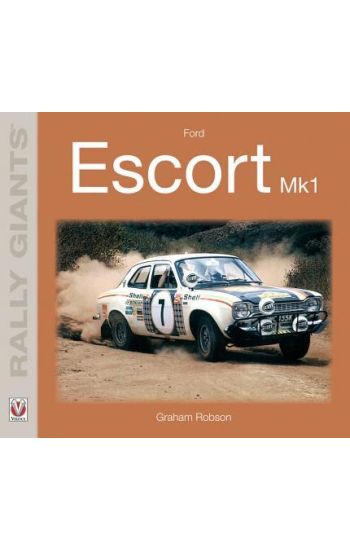
This book describes the birth, development, and rallying career of the original Ford Escort, one of Europe‘s Landmark Rally Cars in the early 1970s, providing a compact and authoritative history of where, how and why it became so important to the sport. The Escort MkI delivered everything its predecessor, the Lotus-Cortina, had promised. Versatile, accessible and competitive at all levels, it dominated international rallying throughout the 1970s, and became hugely popular with teams and spectators alike.
Ford Escort Rs1800

Ford Escort Rs1800

Graham Robson

Veloce Publishing Ltd
2017
nidottu
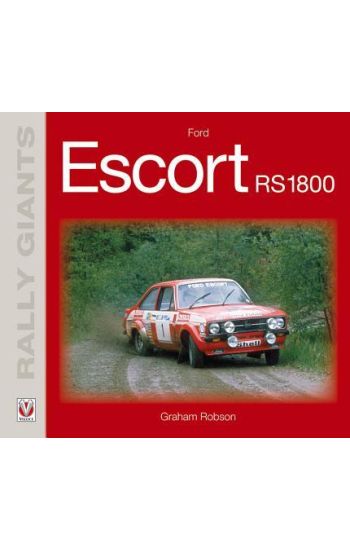
The Ford Escort RS1800 (Escort MkII) is considered a Rally Giant because it was consistently the fastest, most successful and most versatile car in the second half of the 1970s. Developed from the MkI, it was a conventional front engine/rear drive machine, which rallied with 2-litre engines of up to 270bhp. Rally successes were legendary – British (RAC), Safari, Acropolis, Finland (1000 Lakes), Sweden, Portugal, Canada, and many more. The cars won 17 World Rallies between 1975 and 1981, as well as the World Makes Championship in 1979. They were always close to victory, and always competitive. Escort drivers like Bjorn Waldegard (1979) and Ari Vatanen (1981) won the World Drivers' Championships. Over the years hundreds – and this is no exaggeration – of RS1800s were built for motorsport, and were the ideal car for almost any condition in the world because they were very powerful, but simple and rugged. The RS1800 was also the layout template copied by other manufacturers for cars like the Talbot Sunbeam-Lotus, the Vauxhall Chevette HSR and the Nissan GTs of the late 1970s/early 1980s, which were really all Escort 'clones.' Ford claims, and it may be right, that RS1800s have won more rallies, at World, International and National level than any other car in the world.
Audi Quattro

Audi Quattro

Graham Robson

Veloce Publishing Ltd
2017
nidottu
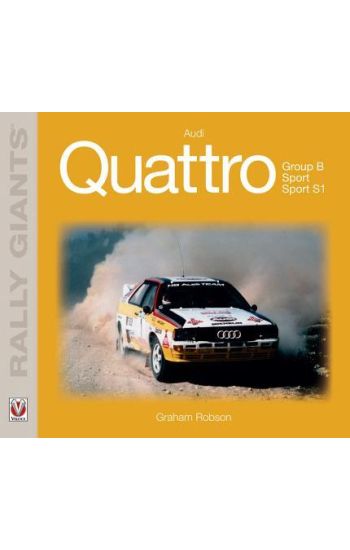
The Audi Quattro is a Rally Giant because it was the first to combine four-wheel-drive and a turbocharged engine – not the most sophisticated, but it was the first, and very successful. It was also the first to run with more than 300bhp. As it was re-homologated/transformed from Group 4 into Group B in 1983, it was also the first successful Group B car. The Quattro dominated rallying from the start of 1981 until late 1984 (when the Peugeot 205 T16 took over). Quattros won no fewer than 23 World rallies from 1981 to 1985, won the Makes Championship in 1982 and 1984, and drivers Hannu Mikkola (1983) and Stig Blomqvist (1984) also won the World Drivers' series in Quattros. The Quattro led the World and European rally scene in the first half of the 1980s.
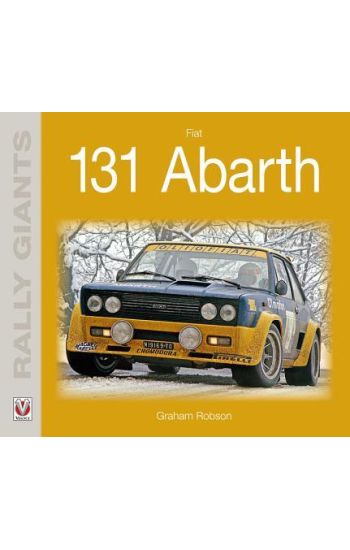
Fiat 131 Abarth

Fiat 131 Abarth

Graham Robson

Veloce Publishing Ltd
2017
nidottu
When Fiat entered rallying in 1970, its ultimate aim was to become World Rally Champion – and the 131 Abarth of 1976-1980 provided the machinery to make that possible. Within the Fiat-Lancia empire, the 131 Abarth not only replaced the 124 Abarth Spider sports car, but was also favoured ahead of the charismatic Lancia Stratos. By 1970s standards, the 131 Abarth was the most extreme, and effective, of all homologation specials. Compared with the 131 family car on which it was originally based, it had different engine, transmission and suspension layouts, was backed by big budgets and by a team of superstar drivers, and was meant to win all round the world. Not only did it start winning World rallies within months of being launched, but in 1977, 1978 and 1980 the 'works' team also won the World Championship for Makes, and set every standard by which Rally Giants were to be judged. The 131 Abarth was backed by a peerless team of engineers, so was there ever any doubt that successors like the Lancia Rally 037 and the Delta Integrale would eventually come from the same stable?
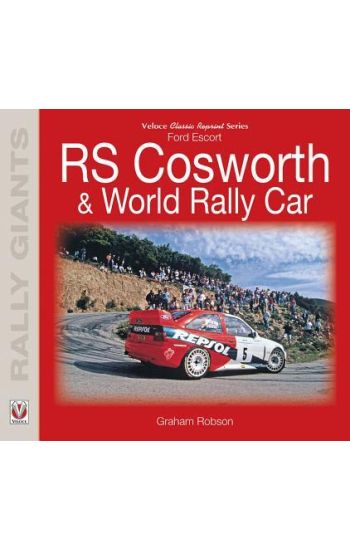
Ford Escort Rs Cosworth & World Rally Car

Ford Escort Rs Cosworth & World Rally Car

Graham Robson

Veloce Publishing Ltd
2017
nidottu
The Escort RS Cosworth, which started rallying in 1993, was one of the most ingenious designs of all time. What started as a shortened Sierra Cosworth 4x4 platform, topped off by a modified Escort cabin and outer skins, was soon developed into a versatile and sophisticated rally car, and eventually became Ford's most successful since the legendary Escorts of the 1970s. Because it was smaller, lighter, and more nimble than any of the Sierras, the combination of Cosworth power, four-wheel-drive transmission, and an effective aerodynamic package made it a Rally Giant in all conditions. With five World victories in its first season, and success all round the world in later years, it was seen in every continent, in all conditions. Drivers like Carlos Sainz, Tommi Makinen and Francois Delecour added their own stardust to a glittering reputation. To meet a change in regulations, the Escort World Rally Car took over in 1997, and also enjoyed years of success. Until the all-new Focus WRC was launched in 1999, this generation of Escorts was the most effective rally car that Ford had ever produced. This book tells the whole story, and is part of the series “Rally Giants” many of which have recently been reprinted by Veloce, due to popular demand.
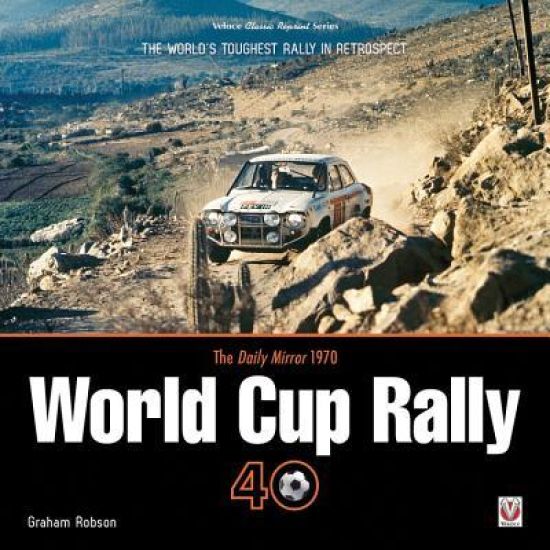
The Daily Mirror 1970 World Cup Rally 40

The Daily Mirror 1970 World Cup Rally 40

Graham Robson

Veloce Publishing Ltd
2017
nidottu
After the first ever intercontinental rally – the London-Sydney in 1968 – there was widespread enthusiasm for an even more difficult test. With the Football World Cup being held in Mexico in 1970, it was the perfect opportunity to hold a parallel, much tougher challenge – the World Cup Rally. Organisers John Sprinzel and John Brown secured sponsorship from the Daily Mirror and planned a unique high-speed event, lasting six weeks and covering 16,000 miles from London to Mexico City via some of the most varying, tortuous and difficult terrain on three continents. Serious works teams such as Ford and British Leyland spent tremendous amounts choosing and developing new cars, completing months-long route surveys, and analysing every detail of diets, oxygen provision, and the number of crew members. Despite all this planning, out of an entry of more than 100, only 23 cars made it to the finish. It was then, and remains now, the toughest rally of all time. This book, now reprinted in paperback, tells the complete story.
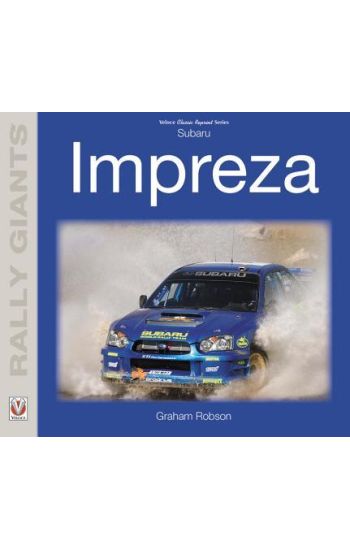
Subaru Impreza

Subaru Impreza

Graham Robson

Veloce Publishing Ltd
2018
nidottu
This book describes the birth, development, and rallying car of the turbocharged, four-wheel-drive Subaru Impreza in the 1990s and early 2000s, providing a compact and authoritative history of where, when and how it became so important to the sport.
Austin Healey 100-6 & 3000

Austin Healey 100-6 & 3000

Graham Robson

Veloce Publishing Ltd
2018
nidottu
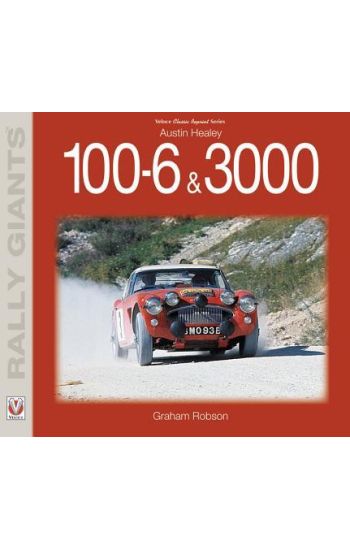
This is the complete story of the Austin Healey 100-6 and 3000’s rallying history, told in all its glory by expert motoring historian Graham Robson, as part of the ‘Rally Giants’ series. In nine eventful years – 1957 to 1965 – the six-cylinder-engined Austin Healey evolved into a formidable and increasingly specialised rally car. By any standards, it was the first of the ‘homologation specials’ – a type made progressively stronger, faster, more versatile, and more suitable for the world's toughest International rallies. Though the motorsport foundations had been laid by the Healey Motor Co. Ltd, the work needed to turn these cars into rock-solid 210bhp projectiles was almost all completed by the world-famous ‘works’ BMC Competitions Department at Abingdon. It was because of their vast experience that the ‘Big Healeys’ (as they were affectionately known) became fast and tough, nimble yet durable, so that they were capable of winning major events wherever traction could be assured. Not only did the works Austin Healeys win some of the world's most famous events – including Liege-Sofia-Liege, Spa-Sofia-Liege and the French and Austrian Alpine rallies – but they were also supremely fast on events like the Tulip, and came so close, so often, to winning their home event, the British RAC Rally, which traditionally ended the season. The drivers – Pat Moss, Donald Morley, Rauno Aaltonen, Timo Makinen and Paddy Hopkirk among them – became heroes, while individual cars seemed to take on a character and reputation of their own. This book lists each and every success, each and every notable car, and traces exactly how the machinery developed, and improved, from one season to the next. Over time, the works cars adopted aluminium cylinder heads and body panels, much-modified chassis, transmission and exhaust systems; they also became supremely strong and could withstand a true battering on the world's toughest events. This book relates how the cars were improved by the engineers, how the drivers came to love their heavy and sometimes self-willed steeds, and how the management team got the most out of everything - machinery, personnel, drivers, and regulations. Heavily illustrated and packed with technical detail, this book will make a welcome addition to any motorsport fan’s library.
Peugeot 205 T16

Peugeot 205 T16

Graham Robson

Veloce Publishing Ltd
2018
nidottu
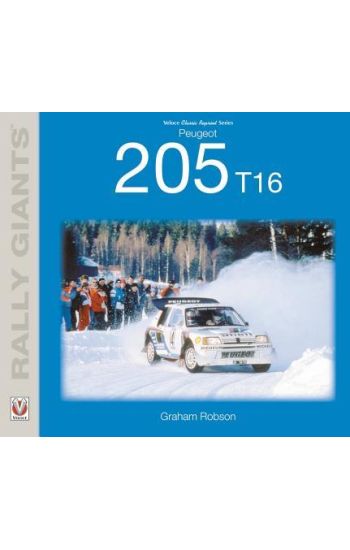
This is the complete story of the Peugeot 205’s rallying history, told in all its glory by expert motoring historian Graham Robson, as part of the ‘Rally Giants’ series. Four-wheel-drive had been authorised in rallying from 1979, but for a time no serious car-manufacturer even tried to harness it to their cars. Although it was Audi who produced the world’s first rally-winning four-wheel-drive car – the Quattro – it was Peugeot who designed, developed, campaigned and won with the first truly sophisticated four-wheel-drive Group B Car – the 205 Turbo 16. It was the first truly great, purpose-designed, Group B car. Determined to win at almost any cost, Peugeot hired Jean Todt (who would later transform the fortunes of the Ferrari F1 organisation) in 1981, and set him an ambitious target. His dream car had to be running in 1983, homologated in 1984, and capable of winning World Championships by 1985. Nothing, no excuses and no lack of application, was to get in the way of that. Apart from being obliged to use the silhouette of the still-secret new 205 road car, Todt was able ask for anything. Getting approval for whatever he needed and fast-tracking the engineering of the four-wheel-drive rally was not an issue in reaching one simple objective – victory! This book tells the detailed story of all the cars, the influences, and the personalities behind a magnificent success story. No sooner had the new turbocharged, transverse-mid-engined car started competing, than it was ready to win, yet its dominant career was cut short at the end of 1986 by an abrupt change in rallying regulations. This is the engineering story laid out in great detail, as well as the interaction between company personalities, superstar drivers (including Ari Vatanen) and the highly-charged atmosphere of motorsport at this time. Because Group B was cancelled even before the 205 T16 had reached maturity, it went on to have a successful career in desert raid rallies, and at Pike Peak in the USA, all of which is described in this amazingly authoritative study. Packed with illustrations, technical details, facts, figures and successes of this innovative car, this book is a must for any rally fan.
Toyota Celica Gt-Four

Toyota Celica Gt-Four

Graham Robson

Veloce Publishing Ltd
2018
nidottu
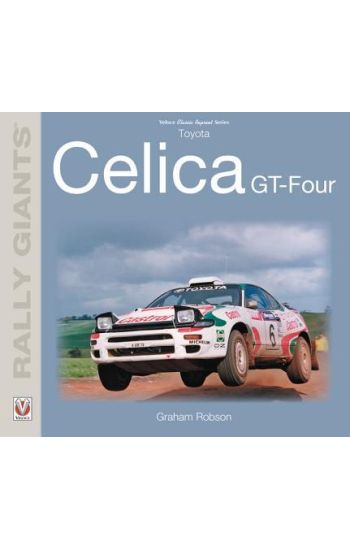
This is a comprehensive study of the rallying career of the Toyota Celica GT-Four. Starting in 1988, three generations of this effective turbocharged four-wheel-drive car – known by enthusiasts as ST165, ST185 and ST205 types – fought for World Championships, and were amazingly successful for almost a decade. All types combined high-performance, great reliability, and superb preparation by Toyota Team Europe (based in Cologne, Germany), their 300bhp/four-wheel-drive chassis package being among the best in the world. Over the years, the cars won some of the roughest events in the world (such as the Safari and the Acropolis), and were also supreme on tarmac, snow and ice, including Monte Carlo. After fighting a running battle with Lancia for years, the Celicas won the World Manufacturers' Championship twice. Its famous drivers included Carlos Sainz (World Champion in 1990 and 1992), Juha Kankkunen (Champion in 1993) and Didier Auriol (Champion in 1994). Never far from controversy, and at times embroiled in technical and regulatory disputes, these cars brought real glamour to the colourful sport of rallying, and were only replaced by an even higher-tech Toyota – the Corolla World Rally Car – in 1997.
Saab 96 & V4

Saab 96 & V4

Graham Robson

Veloce Publishing Ltd
2018
nidottu
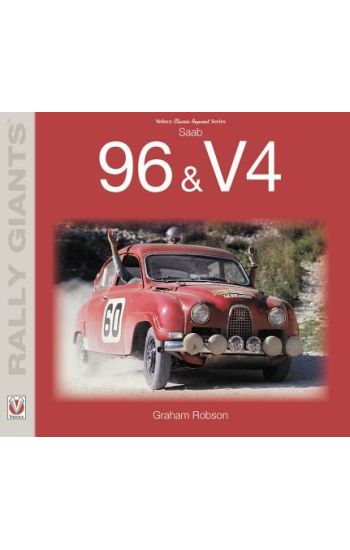
The complete story of the front-wheel-drive Saab 96 made the brand into a rally icon in the 1960s. Superstar driving from Erik Carlsson, his wife Pat Moss-Carlsson and – later – from Stig Blomqvist, all brought real publicity and admiration for a car that always lacked the sheer straight-line performance of its rivals. Saabs like this, however, never wanted for strength, or for amazing handling and traction, and they succeeded in events as diverse as the Monte Carlo, Britain's RAC rally, special stage events in every Scandinavian country, and the rough-and-tough Spa-Sofia-Liege Marathon. The big change came in 1967, when the 96 became the V4, looking almost the same as before, but with a new and more powerful four-stroke Ford-Germany V4 engine. Works cars continued to be competitive in carefully chosen events for many years, and it was only the arrival of much more specialised rivals that made them outdated. Saab, though, was not finished with rallying, as the V4's successors, the much larger and more powerful 99 and 99 Turbo types, proved. More than any other car of its era, the 96 and V4 models proved that front-wheel-drive allied to true superstar driving could produce victory where no-one expected it.
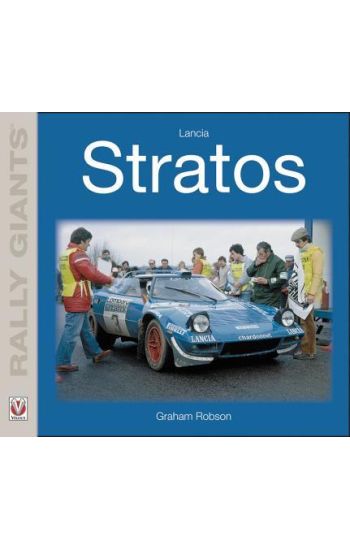
Lancia Stratos

Lancia Stratos

Graham Robson

Veloce Publishing Ltd
2019
nidottu
This book describes the birth, development and rallying career of the Lancia Stratos, Europe’s very first purpose-built rally car, in the mid/late 1970s. It provides a compact and authoritative history of where, when and how it became so important to the sport, as well as telling the story of the team. The book is part of Graham Robson’s definitive “Rally Giants” series, published by Veloce.
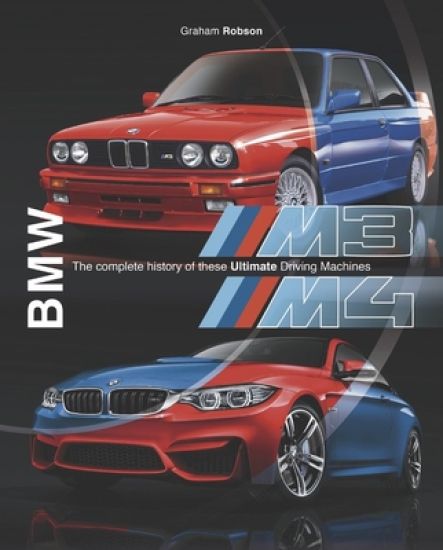
BMW M3 & M4

BMW M3 & M4

Graham Robson

Veloce Publishing Ltd
2021
sidottu
This new edition explores all aspects of the M3’s history, including the race and rally successes worldwide, supported by full and detailed specifications for each generation of the model. It expands on the previous edition, to bring the story right up to the present day, with details of all models produced between 2013 and 2021, including the new M4. Developed in the 1980s, the BMW M3 was intended to be the world’s most successful racing saloon car. Not only did it achieve that in its very first season of motorsport, but went on to achieve lasting commercial success as a high performance road car. Fully illustrated throughout, with a lavish array of colour photographs and magnificently detailed cutaway drawings of mechanical equipment, this comprehensive and authoritative book is a must for all BMW M3 and M4 enthusiasts.
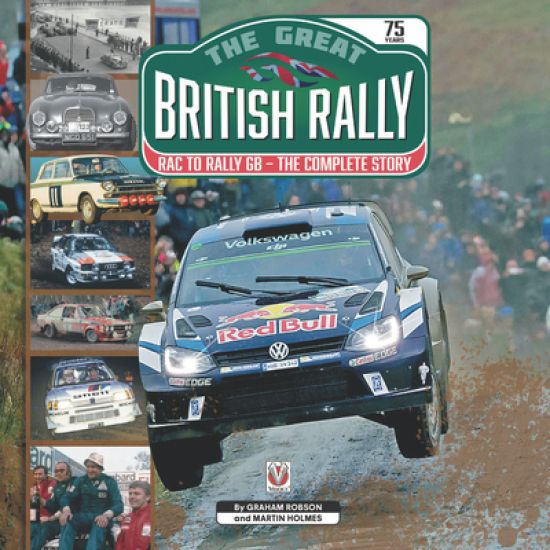
The Great British Rally

The Great British Rally

Graham Robson

Veloce Publishing Ltd
2020
nidottu
Now in paperback, the complete history of British international rally events, starting with the very first RAC rally of 1932, which included 1000 miles of road motoring, when a mere three driving tests were needed to produce a result. By 1951 an international permit had been achieved, a speed element was included, and the ‘Rally of the Tests’ ran until 1960. From 1961, the event took on a number of high-speed, loose-surfaced Special Stages, the Scandinavian influence became clear, and the event took on a World Championship qualification in 1973. In that time, competing cars had progressed from having perhaps 50bhp to at least 300bhp, and even more high-tech machines with 500bhp and four-wheel-drive would follow. By then the RAC Rally was – and remains in its present form as Wales Rally GB – one of the three most important rallies in the world. Every ‘works’ team makes sure that it is represented, and it has a very important image throughout the world. Major sponsors embraced the event from the 1960s – first The Sun and Daily Mirror, then Lombard, and Network Q, and finally the Welsh government – which in recent years has become a very high-profile showcase for the world’s most exciting cars. Few other British International events have such a long and distinguished record. The 75th running of this event takes place in 2019. With year-by-year accounts of all events in the Rally’s history, copiously illustrated with period photographs, and covering the various challenges posed by such crises as foot and mouth disease, weather conditions and controversy over rules and regulations, this book is the definitive guide.
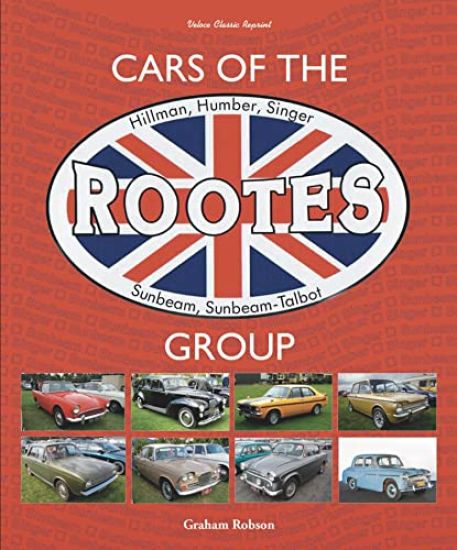
Cars of the Rootes Group

Cars of the Rootes Group

Graham Robson

DAVID CHARLES
2023
sidottu
From the early 1930s until the mid-1970s the Rootes Group was one of Britain’s foremost car manufacturers, producing and selling a multitude of models under the Hillman, Humber, Singer, Sunbeam and Sunbeam-Talbot badges. Some of these cars have been the subject of individual model histories, but this is the first book to bring the total Rootes model line together in one major reference book. Written by one of Britain’s most able car historians, the late Graham Robson, this book has now been reprinted for future generations to enjoy. It covers the company’s history, and details all the major marques within the Rootes Group. The book looks at the overall marketing strategies as well as the widespread use of common components across the range. Individual descriptions of each model built results in a book of great breadth and absorbing interest, that will be welcomed back by all classic car enthusiasts.