Kirjojen hintavertailu. Mukana 12 390 323 kirjaa ja 12 kauppaa.

Kirjahaku

Etsi kirjoja tekijän nimen, kirjan nimen tai ISBN:n perusteella.

5 kirjaa tekijältä Grant N. Havers

Lincoln and the Politics of Christian Love

Lincoln and the Politics of Christian Love

Grant N. Havers

University of Missouri Press
2009
sidottu
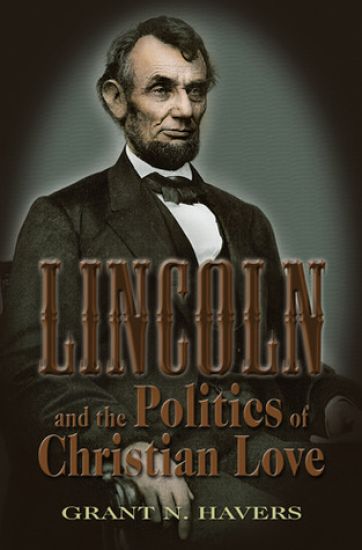
America has seen faith-based initiatives and 'the audacity of hope' in twenty-first-century politics, but few participants in our political scene have invoked the other Christian virtue of charity as a guiding principle. Abraham Lincoln extolled the merit of 'loving thy neighbor as thyself', but a discussion of Christian love is noticeably absent from today's debates about religion and democracy. In this provocative book, Grant Havers argues that charity is a central tenet of what Lincoln once called America's 'political religion'. He explores the implications of making Christian love the highest moral standard for American democracy, showing how Lincoln's legacy demands that a true democracy be charitable toward all - and that only a people who lived according to such ideals could succeed in building democracy as Lincoln understood it. Havers argues that it is simplistic to conflate Lincoln's invocation of 'with charity for all' with his abiding support for the ideal of human equality. The ethic of charity in his view also brought a uniquely Christian realism to the universalism of democracy. He also describes how, since World War I, intellectuals and political leaders have denied that there exists a necessary relation between democracy and Christian love while proposing that democracy is sufficiently ethical without reliance on a specific religious tradition. Today's neoconservatives and liberals instead posit a universal yearning for democracy that requires no foundation in the ethic of charity. Havers shows that this democratic universalism, espoused by those who believe a 'chosen people' should uphold the natural rights of humanity, is alien to the sober thought of both the Founders and Lincoln. This carefully argued work defends Lincoln's understanding of charity as essential to democracy while emphasizing the difficulty of conflating this ethic with the desire to spread democracy to people not of Christian heritage. In considering the prospect of America's leaders rediscovering a moral foreign policy based on charity rather than the costly idolization of democracy, ""Lincoln and the Politics of Christian Love"" contributes to the wider debate over both the meaning of religion in American politics and the mission of America in the world - and opens a new window on Lincoln's lasting legacy.
Leo Strauss and Anglo-American Democracy

Leo Strauss and Anglo-American Democracy

Grant N. Havers

Northern Illinois University Press
2013
sidottu
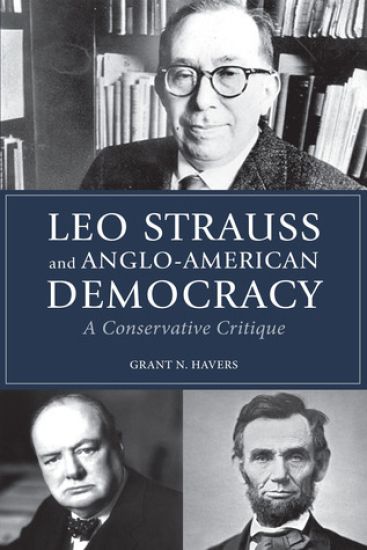
Leo Strauss and Anglo-American Democracy critically interprets Strauss's political philosophy from a conservative perspective. Most mainstream readers of Strauss have either condemned him from the Left as an extreme right-wing opponent of liberal democracy or celebrated him from the Right as a traditional defender of Western civilization. Rejecting both portrayals, Grant N. Havers shifts the debate beyond the conventional parameters stating that Strauss was neither a man of the Far Right nor a conservative but. in fact a secular Cold War liberal. In Leo Strauss and Anglo-American Democracy Havers contends that the most troubling implication of Straussianism is that it provides an ideological rationale for the aggressive spread of democratic values on a global basis while ignoring the preconditions that make these values possible. Concepts such as the rule of law, constitutional government, Christian morality, and the separation of church and state are not easily transplanted beyond the historic confines of Anglo-American civilization, as recent wars to spread democracy have demonstrated.
Leo Strauss and Anglo-American Democracy

Leo Strauss and Anglo-American Democracy

Grant N. Havers

CORNELL UNIVERSITY PRESS
2024
pokkari
Leo Strauss and Anglo-American Democracy critically interprets Strauss's political philosophy from a conservative perspective. Most mainstream readers of Strauss have either condemned him from the Left as an extreme right-wing opponent of liberal democracy or celebrated him from the Right as a traditional defender of Western civilization. Rejecting both portrayals, Grant N. Havers shifts the debate beyond the conventional parameters stating that Strauss was neither a man of the Far Right nor a conservative but. in fact a secular Cold War liberal. In Leo Strauss and Anglo-American Democracy Havers contends that the most troubling implication of Straussianism is that it provides an ideological rationale for the aggressive spread of democratic values on a global basis while ignoring the preconditions that make these values possible. Concepts such as the rule of law, constitutional government, Christian morality, and the separation of church and state are not easily transplanted beyond the historic confines of Anglo-American civilization, as recent wars to spread democracy have demonstrated.
The Medium Is Still the Message

The Medium Is Still the Message

Grant N. Havers

CORNELL UNIVERSITY PRESS
2025
pokkari
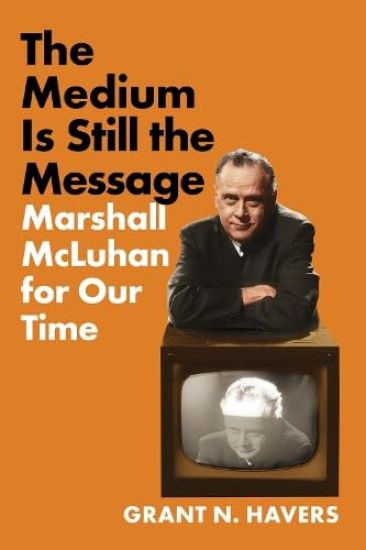
The Medium Is Still the Message presents Marshall McLuhan, history's foremost philosopher of media, as the indispensable guide for understanding the impact of technologies. McLuhan (1911–1980) shows that media are not simply tools of communication: they create new environments with transformational effects on politics, economics, culture, identity, religion, and nature. Grant N. Havers argues that McLuhan's key insight—"the medium is the message"—is even more relevant today as humanity grapples with the unintended effects of new media. As McLuhan demonstrated, a lack of understanding about the power of media technologies allows these entities to become idols that enslave their makers. At the same time, they encourage human beings to act like gods who can reinvent reality itself, all the while leading to the decline of literacy, the weakening of democracy, the resurgence of tribalism within the global village, and the elusive search for identity in cyberspace. The Medium Is Still the Message ultimately offers good news: using McLuhan's insights, human beings can escape the technological cave that they have fashioned for themselves.
The Medium Is Still the Message

The Medium Is Still the Message

Grant N. Havers

CORNELL UNIVERSITY PRESS
2025
sidottu
The Medium Is Still the Message presents Marshall McLuhan, history's foremost philosopher of media, as the indispensable guide for understanding the impact of technologies. McLuhan (1911–1980) shows that media are not simply tools of communication: they create new environments with transformational effects on politics, economics, culture, identity, religion, and nature. Grant N. Havers argues that McLuhan's key insight—"the medium is the message"—is even more relevant today as humanity grapples with the unintended effects of new media. As McLuhan demonstrated, a lack of understanding about the power of media technologies allows these entities to become idols that enslave their makers. At the same time, they encourage human beings to act like gods who can reinvent reality itself, all the while leading to the decline of literacy, the weakening of democracy, the resurgence of tribalism within the global village, and the elusive search for identity in cyberspace. The Medium Is Still the Message ultimately offers good news: using McLuhan's insights, human beings can escape the technological cave that they have fashioned for themselves.