Kirjojen hintavertailu. Mukana 11 636 426 kirjaa ja 12 kauppaa.

Kirjahaku

Etsi kirjoja tekijän nimen, kirjan nimen tai ISBN:n perusteella.

21 kirjaa tekijältä Grant Rodwell

Risk Society and School Educational Policy
Risk Society and School Educational Policy explores the impact of risk society on policy in the US, UK and Australia through both practical and theoretical perspectives. The book develops an in-depth understanding of risk society itself, and guides the reader in applying this knowledge to the problem of how this impacts policy and practice in school education.Drawing on work by Ulrich Beck and Anthony Giddens, Rodwell explores the development of risk society as a field of interest, discussing its history, contemporary significance and links with neoliberalism, school education, and both mainstream and social media. He also examines its impact on government policies and the practical implications of how this impacts the educational experiences of children around the globe today.A book for policy professionals, researchers, academics and postgraduate students interested in Education Studies, Theory and Policy, and International and Comparative Education, Risk Society and School Educational Policy is the first international academic monograph published in the field.
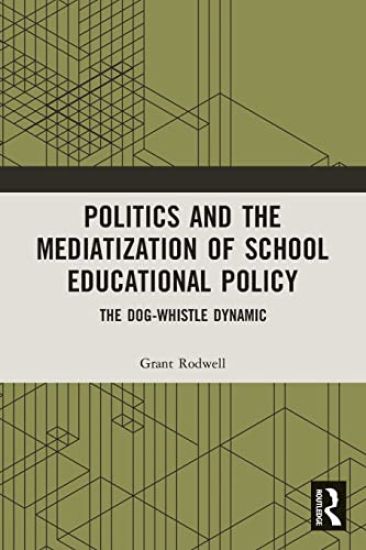
Politics and the Mediatization of School Educational Policy
Despite increasing prevalence over the past three decades and a clear impact on school education policy and practice, education’s connection to dog-whistle journalism and politics has not yet been fully explored. Addressing this gap, Politics and the Mediatization of School Educational Policy examines the emergence and current impact of dog-whistle politics and journalism on education in Australia, the US and the UK, questioning what is at stake when this political dog whistle is directed at school educational policy and practice.Exploring common targets for dog-whistling, such as teaching standards, teacher quality and specific curriculum areas, such as history, sex and health education, the book considers the broader social issues of xenophobia and racism, as well as the decline of print media and rise of digital news sources in its place, with each chapter including an in-depth discussion using peer-reviewed literature on the subject. Following the trail of dog whistles impacting in school educational policy and practice across these three countries, this book explores: To what extent is the dog-whistle dynamic embedded in school educational policy and practice? To what extent does the dog-whistle dynamic affect our understanding of school educational policy and practice? How might we explain the continued flurry of dog whistles impacting school educational policy and practice?As the phenomenon of the dog whistle intensifies both nationally and internationally, this timely and thought-provoking book is necessary reading for academics, postgraduate researchers and all members of school communities.
Risk Society and School Educational Policy
Risk Society and School Educational Policy explores the impact of risk society on policy in the US, UK and Australia through both practical and theoretical perspectives. The book develops an in-depth understanding of risk society itself, and guides the reader in applying this knowledge to the problem of how this impacts policy and practice in school education.Drawing on work by Ulrich Beck and Anthony Giddens, Rodwell explores the development of risk society as a field of interest, discussing its history, contemporary significance and links with neoliberalism, school education, and both mainstream and social media. He also examines its impact on government policies and the practical implications of how this impacts the educational experiences of children around the globe today.A book for policy professionals, researchers, academics and postgraduate students interested in Education Studies, Theory and Policy, and International and Comparative Education, Risk Society and School Educational Policy is the first international academic monograph published in the field.
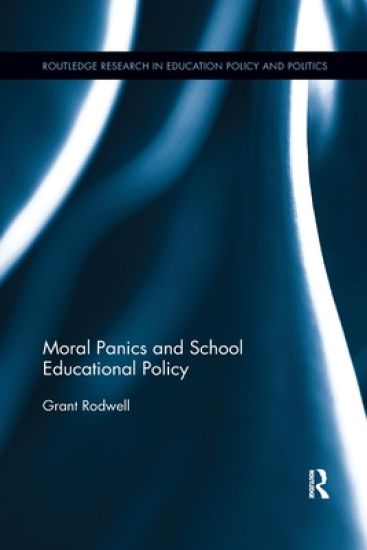
Moral Panics and School Educational Policy
How do the moral panics that have plagued school education since it’s nineteenth-century beginnings impact current school education policy? Research has shown young people to be particularly vulnerable to moral panics and, with the rise of social media, the impact of moral panics on school education is growing exponentially. Increasingly, they are reaching into the highest levels of national governments and, so powerful are their effects, some politicians choose to orchestrate them for their own political ends. For many educational administrators, the management of the ‘fallout’ of moral panics has become a time-consuming part of their day, as well as being a problematic time for parents, teachers and students.First developed by British and Canadian sociologists such as Stanley Cohen (1972), moral panic theory has evolved substantially since its early focus on adolescent deviant behaviour, and is now a part of common media talk. This book addresses the need for a single monograph on the topic, with reference to historical moral panics such as those associated with sexuality education, but also wider societal moral panics such as those associated with obesity. Teachers, students, indeed all members of school communities, along with educational administrators and politicians can learn from this study of the impact of moral panics on school educational policy.
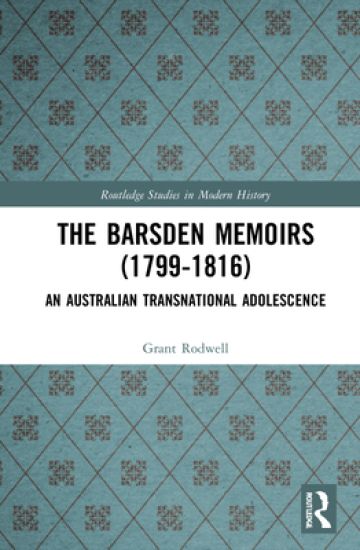
The Barsden Memoirs (1799-1816)

The Barsden Memoirs (1799-1816)

Grant Rodwell

TAYLOR FRANCIS LTD
2023
nidottu
Covering the life of Josephus Henry Barsden from his birth in 1799 through his childhood to 16 years of age, the Barsden memoirs describe events from a Sussex smugglers’ inn, a convict ship to the colony of New South Wales, sealing and whaling expeditions to Van Diemen’s Land, and Barsden’s participation in a Tahitian civil war. The author assesses the value of memoirs, and of these memoirs in particular to students of history in respect to the transnational paradigm. He tests the historicity and veracity of their contents, and provides an engaging exegesis and graphical supplement of its contents. Of central importance is Barsden’s account of the Battle of Fe’i Pi, which was in many respects the Pacific’s equivalent to the contemporaneous Battle of Waterloo, such was its lasting impact on Pacific geopolitics. This was no ordinary childhood, and poses many questions about a transnational adolescent’s impact on major events.A fascinating read for scholars and students of Australian, Pacific, and British Colonial History, written with academic rigour but accessible to non-specialists.
The Barsden Memoirs (1799-1816)

The Barsden Memoirs (1799-1816)

Grant Rodwell

TAYLOR FRANCIS LTD
2022
sidottu
Covering the life of Josephus Henry Barsden from his birth in 1799 through his childhood to 16 years of age, the Barsden memoirs describe events from a Sussex smugglers’ inn, a convict ship to the colony of New South Wales, sealing and whaling expeditions to Van Diemen’s Land, and Barsden’s participation in a Tahitian civil war. The author assesses the value of memoirs, and of these memoirs in particular to students of history in respect to the transnational paradigm. He tests the historicity and veracity of their contents, and provides an engaging exegesis and graphical supplement of its contents. Of central importance is Barsden’s account of the Battle of Fe’i Pi, which was in many respects the Pacific’s equivalent to the contemporaneous Battle of Waterloo, such was its lasting impact on Pacific geopolitics. This was no ordinary childhood, and poses many questions about a transnational adolescent’s impact on major events.A fascinating read for scholars and students of Australian, Pacific, and British Colonial History, written with academic rigour but accessible to non-specialists.
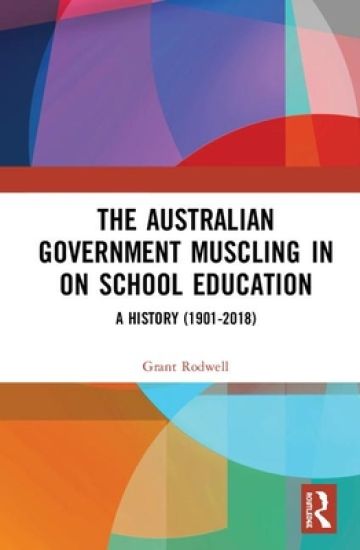
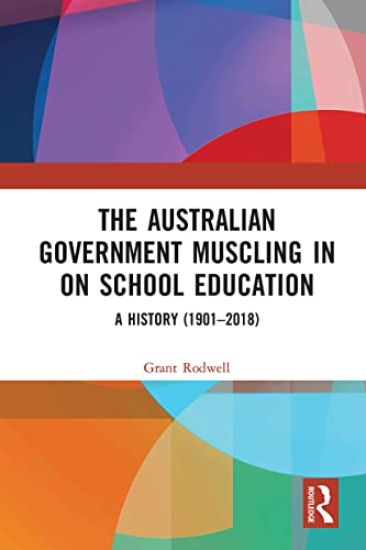
The Australian Government Muscling in on School Education
Despite the Australian Constitution implying school education to be a state responsibility, the Commonwealth has increasingly interfered with state school education. The Australian Government Muscling in on School Education therefore offers a historical account of this government involvement in Australian education, from federation to the present day, providing a much-needed, fully updated and relevant overview the topic.Arguing that education has become an arena for competing political forces, this book examines the powerful influence of the Commonwealth over education and the political motives behind it, exploring how politics influences aspects of the curriculum, teaching standards, assessment and reporting, funding, teacher selection and policy more broadly. Ultimately questioning whether this influence is in the interests of the members of the community who depend on education, the book holds government engagement in education to account. Taking the major epochs of federalism as an organizing framework, the book’s chapters include explorations of: The efficiency dynamic and the progressive years (1919–39) Postwar imperatives and the Menzies years (1949–72) Coordinative federalism and treading softly: the Whitlam years (1972–5) and Fraser years (1975–83) Corporate federalism: the Hawke/Keating years (1983–96) Supply-side federalism and globalization: the Howard years (1996–2007) National control and the Rudd, Gillard, Abbott, Turnbull and Morrison years (2007–15)A thorough and significant examination of the historical engagement of the Australian government in education, this book is essential reading for student teachers and postgraduate students in education studies and politics.
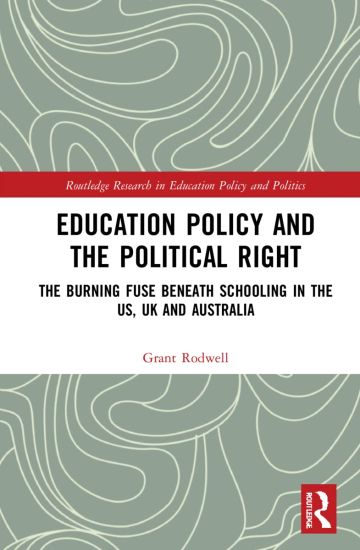
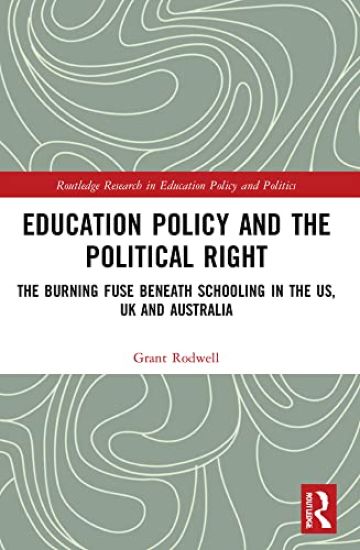
Education Policy and the Political Right

Education Policy and the Political Right

Grant Rodwell

TAYLOR FRANCIS LTD
2021
sidottu
This work attempts a comparative description and analysis, focusing on the US, the UK, and Australia on the topic of the Right, educational policy, and schooling. It adopts as its underlying theme the burning fuse in tracing the topic back to Joseph de Maistre a Rightist who fled revolutionary France to seek safety in the company of Tsar Alexander I’s Russian Empire. Here, he had much to say about school education, not for all, but rather the “deserving” social elite. During the past three or four decades in the US, the UK, and Australia, the Right has been remarkably successful in amassing political power. And in doing so, the right of politics in these countries has reshaped school educational policy and practice, a necessary step in securing the future of the Right as a political force. Moreover, even during the years the Right has been on the opposition benches in these countries, such has been the strength of their political force that governments of the Left have acquiesced to much of their school educational policy. A pioneering effort, this book asserts that to understand school educational policy in the third decade of the 21st century, we need to comprehend the politics of the Right. This book will be of interest to researchers and postgraduate students interested in Education Studies, Theory and Policy, and International and Comparative Education.
Education Policy and the Political Right

Education Policy and the Political Right

Grant Rodwell

TAYLOR FRANCIS LTD
2024
nidottu
This work attempts a comparative description and analysis, focusing on the US, the UK, and Australia on the topic of the Right, educational policy, and schooling. It adopts as its underlying theme the burning fuse in tracing the topic back to Joseph de Maistre a Rightist who fled revolutionary France to seek safety in the company of Tsar Alexander I’s Russian Empire. Here, he had much to say about school education, not for all, but rather the “deserving” social elite. During the past three or four decades in the US, the UK, and Australia, the Right has been remarkably successful in amassing political power. And in doing so, the right of politics in these countries has reshaped school educational policy and practice, a necessary step in securing the future of the Right as a political force. Moreover, even during the years the Right has been on the opposition benches in these countries, such has been the strength of their political force that governments of the Left have acquiesced to much of their school educational policy. A pioneering effort, this book asserts that to understand school educational policy in the third decade of the 21st century, we need to comprehend the politics of the Right. This book will be of interest to researchers and postgraduate students interested in Education Studies, Theory and Policy, and International and Comparative Education.
The Australian Government Muscling in on School Education
Despite the Australian Constitution implying school education to be a state responsibility, the Commonwealth has increasingly interfered with state school education. The Australian Government Muscling in on School Education therefore offers a historical account of this government involvement in Australian education, from federation to the present day, providing a much-needed, fully updated and relevant overview the topic.Arguing that education has become an arena for competing political forces, this book examines the powerful influence of the Commonwealth over education and the political motives behind it, exploring how politics influences aspects of the curriculum, teaching standards, assessment and reporting, funding, teacher selection and policy more broadly. Ultimately questioning whether this influence is in the interests of the members of the community who depend on education, the book holds government engagement in education to account. Taking the major epochs of federalism as an organizing framework, the book’s chapters include explorations of:The efficiency dynamic and the progressive years (1919–39)Postwar imperatives and the Menzies years (1949–72)Coordinative federalism and treading softly: the Whitlam years (1972–5) and Fraser years (1975–83)Corporate federalism: the Hawke/Keating years (1983–96)Supply-side federalism and globalization: the Howard years (1996–2007)National control and the Rudd, Gillard, Abbott, Turnbull and Morrison years (2007–15)A thorough and significant examination of the historical engagement of the Australian government in education, this book is essential reading for student teachers and postgraduate students in education studies and politics.
Politics and the Mediatization of School Educational Policy
Despite increasing prevalence over the past three decades and a clear impact on school education policy and practice, education’s connection to dog-whistle journalism and politics has not yet been fully explored. Addressing this gap, Politics and the Mediatization of School Educational Policy examines the emergence and current impact of dog-whistle politics and journalism on education in Australia, the US and the UK, questioning what is at stake when this political dog whistle is directed at school educational policy and practice.Exploring common targets for dog-whistling, such as teaching standards, teacher quality and specific curriculum areas, such as history, sex and health education, the book considers the broader social issues of xenophobia and racism, as well as the decline of print media and rise of digital news sources in its place, with each chapter including an in-depth discussion using peer-reviewed literature on the subject. Following the trail of dog whistles impacting in school educational policy and practice across these three countries, this book explores:To what extent is the dog-whistle dynamic embedded in school educational policy and practice?To what extent does the dog-whistle dynamic affect our understanding of school educational policy and practice?How might we explain the continued flurry of dog whistles impacting school educational policy and practice?As the phenomenon of the dog whistle intensifies both nationally and internationally, this timely and thought-provoking book is necessary reading for academics, postgraduate researchers and all members of school communities.
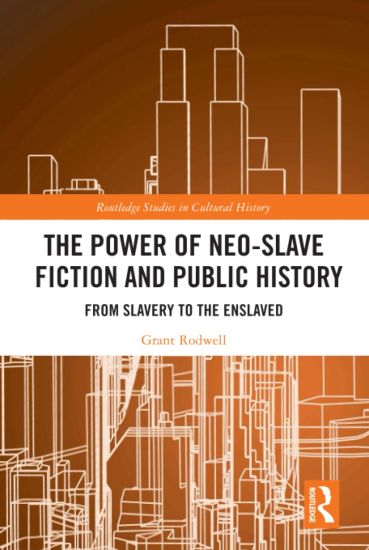
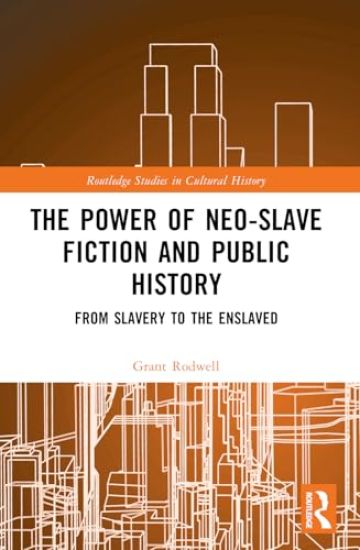
The Power of Neo-Slave Fiction and Public History
Professional historians, schools, colleges and universities are not alone in shaping higher-order understanding of history. The central thesis of this book is the belief historical fiction in text and film shape attitudes towards an understanding of history as it moves the focus from slavery to the enslaved—from the institution to the personal, families and feminist accounts.In a broader sense, this contributes to a public history. In part, using the quickly growing corpus of neo-slave counterfactual narratives, this book examines the notion of the emerging slavery public history, and the extent to which this is defined by literature, film and other forms of artistic expression, rather than non-fiction—popular or scholarly—and education in history in the school systems. Inter alia, this book looks to the validity of historical fiction in print or in film as a way of understanding history. A focal point of this book is the hypothesis that neo-slave narratives—supported by selective triangulated readings and viewings of scholarly works and non-fiction—have assisted greatly in re-shaping the historiography of antebellum slavery, and scholarly historians followed in the wake of these developments. Essentially, this has meant a re-shaping of the historiography with a focus from slavery to that of the enslaved. Moreover, it has opened new vistas for a public history, devoid of top-down authoritative scholarship.An important and provocative read for students and scholars interested in understanding the history of slavery, its harrowing effects and how it was culturally defined.
The Power of Neo-Slave Fiction and Public History
Professional historians, schools, colleges and universities are not alone in shaping higher-order understanding of history. The central thesis of this book is the belief historical fiction in text and film shape attitudes towards an understanding of history as it moves the focus from slavery to the enslaved—from the institution to the personal, families and feminist accounts.In a broader sense, this contributes to a public history. In part, using the quickly growing corpus of neo-slave counterfactual narratives, this book examines the notion of the emerging slavery public history, and the extent to which this is defined by literature, film and other forms of artistic expression, rather than non-fiction—popular or scholarly—and education in history in the school systems. Inter alia, this book looks to the validity of historical fiction in print or in film as a way of understanding history. A focal point of this book is the hypothesis that neo-slave narratives—supported by selective triangulated readings and viewings of scholarly works and non-fiction—have assisted greatly in re-shaping the historiography of antebellum slavery, and scholarly historians followed in the wake of these developments. Essentially, this has meant a re-shaping of the historiography with a focus from slavery to that of the enslaved. Moreover, it has opened new vistas for a public history, devoid of top-down authoritative scholarship.An important and provocative read for students and scholars interested in understanding the history of slavery, its harrowing effects and how it was culturally defined.
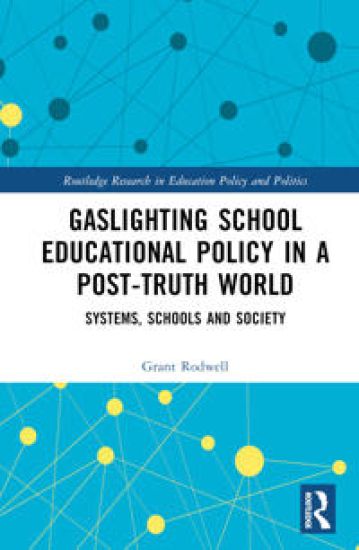
Gaslighting School Educational Policy in a Post-Truth World
Focusing on current educational systems in the US, UK, and Australia, Grant Rodwell examines the politics of gaslighting within school educational policy and how this links to political motives in a post-truth world. In recent years, gaslighting has become a major global issue due to various personal, social and political factors. Using sustained comparative description and analysis, Rodwell provides up-to-date research on how gaslighting impacts school educational policy. As gaslighting is a complex term, the book gives a framework of how to comprehend it relative to school educational topics and issues. This book will be a foundational resource for tertiary institutions, educational policy students and researchers, politicians and parents concerned with gaslighting policies and practices.
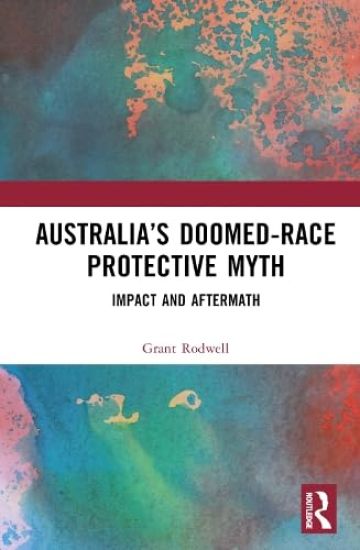
Australia’s Doomed-Race Protective Myth

Australia’s Doomed-Race Protective Myth

Grant Rodwell

TAYLOR FRANCIS LTD
2024
sidottu
Periodically, in Australian society racial chasms emerge portraying the great divide between Indigenous and non-Indigenous Australians, exposing the sustained influence of the doomed-race protective myth and its residue. This book exposes that a long and powerful influence on Australian society, economy, culture, and history has been the doomed-race protective myth. While most nations harbour protective myths of one form or another, often endorsed by Australian governments at all levels and steeped in a cruel racism and, inter alia, a quest for pastoral lands, Australia’s doomed-race protective myth has asserted an undue influence on First Nations people. This book argues the doomed race protective myth warped the vision of power elites, politicians, and bureaucrats. For centuries, sustained by representations in official and public history, schools, churches, and a whole host of public institutions, the doomed-race protective myth has been voiced by almost every facet of non-Indigenous Australian society, with pastoral Australia particularly benefiting. This book opens fresh vistas to the continuing racism in Australian society through an examination of the long-politicised doomed-race protective myth which was foisted on First Nations people, and with vested interests in pastoral Australia. Key events in Australia’s race-relations history such as the 2023 First Nations Voice to Parliament Referendum have new light shed on them. Transnational themes relevant to Indigenous history have been examined. People with an interest in non-Indigenous-Indigenous affairs, academics, politicians and bureaucrats, and students will enjoy this book.
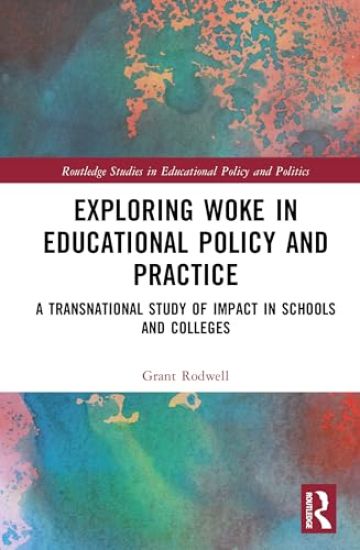
Exploring Woke in Educational Policy and Practice
Written at a time when the understanding of ‘woke’ is being increasingly challenged by governments and authorities, this book traces woke back to its early 20th-century origins to understand and focus on its transnationalism, promotion and impact in current school and college classroom practice, principally in Australia, the UK and the US. Chapters present a transnational study of the politics of promotion and impact of and opposition to woke in school and college educational policy and practice. In doing so, the book explores the ideals and practices of political correctness, Critical Race Theory (CRT), Social and Emotional Learning (SEL), diversity, equity and inclusion (DEI) and intersectionality. Further, it demonstrates the ability of ‘woke’ to mobilize and raise awareness around social issues, challenging existing power structures and demanding change. Investigating these as a contemporary embodiment of early 20th-century progressivism, the author argues that ‘woke’ is best understood through its association with moral panic, risk society mentality, post-truth, cancel culture and the rise of it in social media. This exemplary volume will be of interest to scholars, researchers and academics in the field of education policy and politics, sociology of education, cultural studies and race theory. Those involved in tertiary training of teachers and curriculum developers may also benefit from it more broadly.
Moral Panics and School Educational Policy
How do the moral panics that have plagued school education since it’s nineteenth-century beginnings impact current school education policy? Research has shown young people to be particularly vulnerable to moral panics and, with the rise of social media, the impact of moral panics on school education is growing exponentially. Increasingly, they are reaching into the highest levels of national governments and, so powerful are their effects, some politicians choose to orchestrate them for their own political ends. For many educational administrators, the management of the ‘fallout’ of moral panics has become a time-consuming part of their day, as well as being a problematic time for parents, teachers and students.First developed by British and Canadian sociologists such as Stanley Cohen (1972), moral panic theory has evolved substantially since its early focus on adolescent deviant behaviour, and is now a part of common media talk. This book addresses the need for a single monograph on the topic, with reference to historical moral panics such as those associated with sexuality education, but also wider societal moral panics such as those associated with obesity. Teachers, students, indeed all members of school communities, along with educational administrators and politicians can learn from this study of the impact of moral panics on school educational policy.
A Pedagogist’s Memoir

A Pedagogist’s Memoir

Grant Rodwell

ANTHEM PRESS
2025
sidottu
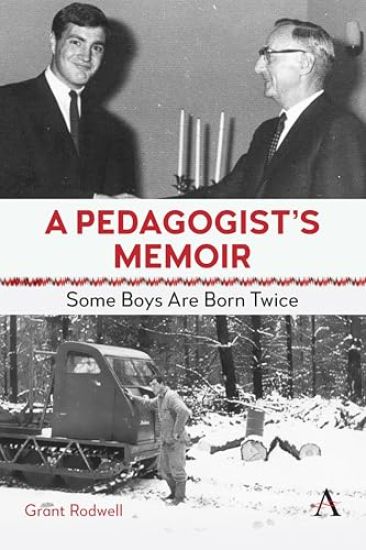
Opportunities to write our memoirs are many and varied. To meet emerging demands, the memoir genre continually is evolving, and it is possible for the memoirist to shape the memoirs, with varying themes, time and settings, to be brought to bear on school education at a senior level and for a range of teacher-development programs. Thus, the developing importance of an accompanying exegesis. For better or for worse, childhoods shape adult relationships and attachment styles, profoundly shaping who we are as teachers, teaching styles and generally the things we consider important and not so important. The shape of our childhood and adolescence has a profound impact on how relationships are formed in adulthood. It can affect our ability to trust, be vulnerable and create productive bonds, both at school and college and professionally, and also our general levels of motivation. Through the aforementioned theme and subthemes, my memoirs here reveal how childhood struggle has shaped my approach to teaching and my academic career – from an unskilled labourer from the country working class in the timber industry, deprived of a high school education and recruited into the workforce at 15 years of age, to a senior academic in one of Australia’s G8 universities, holding five PhDs. With strong historical backgrounding, a special appeal of this book is its drive to place childhood and adolescent events contained in the memoirs in a wider historical context, looking to transnational movements such as discussions on anachronisms and eugenics. In so doing, the exegesis – a fresh and exciting innovation – is in harmony with the memoirs. The memoir is so refashioned as a pedagogical tool.
Gommera Woman

Gommera Woman

Grant Rodwell

Booksurge Australia
2006
nidottu
Compelling reading. During the early months of 1849 on the Bathurst Plain Richard and Robert Barsden are engaged in their favourite leisure pastime of hunting emus. The Barsden brothers are the adopted sons of Esther and William Barsden. They are ruthless Australian sheep and cattle barons and nowhere is this better illustrated in their treatment of the Wiradjuri people. They despise their sister, Fuhi Barsden, who controls the adjoining property. They plot to kill her and their parents in order that they can take control of the vast Barsden pastoral and shipping empire. The reader is left with a feeling of the brutality of the harsh and unforgiving Australian colonial frontier. The reader is immediately placed in sympathy with Fuhi Barsden. Unmarried and beautiful, the reader first meets Fuhi at the occasion of Esther Barsden's fiftieth birthday celebrations at Esther and William Barsden's Sydney mansion. Fuhi is William's child from a previous relationship with a Tahitian princess. Here the reader also meets Philip Gidley Barsden, Esther and William's youngest son, who controls the Barsden shipping business. At the Sydney gathering of the Barsden family Richard Barsden suggests that the family sail together to England on a new clipper that Philip Gidley has purchased. This indeed is a fateful voyage. Fuhi must survive the voyage to revenge the deaths of her lover, brother and parents.