Kirjojen hintavertailu. Mukana 11 627 220 kirjaa ja 12 kauppaa.

Kirjahaku

Etsi kirjoja tekijän nimen, kirjan nimen tai ISBN:n perusteella.

10 kirjaa tekijältä Greg Anderson

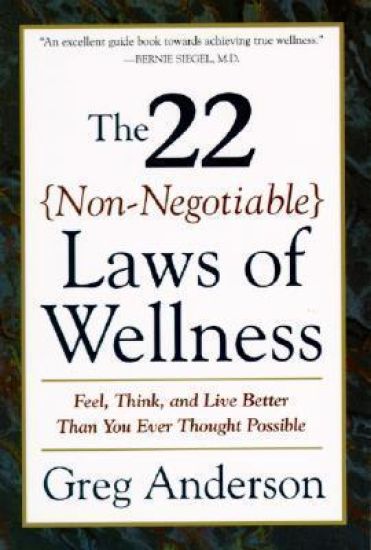
22 Non Negotiable Laws of Wellness

22 Non Negotiable Laws of Wellness

Greg Anderson

HarperOne
1996
nidottu
Everything we think, say, feel, and do has a direct impact on our physical and emotional health. And yet, we overlook this fundamental truth every day.A solution exists. The 22 Non-Negotiabte Laws of Wellness advocates a holistic no-nonsense approach to health and well-being that is keenly sensitive to all facets of body, mind, and. spirit. These twenty-two keys provide the definitive toolkit for achieving your own high-level wellness.
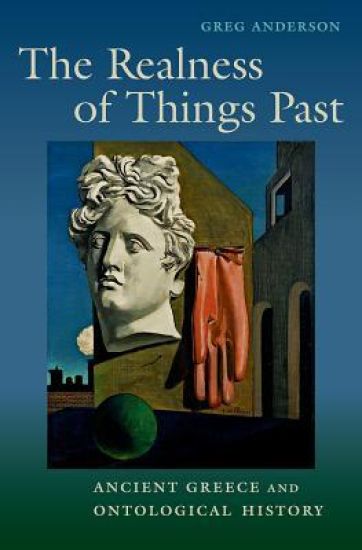
The Realness of Things Past

The Realness of Things Past

Greg Anderson

Oxford University Press Inc
2018
sidottu
The Realness of Things Past proposes a new paradigm of historical practice. It questions the way we conventionally historicize the experiences of non-modern peoples, western and non-western, and makes the case for an alternative. It shows how our standard analytical devices impose modern, dualist metaphysical conditions upon all non-modern realities, thereby authorizing us to align those realities with our own modern ontological commitments, fundamentally altering their contents in the process. The net result is a practice that homogenizes the past's many different ways of being human. To produce histories that are more ethically defensible, more philosophically robust, and more historically meaningful, we need to take an ontological turn in our practice. The book works to formulate a non-dualist historicism that will allow readers to analyse each past reality on its own ontological terms, as a more or less autonomous world unto itself. To make the case for this alternative paradigm, the book engages with currents of thought in many different intellectual provinces, from anthropology and postcolonial studies to the sociology of science and quantum physics. And to demonstrate how the new paradigm might work in practice, it uses classical Athens as its primary case study. The Realness of Things Past is divided into three parts. To highlight the limitations of conventional historicist analysis and the need for an alternative, Part I critically scrutinizes our standard modern accounts of "democratic Athens." Part II draws on a wide range of historical, ethnographic, and theoretical literatures to frame ethical and philosophical mandates for the proposed ontological turn. To illustrate the historical benefits of this alternative paradigm, Part III then shows how it allows us to produce an entirely new and more meaningful account of the Athenian politeia or "way of life." The book is expressly written to be accessible to a non-specialist, cross-disciplinary readership.
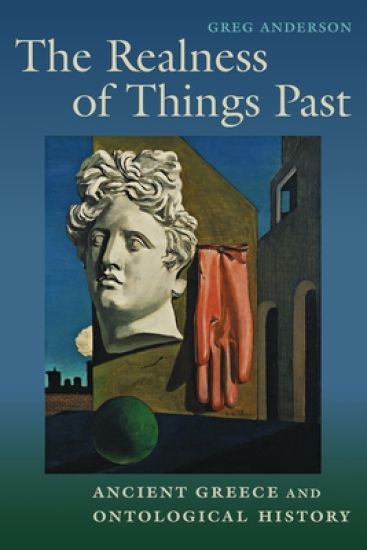
The Realness of Things Past

The Realness of Things Past

Greg Anderson

Oxford University Press Inc
2021
nidottu
The Realness of Things Past proposes a new paradigm of historical practice. It questions the way we conventionally historicize the experiences of non-modern peoples, western and non-western, and makes the case for an alternative. It shows how our standard analytical devices impose modern, dualist metaphysical conditions upon all non-modern realities, thereby authorizing us to align those realities with our own modern ontological commitments, fundamentally altering their contents in the process. The net result is a practice that homogenizes the past's many different ways of being human. To produce histories that are more ethically defensible, more philosophically robust, and more historically meaningful, we need to take an ontological turn in our practice. The book works to formulate a non-dualist historicism that will allow readers to analyse each past reality on its own ontological terms, as a more or less autonomous world unto itself. To make the case for this alternative paradigm, the book engages with currents of thought in many different intellectual provinces, from anthropology and postcolonial studies to the sociology of science and quantum physics. And to demonstrate how the new paradigm might work in practice, it uses classical Athens as its primary case study. The Realness of Things Past is divided into three parts. To highlight the limitations of conventional historicist analysis and the need for an alternative, Part I critically scrutinizes our standard modern accounts of "democratic Athens." Part II draws on a wide range of historical, ethnographic, and theoretical literatures to frame ethical and philosophical mandates for the proposed ontological turn. To illustrate the historical benefits of this alternative paradigm, Part III then shows how it allows us to produce an entirely new and more meaningful account of the Athenian politeia or "way of life." The book is expressly written to be accessible to a non-specialist, cross-disciplinary readership.
Cancer: 50 Essential Things to Do: 2013 Edition
The ground-breaking classic guide to surviving cancer--now completely updated Revised and updated for the first time since 1999, this invaluable guide to cancer recovery offers an easily accessible plan for patients and family members. Written by a cancer survivor, the book is an inspiring, action-oriented roadmap for those who choose to adopt a stance of hope and take charge of their diagnosis. With penetrating insights that bring together more than two decades of scientifically supported research and experience, Anderson reveals a step-by-step holistic action plan that has been successfully employed by hundreds of thousands of cancer patients worldwide. Anderson's message is: "You must not simply treat illness, you must also create wellness--physically, emotionally and spiritually."
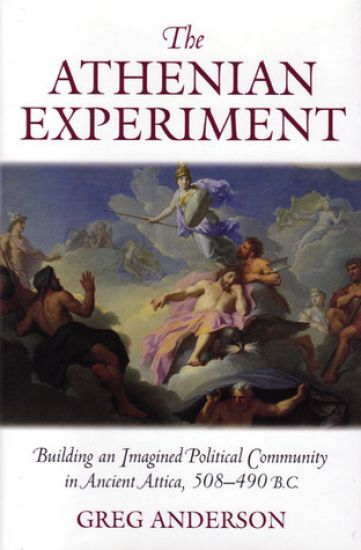
The Athenian Experiment

The Athenian Experiment

Greg Anderson

The University of Michigan Press
2003
sidottu
In barely the space of one generation, Athens was transformed from a conventional city-state into something completely new--a region-state on a scale previously unthinkable. This book sets out to answer a seemingly simple question: How and when did the Athenian state attain the anomalous size that gave it such influence in Greek politics and culture in the classical period? Many scholars argue that Athens's incorporation of Attica was a gradual development, largely completed some two hundred years before the classical era. Anderson, however, suggests that it is not until the late sixth century that we see the first systematic attempts by the Athenian polis to integrate all of Attica. Anderson first takes issue with the prevailing view of Cleisthenes' landmark political reforms of 508-7 b.c., arguing that they were animated by a more comprehensive vision of regional political community in Attica. The Athenians' strengthened the state by establishing institutional mechanisms that would allow inhabitants of the Attic periphery to participate as never before in the life of the center. The creation of a suitable physical setting for the new order was accompanied by religious, military, and symbolic innovations. Regional participation in Athenian affairs was stimulated by encouraging the Attic populace to imagine themselves, for the first time ever, as members of a single, like-minded, self-governing political community. Greg Anderson is Assistant Professor of Classics and History, University of Illinois at Chicago.
Thermodynamics of Natural Systems

Thermodynamics of Natural Systems

Greg Anderson

Cambridge University Press
2017
sidottu
Thermodynamics deals with energy levels and energy transfers between states of matter, and is therefore fundamental to all branches of science. This new edition provides an accessible introduction to the subject, specifically tailored to the interests of Earth and environmental science students. Beginning at an elementary level, the first four chapters explain all necessary concepts via a simple graphical approach. Throughout the rest of the book, the author emphasizes the importance of field observations and demonstrates that, despite being derived from idealized circumstances, thermodynamics is crucial to understanding ore formation, acid mine drainage, and other real-world geochemical and geophysical problems. Exercises now follow each chapter, with answers provided at the end of the book. An associated website includes extra chapters and password-protected answers to additional problems. This textbook is ideal for undergraduate and graduate students studying geochemistry and environmental science.
Breast Cancer

Breast Cancer

Greg Anderson

Conari Press,U.S.
2011
nidottu
2.5 million women in the U.S. have had a breast cancer diagnosis; more than 200,000 women are diagnosed each year. While recovery and survival rates have improved, selecting a treatment plan can be confusing and overwhelming."Breast Cancer: 50 Essential Things You Can Do" offers a roadmap for women facing breast cancer. Cancer-survivor Greg Anderson, a recognized pioneer in the field of integrated cancer care, has guided tens-of-thousands of cancer patients to health and healing over the past 25 years, through his books and his Cancer Recovery Foundation. In this new book he offers critical information about the major issues patients face following a breast cancer diagnosis, and shows how to implement a comprehensive recovery plan that maximizes opportunity for healing and recovery.This is a fully integrative approach--one that questions Western medicine's tendency to overtreat and proposes a combination of nutrition, exercise, mind/body approaches, and social support along with conventional medical care. "Breast Cancer: 50 Essential Things You Can Do "shows how to get well and stay well by: --Understanding your diagnosis --Determining your treatment--Managing your medical care--Transforming your diet--Designing a vitamin and mineral supplement program--Minimizing toxic exposure, implementing an exercise program, and getting enough sleep--Creating physical, emotional and spiritual health This is a life-saving guide for anyone with breast cancer--whether it's a new diagnosis or a recurrence--to become fully engaged in her own health and healing.
Freeing Trade in North America

Freeing Trade in North America

Greg Anderson

Agenda Publishing
2019
sidottu
Conceived in an era of rapid post-Cold War economic liberalization, the North American Free Trade Agreement (NAFTA), signed in 1994, brought together Canada, Mexico and the United States with the aim of creating a regional trade bloc that eliminated the friction and costs of trade between the three nations. Without an overarching institutional framework, NAFTA never sought to attain the levels of integration achieved by the European Union – for many it was a missed opportunity – and never quite fulfilled its potential as a single market. And under Trump’s administration a trilateral trade agreement has become increasingly precarious. This book provides an overview of NAFTA and its successor the USCMA, explaining the theory behind the politics and economics of trade in North America. It offers an accessible and concise analysis of the key provisions, shortcomings and past revision efforts of the governments involved. At a time of increasing protectionism and heightened awareness of trading relationships, the book highlights the lessons to be learnt from the fraught history of one of the largest trade blocs in the world.
Freeing Trade in North America

Freeing Trade in North America

Greg Anderson

Agenda Publishing
2019
nidottu
Conceived in an era of rapid post-Cold War economic liberalization, the North American Free Trade Agreement (NAFTA), signed in 1994, brought together Canada, Mexico and the United States with the aim of creating a regional trade bloc that eliminated the friction and costs of trade between the three nations. Without an overarching institutional framework, NAFTA never sought to attain the levels of integration achieved by the European Union – for many it was a missed opportunity – and never quite fulfilled its potential as a single market. And under Trump’s administration a trilateral trade agreement has become increasingly precarious. This book provides an overview of NAFTA and its successor the USCMA, explaining the theory behind the politics and economics of trade in North America. It offers an accessible and concise analysis of the key provisions, shortcomings and past revision efforts of the governments involved. At a time of increasing protectionism and heightened awareness of trading relationships, the book highlights the lessons to be learnt from the fraught history of one of the largest trade blocs in the world.