Kirjojen hintavertailu. Mukana 12 016 292 kirjaa ja 12 kauppaa.

Kirjahaku

Etsi kirjoja tekijän nimen, kirjan nimen tai ISBN:n perusteella.

3 kirjaa tekijältä Greg Barnhisel

Code Name Puritan

Code Name Puritan

Greg Barnhisel

THE UNIVERSITY OF CHICAGO PRESS
2024
sidottu
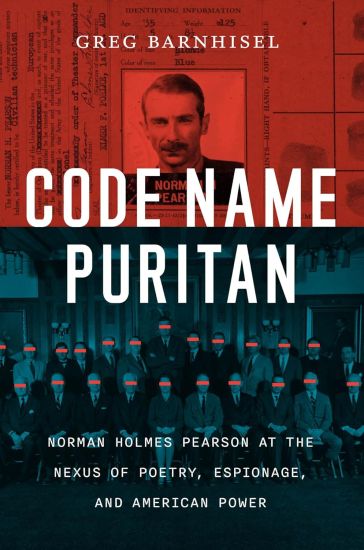
An insightful biography of an unassuming literary scholar—and spy—who transformed postwar American culture. Although his impact on twentieth-century American cultural life was profound, few people know the story of Norman Holmes Pearson. Pearson’s life embodied the Cold War alliances among US artists, scholars, and the national-security state that coalesced after World War II. As a Yale professor and editor, he helped legitimize the study of American culture and shaped the public’s understanding of literary modernism—significantly, the work of women poets such as Hilda Doolittle and Gertrude Stein. At the same time, as a spy, recruiter, and cultural diplomat, he connected the academy, the State Department, and even the CIA. In Code Name Puritan, Greg Barnhisel maps Pearson’s life, from his childhood injury that led to a visible, permanent disability to his wartime counterespionage work neutralizing the Nazis’ spy network to his powerful role in the cultural and political heyday sometimes called the American Century. Written with clarity and informed by meticulous research, Barnhisel’s revelatory portrait of Pearson details how his unique experiences shaped his beliefs about the American character, from the Puritans onward.
Cold War Modernists

Cold War Modernists

Greg Barnhisel

Columbia University Press
2015
sidottu
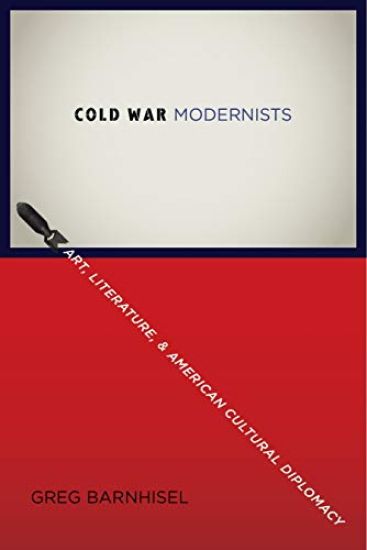
European intellectuals of the 1950s dismissed American culture as nothing more than cowboy movies and the A-bomb. In response, American cultural diplomats tried to show that the United States had something to offer beyond military might and commercial exploitation. Through literary magazines, traveling art exhibits, touring musical shows, radio programs, book translations, and conferences, they deployed the revolutionary aesthetics of modernism to prove-particularly to the leftists whose Cold War loyalties they hoped to secure-that American art and literature were aesthetically rich and culturally significant. Yet by repurposing modernism, American diplomats and cultural authorities turned the avant-garde into the establishment. They remade the once revolutionary movement into a content-free collection of artistic techniques and styles suitable for middlebrow consumption. Cold War Modernists documents how the CIA, the State Department, and private cultural diplomats transformed modernist art and literature into pro-Western propaganda during the first decade of the Cold War. Drawing on interviews, previously unknown archival materials, and the stories of such figures and institutions as William Faulkner, Stephen Spender, Irving Kristol, James Laughlin, and Voice of America, Barnhisel reveals how the U.S. government reconfigured modernism as a trans-Atlantic movement, a joint endeavor between American and European artists, with profound implications for the art that followed and for the character of American identity.
Cold War Modernists

Cold War Modernists

Greg Barnhisel

Columbia University Press
2024
pokkari
European intellectuals of the 1950s dismissed American culture as nothing more than cowboy movies and the A-bomb. In response, American cultural diplomats tried to show that the United States had something to offer beyond military might and commercial exploitation. Through literary magazines, traveling art exhibits, touring musical shows, radio programs, book translations, and conferences, they deployed the revolutionary aesthetics of modernism to prove—particularly to the leftists whose Cold War loyalties they hoped to secure—that American art and literature were aesthetically rich and culturally significant. Yet by repurposing modernism, American diplomats and cultural authorities turned the avant-garde into the establishment. They remade the once revolutionary movement into a content-free collection of artistic techniques and styles suitable for middlebrow consumption. Cold War Modernists documents how the CIA, the State Department, and private cultural diplomats transformed modernist art and literature into pro-Western propaganda during the first decade of the Cold War. Drawing on interviews, previously unknown archival materials, and the stories of such figures and institutions as William Faulkner, Stephen Spender, Irving Kristol, James Laughlin, and Voice of America, Barnhisel reveals how the U.S. government reconfigured modernism as a trans-Atlantic movement, a joint endeavor between American and European artists, with profound implications for the art that followed and for the character of American identity.