Kirjojen hintavertailu. Mukana 12 377 115 kirjaa ja 12 kauppaa.

Kirjahaku

Etsi kirjoja tekijän nimen, kirjan nimen tai ISBN:n perusteella.

17 kirjaa tekijältä Greg Grandin

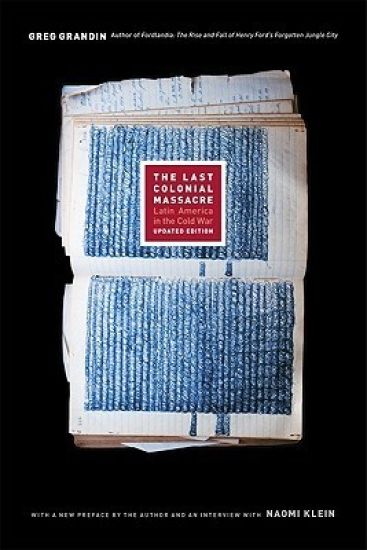
The Last Colonial Massacre

The Last Colonial Massacre

Greg Grandin

University of Chicago Press
2011
nidottu
After decades of bloodshed and political terror, many lament the rise of the left in Latin America. Since the triumph of Castro, politicians and historians have accused the left there of rejecting democracy, embracing communist totalitarianism, and prompting both revolutionary violence and a right-wing backlash. Through unprecedented archival research and gripping personal testimonies, Greg Grandin powerfully challenges these views in this classic work. In doing so, he uncovers the hidden history of the Latin American Cold War: of hidebound reactionaries holding on to their power and privilege; of Mayan Marxists blending indigenous notions of justice with universal ideas of equality; and, of a United States supporting new styles of state terror throughout the region. With Guatemala as his case study, Grandin argues that the Latin American Cold War was a struggle not between political liberalism and Soviet communism but two visions of democracy - one vibrant and egalitarian, the other tepid and unequal - and that the conflict's main effect was to eliminate homegrown notions of social democracy. Updated with a new preface by the author and an interview with Naomi Klein, "The Last Colonial Massacre" is history of the highest order - a work that will dramatically recast our understanding of Latin American politics and the role of the United States in the Cold War and beyond.
Fordlandia: The Rise and Fall of Henry Ford's Forgotten Jungle City
From Pulitzer Prize-winning author Greg Grandin comes the stunning, never before told story of the quixotic attempt to recreate small-town America in the heart of the Amazon In 1927, Henry Ford, the richest man in the world, bought a tract of land twice the size of Delaware in the Brazilian Amazon. His intention was to grow rubber, but the project rapidly evolved into a more ambitious bid to export America itself, along with its golf courses, ice-cream shops, bandstands, indoor plumbing, and Model Ts rolling down broad streets. Fordlandia, as the settlement was called, quickly became the site of an epic clash. On one side was the car magnate, lean, austere, the man who reduced industrial production to its simplest motions; on the other, the Amazon, lush, extravagant, the most complex ecological system on the planet. Ford's early success in imposing time clocks and square dances on the jungle soon collapsed, as indigenous workers, rejecting his midwestern Puritanism, turned the place into a ribald tropical boomtown. Fordlandia's eventual demise as a rubber plantation foreshadowed the practices that today are laying waste to the rain forest. More than a parable of one man's arrogant attempt to force his will on the natural world, Fordlandia depicts a desperate quest to salvage the bygone America that the Ford factory system did much to dispatch. As Greg Grandin shows in this gripping and mordantly observed history, Ford's great delusion was not that the Amazon could be tamed but that the forces of capitalism, once released, might yet be contained. Fordlandia is a 2009 National Book Award Finalist for Nonfiction.
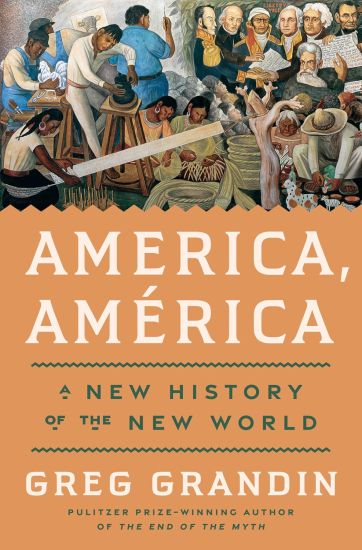
America, América: A New History of the New World
A New York Times bestseller "An extraordinarily ambitious book . . . America, Am rica reads at times as the historical equivalent of the great epic novels of Gabriel Garc a M rquez." --Irish Times From the Pulitzer Prize-winning historian, the first comprehensive history of the Western Hemisphere, a sweeping five-century narrative of North and South America that redefines our understanding of both The story of how the United States' identity was formed is almost invariably told by looking east to Europe. But as Greg Grandin vividly demonstrates, the nation's unique sense of itself was in fact forged facing south toward Latin America. In turn, Latin America developed its own identity in struggle with the looming colossus to the north. In this stunningly original reinterpretation of the New World, Grandin reveals how North and South emerged from a constant, turbulent engagement with each other. America, Am rica traverses half a millennium, from the Spanish Conquest--the greatest mortality event in human history--through the eighteenth-century wars for independence, the Monroe Doctrine, the coups and revolutions of the twentieth century, and beyond. Grandin shows, among other things, how in response to U.S. interventions, Latin Americans remade the rules, leading directly to the founding of the United Nations; and how the Good Neighbor Policy allowed FDR to assume the moral authority to lead the fight against world fascism. Grandin's book sheds new light on well-known historical figures like Bartolom de las Casas, Sim n Bol var, and Woodrow Wilson, as well as lesser-known actors such as the Venezuelan Francisco de Miranda, who almost lost his head in the French Revolution and conspired with Alexander Hamilton to free America from Spain; the Colombian Jorge Gait n, whose unsolved murder inaugurated the rise of Cold War political terror, death squads, and disappearances; and the radical journalist Ernest Gruening, who, in championing non-interventionism in Latin America, helped broker the most spectacularly successful policy reversal in United States history. This is a monumental work of scholarship that will fundamentally change the way we think of Spanish and English colonialism, slavery and racism, and the rise of universal humanism. At once comprehensive and accessible, America, Am rica shows that centuries of bloodshed and diplomacy not only helped shape the political identities of the United States and Latin America but also the laws, institutions, and ideals that govern the modern world. In so doing, Grandin argues that Latin America's deeply held culture of social democracy can be an effective counterweight to today's spreading rightwing authoritarianism. A culmination of a decades-long engagement with hemispheric history, drawing on a vast array of sources, and told with authority and flair, this is a genuinely new history of the New World.
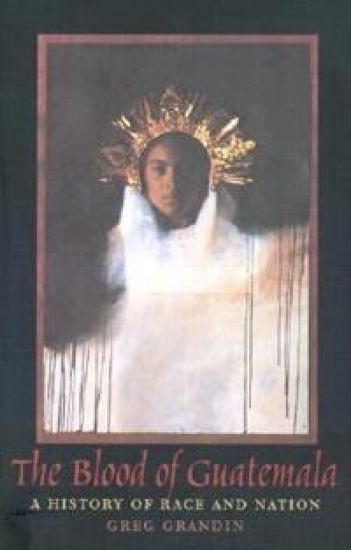
The Blood of Guatemala

The Blood of Guatemala

Greg Grandin

Duke University Press
2000
sidottu
Over the latter half of the twentieth century, the Guatemalan state slaughtered more than two hundred thousand of its citizens. In the wake of this violence, a vibrant pan-Mayan movement has emerged, one that is challenging Ladino (non-indigenous) notions of citizenship and national identity. In The Blood of Guatemala Greg Grandin locates the origins of this ethnic resurgence within the social processes of eighteenth- and nineteenth-century state formation rather than in the ruins of the national project of recent decades. Focusing on Mayan elites in the community of Quetzaltenango, Grandin shows how their efforts to maintain authority over the indigenous population and secure political power in relation to non-Indians played a crucial role in the formation of the Guatemalan nation. To explore the close connection between nationalism, state power, ethnic identity, and political violence, Grandin draws on sources as diverse as photographs, public rituals, oral testimony, literature, and a collection of previously untapped documents written during the nineteenth century. He explains how the cultural anxiety brought about by Guatemala’s transition to coffee capitalism during this period led Mayan patriarchs to develop understandings of race and nation that were contrary to Ladino notions of assimilation and progress. This alternative national vision, however, could not take hold in a country plagued by class and ethnic divisions. In the years prior to the 1954 coup, class conflict became impossible to contain as the elites violently opposed land claims made by indigenous peasants. This “history of power” reconsiders the way scholars understand the history of Guatemala and will be relevant to those studying nation building and indigenous communities across Latin America.
The Blood of Guatemala

The Blood of Guatemala

Greg Grandin

Duke University Press
2000
pokkari
Focusing on Mayan elites in the community of Quetzaltenango, Grandin shows how their efforts to maintain authority over the indigenous population and secure political power in relation to non-Indians played a crucial role in the formation of the Guatemalan nation.
The Empire of Necessity

The Empire of Necessity

Greg Grandin

St Martin's Press
2015
nidottu
One morning in 1805, off a remote island in the South Pacific, Captain Amasa Delano, a New England seal hunter, climbed aboard a distressed Spanish ship carrying scores of West Africans he thought were slaves. They weren't. Having earlier seized control of the vessel and slaughtered most of the crew, they were staging an elaborate ruse, acting as if they were humble servants. When Delano, an idealistic, anti-slavery republican, finally realized the deception, he responded with explosive violence. Drawing on research on four continents, The Empire of Necessity explores the multiple forces that culminated in this extraordinary event-an event that already inspired Herman Melville's masterpiece Benito Cereno. Now historian Greg Grandin, with the gripping storytelling that was praised in Fordlandia, uses the dramatic happenings of that day to map a new transnational history of slavery in the Americas, capturing the clash of peoples, economies, and faiths that was the New World in the early 1800s.
Kissinger's Shadow

Kissinger's Shadow

Greg Grandin

St Martin's Press
2016
nidottu
In his fascinating new book, acclaimed historian Greg Grandin argues that to understand the crisis of contemporary America - its never-ending wars abroad and political polarisation at home - we have to understand Henry Kissinger. Examining Kissinger's own writings, as well as a wealth of newly declassified documents, Grandin reveals how Richard Nixon's top foreign policy advisor, even as he was presiding over defeat in Vietnam and a disastrous, secret, and illegal war in Cambodia, was helping to revive a militarised version of American exceptionalism centred on an imperial presidency. Believing that reality could be bent to his will, insisting that intuition is more important in determining policy than hard facts, and vowing that past mistakes should never hinder future bold action, Kissinger anticipated, even enabled, the ascendance of the neoconservative idealists who took America into crippling wars in Afghanistan and Iraq.
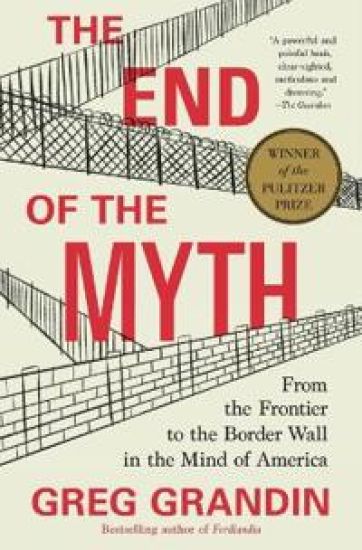
The End of the Myth

The End of the Myth

Greg Grandin

St Martin's Press
2020
nidottu
Ever since this nation’s inception, the idea of an open and ever-expanding frontier has been central to American identity. Symbolising a future of endless promise, it was the foundation of the United States’ belief in itself as an exceptional nation - democratic, individualistic, forward-looking. Today, though, America hasa new symbol: the border wall. In The End of the Myth, acclaimed historian Greg Grandin explores the meaning of the frontier throughout the full sweep of U.S. history - from the American Revolution to the War of 1898, the New Deal to the election of 2016. For centuries, he shows, America’s constant expansion - fighting wars and opening markets - served as a “gate of escape,” helping to deflect domestic political and economic conflicts outward. But this deflection meant that the country’s problems, from racism to inequality, were never confronted directly. And now, the combined catastrophe of the 2008 financial meltdown and our unwinnable wars in the Middle East have slammed this gate shut, bringing political passions that had long been directed elsewhere back home. It is this new reality, Grandin says, that explains the rise of reactionary populism and racist nationalism, the extreme anger and polarisation that catapulted Trump to the presidency. The border wall may or may not be built, but it will survive as a rallying point, an allegorical tombstone marking the end of American exceptionalism.
Empire's Workshop

Empire's Workshop

Greg Grandin

Picador USA
2021
nidottu
Examining over a century of US intervention in Latin America, acclaimed historian Greg Grandin reveals how the region has long served as a laboratory for US foreign policy, providing generations of Washington policy makers with an opportunity to rehearse a broad range of diplomatic and military tactics - tactics that then were applied elsewhere in the world as the US became a global superpower. During the Great Depression, for instance, FDR’s Good Neighbor policy taught the United States to use “soft power” effectively and provided a blueprint for its postwar “empire by invitation.” In the 1980s, Reagan likewise turned to Latin America, but now to rehabilitate “hard power” after the debacle of Vietnam, putting the United States on the road to its current crisis: endless, forever wars. This completely revised edition includes new information on the US invasion of Panama, US interventions in Cuba, Guatemala, and Chile, Plan Colombia and the War on Drugs, the Obama administration’s involvement in the 2009 coup in Honduras, and the current crisis at the US-Mexico border, caused by decades of misguided Washington policies. Most provocatively, Grandin argues that the origins of many of the current threats to American democracy - disinformation, permanent surveillance, political extremism and out-of-control militarism - were foreshadowed in the United States’ Central American policy.
The Empire of Necessity

The Empire of Necessity

Greg Grandin

Oneworld Publications
2014
sidottu
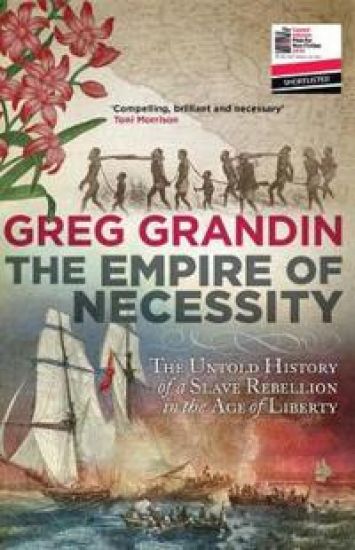
SHORTLISTED FOR THE SAMUEL JOHNSON PRIZE FOR NON-FICTION 2014 Discover the story of a real-life Captain Ahab of the slave trade, in a landmark book by one of today’s most original and highly acclaimed historians One morning in 1805, off a remote island in the South Pacific, seal hunter and abolitionist Captain Amasa Delano climbed aboard the Tryal, a distressed Spanish slaver. He spent all day on the ship, sharing food and water, yet failed to see that the slaves, having slaughtered most of the crew, were now their own masters. Later, when Delano realized the deception, he chased the ship down, responding with barbaric violence. Drawing on never-before-consulted records on four continents, Greg Grandin follows this group of courageous slaves and their persecutor from the horrors of the Middle Passage to their explosive confrontation. The Empire of Necessity is a gripping account of obsessive mania, imperial exploitation, and lost ideals, capturing the epic clash of peoples, economies, and faiths that was shaping the so-called New World and the Age of Revolution.
The Empire of Necessity

The Empire of Necessity

Greg Grandin

Oneworld Publications
2015
nidottu
SHORTLISTED FOR THE SAMUEL JOHNSON PRIZE FOR NON-FICTION 2014 WINNER OF THE BANCROFT PRIZE 2015 One morning in 1805, off a remote island in the South Pacific, seal hunter and abolitionist Captain Amasa Delano climbed aboard the Tryal, a distressed Spanish slaver. He spent all day on the ship, sharing food and water, yet failed to see that the slaves, having slaughtered most of the crew, were now their own masters. Later, when Delano realized the deception, he chased the ship down, responding with barbaric violence. Greg Grandin follows this group of courageous slaves and their persecutor from the horrors of the Middle Passage to their explosive confrontation. A page-turning and profoundly moving account of obsessive mania, imperial exploitation, and lost ideals, The Empire of Necessity captures the epic clash of peoples, economies, and faiths that was shaping the so-called New World and the Age of Revolution.
Who Is Rigoberta Menchú?

Who Is Rigoberta Menchú?

Greg Grandin

Verso Books
2011
sidottu
In 1984, indigenous rights activist Rigoberta Menchú published a harrowing account of life under a military dictatorship in Guatemala. That autobiography-I, Rigoberta Menchú-transformed the study and understanding of modern Guatemalan history and brought its author international renown. She won a Nobel Peace Prize in 1992. At that point, she became the target of historians seeking to discredit her testimony and deny US complicity in the genocidal policies of the Guatemalan regime. Told here is the story of an unlettered woman who became the spokesperson for her people and clashed with the intellectual apologists of the world's most powerful nation. What happened to her autobiography speaks volumes about power, perception and race on the world stage. This critical companion to Menchú's work will disabuse many readers of the lies that have been told about this courageous individual.
Who Is Rigoberta Menchú?

Who Is Rigoberta Menchú?

Greg Grandin

Verso Books
2011
nidottu
In 1984, indigenous rights activist Rigoberta Menchú published a harrowing account of life under a military dictatorship in Guatemala. That autobiography-I, Rigoberta Menchú-transformed the study and understanding of modern Guatemalan history and brought its author international renown. She won a Nobel Peace Prize in 1992. At that point, she became the target of historians seeking to discredit her testimony and deny US complicity in the genocidal policies of the Guatemalan regime. Told here is the story of an unlettered woman who became the spokesperson for her people and clashed with the intellectual apologists of the world's most powerful nation. What happened to her autobiography speaks volumes about power, perception and race on the world stage. This critical companion to Menchú's work will disabuse many readers of the lies that have been told about this courageous individual.
America, América

America, América

Greg Grandin

TRANSWORLD PUBLISHERS LTD
2025
sidottu
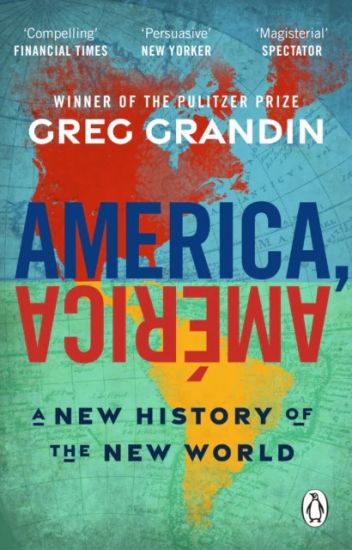
The first definitive history of the Western hemisphere, a sweeping five-century narrative of North and South America that redefines our understanding of both continents - perfect for readers of How the World Made the West.'An extraordinarily ambitious book . . . America, América reads at times as the historical equivalent of the great epic novels of Gabriel García Márquez.' Irish Times‘Compelling and written with zest…Don’t be surprised if he wins another Pulitzer’ Financial TimesTHE NEW YORK TIMES BESTSELLERThe story of the United States’ unique sense of itself was forged facing south – no less than Latin America’s was indelibly stamped by the looming colossus to the north.In this stunningly original reinterpretation of the New World, Professor Greg Grandin reveals how the Americas emerged from constant, turbulent engagement with each other, shedding new light on well-known historical figures like Bartolomé de las Casas, Simón Bolívar and Woodrow Wilson, as well as lesser-known actors such as the Venezuelan Francisco de Miranda, who almost lost his head in the French Revolution and conspired with Alexander Hamilton to free America from Spain.America, América traverses half a millennium, from the Spanish Conquest – the greatest mortality event in human history – through the eighteenth-century wars for independence and the Monroe Doctrine, to the coups and revolutions of the twentieth century. This monumental work of scholarship fundamentally changes our understanding of Spanish and English colonialism, slavery and racism, the rise of universal humanism, and the role of social democracy in staving off authoritarian impulses.At once comprehensive and accessible, America, América shows how the United States and Latin America together shaped the laws, institutions, and ideals that govern the modern world. Drawing on a vast array of sources, and told with authority and flair, this is a genuinely new history of the New World.'Dazzling. Mind-altering. World-changing. A once-in-a-generation contribution' NAOMI KLEIN'Sweeping and provocative... groundbreaking' AMITAV GHOSH'Will transform your understanding of the modern world' JONATHAN KENNEDY'Masterful and erudite yet absolutely riveting' ADA FERRER'A major and desperately needed synthesis of the Americas' NED BLACKHAWK'An awe-inspiring masterpiece' SAMUEL MOYN* Professor Greg Grandin won the Pulitzer Prize for Non-fiction in 2020 with his book The End of the Myth.
America, América

America, América

Greg Grandin

TRANSWORLD PUBLISHERS LTD
2026
pokkari
'An original and outstanding new history of the New World... Magisterial' Spectator 'An extraordinarily ambitious book . . . America, América reads at times as the historical equivalent of the great epic novels of Gabriel García Márquez' Irish Times THE NEW YORK TIMES BESTSELLER, SHORTLISTED FOR THE CUNDILL HISTORY PRIZE The first definitive history of the Western hemisphere, a sweeping five-century narrative of North and South America that redefines our understanding of both continents - perfect for readers of How the World Made the West. The story of the United States’ unique sense of itself was forged facing south – no less than Latin America’s was indelibly stamped by the looming colossus to the north. In this stunningly original reinterpretation of the New World, Professor Greg Grandin reveals how the Americas emerged from constant, turbulent engagement with each other, shedding new light on well-known historical figures like Bartolomé de las Casas, Simón Bolívar and Woodrow Wilson, as well as lesser-known actors such as the Venezuelan Francisco de Miranda, who almost lost his head in the French Revolution and conspired with Alexander Hamilton to free America from Spain. America, América traverses half a millennium, from the Spanish Conquest – the greatest mortality event in human history – through the eighteenth-century wars for independence and the Monroe Doctrine, to the coups and revolutions of the twentieth century. This monumental work of scholarship fundamentally changes our understanding of Spanish and English colonialism, slavery and racism, the rise of universal humanism, and the role of social democracy in staving off authoritarian impulses. At once comprehensive and accessible, America, América shows how the United States and Latin America together shaped the laws, institutions, and ideals that govern the modern world. Drawing on a vast array of sources, and told with authority and flair, this is a genuinely new history of the New World. ‘Compelling and written with zest…Don’t be surprised if he wins another Pulitzer’ Financial Times 'Dazzling. Mind-altering. World-changing. A once-in-a-generation contribution' NAOMI KLEIN 'Sweeping and provocative... groundbreaking' AMITAV GHOSH 'Will transform your understanding of the modern world' JONATHAN KENNEDY 'Masterful and erudite yet absolutely riveting' ADA FERRER 'A major and desperately needed synthesis of the Americas' NED BLACKHAWK 'An awe-inspiring masterpiece' SAMUEL MOYN * Professor Greg Grandin won the Pulitzer Prize for Non-fiction in 2020 with his book The End of the Myth. America, América has been shortlisted for the Cundill History Prize and is a finalist for the Kirkus Prize.