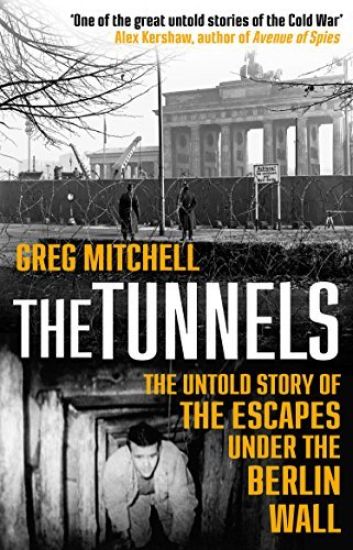
In the summer of 1962, one year after the rise of the Berlin Wall, a group of daring young West Germans risked prison, Stasi torture and even death to liberate friends, lovers, and strangers in East Berlin by digging tunnels under the Wall. This book tells their story.
Greg Mitchell -- award-winning author, popular blogger and former editor of Editor & Publisher magazine -- probes the historic 2008 race for president, from the first primary to the aftermath of the election, but also focuses on lessons for 2012 and the future. In "Why Obama Won" he explores, with insight (and often humor), all of the key controversies, old media vs. new media, and the emergence of video and online organizing as major players. Political campaigns, and politics in America, he reveals, will never be the same. "Why Obama Won" has been featured on MSNBC's Rachel Maddow Show, other national news outlets and hailed at leading political blogs Huffington Post, DailyKos and Talking Points Memo, among others. Mitchell is the author of a dozen books, including "The Campaign of the Century" (winner of the Goldsmith Book Prize) and "Tricky Dick and the Pink Lady," and the acclaimed "So Wrong for So Long," on Iraq and the media. "Great " -- Will Bunch, author "Tear Down This Myth" "A provocative book" -- Paul Street, author "Barack Obama and the Future of American Politics"
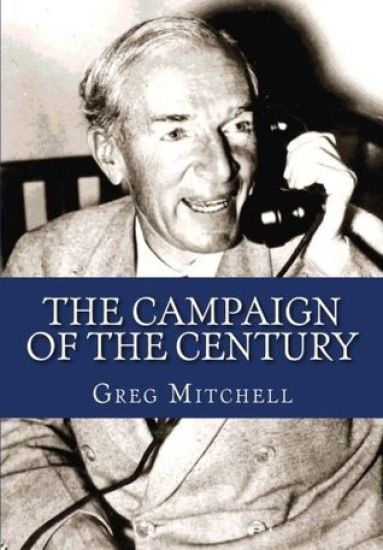
----"One of the five greatest books ever about an American campaign." -- The Wall Street Journal / "A compelling account"-- Jill Lepore, The New Yorker. / Winner of the Goldsmith Book Prize. In 1934, voters hoping to turn the tide of the Great Depression backed an unlikely candidate for governor of California: Upton Sinclair, muckraking author of "The Jungle" and lifelong socialist. Amazingly, Sinclair swept the Democratic primary, leading a mass movement called EPIC (End Poverty in California). More than a thousand EPIC chapters formed. Alarmed, Sinclair's opponents launched an unprecedented public relations blitzkrieg to discredit him. The result was nothing less than a revolution in American politics, and with it, the era of the "spin doctor" was born. The iconic Hollywood producer Irving Thalberg created the first "attack ads" for the screen, the precursor of today's TV travesties. Hollywood took its first all-out plunge into politics and money started to play the tune in our political process. In a riveting, blow-by-blow narrative featuring the likes of Franklin D. Roosevelt, Louis B. Mayer, H. L. Mencken, William Randolph Hearst, Will Rogers, Katharine Hepburn, and a Who's Who of political, literary and entertainment stars, Greg Mitchell brings to life the outrageous campaign that forever transformed the electoral process. A finalist for the Los Angeles Times Book Award, it served as the basis for one episode in the award-winning PBS documentary "The Great Depression" "Sizzling, rambunctiously useful." -Los Angeles Times "Fascinating....a lively, anecdote-filled history." -The New York Times Book Review "To read The Campaign of the Century is to understand how the business of electing officials began to get so colossally out of hand." -Newsweek "America witnessed a transforming experience, as Greg Mitchell makes clearin his vivid chronicle." -Wall Street Journal "There are lessons to be learned herein. Politicians learned them long ago, to the general detriment. Perhaps now Mitchell can help the rest of us learn them." -Washington Post Book World
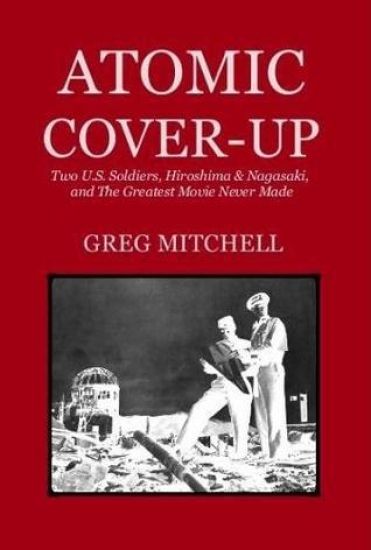
"Greg Mitchell is the best kind of historian, a true storyteller." -Kai Bird, Pulitzer Prize-winning co-author of American Prometheus: The Triumph and Tragedy of J. Robert OppenheimerNew 2023 Edition with Response to Christopher Nolan's Oppenheimer.In this new, updated and expanded edition of a book which has gained national attention, award-winning author Greg Mitchell probes a turning point in U.S. history: the suppression of film footage, for decades, shot by an elite U.S. Army unit and a Japanese newsreel team in Hiroshima and Nagasaki -- with staggering consequences even today.This is a detective story, and one of the last untold stories of World War II, and it has far-reaching impact.Mitchell, author of the award-winning "The Beginning or the End: How Hollywood--and America--Learned to Stop Worrying and Love the Bomb" and a dozen other books, including the best-selling "The Tunnels," now reveals the full story, in this expanded 2023 edition.David Friend of Vanity Fair calls it "a new work of revelatory scholarship and insight by Greg Mitchell that will speak to all of those concerned about the lessons of the nuclear age." This expanded 2023 edition includes twelve pages of compelling new material related to Christopher Nolan's hit movie Oppenheimer.The buried film footage was the most important shot in the aftermath of the atomic bombings. How did this cover-up happen? Why? And what did the two military officers, Daniel McGovern and Herbert Sussan, try to do about it, for decades? "Atomic Cover-up" answers all of these questions in a quick-paced but often surprising narrative.Robert Jay Lifton, author of "Death in Life" (winner of the National Book Award) and numerous other acclaimed books, writes: "Greg Mitchell has been a leading chronicler for many years of Hiroshima and Nagasaki, and American behavior toward them. Now he has written the first book devoted to the suppression of historic film footage shot by Japanese and Americans in the atomic cities in 1945 and 1946. He makes use of key interviews and documents to record an extremely important part of atomic bomb history that deserves far more attention today."
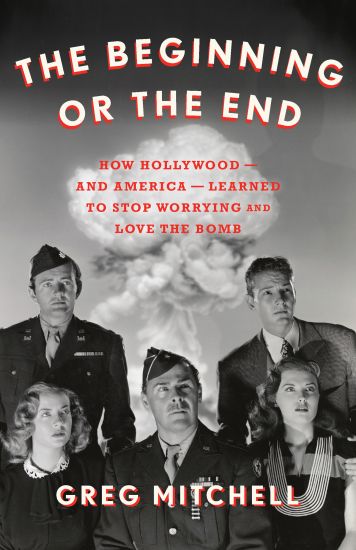
The shocking and significant story of how the White House and Pentagon scuttled an epic Hollywood production. Soon after atomic bombs exploded over Hiroshima and Nagasaki in 1945, MGM set out to make a movie studio chief Louis B. Mayer called “the most important story” he would ever film: a big budget dramatization of the Manhattan Project and the invention and use of the revolutionary new weapon. Over at Paramount, Hal B. Wallis was ramping up his own film version. His screenwriter: the novelist Ayn Rand, who saw in physicist J. Robert Oppenheimer the model for a character she was sketching for Atlas Shrugged. Greg Mitchell’s The Beginning or the End chronicles the first efforts of American media and culture to process the Atomic Age. A movie that began as a cautionary tale inspired by atomic scientists aiming to warn the world against a nuclear arms race would be drained of all impact due to revisions and retakes ordered by President Truman and the military—for reasons of propaganda, politics, and petty human vanity (this was Hollywood). Mitchell has found his way into the lofty rooms, from Washington to California, where it happened, unearthing hundreds of letters and dozens of scripts that show how wise intentions were compromised in favor of defending the use of the bomb and the imperatives of postwar politics. As in his acclaimed Cold War true-life thriller The Tunnels, he exposes how our implacable American myth-making mechanisms distort our history.
The End is Here Greensboro has fallen. Swayed by the demonic Strange Man, the townspeople have sacrificed their freedom for prosperity. Monsters lurk in every shadow and the few who oppose the new regime have been chased out of town, forced to wage their war in hiding. For ex-reverend Jeff Weldon and those under his care, it is a losing battle, but the tide begins to turn with the return of his brother Dras. Dras arrives at his hometown to find it has descended into darkness - but the worst is yet to come. The Strange Man's final plan is falling into place and the Dark Hour is close at hand. Dras, Jeff, and the last of Greensboro's protectors work frantically to unlock the Strange Man's secrets and uncover the key to stopping the Dark Hour before all is lost. But when Dras discovers the fate of his best friend, Rosalyn Myers, he will realize that he has more to lose in this battle than he ever imagined. Dark Hour is the explosive final act in The Coming Evil Trilogy. All bets are off as the remnant of light clash with the armies of darkness. The final fates of Jeff, Isabella, Dras, and Rosalyn, along with all of Greensboro, will be decided in a desperate last stand.
A thrilling Cold War narrative of superpower showdowns, media suppression, and two escape tunnels beneath the Berlin Wall. In the summer of 1962, the year after the rise of the Berlin Wall, a group of young West Germans risked prison, Stasi torture, and even death to liberate friends, lovers, and strangers in East Berlin by digging tunnels under the Wall. Then two U.S. television networks heard about the secret projects and raced to be first to document them from the inside. NBC and CBS funded two separate tunnels in return for the right to film the escapes, planning spectacular prime-time specials. President John F. Kennedy, however, was wary of anything that might spark a confrontation with the Soviets, having said, "A wall is better than a war," and even confessing to Secretary of State Dean Rusk, "We don't care about East Berlin." JFK approved unprecedented maneuvers to quash both documentaries, testing the limits of a free press in an era of escalating nuclear tensions. As Greg Mitchell's riveting narrative unfolds, we meet extraordinary characters: the legendary cyclist who became East Germany's top target for arrest; the Stasi informer who betrays the "CBS tunnel"; the American student who aided the escapes; an engineer who would later help build the tunnel under the English channel; and the young East Berliner who fled with her baby, then married one of the tunnelers. The Tunnels captures the chilling reach of the Stasi secret police as U.S. networks prepared to "pay for play" but were willing to cave to official pressure, the White House was eager to suppress historic coverage, and ordinary people in dire circumstances became subversive. The Tunnels is breaking history, a propulsive read whose themes still reverberate.