Kirjojen hintavertailu. Mukana 11 244 527 kirjaa ja 12 kauppaa.

Kirjahaku

Etsi kirjoja tekijän nimen, kirjan nimen tai ISBN:n perusteella.

12 kirjaa tekijältä Greg Walker

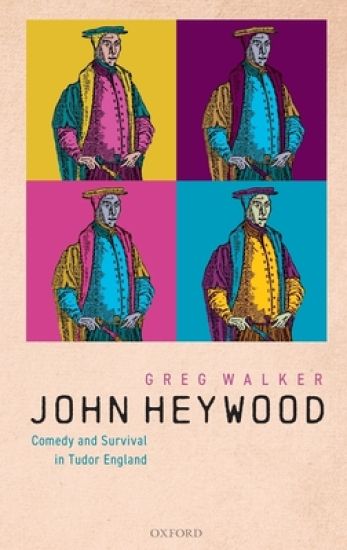
John Heywood

John Heywood

Greg Walker

Oxford University Press
2020
sidottu
John Heywood was an important literary and theatrical pioneer in his own right, but he is also a revealing lens through which to view the wider tumultuous history of the sixteenth century. He was, through the period from the mid-1520s to the 1560s, as near to a celebrity as Tudor England possessed, famed for his 'merry' persona and good humour. But his public image concealed a deeper engagement with religious and political history. Enduringly resistant to extremism, he variously entertained, counselled, and cautioned his readers and audiences through four reigns, finding himself, as regimes changed and religious policies shifted, successively celebrated, marginalised, anathematised, condemned to death, recuperated, and celebrated once more before finally retreating into exile on the Continent in 1564. He produced plays at the courts of Henry VIII, Edward VI, Mary and Elizabeth, performed and taught keyboard music, wrote lyric poetry and songs, and from the mid-sixteenth century turned to collecting and publishing highly successful volumes of proverbs and epigrams for which he was remembered well into the seventeenth century. Each of these works provides a subtle, often courageously critical engagement with the politics of its moment. To study Heywood's career takes us beyond the clichés of popular history, beyond Shakespeare and the Elizabethan playhouses, beyond the canonical Henrician court poets and the writers of the Elizabethan 'Golden Age', beyond even the experiences of the century's chief ministers, intellectuals, and martyrs, to a theatrical and literary world less visible in the conventional sources. It opens a window on a culture in which the actions of monarchs, their councillors, and their victims were witnessed and reflected upon at one remove from the centres of power. And it allows us to re-examine the significance of an individual who deserves our attention, not only for his considerable artistic achievements, but also for the determination with which, often against the odds, he used his talents in pursuit of wider humanist cultural principles for over half a century.
Writing Under Tyranny

Writing Under Tyranny

Greg Walker

Oxford University Press
2007
nidottu
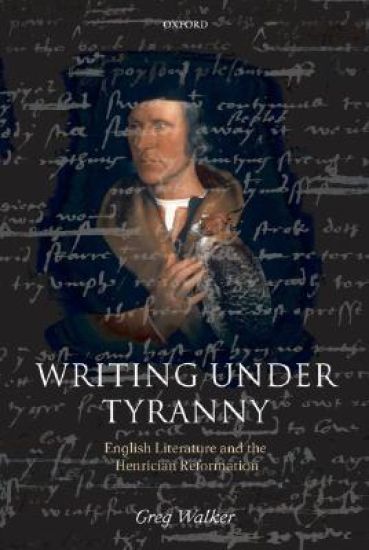
Writing Under Tyranny: English Literature and the Henrician Reformation spans the boundaries between literary studies and history. It looks at the impact of tyrannical government on the work of poets, playwrights, and prose writers of the early English Renaissance. It shows the profound effects that political oppression had on the literary production of the years from 1528 to 1547, and how English writers in turn strove to mitigate, redirect, and finally resist that oppression. The result was the destruction of a number of forms that had dominated the literary production of late-medieval England, but also the creation of new forms that were to dominate the writing of the following centuries. Paradoxically, the tyranny of Henry VIII gave birth to many modes of writing now seen to be characteristic of the English literary Renaissance.
Writing Under Tyranny

Writing Under Tyranny

Greg Walker

Oxford University Press
2005
sidottu
Writing Under Tyranny: English Literature and the Henrician Reformation spans the boundaries between literary studies and history. It looks at the impact of tyrannical government on the work of poets, playwrights, and prose writers of the early English Renaissance. It shows the profound effects that political oppression had on the literary production of the years from 1528 to 1547, and how English writers in turn strove to mitigate, redirect, and finally resist that oppression. The result was the destruction of a number of forms that had dominated the literary production of late-medieval England, but also the creation of new forms that were to dominate the writing of the following centuries. Paradoxically, the tyranny of Henry VIII gave birth to many modes of writing now seen to be characteristic of the English literary Renaissance.
The Politics of Performance in Early Renaissance Drama

The Politics of Performance in Early Renaissance Drama

Greg Walker

Cambridge University Press
2006
pokkari
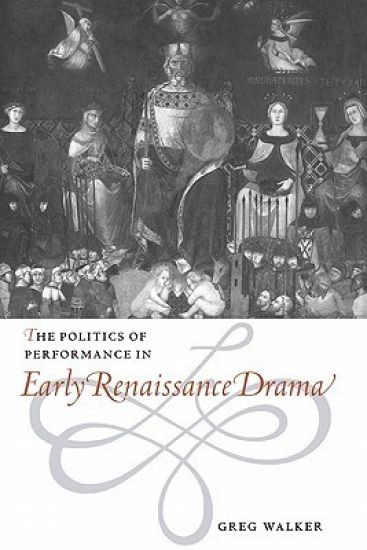
Greg Walker provides a new account of the relationship between politics and drama in the turbulent period from the accession of Henry VIII to the reign of Elizabeth I. Building upon ideas first developed in Plays of Persuasion (1991), he focuses on political drama in both England and Scotland, exploring the complex relationships between politics, court culture and dramatic composition, performance and publication. Through a detailed analysis of one central dramatic form, the interlude or great hall play, and close study of key texts, Walker examines drama produced and adapted for varying conditions of performance: indoor and outdoor, private and public. He examines what happened when the play script was printed and sold commercially as a literary commodity. This interdisciplinary analysis will find a market among Tudor historians as well as students of medieval and Renaissance drama.
Plays of Persuasion

Plays of Persuasion

Greg Walker

Cambridge University Press
2008
pokkari
A detailed study of the interaction between drama and politics in the reign of Henry VIII. The subject is addressed both in general terms and through a series of case-studies of individual early Tudor plays. Through its innovative use of dramatic texts as historical source material, the book provides illuminating insights into the political and cultural history of the Henrician period, and into the perceived character of the King himself. It focuses on the troubled religious and political history of the reign, the culture of the Court, and the personality and governmental style of its head. In doing so the book argues for a reassessment of the reign, which places the King once more at the centre of affairs, and acknowledges the determining effect which this egotistical, charismatic but, above all, pragmatic monarch exercised on the artistic culture, as much as on the politics, of the Court. The book also demonstrates the close and specific links between the drama and the politics of the reign, through a detailed study of a number of key works, links which have hitherto been viewed only as general or peripheral.
John Skelton and the Politics of the 1520s

John Skelton and the Politics of the 1520s

Greg Walker

Cambridge University Press
2002
pokkari
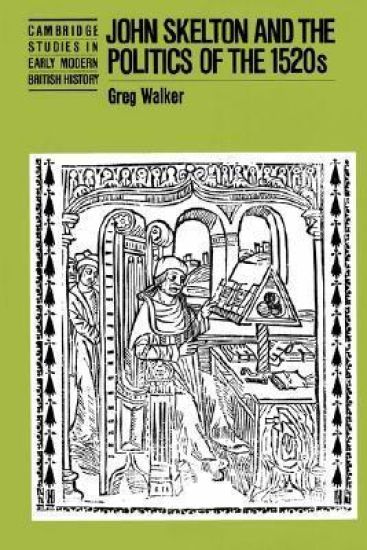
The series of satirical poems and invectives written against Thomas, Cardinal Wolsey, the chief minister of Henry VIII, by the poet John Skelton has long been used by scholars as evidence of the sins and follies of Wolsey’s regime. Yet the poems have never undergone serious political analysis. At the heart of this book is a detailed examination of these texts which aims to rectify that omission. For the first time they are subjected to a close reading which both elucidates their major themes and purpose, and sets them firmly in their political context. The book questions the orthodoxies of previous scholarship and challenges received opinions concerning the poet’s status at the court of Henry VIII, his employment by the noble house of Howard, and his motives for launching the satirical assault upon Wolsey. From this analysis emerges a very different Skelton to that provided by earlier accounts.
The Politics of Performance in Early Renaissance Drama

The Politics of Performance in Early Renaissance Drama

Greg Walker

Cambridge University Press
1998
sidottu
Greg Walker provides a new account of the relationship between politics and drama in the turbulent period from the accession of Henry VIII to the reign of Elizabeth I. Building upon ideas first developed in Plays of Persuasion (1991), he focuses on political drama in both England and Scotland, exploring the complex relationships between politics, court culture and dramatic composition, performance and publication. Through a detailed analysis of one central dramatic form, the interlude or great hall play, and close study of key texts, Walker examines drama produced and adapted for varying conditions of performance: indoor and outdoor, private and public. He examines what happened when the play script was printed and sold commercially as a literary commodity. This interdisciplinary analysis will find a market among Tudor historians as well as students of Medieval and Renaissance drama.
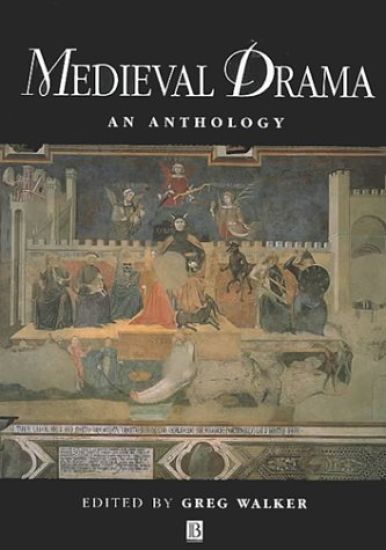
Medieval Drama

Medieval Drama

Greg Walker

Blackwell Publishers
2000
sidottu
This comprehensive anthology brings together a diverse collection of dramatic writing from the late fourteenth century to the onset of the Renaissance. The volume presents for the first time the key plays of the period in their entirety, alongside more unusual selections, covering religious narrative, religion and conscience, and politics and morality. The first section focuses on Biblical plays, including coherent sequences of the narrative Cycle plays from York and N-Town and supporting pageants from Chester and Wakefield. This approach allows a clear narrative line to develop, and permits the comparison of the treatment of key stories between the Cycles. The selected material demonstrates how the drama of the towns and cities of East Anglia and the North of England mediated religious culture to a heterodox urban audience, and explored biblical events in an intensely contemporary setting. In the second and third sections, the attention turns to secular drama, and the Moral Plays and Interludes. The featured texts illustrate the range of themes and issues covered, from the salvation of the individual human soul to the renovation of the political nation, and the variety of settings and audiences for which the plays were designed. The flexibility of the Interlude form is explored, as are the ways in which it was utilised by playwrights and their patrons to address issues of direct political and social concern to them and their audiences. Medieval Drama: An Anthology is an indispensable guide to the breadth and depth of dramatic activity in medieval Britain.
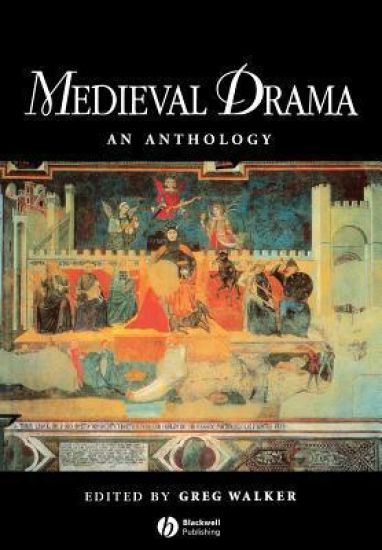
Medieval Drama

Medieval Drama

Greg Walker

JOHN WILEY AND SONS LTD
2000
nidottu
This comprehensive anthology brings together a diverse collection of dramatic writing from the late fourteenth century to the onset of the Renaissance. The volume presents for the first time the key plays of the period in their entirety, alongside more unusual selections, covering religious narrative, religion and conscience, and politics and morality. The first section focuses on Biblical plays, including coherent sequences of the narrative Cycle plays from York and N-Town and supporting pageants from Chester and Wakefield. This approach allows a clear narrative line to develop, and permits the comparison of the treatment of key stories between the Cycles. The selected material demonstrates how the drama of the towns and cities of East Anglia and the North of England mediated religious culture to a heterodox urban audience, and explored biblical events in an intensely contemporary setting. In the second and third sections, the attention turns to secular drama, and the Moral Plays and Interludes. The featured texts illustrate the range of themes and issues covered, from the salvation of the individual human soul to the renovation of the political nation, and the variety of settings and audiences for which the plays were designed. The flexibility of the Interlude form is explored, as are the ways in which it was utilised by playwrights and their patrons to address issues of direct political and social concern to them and their audiences. Medieval Drama: An Anthology is an indispensable guide to the breadth and depth of dramatic activity in medieval Britain.
Reading Literature Historically

Reading Literature Historically

Greg Walker

Edinburgh University Press
2013
sidottu
Pioneer of early-modern literary historicism reads Medieval and early Tudor drama and poetry historically. How far should we try to read medieval and early modern texts historically? Does the attempt to uncover how such texts might have been received by their original readers and audiences uncover new, hitherto unexpected contemporary resonances in them? Or does it flatten works of art into mere 'secondary sources' for historical analysis? This book makes the case for the study of literature in context. It demonstrates the value of historical and cultural analysis alongside traditional literary scholarship for enriching our understanding of plays and poems from the medieval and early Tudor past and of the cultures which produced and received them. It equally accepts the risks involved in that kind of study. It makes the case for reading medieval and early Tudor literature historically. It includes case studies of the interaction between literature and politics, from Chaucer to the reign of Henry VIII. It offers detailed analysis of key medieval and Renaissance texts, Chaucer's Miller's Tale, Sir Gawain and Green Knight, Sir David Lyndsay's A Satire of the Three Estates. It turns a spotlight on hitherto neglected texts that reveal the challenges, rewards and potential pitfalls of reading literature historically.
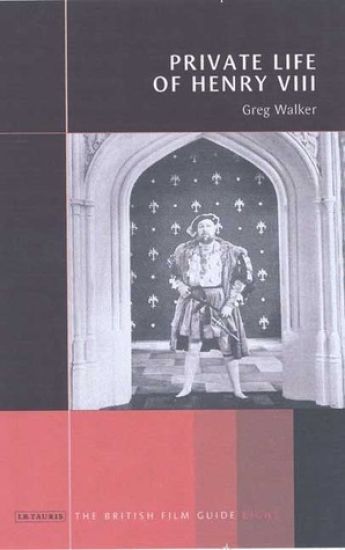
"The Private Life of Henry VIII"

"The Private Life of Henry VIII"

Greg Walker

I.B. Tauris
2003
pokkari
Alexander Korda's masterpiece "The Private Life of Henry VIII" was arguably the most important British film of the pre-war period and a phenomenal, critical and box-office success. Greg Walker's accessible and thoroughly researched book examines the film itself, its makers and its place in the cinematic and cultural history of the period. He examines Korda's subtle treatment of national and "international" identity, his representation of British history, use of modern stereotypes, and discusses the representation of gender and sexuality in the film, including that of Henry's wives and Laughton's award-winning central performance.