Kirjojen hintavertailu. Mukana 11 244 527 kirjaa ja 12 kauppaa.

Kirjahaku

Etsi kirjoja tekijän nimen, kirjan nimen tai ISBN:n perusteella.

45 kirjaa tekijältä Gregory Claeys

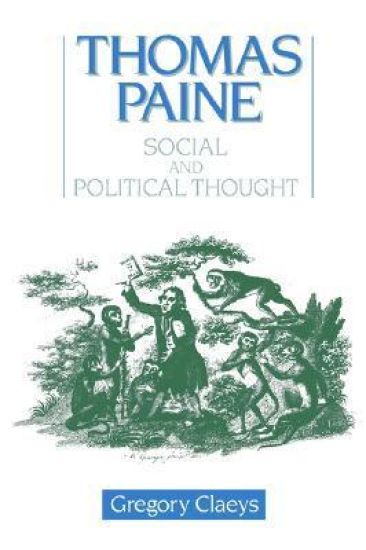
Thomas Paine

Thomas Paine

Gregory Claeys

Routledge
1989
nidottu
This book investigates Thomas Paine's social and political thought in both its British and American moments. It examines the ways in which Paine's ideas were understood. The book restores him to the position his contemporaries accorded him, that of an important writer on politics and society.
Marx and Marxism

Marx and Marxism

Gregory Claeys

Penguin Books Ltd.
2018
pokkari
An illuminating history of Marx's thought and intellectual influence from a leading historian of socialismWhy was Marx so successful as a thinker? Did he have a system and if so, what does it consist of? How did Marxism develop in the twentieth century and what does it mean today?Karl Marx remains the most influential and controversial political thinker in history. The movements associated with his name have lent hope to many victims of tyranny and aggression but have also proven disastrous in practice and resulted in the unnecessary deaths of millions. If after the collapse of the Soviet Union his reputation seemed utterly eclipsed, a new generation is reading and discovering Marx in the wake of the recurrent financial crises, growing social inequality and an increasing sense of the injustice and destructiveness of capitalism. Both his critique of capitalism and his vision of the future speak across the centuries to our times, even if the questions he poses are more difficult to answer than ever. In this wide-ranging account, Gregory Claeys, one of Britain's leading historians of socialism, considers Marx's ideas and their development through the Russian Revolution to the present, showing why Marx and Marxism still matter today.
John Stuart Mill

John Stuart Mill

Gregory Claeys

Oxford University Press
2022
nidottu
Very Short Introductions: Brilliant, Sharp, Inspiring John Stuart Mill (1806-73) is widely regarded as the leading liberal philosopher, economist, and political theorist of nineteenth century Britain. In his lifetime he was best known for his System of Logic (1843) and the Principles of Political Economy (1848). Today Mill is chiefly identified with On Liberty (1859), perhaps the definitive text of modern liberal statement of its subject, and probably the single most important work of modern political thought. Mill was also the first major male feminist thinker of the period (author of The Subjection of Women, 1869), and the first, as an MP, to introduce a bill for female enfranchisement before Parliament. This Very Short Introduction offers a brief survey of the life and key ideas of this most influential Victorian British writer. Moving chronologically, Gregory Claeys outlines the philosophical background out of which Mill developed, chiefly through the ideas of Jeremy Bentham and James Mill. He demonstrates how Mill's personal life, especially his 'mental crisis' of 1827, and his relationship with Harriet Taylor, were integral to his intellectual development. Throughout Claeys considers Mill's key works set within the context of his lesser writings and correspondence, and discusses the more controversial aspects of his thought concerning religion, secularism, and birth control. ABOUT THE SERIES: The Very Short Introductions series from Oxford University Press contains hundreds of titles in almost every subject area. These pocket-sized books are the perfect way to get ahead in a new subject quickly. Our expert authors combine facts, analysis, perspective, new ideas, and enthusiasm to make interesting and challenging topics highly readable.
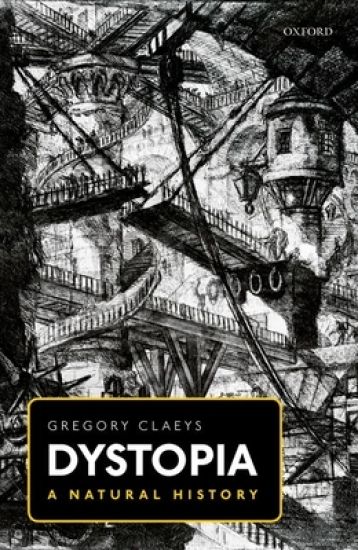
Dystopia

Dystopia

Gregory Claeys

Oxford University Press
2016
sidottu
Dystopia: A Natural History is the first monograph devoted to the concept of dystopia. Taking the term to encompass both a literary tradition of satirical works, mostly on totalitarianism, as well as real despotisms and societies in a state of disastrous collapse, this volume redefines the central concepts and the chronology of the genre and offers a paradigm-shifting understanding of the subject. Part One assesses the theory and prehistory of 'dystopia'. By contrast to utopia, conceived as promoting an ideal of friendship defined as 'enhanced sociability', dystopia is defined by estrangement, fear, and the proliferation of 'enemy' categories. A 'natural history' of dystopia thus concentrates upon the centrality of the passion or emotion of fear and hatred in modern despotisms. The work of Le Bon, Freud, and others is used to show how dystopian groups use such emotions. Utopia and dystopia are portrayed not as opposites, but as extremes on a spectrum of sociability, defined by a heightened form of group identity. The prehistory of the process whereby 'enemies' are demonised is explored from early conceptions of monstrosity through Christian conceptions of the devil and witchcraft, and the persecution of heresy. Part Two surveys the major dystopian moments in twentieth century despotisms, focusing in particular upon Nazi Germany, Stalinism, the Chinese Cultural Revolution, and Cambodia under Pol Pot. The concentration here is upon the political religion hypothesis as a key explanation for the chief excesses of communism in particular. Part Three examines literary dystopias. It commences well before the usual starting-point in the secondary literature, in anti-Jacobin writings of the 1790s. Two chapters address the main twentieth-century texts usually studied as representative of the genre, Aldous Huxley's Brave New World and George Orwell's Nineteen Eighty-Four. The remainder of the section examines the evolution of the genre in the second half of the twentieth century down to the present.
Dystopia

Dystopia

Gregory Claeys

Oxford University Press
2018
nidottu
Dystopia: A Natural History is the first monograph devoted to the concept of dystopia. Taking the term to encompass both a literary tradition of satirical works, mostly on totalitarianism, as well as real despotisms and societies in a state of disastrous collapse, this volume redefines the central concepts and the chronology of the genre and offers a paradigm-shifting understanding of the subject. Part One assesses the theory and prehistory of 'dystopia'. By contrast to utopia, conceived as promoting an ideal of friendship defined as 'enhanced sociability', dystopia is defined by estrangement, fear, and the proliferation of 'enemy' categories. A 'natural history' of dystopia thus concentrates upon the centrality of the passion or emotion of fear and hatred in modern despotisms. The work of Le Bon, Freud, and others is used to show how dystopian groups use such emotions. Utopia and dystopia are portrayed not as opposites, but as extremes on a spectrum of sociability, defined by a heightened form of group identity. The prehistory of the process whereby 'enemies' are demonised is explored from early conceptions of monstrosity through Christian conceptions of the devil and witchcraft, and the persecution of heresy. Part Two surveys the major dystopian moments in twentieth century despotisms, focussing in particular upon Nazi Germany, Stalinism, the Chinese Cultural Revolution, and Cambodia under Pol Pot. The concentration here is upon the political religion hypothesis as a key explanation for the chief excesses of communism in particular. Part Three examines literary dystopias. It commences well before the usual starting-point in the secondary literature, in anti-Jacobin writings of the 1790s. Two chapters address the main twentieth-century texts usually studied as representative of the genre, Aldous Huxley's Brave New World and George Orwell's Nineteen Eighty-Four. The remainder of the section examines the evolution of the genre in the second half of the twentieth century down to the present.
French Revolution Debate in Britain

French Revolution Debate in Britain

Gregory Claeys

Red Globe Press
2007
sidottu
Gregory Claeys explores the reception of the French Revolution in Britain through the medium of its leading interpreters. Claeys argues that the major figures - Thomas Paine, Edmund Burke, Mary Wollstonecraft, William Godwin and John Thelwall - collectively laid the foundations for political debate for the following century, and longer.
French Revolution Debate in Britain

French Revolution Debate in Britain

Gregory Claeys

Red Globe Press
2007
nidottu
Gregory Claeys explores the reception of the French Revolution in Britain through the medium of its leading interpreters. Claeys argues that the major figures - Thomas Paine, Edmund Burke, Mary Wollstonecraft, William Godwin and John Thelwall - collectively laid the foundations for political debate for the following century, and longer.
Imperial Sceptics

Imperial Sceptics

Gregory Claeys

Cambridge University Press
2010
sidottu
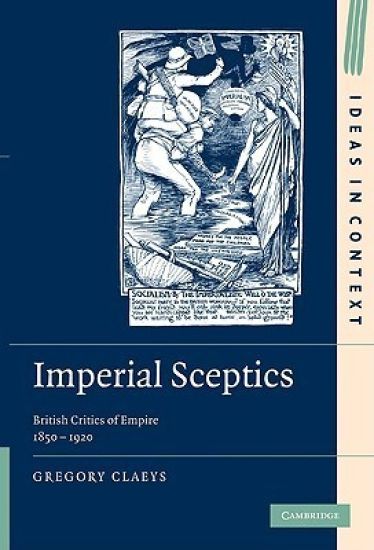
Imperial Sceptics provides a highly original analysis of the emergence of opposition to the British Empire from 1850–1920. Departing from existing accounts, which have focused upon the Boer War and the writings of John Hobson, Gregory Claeys proposes a new chronology for the contours of resistance to imperial expansion. Claeys locates the impetus for such opposition in the late 1850s with the British followers of Auguste Comte. Tracing critical strands of anti-imperial thought through to the First World War, Claeys then scrutinises the full spectrum of socialist writings from the early 1880s onwards, revealing a fundamental division over whether a new conception of 'socialist imperialism' could appeal to the electorate and satisfy economic demands. Based upon extensive archival research, and utilising rare printed sources, Imperial Sceptics will prove a major contribution to our understanding of nineteenth-century political thought, shedding new light on theories of nationalism, patriotism, the state and religion.
Mill and Paternalism

Mill and Paternalism

Gregory Claeys

Cambridge University Press
2013
sidottu
Many discussions of J. S. Mill's concept of liberty focus too narrowly on On Liberty and fail to acknowledge that his treatment of related issues elsewhere may modify its leading doctrines. Mill and Paternalism demonstrates how a contextual reading suggests that in Principles of Political Economy, and also his writings on Ireland, India and on domestic issues like land reform, Mill proposed a substantially more interventionist account of the state than On Liberty seems to imply. This helps to explain Mill's sympathies for socialism after 1848, as well as his Malthusianism and feminism, which, in conjunction with Harriet Taylor's views, are central to his later discussions of the family and marriage. Feminism, indeed, is shown to provide the answer to the problem which most agitated Mill, overpopulation. Thus Gregory Claeys sheds new lights on many of Mill's overarching preoccupations, including the theory of liberty at the heart of On Liberty.
Citizens and Saints

Citizens and Saints

Gregory Claeys

Cambridge University Press
2002
pokkari
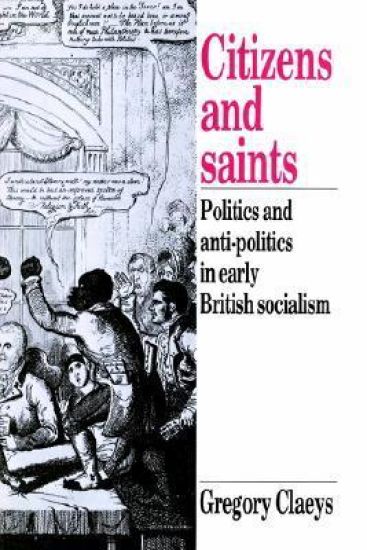
Citizens and Saints is a comprehensive study of the profound rupture in the language of reform and revolution which occurred with the rise of socialism. Focusing upon British Owenite socialism, Professor Claeys argues that two schools of political thinking emerged from the ‘social’ critique of contemporary political radicalism. One, largely identified with Owenite perfectibilism, aimed to transcend existing forms of democracy and to establish more harmonious, less divisive forms of rule. The other, apparently more democratic, aimed to extend popular control of political institutions to economic organisations. Both were sceptical of the ‘political’ analyses of socioeconomic deprivation proferred by existing radicalism. Such scepticism was to prove crucial to both liberal and socialist political thought, and Professor Claeys shows that such perennial questions as the intrinsically democratic (or otherwise) nature of Marxist socialism can only be understood by reference to the political and intellectual circumstances in which early socialist ideas emerged.
Utopianism for a Dying Planet

Utopianism for a Dying Planet

Gregory Claeys

PRINCETON UNIVERSITY PRESS
2022
sidottu
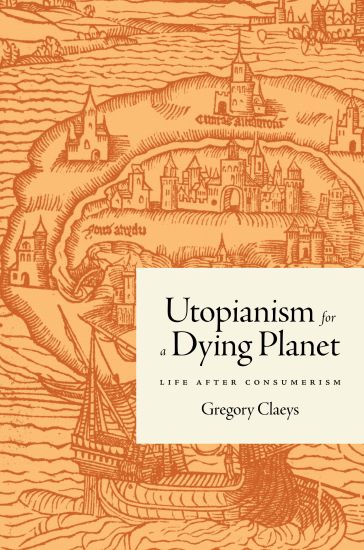
How the utopian tradition offers answers to today’s environmental crisesIn the face of Earth’s environmental breakdown, it is clear that technological innovation alone won’t save our planet. A more radical approach is required, one that involves profound changes in individual and collective behavior. Utopianism for a Dying Planet examines the ways the expansive history of utopian thought, from its origins in ancient Sparta and ideas of the Golden Age through to today's thinkers, can offer moral and imaginative guidance in the face of catastrophe. The utopian tradition, which has been critical of conspicuous consumption and luxurious indulgence, might light a path to a society that emphasizes equality, sociability, and sustainability.Gregory Claeys unfolds his argument through a wide-ranging consideration of utopian literature, social theory, and intentional communities. He defends a realist definition of utopia, focusing on ideas of sociability and belonging as central to utopian narratives. He surveys the development of these themes during the eighteenth and nineteenth centuries before examining twentieth- and twenty-first-century debates about alternatives to consumerism. Claeys contends that the current global warming limit of 1.5C (2.7F) will result in cataclysm if there is no further reduction in the cap. In response, he offers a radical Green New Deal program, which combines ideas from the theory of sociability with proposals to withdraw from fossil fuels and cease reliance on unsustainable commodities.An urgent and comprehensive search for antidotes to our planet’s destruction, Utopianism for a Dying Planet asks for a revival of utopian ideas, not as an escape from reality, but as a powerful means of changing it.
Utopianism for a Dying Planet

Utopianism for a Dying Planet

Gregory Claeys

PRINCETON UNIVERSITY PRESS
2024
pokkari
How the utopian tradition offers answers to today’s environmental crisesIn the face of Earth’s environmental breakdown, it is clear that technological innovation alone won’t save our planet. A more radical approach is required, one that involves profound changes in individual and collective behavior. Utopianism for a Dying Planet examines the ways the expansive history of utopian thought, from its origins in ancient Sparta and ideas of the Golden Age through to today's thinkers, can offer moral and imaginative guidance in the face of catastrophe. The utopian tradition, which has been critical of conspicuous consumption and luxurious indulgence, might light a path to a society that emphasizes equality, sociability, and sustainability.Gregory Claeys unfolds his argument through a wide-ranging consideration of utopian literature, social theory, and intentional communities. He defends a realist definition of utopia, focusing on ideas of sociability and belonging as central to utopian narratives. He surveys the development of these themes during the eighteenth and nineteenth centuries before examining twentieth- and twenty-first-century debates about alternatives to consumerism. Claeys contends that the current global warming limit of 1.5C (2.7F) will result in cataclysm if there is no further reduction in the cap. In response, he offers a radical Green New Deal program, which combines ideas from the theory of sociability with proposals to withdraw from fossil fuels and cease reliance on unsustainable commodities.An urgent and comprehensive search for antidotes to our planet’s destruction, Utopianism for a Dying Planet asks for a revival of utopian ideas, not as an escape from reality, but as a powerful means of changing it.
Encyclopedia of Modern Political Thought (set)
This groundbreaking new work explores modern and contemporary political thought since 1750, looking at the thinkers, concepts, debates, issues, and national traditions that have shaped political thought from the Enlightenment to post-modernism and post-structuralism. Encyclopedia of Modern Political Thought is two-volume A to Z reference that provides historical context to the philosophical issues and debates that have shaped attitudes toward democracy, citizenship, rights, property, duties, justice, equality, community, law, power, gender, race, and legitimacy over the last three centuries. It profiles major and minor political thinkers, and the national traditions, both Western and non-Western, which continue to shape and divide political thought. More than 200 scholars from leading international research institutions and organizations have provided signed entries that offer comprehensive coverage of: Thought of regions and countries, including African political thought, American political thought , Australasian political thought (Australian and New Zealand), Chinese political thought, Indian political thought, Islamic political Thought, Japanese political thought, and more Thought regarding contemporary issues such as abortion, affirmative action, animal rights, European integration, feminism, humanitarian intervention, international law, race and racism, and more The ideological spectrum from Marxism to neoconservatism, including anarchism, conservatism, Darwinism and Social Darwinism, Engels, fascism, the Frankfurt School, Lenin and Leninism, socialism, and more Connections of political thought to key areas of politics and other disciplines such as economics, psychology, law, and religion Notable time periods of political thought since 1750 Concepts including class, democratic theory, liberalism, nationalism, natural and human rights, and theories of the state Theorists and political intellectuals, both Western and non-Western including John Adams, Edmund Burke, Mohandas Gandhi, Immanuel Kant, Ayatollah Khomeini, Ernst Friedrich Schumacher, George Washington, and Mary Wollstonecraft
Imperial Sceptics

Imperial Sceptics

Gregory Claeys

Cambridge University Press
2012
pokkari
Imperial Sceptics provides a highly original analysis of the emergence of opposition to the British Empire from 1850–1920. Departing from existing accounts, which have focused upon the Boer War and the writings of John Hobson, Gregory Claeys proposes a new chronology for the contours of resistance to imperial expansion. Claeys locates the impetus for such opposition in the late 1850s with the British followers of Auguste Comte. Tracing critical strands of anti-imperial thought through to the First World War, Claeys then scrutinises the full spectrum of socialist writings from the early 1880s onwards, revealing a fundamental division over whether a new conception of 'socialist imperialism' could appeal to the electorate and satisfy economic demands. Based upon extensive archival research, and utilising rare printed sources, Imperial Sceptics will prove a major contribution to our understanding of nineteenth-century political thought, shedding new light on theories of nationalism, patriotism, the state and religion.
Thomas Paine

Thomas Paine

Gregory Claeys

Routledge
2017
sidottu
This book investigates Thomas Paine's social and political thought in both its British and American moments. It examines the ways in which Paine's ideas were understood. The book restores him to the position his contemporaries accorded him, that of an important writer on politics and society.
The Selected Works of Robert Owen Vol I
Robert Owen (1771-1858) was the founder of British socialism, and one of the most influential reformers in Britain and America in the first half of the 19th century. This book contains all Owen's key writings on the ideal community, socialism, religion, and the capitalist economic system.
The Selected Works of Robert Owen vol II
Robert Owen (1771-1858) was the founder of British socialism, and one of the most influential reformers in Britain and America in the first half of the 19th century. This book contains all Owen's key writings on the ideal community, socialism, religion, and the capitalist economic system.
The Selected Works of Robert Owen vol III
Robert Owen (1771-1858) was the founder of British socialism, and one of the most influential reformers in Britain and America in the first half of the 19th century. This book contains all Owen's key writings on the ideal community, socialism, religion, and the capitalist economic system.
The Selected Works of Robert Owen Vol IV
Robert Owen (1771-1858) was the founder of British socialism, and one of the most influential reformers in Britain and America in the first half of the 19th century. This book contains all Owen's key writings on the ideal community, socialism, religion, and the capitalist economic system.