Kirjojen hintavertailu. Mukana 11 717 486 kirjaa ja 12 kauppaa.

Kirjahaku

Etsi kirjoja tekijän nimen, kirjan nimen tai ISBN:n perusteella.

9 kirjaa tekijältä Gregory Currie

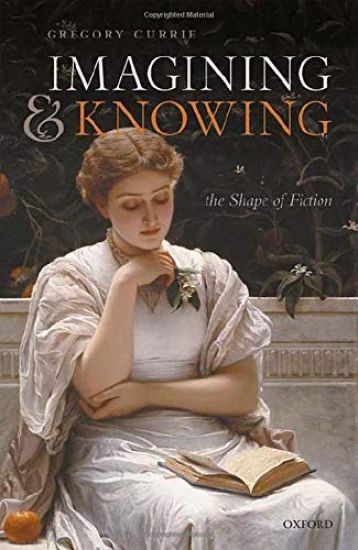
Imagining and Knowing

Imagining and Knowing

Gregory Currie

Oxford University Press
2022
nidottu
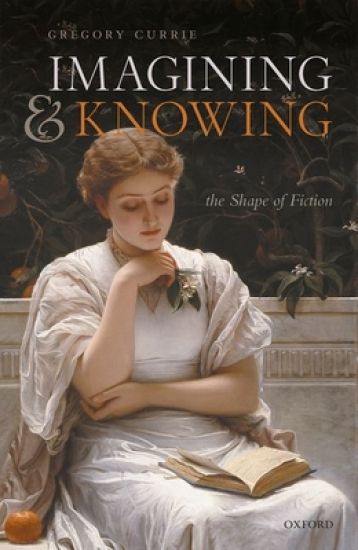
Works of fiction are works of the imagination and for the imagination. Gregory Currie energetically defends the familiar idea that fictions are guides to the imagination, a view which has come under attack in recent years. Responding to a number of challenges to this standpoint, he argues that within the domain of the imagination there lies a number of distinct and not well-recognized capacities which make the connection between fiction and imagination work. Currie then considers the question of whether in guiding the imagination fictions may also guide our beliefs, our outlook, and our habits in directions of learning. It is widely held that fictions very often provide opportunities for the acquisition of knowledge and of skills. Without denying that this sometimes happens, this book explores the difficulties and dangers of too optimistic a picture of learning from fiction. It is easy to exaggerate the connection between fiction and learning, to ignore countervailing tendencies in fiction to create error and ignorance, and to suppose that claims about learning from fiction require no serious empirical support. Currie makes a case for modesty about learning from fiction -- reasoning that a lot of what we take to be learning in this area is itself a kind of pretence, that we are too optimistic about the psychological and moral insights of authors, that the case for fiction as a Darwinian adaptation is weak, and that empathy is both hard to acquire and not always morally advantageous.
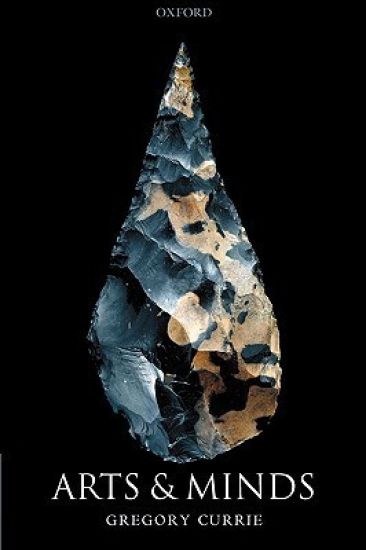
Arts and Minds

Arts and Minds

Gregory Currie

Clarendon Press
2004
nidottu
Philosophical questions about the arts go naturally with other kinds of questions about them. Art is sometimes said to be an historical concept. But where in our cultural and biological history did art begin? If art is related to play and imagination, do we find any signs of these things in our nonhuman relatives? Sometimes the other questions look like ones the philosopher of art has to answer. Anyone who thinks that interpretation in the arts is an activity that leaves the intentions of the author behind needs to explain how and why this differs so fundamentally from ordinary conversational interpretation, where the only decent models we have are ones that depend crucially on the recovery of intention. Anyone who thinks that imaginative literature has anything to tell us about time had better have a position on how earlier and later relate to past and future. Anyone who thinks that empathy plays a role in literary engagement had better have a psychologically plausible account of what empathy is. Philosophical questions about the arts also go naturally with other kinds of philosophical questions: we can't think constructively about representation in art without thinking about representation; text, meaning, reference and existence get similarly drawn into the conversation. Some ideas that philosophers of art deal with emerge from other disciplines. In literary theory an enormous amount of attention has been lavished on tracing the sources of unreliability in narrative. Is the result adequate to the details of the particular works we call unreliable? Contemporary film theory is generally hostile to the fiction/documentary distinction. Are there in fact any grounds for this? This book of thirteen connected essays examines questions of all these kinds. It ranges from the semantics of proper names, through the pragmatics of literary and filmic interpretation, to the aesthetic function of stone age implements. Some of the essays have not been published before; some that have are here substantially revised.
Narratives and Narrators

Narratives and Narrators

Gregory Currie

Oxford University Press
2010
sidottu
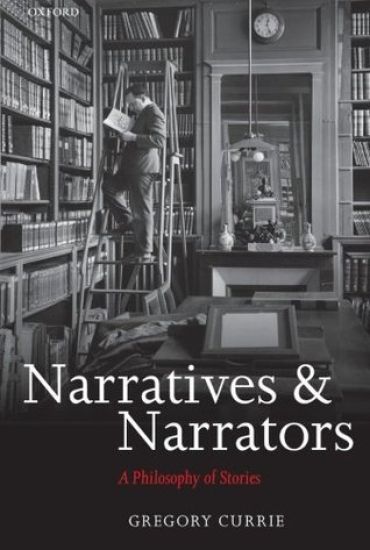
Narratives are artefacts of a special kind: they are intentionally crafted devices which fulfil their story-telling function by manifesting the intentions of their makers. But narrative itself is too inclusive a category for much more to be said about it than this; we should focus attention instead on the vaguely defined but interesting category of things rich in narrative structure. Such devices offer significant possibilities, not merely for the representation of stories, but for the expression of point of view; they have also played an important role in the evolution of reliable communication. Narratives and narrators argues that much of the pleasure of narrative communication depends on deep-seated and early developing tendencies in human beings to imitation and to joint attention, and imitation turns out to be the key to understanding such important literary techniques as free indirect discourse and character-focused narration. The book also examines irony in narrative, with an emphasis on the idea of the expression of ironic points of view. It looks closely at the idea of character, or robust, situation-independent ways of acting and thinking, as it is represented in narrative. It asks whether scepticism about the notion of character should have us reassess the dramatic and literary tradition which places such emphasis on character.
Narratives and Narrators

Narratives and Narrators

Gregory Currie

Oxford University Press
2012
nidottu
Narratives are artefacts of a special kind: they are intentionally crafted devices which fulfil their story-telling function by manifesting the intentions of their makers. But narrative itself is too inclusive a category for much more to be said about it than this; we should focus attention instead on the vaguely defined but interesting category of things rich in narrative structure. Such devices offer significant possibilities, not merely for the representation of stories, but for the expression of point of view; they have also played an important role in the evolution of reliable communication. Narratives and narrators argues that much of the pleasure of narrative communication depends on deep-seated and early developing tendencies in human beings to imitation and to joint attention, and imitation turns out to be the key to understanding such important literary techniques as free indirect discourse and character-focused narration. The book also examines irony in narrative, with an emphasis on the idea of the expression of ironic points of view. It looks closely at the idea of character, or robust, situation-independent ways of acting and thinking, as it is represented in narrative. It asks whether scepticism about the notion of character should have us reassess the dramatic and literary tradition which places such emphasis on character.
Imagining and Knowing

Imagining and Knowing

Gregory Currie

Oxford University Press
2020
sidottu
Works of fiction are works of the imagination and for the imagination. Gregory Currie energetically defends the familiar idea that fictions are guides to the imagination, a view which has come under attack in recent years. Responding to a number of challenges to this standpoint, he argues that within the domain of the imagination there lies a number of distinct and not well-recognized capacities which make the connection between fiction and imagination work. Currie then considers the question of whether in guiding the imagination fictions may also guide our beliefs, our outlook, and our habits in directions of learning. It is widely held that fictions very often provide opportunities for the acquisition of knowledge and of skills. Without denying that this sometimes happens, this book explores the difficulties and dangers of too optimistic a picture of learning from fiction. It is easy to exaggerate the connection between fiction and learning, to ignore countervailing tendencies in fiction to create error and ignorance, and to suppose that claims about learning from fiction require no serious empirical support. Currie makes a case for modesty about learning from fiction--reasoning that a lot of what we take to be learning in this area is itself a kind of pretence, that we are too optimistic about the psychological and moral insights of authors, that the case for fiction as a Darwinian adaptation is weak, and that empathy is both hard to acquire and not always morally advantageous.
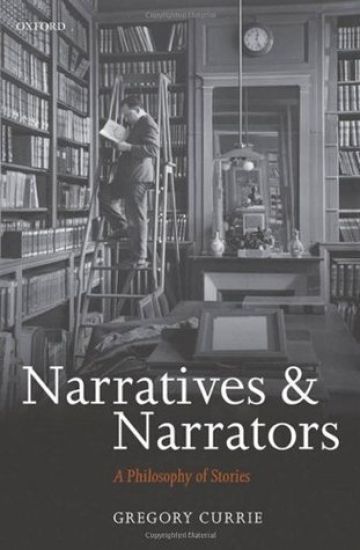
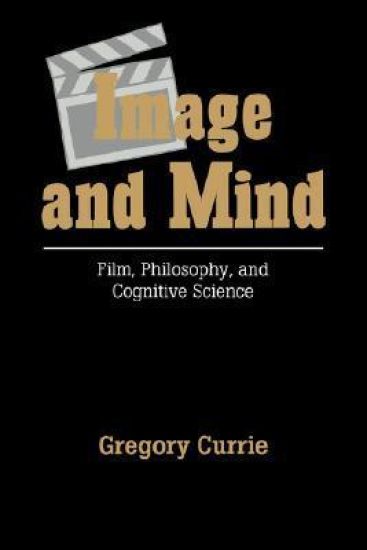
Image and Mind

Image and Mind

Gregory Currie

Cambridge University Press
2008
pokkari
This is a book about the nature of film: about the nature of moving images, about the viewer's relation to film, and about the kinds of narrative that film is capable of presenting. It represents a very decisive break with the semiotic and psychoanalytic theories of film which have dominated discussion. The central thesis is that film is essentially a pictorial medium and that the movement of film images is real rather than illusory. A general theory of pictorial representation is presented, which insists on the realism of pictures and the impossibility of assimilating them to language. It criticizes attempts to explain the psychology of film viewing in terms of the viewer's imaginary occupation of a position within the world of film. On the contrary, film viewing is nearly always impersonal.
The Nature of Fiction

The Nature of Fiction

Gregory Currie

Cambridge University Press
2008
pokkari
This important book provides a theory about the nature of fiction, and about the relation between the author, the reader and the fictional text. The approach is philosophical: that is to say, the author offers an account of key concepts such as fictional truth, fictional characters, and fiction itself. The book argues that the concept of fiction can be explained partly in terms of communicative intentions, partly in terms of a condition which excludes relations of counterfactual dependence between the world and the text. This communicative model is then applied to the following problems: how can something be 'true in the story' without being explicitly stated in the text? In what ways does interpreting a fictional story depend upon grasping its author's intentions? Is there always a unique best interpretation of a fictional text? What is the correct semantics for fictional names? What is the nature of our emotional response to a fictional work? In answering these questions the author explores the complex interaction between author, reader, and text. This interaction requires the reader to construct a 'fictional author' - a character in the story whose personality, beliefs and emotional states must be interpreted if the reader is to grasp the meaning of the work.
Image and Mind

Image and Mind

Gregory Currie

Cambridge University Press
1995
sidottu
This is a book about the nature of film: about the nature of moving images, about the viewer’s relation to film, and about the kinds of narrative that film is capable of presenting. It represents a very decisive break with the semiotic and psychoanalytic theories of film which have dominated discussion over the last twenty years. The central thesis is that film is essentially a pictorial medium and that the movement of film images is real rather than illusory. A general theory of pictorial representation is presented, which insists on the realism of pictures and the impossibility of assimilating them to language. It criticises attempts to explain the psychology of film viewing in terms of the viewer’s imaginary occupation of a position within the world of film. On the contrary, film viewing is nearly always impersonal.