Kirjojen hintavertailu. Mukana 12 016 292 kirjaa ja 12 kauppaa.

Kirjahaku

Etsi kirjoja tekijän nimen, kirjan nimen tai ISBN:n perusteella.

10 kirjaa tekijältä Gregory F. Treverton

Intelligence for an Age of Terror

Intelligence for an Age of Terror

Gregory F. Treverton

Cambridge University Press
2009
sidottu
During the Cold War, U.S. intelligence was concerned primarily with states; non-state actors like terrorists were secondary. Now the priorities are reversed and the challenge is enormous. States had an address, and they were hierarchical and bureaucratic. They thus came with some 'story'. Terrorists do not. States were 'over there', but terrorists are there and here. They thus put pressure on intelligence at home, not just abroad. The strength of this book is that it underscores the extent of the change and ranges broadly across data collection and analysis, foreign and domestic, as well as presenting the issues of value that arise as new targets require collecting more information at home.
Reshaping National Intelligence for an Age of Information

Reshaping National Intelligence for an Age of Information

Gregory F. Treverton

Cambridge University Press
2003
pokkari
The world of intelligence has been completely transformed by the end of the Cold War and the onset of an age of information. Prior to the 1990s, US government intelligence had one principal target, the Soviet Union; a narrow set of ‘customers’, the political and military officials of the US government; and a limited set of information from the sources they owned, spy satellites and spies. Today, world intelligence has many targets, numerous consumers - not all of whom are American or in the government - and too much information, most of which is not owned by the U.S. government and is of widely varying reliability. In this bold and penetrating study, Gregory Treverton, former Vice Chair of the National Intelligence Council and Senate investigator, offers his insider’s views on how intelligence gathering and analysis must change. He suggests why intelligence needs to be both contrarian, leaning against the conventional wisdom, and attentive to the longer term, leaning against the growing shorter time horizons of Washington policy makers. He urges that the solving of intelligence puzzles tap expertise outside government - in the academy, think tanks, and Wall Street - to make these parties colleagues and co-consumers of intelligence, befitting the changed role of government from doer to convener, mediator, and coalition-builder.
Reshaping National Intelligence for an Age of Information

Reshaping National Intelligence for an Age of Information

Gregory F. Treverton

Cambridge University Press
2001
sidottu
The world of intelligence has been completely transformed by the end of the Cold War and the onset of an age of information. Prior to the 1990s, US government intelligence had one principal target, the Soviet Union; a narrow set of 'customers', the political and military officials of the US government; and a limited set of information from the sources they owned, spy satellites and spies. Today, world intelligence has many targets, numerous consumers - not all of whom are American or in the government - and too much information, most of which is not owned by the U.S. government and is of widely varying reliability. In this bold and penetrating study, Gregory Treverton, former Vice Chair of the National Intelligence Council and Senate investigator, offers his insider's views on how intelligence gathering and analysis must change. He suggests why intelligence needs to be both contrarian, leaning against the conventional wisdom, and attentive to the longer term, leaning against the growing shorter time horizons of Washington policy makers. He urges that the solving of intelligence puzzles tap expertise outside government - in the academy, think tanks, and Wall Street - to make these parties colleagues and co-consumers of intelligence, befitting the changed role of government from doer to convener, mediator, and coalition-builder.
America, Germany, and the Future of Europe

America, Germany, and the Future of Europe

Gregory F. Treverton

Princeton University Press
2014
pokkari
Gregory Treverton reviews the significant episodes in Europe's history after World War II, emphasizing America's preoccupation with Europe and the decisive effect of U.S. foreign policy on European security and economic arrangements during the postwar years. Originally published in 1992. The Princeton Legacy Library uses the latest print-on-demand technology to again make available previously out-of-print books from the distinguished backlist of Princeton University Press. These editions preserve the original texts of these important books while presenting them in durable paperback and hardcover editions. The goal of the Princeton Legacy Library is to vastly increase access to the rich scholarly heritage found in the thousands of books published by Princeton University Press since its founding in 1905.
America, Germany, and the Future of Europe

America, Germany, and the Future of Europe

Gregory F. Treverton

Princeton University Press
2016
sidottu
Gregory Treverton reviews the significant episodes in Europe's history after World War II, emphasizing America's preoccupation with Europe and the decisive effect of U.S. foreign policy on European security and economic arrangements during the postwar years. Originally published in 1992. The Princeton Legacy Library uses the latest print-on-demand technology to again make available previously out-of-print books from the distinguished backlist of Princeton University Press. These editions preserve the original texts of these important books while presenting them in durable paperback and hardcover editions. The goal of the Princeton Legacy Library is to vastly increase access to the rich scholarly heritage found in the thousands of books published by Princeton University Press since its founding in 1905.
Toward Theory of Intelligence

Toward Theory of Intelligence

Gregory F. Treverton

RAND
2006
pokkari
In June 2005, the RAND Corporation and the Office of the Director of National Intelligence convened a one-day workshop to discuss how theories underlie U.S. intelligence work and might lead to a better understanding and practice of intelligence.
Assessing Counterterrorism-focused Domestic Intelligence
One of the questions in the fight against terrorism is whether the United States needs a counterterrorism domestic intelligence agency separate from law enforcement. Drawing on an analysis of current counterterrorism efforts, an examination the domestic intelligence agencies in six other democracies, and interviews with intelligence and law enforcement experts, this volume lays out the relevant considerations for creating such an agency.This volume examines counterterrorism-focused domestic intelligence in the United States and discusses the pros and cons of creating a new, dedicated domestic intelligence agency, on the model of several comparable democracies.
Intelligence for an Age of Terror

Intelligence for an Age of Terror

Gregory F. Treverton

Cambridge University Press
2011
pokkari
During the Cold War, U.S. intelligence was concerned primarily with states; non-state actors like terrorists were secondary. Now the priorities are reversed and the challenge is enormous. States had an address, and they were hierarchical and bureaucratic. They thus came with some 'story'. Terrorists do not. States were 'over there', but terrorists are there and here. They thus put pressure on intelligence at home, not just abroad. The strength of this book is that it underscores the extent of the change and ranges broadly across data collection and analysis, foreign and domestic, as well as presenting the issues of value that arise as new targets require collecting more information at home.
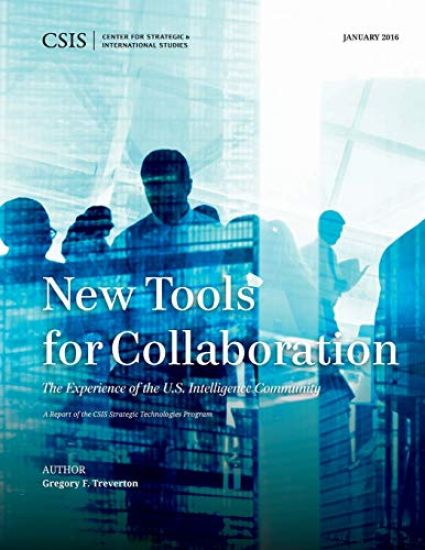
New Tools for Collaboration

New Tools for Collaboration

Gregory F. Treverton

Centre for Strategic International Studies,U.S.
2016
nidottu
The Intelligence Community does not lag far behind the private sector in using collaborative tools; indeed, it has developed an impressive array. However, the most used tools, like instant messaging (IM), are employed primarily within agencies for peer-to-peer communication and hence are neither widely collaborative nor especially novel: they are different ways of accomplishing familiar functions. The array of collaborative tools across agencies—ranging from IM to blogs to a wiki called Intellipedia—is impressive but used mostly by enthusiasts. This report identifies lessons learned from looking at the use of internal collaborative tools across the Intelligence Community, especially across the four biggest agencies: Central Intelligence Agency, Defense Intelligence Agency, National Security Agency, and National Geospatial Intelligence Agency.