Kirjojen hintavertailu. Mukana 11 342 296 kirjaa ja 12 kauppaa.

Kirjahaku

Etsi kirjoja tekijän nimen, kirjan nimen tai ISBN:n perusteella.

7 kirjaa tekijältä Gregory Landini

Russell's Hidden Substitutional Theory

Russell's Hidden Substitutional Theory

Gregory Landini

Oxford University Press Inc
1998
sidottu
This book explores an important central thread that unifies Russell's thoughts on logic in two works previously considered at odds with each other, the Principles of Mathematics and the later Principia Mathematica. This thread is Russell's doctrine that logic is an absolutely general science and that any calculus for it must embrace wholly unrestricted variables. The heart of Landini's book is a careful analysis of Russell's largely unpublished "substitutional" theory. On Landini's showing, the substitutional theory reveals the unity of Russell's philosophy of logic and offers new avenues for a genuine solution of the paradoxes plaguing Logicism.
Russell

Russell

Gregory Landini

Routledge
2010
sidottu
Bertrand Russell (1872–1970) was renowned as one of the founding figures of "analytic" philosophy, and for his lasting contributions to the study of logic, philosophy of language, philosophy of mathematics and epistemology. He was also famous for his popular works, where his humanism, ethics and antipathy towards religion came through in books such as The Problems of Philosophy, Why I am Not A Christian, and The Conquest of Happiness.Beginning with an overview of Russell’s life and work, Gregory Landini carefully explains Russell’s philosophy, to show why he ranks as one of the giants of British and Twentieth century philosophy. He discusses Russell’s major early works in philosophy of mathematics, including The Principles of Mathematics, wherein Russell illuminated and developed the ideas of Gottlob Frege; and the monumental three volume work written with Alfred North Whitehead, Principia Mathematica, where the authors attempted to show that all mathematical theory is part of logic, understood as a science of structure.Landini discusses the second edition of Principia Mathematica, to show Russell’s intellectual relationship with Wittgenstein and Ramsey. He discusses Russell’s epistemology and neutral monism before concluding with a discussion on Russell’s ethics, and the relationship between science and religion.Featuring a chronology and a glossary of terms, as well as suggestions for further reading at the end of each chapter, Russell is essential reading for anyone studying philosophy, and is an ideal guidebook for those coming to Russell for the first time.
Russell

Russell

Gregory Landini

Routledge
2010
nidottu
Bertrand Russell (1872–1970) was renowned as one of the founding figures of "analytic" philosophy, and for his lasting contributions to the study of logic, philosophy of language, philosophy of mathematics and epistemology. He was also famous for his popular works, where his humanism, ethics and antipathy towards religion came through in books such as The Problems of Philosophy, Why I am Not A Christian, and The Conquest of Happiness.Beginning with an overview of Russell’s life and work, Gregory Landini carefully explains Russell’s philosophy, to show why he ranks as one of the giants of British and Twentieth century philosophy. He discusses Russell’s major early works in philosophy of mathematics, including The Principles of Mathematics, wherein Russell illuminated and developed the ideas of Gottlob Frege; and the monumental three volume work written with Alfred North Whitehead, Principia Mathematica, where the authors attempted to show that all mathematical theory is part of logic, understood as a science of structure.Landini discusses the second edition of Principia Mathematica, to show Russell’s intellectual relationship with Wittgenstein and Ramsey. He discusses Russell’s epistemology and neutral monism before concluding with a discussion on Russell’s ethics, and the relationship between science and religion.Featuring a chronology and a glossary of terms, as well as suggestions for further reading at the end of each chapter, Russell is essential reading for anyone studying philosophy, and is an ideal guidebook for those coming to Russell for the first time.
Wittgenstein's Apprenticeship with Russell

Wittgenstein's Apprenticeship with Russell

Gregory Landini

Cambridge University Press
2009
pokkari
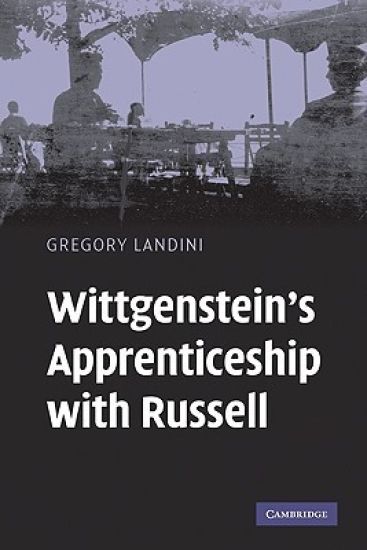
Wittgenstein's Tractatus has generated many interpretations since its publication in 1921, but over the years a consensus has developed concerning its criticisms of Russell's philosophy. In Wittgenstein's Apprenticeship with Russell, Gregory Landini draws extensively from his work on Russell's unpublished manuscripts to show that the consensus characterises Russell with positions he did not hold. Using a careful analysis of Wittgenstein's writings he traces the 'Doctrine of Showing' and the 'fundamental idea' of the Tractatus to Russell's logical atomist research program, which dissolves philosophical problems by employing variables with structure. He argues that Russell and his apprentice Wittgenstein were allies in a research program that makes logical analysis and reconstruction the essence of philosophy. His sharp and controversial study will be essential reading for all who are interested in this rich period in the history of analytic philosophy.
Wittgenstein's Apprenticeship with Russell

Wittgenstein's Apprenticeship with Russell

Gregory Landini

Cambridge University Press
2007
sidottu
Wittgenstein's Tractatus has generated many interpretations since its publication in 1921, but over the years a consensus has developed concerning its criticisms of Russell's philosophy. In Wittgenstein's Apprenticeship with Russell, Gregory Landini draws extensively from his work on Russell's unpublished manuscripts to show that the consensus characterises Russell with positions he did not hold. Using a careful analysis of Wittgenstein's writings he traces the 'Doctrine of Showing' and the 'fundamental idea' of the Tractatus to Russell's logical atomist research program, which dissolves philosophical problems by employing variables with structure. He argues that Russell and his apprentice Wittgenstein were allies in a research program that makes logical analysis and reconstruction the essence of philosophy. His sharp and controversial study will be essential reading for all who are interested in this rich period in the history of analytic philosophy.
Repairing Bertrand Russell’s 1913 Theory of Knowledge

Repairing Bertrand Russell’s 1913 Theory of Knowledge

Gregory Landini

Springer Nature Switzerland AG
2022
sidottu
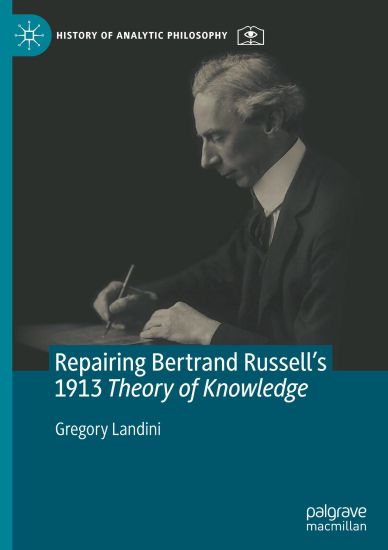
This book repairs and revives the Theory of Knowledge research program of Russell’s Principia era. Chapter 1, 'Introduction and Overview', explains the program’s agenda. Inspired by the non-Fregean logicism of Principia Mathematica, it endorses the revolution within mathematics presenting it as a study of relations. The synthetic a priori logic of Principia is the essence of philosophy considered as a science which exposes the dogmatisms about abstract particulars and metaphysical necessities that create prisons that fetter the mind. Incipient in The Problems of Philosophy, the program’s acquaintance epistemology embraced a multiple-relation theory of belief. It reached an impasse in 1913, having been itself retrofitted with abstract particular logical forms to address problems of direction and compositionality. With its acquaintance epistemology in limbo, ScientificMethod in Philosophy became the sequel to Problems. Chapter 2 explains Russell’s feeling intellectually dishonest. Wittgenstein’s demand that logic exclude nonsense belief played no role. The 1919 neutral monist era ensued, but Russell found no epistemology for the logic essential to philosophy. Repairing, Chapters 4–6 solve the impasse. Reviving, Chapters 3 and 7 vigorously defend the facts about Principia. Studies of modality and entailment are viable while Principia remains a universal logic above the civil wars of the metaphysicians.
Repairing Bertrand Russell’s 1913 Theory of Knowledge

Repairing Bertrand Russell’s 1913 Theory of Knowledge

Gregory Landini

Springer Nature Switzerland AG
2023
nidottu
This book repairs and revives the Theory of Knowledge research program of Russell’s Principia era. Chapter 1, 'Introduction and Overview', explains the program’s agenda. Inspired by the non-Fregean logicism of Principia Mathematica, it endorses the revolution within mathematics presenting it as a study of relations. The synthetic a priori logic of Principia is the essence of philosophy considered as a science which exposes the dogmatisms about abstract particulars and metaphysical necessities that create prisons that fetter the mind. Incipient in The Problems of Philosophy, the program’s acquaintance epistemology embraced a multiple-relation theory of belief. It reached an impasse in 1913, having been itself retrofitted with abstract particular logical forms to address problems of direction and compositionality. With its acquaintance epistemology in limbo, ScientificMethod in Philosophy became the sequel to Problems. Chapter 2 explains Russell’s feeling intellectually dishonest. Wittgenstein’s demand that logic exclude nonsense belief played no role. The 1919 neutral monist era ensued, but Russell found no epistemology for the logic essential to philosophy. Repairing, Chapters 4–6 solve the impasse. Reviving, Chapters 3 and 7 vigorously defend the facts about Principia. Studies of modality and entailment are viable while Principia remains a universal logic above the civil wars of the metaphysicians.