Kirjojen hintavertailu. Mukana 12 390 323 kirjaa ja 12 kauppaa.

Kirjahaku

Etsi kirjoja tekijän nimen, kirjan nimen tai ISBN:n perusteella.

4 kirjaa tekijältä Gregory M.W. Kennedy

Lost in the Crowd

Lost in the Crowd

Gregory M.W. Kennedy

MCGILL-QUEEN'S UNIVERSITY PRESS
2024
sidottu
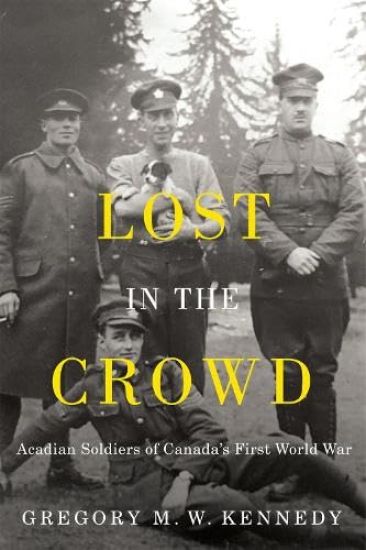
In December 1915, as the First World War wore on, Acadian leaders meeting in New Brunswick deplored how soldiers from their communities were “lost in the crowd” of the Canadian Expeditionary Force. They successfully lobbied the federal government for the creation of an Acadian national unit that would be French-speaking, Catholic, and led by their own. More than a thousand Acadians from across the Maritime provinces, Quebec, and the American northeast answered the call.In Lost in the Crowd Gregory Kennedy draws on military archives, census records, newspapers, and soldiers’ letters to present a new kind of military history focusing on the experiences of Acadian soldiers and their families before, during, and after the war. He shows that Acadians were just as likely to enlist as their English-speaking counterparts across the Maritimes, though the backgrounds of the volunteers were quite different. Kennedy tackles controversial topics often missing from the previous historiography, such as underage recruits, desertion, and army discipline. With the help of the 1921 Canadian Census, he explores the factors that influenced post-war outcomes, both positive and negative, for soldiers, families, and communities.Lost in the Crowd offers a completely new and replicable approach to the traditional regimental history, reconstituting the lives of soldiers and their families. The focus on the Acadians, a francophone minority group in the Maritime provinces, significantly shifts our understanding of French Canada and the First World War.
Lost in the Crowd

Lost in the Crowd

Gregory M.W. Kennedy

MCGILL-QUEEN'S UNIVERSITY PRESS
2024
nidottu
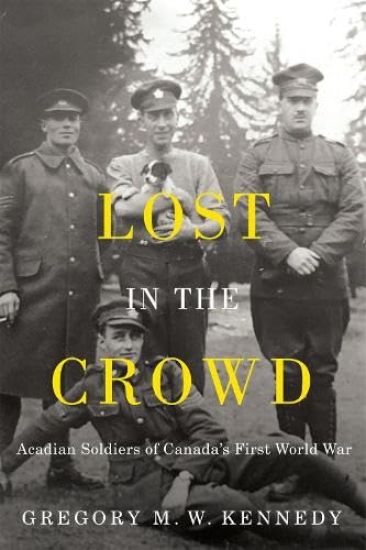
In December 1915, as the First World War wore on, Acadian leaders meeting in New Brunswick deplored how soldiers from their communities were “lost in the crowd” of the Canadian Expeditionary Force. They successfully lobbied the federal government for the creation of an Acadian national unit that would be French-speaking, Catholic, and led by their own. More than a thousand Acadians from across the Maritime provinces, Quebec, and the American northeast answered the call.In Lost in the Crowd Gregory Kennedy draws on military archives, census records, newspapers, and soldiers’ letters to present a new kind of military history focusing on the experiences of Acadian soldiers and their families before, during, and after the war. He shows that Acadians were just as likely to enlist as their English-speaking counterparts across the Maritimes, though the backgrounds of the volunteers were quite different. Kennedy tackles controversial topics often missing from the previous historiography, such as underage recruits, desertion, and army discipline. With the help of the 1921 Canadian Census, he explores the factors that influenced post-war outcomes, both positive and negative, for soldiers, families, and communities.Lost in the Crowd offers a completely new and replicable approach to the traditional regimental history, reconstituting the lives of soldiers and their families. The focus on the Acadians, a francophone minority group in the Maritime provinces, significantly shifts our understanding of French Canada and the First World War.
Something of a Peasant Paradise?

Something of a Peasant Paradise?

Gregory M.W. Kennedy

McGill-Queen's University Press
2014
sidottu
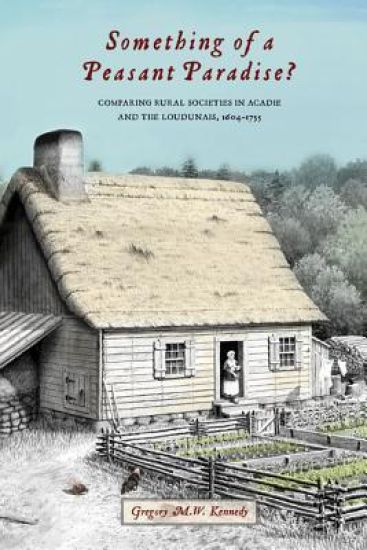
Were Acadians better off than their rural counterparts in old regime France? Did they enjoy a Golden Age? To what degree did a distinct Acadian identity emerge before the wars and deportations of the mid-eighteenth century? In Something of a Peasant Paradise?, Gregory Kennedy compares Acadie in North America with a region of western France, the Loudunais, from which a number of the colonists originated. Kennedy considers the natural environment, the role of the state, the economy, the seigneury, and local governance in each place to show that similarities between the two societies have been greatly underestimated or ignored. The Acadian colonists and the people of the Loudunais were frontier peoples, with dispersed settlement patterns based on kin groups, who sought to make the best use of the land and to profit from trade opportunities. Both societies were hierarchical, demonstrated a high degree of political agency, and employed the same institutions of local governance to organize their affairs and negotiate state demands. Neither group was inherently more prosperous, egalitarian, or independent-minded than the other. Rather, the emergence of a distinct Acadian identity can be traced to the gradual adaptation of traditional methods, institutions, and ideas to their new environmental and political situations. A compelling comparative analysis based on archival evidence on both sides of the Atlantic, Something of a Peasant Paradise? Challenges the traditional historiography and demonstrates that Acadian society shared many of its characteristics with other French rural societies of the period.
Something of a Peasant Paradise?

Something of a Peasant Paradise?

Gregory M.W. Kennedy

McGill-Queen's University Press
2014
nidottu
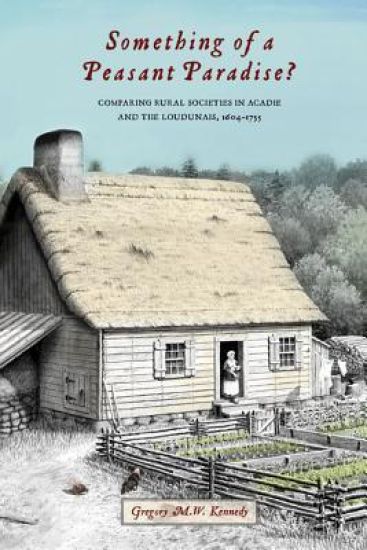
Were Acadians better off than their rural counterparts in old regime France? Did they enjoy a Golden Age? To what degree did a distinct Acadian identity emerge before the wars and deportations of the mid-eighteenth century? In Something of a Peasant Paradise?, Gregory Kennedy compares Acadie in North America with a region of western France, the Loudunais, from which a number of the colonists originated. Kennedy considers the natural environment, the role of the state, the economy, the seigneury, and local governance in each place to show that similarities between the two societies have been greatly underestimated or ignored. The Acadian colonists and the people of the Loudunais were frontier peoples, with dispersed settlement patterns based on kin groups, who sought to make the best use of the land and to profit from trade opportunities. Both societies were hierarchical, demonstrated a high degree of political agency, and employed the same institutions of local governance to organize their affairs and negotiate state demands. Neither group was inherently more prosperous, egalitarian, or independent-minded than the other. Rather, the emergence of a distinct Acadian identity can be traced to the gradual adaptation of traditional methods, institutions, and ideas to their new environmental and political situations. A compelling comparative analysis based on archival evidence on both sides of the Atlantic, Something of a Peasant Paradise? Challenges the traditional historiography and demonstrates that Acadian society shared many of its characteristics with other French rural societies of the period.