Kirjojen hintavertailu. Mukana 11 342 296 kirjaa ja 12 kauppaa.

Kirjahaku

Etsi kirjoja tekijän nimen, kirjan nimen tai ISBN:n perusteella.

18 kirjaa tekijältä Gregory Nagy

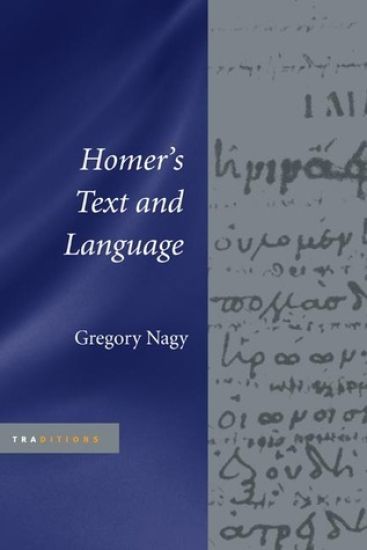
Homer's Text and Language

Homer's Text and Language

Gregory Nagy

University of Illinois Press
2004
sidottu
As Homer remains an indispensable figure in the canons of world literature, interpreting the Homeric text is a challenging and high stakes enterprise. There are untold numbers of variations, imitations, alternate translations, and adaptations of the Iliad and Odyssey, making it difficult to establish what, exactly, the epics were. Gregory Nagy's essays have one central aim: to show how the text and language of Homer derive from an oral poetic system. In Homeric studies, there has been an ongoing debate centering on different ways to establish the text of Homer and the different ways to appreciate the poetry created in the language of Homer. Gregory Nagy, a lifelong Homer scholar, takes a stand in the midst of this debate. He presents an overview of millennia of scholarly engagement with Homer's poetry, shows the different editorial principles that have been applied to the texts, and evaluates their impact.
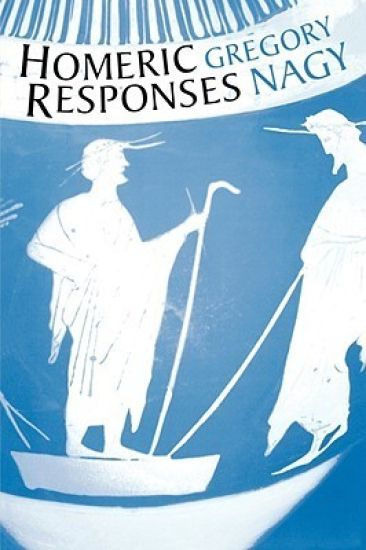
Homeric Responses

Homeric Responses

Gregory Nagy

University of Texas Press
2004
pokkari
The Homeric Iliad and Odyssey are among the world's foremost epics. Yet, millennia after their composition, basic questions remain about them. Who was Homer-a real or an ideal poet? When were the poems composed-at a single point in time, or over centuries of composition and performance? And how were the poems committed to writing? These uncertainties have been known as The Homeric Question, and many scholars, including Gregory Nagy, have sought to solve it. In Homeric Responses, Nagy presents a series of essays that further elaborate his theories regarding the oral composition and evolution of the Homeric epics. Building on his previous work in Homeric Questions and Poetry as Performance: Homer and Beyond and responding to some of his critics, he examines such issues as the importance of performance and the interaction between audience and poet in shaping the poetry; the role of the rhapsode (the performer of the poems) in the composition and transmission of the poetry; the "irreversible mistakes" and cross-references in the Iliad and Odyssey as evidences of artistic creativity; and the Iliadic description of the shield of Achilles as a pointer to the world outside the poem, the polis of the audience.
Homeric Questions

Homeric Questions

Gregory Nagy

University of Texas Press
1996
pokkari
A Choice Outstanding Academic BookThe "Homeric Question" has vexed Classicists for generations. Was the author of the Iliad and the Odyssey a single individual who created the poems at a particular moment in history? Or does the name "Homer" hide the shaping influence of the epic tradition during a long period of oral composition and transmission?In this innovative investigation, Gregory Nagy applies the insights of comparative linguistics and anthropology to offer a new historical model for understanding how, when, where, and why the Iliad and the Odyssey were ultimately preserved as written texts that could be handed down over two millennia. His model draws on the comparative evidence provided by living oral epic traditions, in which each performance of a song often involves a recomposition of the narrative.This evidence suggests that the written texts emerged from an evolutionary process in which composition, performance, and diffusion interacted to create the epics we know as the Iliad and the Odyssey. Sure to challenge orthodox views and provoke lively debate, Nagy's book will be essential reading for all students of oral traditions.
Homer the Preclassic

Homer the Preclassic

Gregory Nagy

University of California Press
2012
sidottu
"Homer the Preclassic" considers the development of the Homeric poems - in particular "The Iliad" and "Odyssey" - during the time when they were still part of the oral tradition. Gregory Nagy traces the evolution of rival 'Homers' and the different versions of Homeric poetry in this pretextual period, reconstructed over a time frame extending back from the sixth century BCE to the Bronze Age. Accurate in their linguistic detail and surprising in their implications, Nagy's insights conjure the Greeks' nostalgia for the imagined 'epic space' of 'Troy' and for the resonances and distortions this mythic past provided to the various Greek constituencies for whom the Homeric poems were so central and definitive.
Homer the Preclassic

Homer the Preclassic

Gregory Nagy

University of California Press
2017
pokkari
Homer the Preclassic considers the development of the Homeric poems - in particular the Iliad and Odyssey-during the time when they were still part of the oral tradition. Gregory Nagy traces the evolution of rival "Homers" and the different versions of Homeric poetry in this pretextual period, reconstructed over a time frame extending back from the sixth century BCE to the Bronze Age. Accurate in their linguistic detail and surprising in their implications, Nagy's insights conjure the Greeks' nostalgia for the imagined "epic space" of Troy and for the resonances and distortions this mythic past provided to the various Greek constituencies for whom the Homeric poems were so central and definitive.
Poetry as Performance

Poetry as Performance

Gregory Nagy

Cambridge University Press
1996
pokkari
To understand the emergence of Homeric poetry as an actual written text, it is essential to trace the history of Homeric performance, from the very beginnings of literacy to the critical era of textual canonisations in the Hellenistic and Roman periods. Professor Nagy applies the comparative evidence of oral poetic traditions, including those that survived in literate societies, such as the Provençal troubadour tradition. It appears that a song cannot be fixed as a final written text so long as the oral poetic tradition in which it was created stays alive. So also with Homeric poetry, it is argued that no single definitive text could evolve until the oral traditions in which the epic was grounded became obsolete. In the time of Aristarchus, the gradual movement from relatively fluid to more rigid stages of Homeric transmission reached a near-final point of textualisation.
Plato's Rhapsody and Homer's Music

Plato's Rhapsody and Homer's Music

Gregory Nagy

Harvard University Press
2002
nidottu
The festival of the Panathenaia, held in Athens every summer to celebrate the birthday of the city's goddess, Athena, was the setting for performances of the Homeric Iliad and Odyssey by professional reciters or "rhapsodes." The works of Plato are our main surviving source of information about these performances. Through his references, a crucial phase in the history of the Homeric tradition can be reconstructed. Through Plato's eyes, the "staging" of Homer in classical Athens can once again become a virtual reality. This book examines the overall testimony of Plato as an expert about the cultural legacy of these Homeric performances. Plato's fine ear for language—in this case the technical language of high-class artisans like rhapsodes—picks up on a variety of authentic expressions that echo the talk of rhapsodes as they once practiced their art. Highlighted among the works of Plato are the Ion, the Timaeus, and the Critias. Some experts who study the Timaeus have suggested that Plato must have intended this masterpiece, described by his characters as a humnos, to be a tribute to Athena. The metaphor of weaving, implicit in humnos and explicit in the peplos or robe that was offered to the goddess at the Panathenaia, applies also to Homeric poetry: it too was pictured as a humnos, destined for eternal re-weaving on the festive occasion of Athena's eternally self-renewing birthday.
Homer the Classic

Homer the Classic

Gregory Nagy

Harvard University, Center for Hellenic Studies
2010
nidottu
Homer the Classic is about the reception of Homeric poetry from the fifth through the first century BCE. The study of this reception is important for understanding not only the all-pervasive literary influence of ancient Greek epic traditions but also the various ways in which these traditions were used by individuals and states to promote their own cultural and political agenda. The aim of this book, which centers on ancient concepts of Homer as the author of a body of poetry that we know as the Iliad and the Odyssey, is not to reassess the oral poetic heritage of Homeric poetry but to show how it became a classic in the days of the Athenian empire and later.This volume is one of two books stemming from six Sather Classical Lectures given in the spring semester of 2002 at the University of California at Berkeley while the author was teaching there as the Sather Professor.
Masterpieces of Metonymy

Masterpieces of Metonymy

Gregory Nagy

Harvard University, Center for Hellenic Studies
2016
nidottu
In Masterpieces of Metonymy, Gregory Nagy analyzes metonymy as a mental process that complements metaphor. If metaphor is a substitution of something unfamilar for something familiar, then metonymy can be seen as a connecting of something familiar with something else that is already familiar. Applying this formulation, Nagy offers close readings of over one hundred examples of metonymy as it comes to life in the verbal and the visual arts of Greek culture, as well as in the arts of other cultures. Though it is debatable whether all the selected examples really qualify as masterpieces, what they all have in common is their potential for artistic greatness. A close reading of the verbal and the visual evidence, Nagy argues, leads to a fuller appreciation of this greatness.
The Ancient Greek Hero in 24 Hours

The Ancient Greek Hero in 24 Hours

Gregory Nagy

The Belknap Press
2020
nidottu
What does it mean to be a hero? The ancient Greeks who gave us Achilles and Odysseus had a very different understanding of the term than we do today. Based on the legendary Harvard course that Gregory Nagy has taught for well over thirty years, The Ancient Greek Hero in 24 Hours explores the roots of Western civilization and offers a masterclass in classical Greek literature. We meet the epic heroes of Homer’s Iliad and Odyssey, but Nagy also considers the tragedies of Aeschylus, Sophocles, and Euripides, the songs of Sappho and Pindar, and the dialogues of Plato. Herodotus once said that to read Homer was to be a civilized person. To discover Nagy’s Homer is to be twice civilized.“Fascinating, often ingenious… A valuable synthesis of research finessed over thirty years.”—Times Literary Supplement“Nagy exuberantly reminds his readers that heroes—mortal strivers against fate, against monsters, and…against death itself—form the heart of Greek literature… [He brings] in every variation on the Greek hero, from the wily Theseus to the brawny Hercules to the ‘monolithic’ Achilles to the valiantly conflicted Oedipus.”—Steve Donoghue, Open Letters Monthly
Ancient Greek Heroes, Athletes, Poetry

Ancient Greek Heroes, Athletes, Poetry

Gregory Nagy

HARVARD UNIVERSITY PRESS
2024
nidottu
In Ancient Greek Heroes, Athletes, Poetry, Gregory Nagy continues where The Ancient Greek Hero in 24 Hours left off. This book is also centered on some of the greatest masterpieces of ancient Greek literature—including the Homeric Iliad and Odyssey and seven tragedies stemming from the grand masters of the Classical Age of Athens. It returns to the same grand era and then moves beyond, in both time and space, with a new emphasis: how did the heroes of ancient Greek poetry relate to athletes, female as well as male, who competed in the athletic festivals of ancient Greece? A primary point of interest here is the seasonally recurring festival of the ancient Olympics, notionally founded by the hero Herakles.
Greek Mythology and Poetics

Greek Mythology and Poetics

Gregory Nagy

Cornell University Press
1992
pokkari
Gregory Nagy here provides a far-reaching assessment of the relationship between myth and ritual in ancient Greek society. Nagy illuminates in particular the forces of interaction and change that transformed the Indo-European linguistic and cultural heritage into distinctly Greek social institutions between the eighth and the fifth centuries B.C. Included in the volume are thirteen of Nagy's major essays—all extensively revised for book publication—on various aspects of the Hellenization of Indo-European poetics, myth and ritual, and social ideology. The primary aim of this book is to examine the Greek language as a reflection of society, with special attention to its function as a vehicle for transmitting mythology and poetics. Nagy's emphasis on the language of the Greeks, and on its comparison with the testimony of related Indo-European languages such as Latin, Indic, and Hittite, reflects his long-standing interest in Indo-European linguistics. The individual chapters examine the development of Hellenic poetics in the traditions of Homer and Hesiod; the Hellenization of Indo-European myths and rituals, including myths of the afterlife, rituals of fire, and symbols in the Greek lyric; and the Hellenization of Indo-European social ideology, with reference to such cultural institutions as the concept of the city-state. A path-breaking application of the principles of social anthropology, comparative mythology, historical linguistics, and oral poetry theory to the study of classics, Greek Mythology and Poetics will be an invaluable resource for classicists and other scholars of linguistics and literary theory.
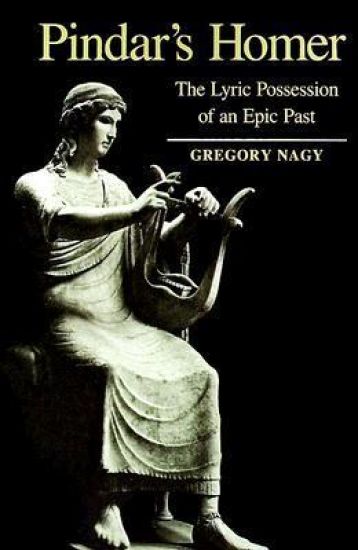
Pindar's Homer

Pindar's Homer

Gregory Nagy

Johns Hopkins University Press
1994
pokkari
Nagy challenges the widely held view that the development of lyric poetry in Greece represents the rise of individual innovation over collective tradition. Arguing that Greek lyric represents a tradition in its own right, Nagy shows how the form of Greek epic is in fact a differentiation of forms found in Greek lyric. (Criticism)
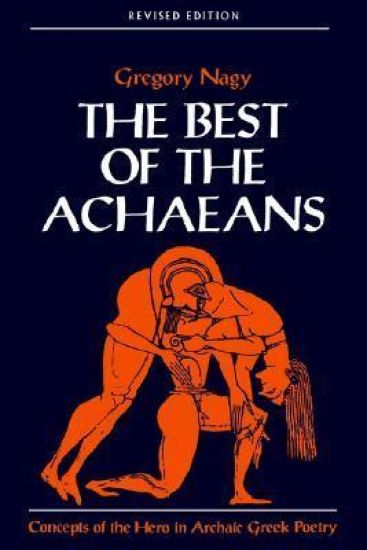
The Best of the Achaeans

The Best of the Achaeans

Gregory Nagy

Johns Hopkins University Press
1999
pokkari
Despite widespread interest in the Greek hero as a cult figure, little was written about the relationship between the cult practices and the portrayals of the hero in poetry. The first edition of The Best of the Achaeans bridged that gap, raising new questions about what could be known or conjectured about Greek heroes. In this revised edition, which features a new preface by the author, Gregory Nagy reconsiders his conclusions in the light of the subsequent debate and resumes his discussion of the special status of heroes in ancient Greek life and poetry. His book remains an engaging introduction both to the concept of the hero in Hellenic civilization and to the poetic forms through which the hero is defined: the Iliad and Odyssey in particular and archaic Greek poetry in general.
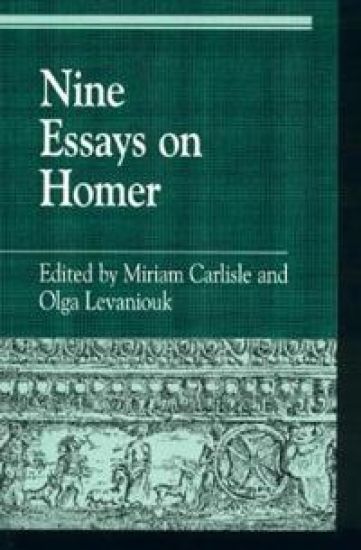
Nine Essays on Homer

Nine Essays on Homer

Gregory Nagy

Rowman Littlefield
1999
nidottu
The essays in this collection addresses questions of intense interest in Homeric studies today: the questions of performance and poet-audience interaction, especially as depicted in idealized performances within the Iliad and the Odyssey; the ways in which epic incorporates material of diverse genres, such as women's laments, blame poetry, or folk tales; how the ideological balance of epic can change and be influenced by 'alternative ideologies' introduced through the incorporation of new material; the implications of the continuity of tradition for etymological studies; and how the traditional nature of epic affects textual criticism. The essays differ in focus and method, but all share one fundamental approach to Homer: an understanding of the Homeric tradition as a poetic system that expresses and preserves what is culturally important and a view of the Homeric epics as instances of a cultural tradition which they attempt to explore through the epics themselves and through the comparative, anthropological, and linguistic evidence they bring to bear on these texts. A unique collection that explores Homeric poetry through a variety of tools and approaches—linguistics, philology, cultural anthropology, sociology, textual criticism, and archeology—this volume will be of interest to all scholars and students of oral poetry and Classical literature.
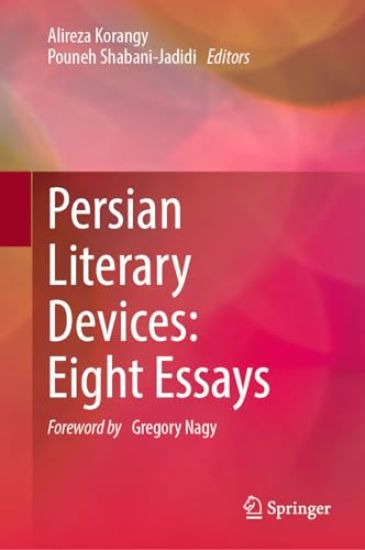
Persian Literary Devices: Eight Essays

Persian Literary Devices: Eight Essays

Gregory Nagy

SPRINGER VERLAG, SINGAPORE
2024
sidottu
This volume offers a glimpse into the rich tradition of literary devices in Persian language and literature. It establishes an incontrovertible connection between literary devices - figurative language, rhetoric, and so on - and pedagogy and poetics in both written and oral expression. The essays offer a detailed and thorough overview of some of these literary devices and their dynamics, which have helped make the Persian literary tradition a force to reckon with. The essays also carve out a space dedicated to colloquialisms and idioms, as they are interwoven into the fabric of Persian culture— within the larger field of rhetoric. These devices are fostered and furthered in their potency, both culturally and linguistically, by the poets, writers, and rhetoricians who utilize them. The essays highlight a culture and history in texts and oral history that further speak to a culturally tailored complexity as per figurative language, idioms, colloquialisms, and therhetoric they help found and/or re-define. These discussions and analyses further facilitate an understanding of the epistemological and cultural meaning of some of the constituents of what is otherwise a Persian identity. This work is a must-have for scholars and students of Persian, Arabic, Ottoman, and Urdu literature, not to mention Middle Eastern history and cultural poetics enthusiasts.