Kirjojen hintavertailu. Mukana 12 016 292 kirjaa ja 12 kauppaa.

Kirjahaku

Etsi kirjoja tekijän nimen, kirjan nimen tai ISBN:n perusteella.

12 kirjaa tekijältä Gregory Smits

The Ryukyu Islands

The Ryukyu Islands

Gregory Smits

THE UNIVERSITY OF CHICAGO PRESS
2025
sidottu
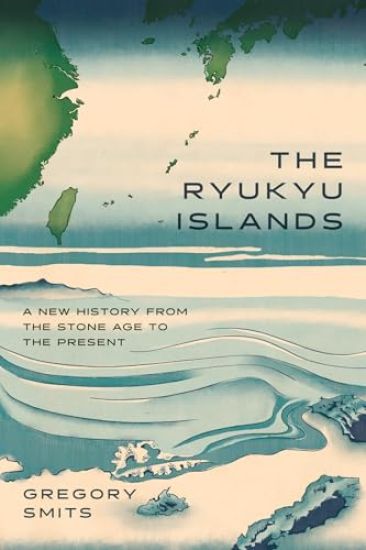
The first comprehensive history of the Ryukyu Islands region in English. The Ryukyu islands between Japan and Taiwan consist of around 160 islands and host over one and a half million inhabitants. Across the islands’ history, sea-lanes and trade patterns have connected them to the East China Sea region, giving them a unique vantage point on the region’s changes and making them a useful lens through which to view and understand those transformations. In this book, Gregory Smits marshals his expertise to canvass the environmental, political, and social history of this fascinating area, emphasizing the diversity of influences from China, Japan, and Korea that have shaped it. Smits begins by tracing the islands’ early history from the time of the oldest extant human remains, through massive inflows of population from Japan, until the emergence of a centralized state in the sixteenth century. He then traces the development of the Ryukyu Kingdom from the fifteenth to the nineteenth century, illustrating its defining cultural forms and the ways they were shaped by Chinese and Japanese influences. Finally, Smits ushers readers to the modern era, from the end of the Ryukyu Kingdom in 1879 through WWII, the era of American military control, and on to the present. He concludes with their present-day status as a tourist destination affected by ongoing geopolitical, economic, and environmental challenges. Synthesizing decades of research, this book is an indispensable, comprehensive guide to the islands’ history for scholars and nonspecialists alike.
The Ryukyu Islands

The Ryukyu Islands

Gregory Smits

THE UNIVERSITY OF CHICAGO PRESS
2025
nidottu
The first comprehensive history of the Ryukyu Islands region in English. The Ryukyu islands between Japan and Taiwan consist of around 160 islands and host over one and a half million inhabitants. Across the islands’ history, sea-lanes and trade patterns have connected them to the East China Sea region, giving them a unique vantage point on the region’s changes and making them a useful lens through which to view and understand those transformations. In this book, Gregory Smits marshals his expertise to canvass the environmental, political, and social history of this fascinating area, emphasizing the diversity of influences from China, Japan, and Korea that have shaped it. Smits begins by tracing the islands’ early history from the time of the oldest extant human remains, through massive inflows of population from Japan, until the emergence of a centralized state in the sixteenth century. He then traces the development of the Ryukyu Kingdom from the fifteenth to the nineteenth century, illustrating its defining cultural forms and the ways they were shaped by Chinese and Japanese influences. Finally, Smits ushers readers to the modern era, from the end of the Ryukyu Kingdom in 1879 through WWII, the era of American military control, and on to the present. He concludes with their present-day status as a tourist destination affected by ongoing geopolitical, economic, and environmental challenges. Synthesizing decades of research, this book is an indispensable, comprehensive guide to the islands’ history for scholars and nonspecialists alike.
When the Earth Roars

When the Earth Roars

Gregory Smits

Rowman Littlefield Publishers
2017
nidottu
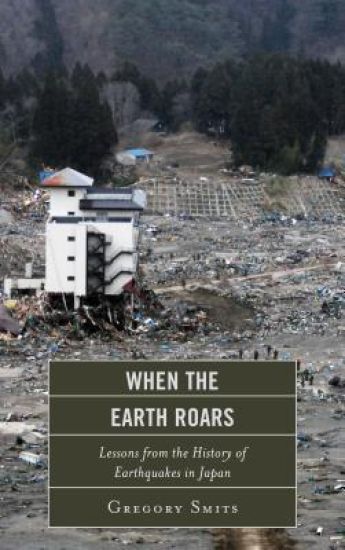
Japan, which is among the most earthquake-prone regions in the world, has a long history of responding to seismic disasters. However, despite advances in earthquake-related safety technologies, the destructiveness of the magnitude 9 class earthquake and tsunami that struck the country on 3/11 raised profound questions about how societies can deal effectively with seismic hazards. This important book places the devastating earthquake, tsunami, and nuclear meltdown disaster in historical perspective, examining conceptions of earthquakes since the seventeenth century, the diverse ways actual earthquakes and their aftermath played out, and their enduring social and scientific significance. By looking backward, Gregory Smits identifies future pitfalls to avoid and assesses the allocation of resources for dealing with future earthquake and tsunami disasters. He criticizes Japan’s postwar quest for earthquake prediction and the concept of “characteristic” earthquakes. Smits argues that earthquakes are so chaotic as to be unpredictable, not only geologically but also in their social and cultural effects. Therefore, he contends, the best hope for future disaster mitigation is antiseismic engineering and flexible disaster-relief capabilities. As the first sustained historical analysis of destructive earthquakes and tsunamis, this book is an essential resource for anyone interested in Japan, natural disasters, seismology, and environmental history.
Visions of Ryukyu

Visions of Ryukyu

Gregory Smits

University of Hawai'i Press
1999
sidottu
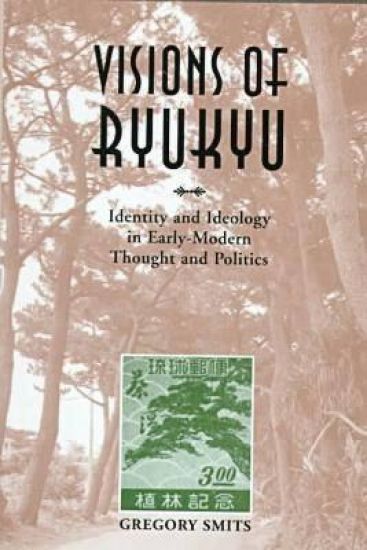
Smits explores early modern perceptions of Ryukyu (modern Okinawa) and their effect on its political culture and institutions. He describes the major historical circumstances that informed discourses of Ryukyuan identity and examines the strategies used by leading intellectual and political figures to fashion, promote and implement their visions.
Seismic Japan

Seismic Japan

Gregory Smits

University of Hawai'i Press
2013
sidottu
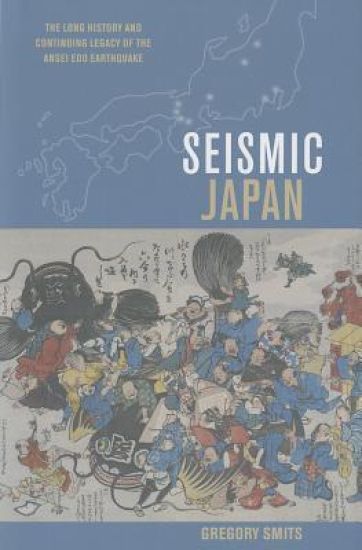
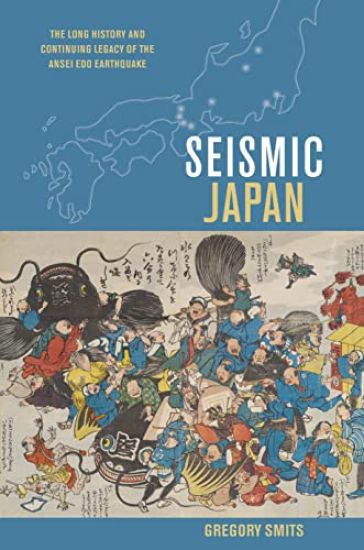
What are we to make of contemporary newspapers in Japan speculating about the possible connection between aquatic creatures and earthquakes? Of a city council deciding to issue evacuation advice based on observed animal behaviour? Why, between 1977 and 1993, did Japan’s government spend taxpayer money to observe catfish in aquariums as part of its mandate to fund earthquake prediction research? All of these actions are direct legacies of the 1855 Ansei Edo earthquake, one of the major natural disasters of the period. In his investigation of the science, politics, and lore of seismic events in Japan, Gregory Smits examines this earthquake in a broad historical context. The Ansei Edo earthquake shook the shogun’s capital during a year of special religious significance and at a time of particularly vigorous seismic activity. It was also a turning point because, according to the prevailing understanding of earthquakes at the time, it should never have happened. Many Japanese, therefore, became receptive to new ideas about the causes of earthquakes as well as to the notion that by observing some phenomena—for example, the behaviour of catfish—one might determine when an earthquake would strike. All subsequent major earthquakes in Japan resulted in claims, always made after the fact, that certain phenomena had been signs of the impending catastrophe. Indeed, earthquake prediction in Japan from 1855 to the present has largely consisted of amassing collections of alleged or possible precursor phenomena. In addition, the Ansei Edo earthquake served as a catalyst accelerating socio-political trends already underway. It revealed bakufu military weaknesses and enhanced the prestige of the imperial deity Amaterasu at the expense of the bakufu deity Kashima.
Maritime Ryukyu, 1050–1650

Maritime Ryukyu, 1050–1650

Gregory Smits

University of Hawai'i Press
2019
sidottu
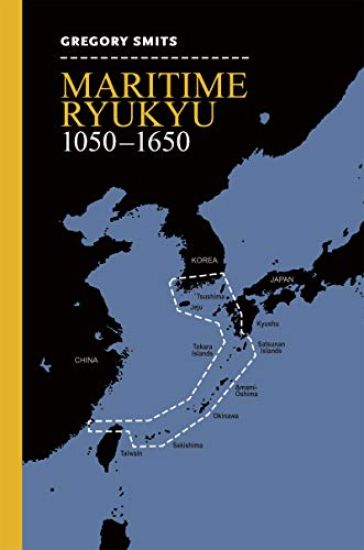
Why do Ryukyu’s official histories locate the origins of its early dynastic founders in Iheya and Izena, small islands located northwest of Okinawa? Why did the Ming court extend favorable trade terms to Ryukyuan rulers? What was the nature of Okinawa’s enigmatic principalities, Sannan, Chuzan, and Hokuzan? When and how did the Ryukyu islands become united under a single ruler? Was this Ryukyuan state an empire, why did it go to war with the powerful Japanese domain of Satsuma in 1609, and what actually happened during that war? Answers to these and other key questions concerning early Ryukyuan history can be found in this bold reappraisal by a leading authority on the subject.Conventional portrayals of early Ryukyu are based on official histories written between 1650 and 1750. Taking an interdisciplinary approach, Gregory Smits makes extensive use of scholarship in archaeology and anthropology and leverages unconventional sources such as the Omoro soshi (a collection of ancient songs) to present a fundamental rethinking of early Ryukyu. Instead of treating Ryukyu as a natural, self-contained cultural or political community, he examines it as part of a maritime network extending from coastal Korea to the islands of Tsushima and Iki, along the western shore of Kyushu, and through the Ryukyu Arc to coastal China. Smits asserts that Ryukyuan culture did not spring from the soil of Okinawa: He highlights Ryukyu’s northern roots and the role of wako (pirate-merchant seafarers) in the formation of power centers throughout the islands, uncovering their close historical connections with the coastal areas of western Japan and Korea. Unlike conventional Ryukyuan histories that open with Okinawa, Maritime Ryukyu starts with the northern island of Kikai, an international crossroads during the eleventh century. It also focuses on other important but often overlooked territories such as the Tokara islands and Kumejima, in addition to bringing the northern and southern Ryukyu islands into a story that all too often centers almost exclusively on Okinawa. Readers interested in the history of the Ryukyu islands, premodern Japan, and East Asia, as well as maritime history, will welcome this original and persuasive volume.
Visions of Ryukyu

Visions of Ryukyu

Gregory Smits

University of Hawai'i Press
2017
nidottu
Between 1609 and 1879, the geographical, political, and ideological status of the Kingdom of Ryukyu (modern Okinawa) was characterized by its ambiguity. It was subordinate to its larger neighbors, China and Japan, yet an integral part of neither. A Japanese invasion force from Satsuma had conquered the kingdom in 1609, resulting in its partial incorporation into Tokugawa Japan's bakuhan state. Given Ryukyu's long-standing ties with China and East Asian foreign relations following the rise of the Qing dynasty, however, the bakufu maintained only an indirect link with Ryukyu from the mid-seventeenth century onward. Thus Ryukyu was able to exist as a quasi-independent kingdom for more than two centuries-albeit amidst a complex web of trade and diplomatic agreements involving the bakufu, Satsuma, Fujian, and Beijing. During this time, Ryukyu's ambiguous position relative to China and Japan prompted its elites to fashion their own visions of Ryukyuan identity. Created in a dialogic relationship to both a Chinese and Japanese Other, these visions informed political programs intended to remake Ryukyu.In this innovative and provocative study, Gregory Smits explores early-modern perceptions of Ryukyu and their effect on its political culture and institutions. He describes the major historical circumstances that informed early-modern discourses of Ryukyuan identity and examines the strategies used by leading intellectual and political figures to fashion, promote, and implement their visions of Ryukyu. Early-modern visions of Ryukyu were based on Confucianism, Buddhism, and other ideologies of the time. Eventually one vision prevailed, becoming the theoretical basis of the early-modern state by the middle of the eighteenth century. Employing elements of Confucianism, the scholar and government official Sai On (1682-1761) argued that the kingdom's destiny lay primarily with Ryukyuans themselves and that moral parity with Japan and China was within its grasp. Despite Satsuma's control over its diplomatic and economic affairs, Sai envisioned Ryukyu as an ideal Confucian state with government and state rituals based on the Chinese model. In examining Sai's thought and political program, this volume sheds new light on Confucian praxis and, conversely, uncovers one variety of an East Asian ""prenational"" imagined political/cultural community.
Maritime Ryukyu, 1050–1650

Maritime Ryukyu, 1050–1650

Gregory Smits

University of Hawai'i Press
2020
nidottu
Why do Ryukyu's official histories locate the origins of its early dynastic founders in Iheya and Izena, small islands located northwest of Okinawa? Why did the Ming court extend favorable trade terms to Ryukyuan rulers? What was the nature of Okinawa's enigmatic principalities, Sannan, Chuzan, and Hokuzan? When and how did the Ryukyu islands become united under a single ruler? Was this Ryukyuan state an empire, why did it go to war with the powerful Japanese domain of Satsuma in 1609, and what actually happened during that war? Answers to these and other key questions concerning early Ryukyuan history can be found in this bold reappraisal by a leading authority on the subject.Conventional portrayals of early Ryukyu are based on official histories written between 1650 and 1750. Taking an interdisciplinary approach, Gregory Smits makes extensive use of scholarship in archaeology and anthropology and leverages unconventional sources such as the Omoro soshi (a collection of ancient songs) to present a fundamental rethinking of early Ryukyu. Instead of treating Ryukyu as a natural, self-contained cultural or political community, he examines it as part of a maritime network extending from coastal Korea to the islands of Tsushima and Iki, along the western shore of Kyushu, and through the Ryukyu Arc to coastal China. Smits asserts that Ryukyuan culture did not spring from the soil of Okinawa: He highlights Ryukyu's northern roots and the role of wako (pirate-merchant seafarers) in the formation of power centers throughout the islands, uncovering their close historical connections with the coastal areas of western Japan and Korea. Unlike conventional Ryukyuan histories that open with Okinawa, Maritime Ryukyu starts with the northern island of Kikai, an international crossroads during the eleventh century. It also focuses on other important but often overlooked territories such as the Tokara islands and Kumejima, in addition to bringing the northern and southern Ryukyu islands into a story that all too often centers almost exclusively on Okinawa. Readers interested in the history of the Ryukyu islands, premodern Japan, and East Asia, as well as maritime history, will welcome this original and persuasive volume.
Seismic Japan

Seismic Japan

Gregory Smits

UNIVERSITY OF HAWAI'I PRESS
2022
nidottu
What are we to make of contemporary newspapers in Japan speculating about the possible connection between aquatic creatures and earthquakes? Of a city council deciding to issue evacuation advice based on observed animal behavior? Why, between 1977 and 1993, did Japan’s government spend taxpayer money to observe catfish in aquariums as part of its mandate to fund earthquake prediction research? All of these actions are direct legacies of the 1855 Ansei Edo earthquake, one of the major natural disasters of the period. In his investigation of the science, politics, and lore of seismic events in Japan, Gregory Smits examines this earthquake in a broad historical context.The Ansei Edo earthquake shook the shogun’s capital during a year of special religious significance and at a time of particularly vigorous seismic activity. It was also a turning point because, according to the prevailing understanding of earthquakes at the time, it should never have happened. Many Japanese, therefore, became receptive to new ideas about the causes of earthquakes as well as to the notion that by observing some phenomena—for example, the behavior of catfish—one might determine when an earthquake would strike. All subsequent major earthquakes in Japan resulted in claims, always made after the fact, that certain phenomena had been signs of the impending catastrophe. Indeed, earthquake prediction in Japan from 1855 to the present has largely consisted of amassing collections of alleged or possible precursor phenomena. In addition, the Ansei Edo earthquake served as a catalyst accelerating socio-political trends already underway. It revealed bakufu military weaknesses and enhanced the prestige of the imperial deity Amaterasu at the expense of the bakufu deity Kashima. Anyone interested in Japan, earthquakes, and natural disasters will benefit from Seismic Japan. The work also serves as essential background for understanding the peculiar history of earthquake prediction in modern and contemporary Japan.
Early Ryukyuan History

Early Ryukyuan History

Gregory Smits

UNIVERSITY OF HAWAI'I PRESS
2024
sidottu
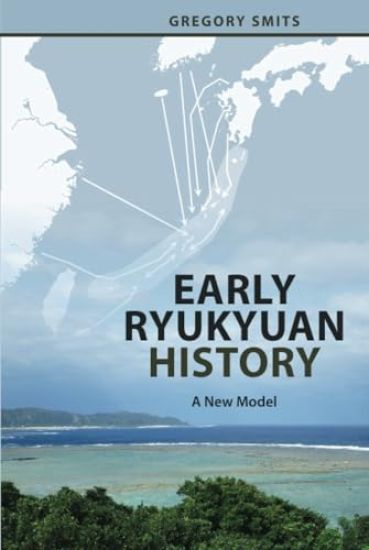
The Ryukyu islands have been inhabited by humans for over 30,000 years. Their modern population, however, did not come from stone-age ancestors, nor did distinctive forms of Ryukyuan culture, such as sacred groves or stone-walled castles, emerge from within the islands. Instead, different groups of people lived in the Ryukyu islands at various points in history. Starting with the earliest extant human remains and ending with the formation of a centralized state in the early 1500s, Early Ryukyuan History traces the people, culture, technologies, goods, and networks that entered different parts of Ryukyu over time. In the process, it synthesizes decades of research in archaeology and anthropology, recent advances in genetic evidence, and conventional documentary sources to advance a new model for the early development of the Ryukyu islands, thoroughly rewriting early Ryukyuan history.Taking a multidisciplinary approach grounded in archaeology, this resource presents an updated framework for understanding early Ryukyu along with a new narrative featuring a fascinating cast of characters. Linked by the ocean into the East China Sea, the early Ryukyu islands were never isolated. People and technologies arrived from across the sea and became the prime movers of early Ryukyuan society. The most consequential of these external agents were waves of immigrants, mainly from the Japanese islands, who settled the Ryukyu islands during the eleventh and twelfth centuries and replaced the islands’ previous Jomon population. While the physical environment of the Ryukyu islands was not conducive to cereal agriculture, the islands were well situated for trading and raiding, and trade became the driving force behind societal development.In Early Ryukyuan History, Gregory Smits reappraises the most fundamental questions and topics in early Ryukyuan history, providing new models of migration and settlement, regional trade, political geography, warfare, and state formation.
When the Earth Roars

When the Earth Roars

Gregory Smits

Rowman Littlefield
2014
sidottu
Japan, which is among the most earthquake-prone regions in the world, has a long history of responding to seismic disasters. However, despite advances in earthquake-related safety technologies, the destructiveness of the magnitude 9 class earthquake and tsunami that struck the country on 3/11 raised profound questions about how societies can deal effectively with seismic hazards. This important book places the devastating earthquake, tsunami, and nuclear meltdown disaster in historical perspective, examining conceptions of earthquakes since the seventeenth century, the diverse ways actual earthquakes and their aftermath played out, and their enduring social and scientific significance. By looking backward, Gregory Smits identifies future pitfalls to avoid and assesses the allocation of resources for dealing with future earthquake and tsunami disasters. He criticizes Japan’s postwar quest for earthquake prediction and the concept of “characteristic” earthquakes. Smits argues that earthquakes are so chaotic as to be unpredictable, not only geologically but also in their social and cultural effects. Therefore, he contends, the best hope for future disaster mitigation is antiseismic engineering and flexible disaster-relief capabilities. As the first sustained historical analysis of destructive earthquakes and tsunamis, this book is an essential resource for anyone interested in Japan, natural disasters, seismology, and environmental history.
Early Ryukyuan History

Early Ryukyuan History

Gregory Smits

UNIVERSITY OF HAWAI'I PRESS
2026
nidottu
The Ryukyu islands have been inhabited by humans for over 30,000 years. Their modern population, however, did not come from stone-age ancestors, nor did distinctive forms of Ryukyuan culture, such as sacred groves or stone-walled castles, emerge from within the islands. Instead, different groups of people lived in the Ryukyu islands at various points in history. Starting with the earliest extant human remains and ending with the formation of a centralized state in the early 1500s, Early Ryukyuan History traces the people, culture, technologies, goods, and networks that entered different parts of Ryukyu over time. In the process, it synthesizes decades of research in archaeology and anthropology, recent advances in genetic evidence, and conventional documentary sources to advance a new model for the early development of the Ryukyu islands, thoroughly rewriting early Ryukyuan history. Taking a multidisciplinary approach grounded in archaeology, this resource presents an updated framework for understanding early Ryukyu along with a new narrative featuring a fascinating cast of characters. Linked by the ocean into the East China Sea, the early Ryukyu islands were never isolated. People and technologies arrived from across the sea and became the prime movers of early Ryukyuan society. The most consequential of these external agents were waves of immigrants, mainly from the Japanese islands, who settled the Ryukyu islands during the eleventh and twelfth centuries and replaced the islands’ previous Jomon population. While the physical environment of the Ryukyu islands was not conducive to cereal agriculture, the islands were well situated for trading and raiding, and trade became the driving force behind societal development. In Early Ryukyuan History, Gregory Smits reappraises the most fundamental questions and topics in early Ryukyuan history, providing new models of migration and settlement, regional trade, political geography, warfare, and state formation.