Kirjojen hintavertailu. Mukana 12 041 560 kirjaa ja 12 kauppaa.

Kirjahaku

Etsi kirjoja tekijän nimen, kirjan nimen tai ISBN:n perusteella.

3 kirjaa tekijältä Guido Seddone

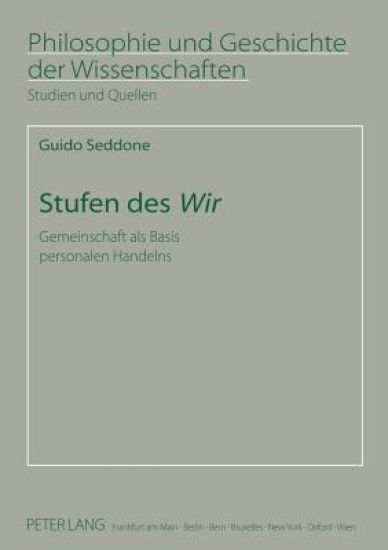
Stufen Des «Wir»

Stufen Des «Wir»

Guido Seddone

Peter Lang AG
2011
nidottu
Die Teilnahme an einer Gemeinschaft oder am gemeinsamen Handeln lasst sich nicht nur als blosse Inklusion des Subjektes in Handlungsformen verstehen, sondern vor allem im Sinne einer kompetenten und bewussten Teilnahme. Diese kompetente Teilnahme wirft eine Reihe von philosophischen Schlusselfragen auf, welche Sprache, Intentionalitat, Institutionen, Kooperation und Zugehoerigkeit betreffen und die dieses Buch zu beantworten versucht. Hier wird eine theoretische Systematik fur die Reflexion uber das Wir vorgeschlagen, die Gegenstand einer wichtigen Debatte in der gegenwartigen Philosophie ist. Die darin empfohlene Stufung soll die Grundlagen des Sozialen behandeln und die primitivsten und irreduziblen Faktoren der Wir-Intentionalitat bestimmen. Denn Teilnehmer einer gemeinsamen Handlung oder einer Institution zu sein, erfordert kooperative, sprachliche und intentionale Fahigkeiten, die miteinander verbunden sind. Eine Analyse des Wir ist letztendlich eine Studie uber die Zugehoerigkeit zu sozialen Gruppen, welche die menschliche Fahigkeit, sich zu gemeinsamen Handlungen zu verpflichten, erklaren kann.

Collective Intentionality, Norms and Institutions
Cooperation is the fundamental feature of intelligent beings. It makes them able to evolve complex social behaviors and to better resolve practical issues. Humans have evolved a very powerful form of cooperation, which is spread anywhere in the everyday life: norms, institutions, states, hierarchies, ordinary relationships, etc., are deeply determined by the original notion of cooperation. This book addresses the conditions of the human cooperative activities in order to focus on their common roots and to bring them back to an unitary origin. It is profoundly animated by the task of understanding how cooperative skills are able to evolve the plurality of the cooperative activities from the spontaneous to the institutional ones and to find a common denominator for joint actions. It also explores the social-political aspects related to joint activities and deals with the notion of intersubjective freedom.