Kirjojen hintavertailu. Mukana 11 342 296 kirjaa ja 12 kauppaa.

Kirjahaku

Etsi kirjoja tekijän nimen, kirjan nimen tai ISBN:n perusteella.

9 kirjaa tekijältä Gyan Prakash

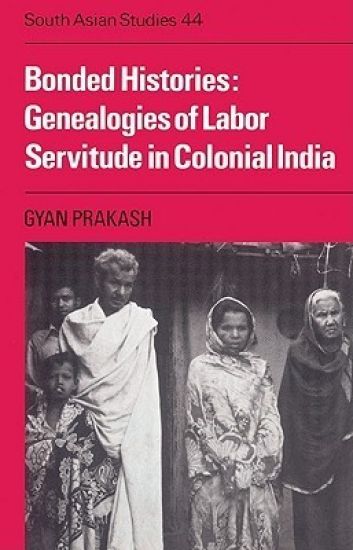
Bonded Histories

Bonded Histories

Gyan Prakash

Cambridge University Press
2003
pokkari
To the modern world, the notions that freedom is an innate condition of human beings and that money possesses the power to bind people appear as natural facts. Bonded Histories traces the historical processes by which these notions became established as dominant discourses in India during colonial rule and continued into post-colonial India. Gyan Prakash locates the formulation of these discourses in the history of bonded labour in southern Bihar. He focuses on the emergence and subsequent transformation of the relationship of reciprocal power and dependence between landlords and labourers. The author explores the way in which these transformations were connected with broader shifts in the political economy of this part of the subcontinent; with the changing structures of agricultural production, land tenure and revenue demand; with local social hierarchies and the ideology of castes; and with Hindu cosmologies, spirit cults and their articulation in ritual practices.
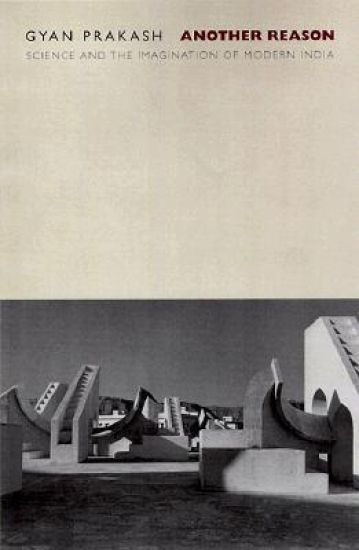
Another Reason

Another Reason

Gyan Prakash

Princeton University Press
1999
pokkari
Another Reason is a bold and innovative study of the intimate relationship between science, colonialism, and the modern nation. Gyan Prakash, one of the most influential historians of India writing today, explores in fresh and unexpected ways the complexities, contradictions, and profound importance of this relationship in the history of the subcontinent. He reveals how science served simultaneously as an instrument of empire and as a symbol of liberty, progress, and universal reason--and how, in playing these dramatically different roles, it was crucial to the emergence of the modern nation. Prakash ranges over two hundred years of Indian history, from the early days of British rule to the dawn of the postcolonial era. He begins by taking us into colonial museums and exhibitions, where Indian arts, crafts, plants, animals, and even people were categorized, labeled, and displayed in the name of science. He shows how science gave the British the means to build railways, canals, and bridges, to transform agriculture and the treatment of disease, to reconstruct India's economy, and to transfigure India's intellectual life--all to create a stable, rationalized, and profitable colony under British domination. But Prakash points out that science also represented freedom of thought and that for the British to use it to practice despotism was a deeply contradictory enterprise. Seizing on this contradiction, many of the colonized elite began to seek parallels and precedents for scientific thought in India's own intellectual history, creating a hybrid form of knowledge that combined western ideas with local cultural and religious understanding. Their work disrupted accepted notions of colonizer versus colonized, civilized versus savage, modern versus traditional, and created a form of modernity that was at once western and indigenous. Throughout, Prakash draws on major and minor figures on both sides of the colonial divide, including Mahatma Gandhi, Jawaharlal Nehru, the nationalist historian and novelist Romesh Chunder Dutt, Prafulla Chandra Ray (author of A History of Hindu Chemistry), Rudyard Kipling, Lord Dalhousie, and John Stuart Mill. With its deft combination of rich historical detail and vigorous new arguments and interpretations, Another Reason will recast how we understand the contradictory and colonial genealogy of the modern nation.
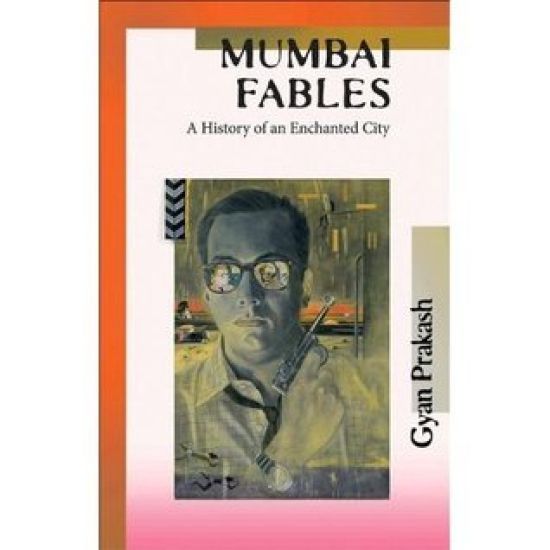
Mumbai Fables

Mumbai Fables

Gyan Prakash

Princeton University Press
2011
pokkari
This is a place of spectacle and ruin, Mumbai exemplifies the cosmopolitan metropolis. It is not just a big city but also a soaring vision of modern urban life. Millions from India and beyond, of different ethnicities, languages, and religions, have washed up on its shores, bringing with them their desires and ambitions. "Mumbai Fables" explores the mythic inner life of this legendary city as seen by its inhabitants, journalists, planners, writers, artists, filmmakers, and political activists. In this remarkable cultural history of one of the world's most important urban centers, Gyan Prakash unearths the stories behind its fabulous history, viewing Mumbai through its turning points and kaleidoscopic ideas, comic book heroes, and famous scandals - the history behind Mumbai's stories of opportunity and oppression, of fabulous wealth and grinding poverty, of cosmopolitan desires and nativist energies. Starting from the catastrophic floods and terrorist attacks of recent years, Prakash reaches back to the sixteenth-century Portuguese conquest to reveal the stories behind Mumbai's historic journey. Examining Mumbai's role as a symbol of opportunity and reinvention, he looks at its nineteenth-century development under British rule and its twentieth-century emergence as a fabled city on the sea. Different layers of urban experience come to light as he recounts the narratives of the Nanavati murder trial and the rise and fall of the tabloid Blitz, and Mumbai's transformation from the red city of trade unions and communists into the saffron city of Hindu nationalist Shiv Sena. Starry-eyed planners and elite visionaries, cynical leaders and violent politicians of the street, land sharks and underworld dons jostle with ordinary citizens and poor immigrants as the city copes with the dashed dreams of postcolonial urban life and lurches into the seductions of globalization. Shedding light on the city's past and present, "Mumbai Fables" offers an unparalleled look at this extraordinary metropolis.
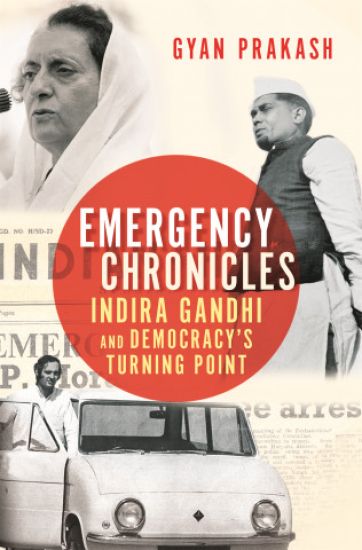
Emergency Chronicles

Emergency Chronicles

Gyan Prakash

PRINCETON UNIVERSITY PRESS
2019
sidottu
The gripping story of an explosive turning point in the history of modern IndiaOn the night of June 25, 1975, Indira Gandhi declared a state of emergency in India, suspending constitutional rights and rounding up her political opponents in midnight raids across the country. In the twenty-one harrowing months that followed, her regime unleashed a brutal campaign of coercion and intimidation, arresting and torturing people by the tens of thousands, razing slums, and imposing compulsory sterilization on the poor. Emergency Chronicles provides the first comprehensive account of this understudied episode in India’s modern history. Gyan Prakash strips away the comfortable myth that the Emergency was an isolated event brought on solely by Gandhi’s desire to cling to power, arguing that it was as much the product of Indian democracy’s troubled relationship with popular politics.Drawing on archival records, private papers and letters, published sources, film and literary materials, and interviews with victims and perpetrators, Prakash traces the Emergency’s origins to the moment of India’s independence in 1947, revealing how the unfulfilled promise of democratic transformation upset the fine balance between state power and civil rights. He vividly depicts the unfolding of a political crisis that culminated in widespread popular unrest, which Gandhi sought to crush by paradoxically using the law to suspend lawful rights. Her failure to preserve the existing political order had lasting and unforeseen repercussions, opening the door for caste politics and Hindu nationalism.Placing the Emergency within the broader global history of democracy, this gripping book offers invaluable lessons for us today as the world once again confronts the dangers of rising authoritarianism and populist nationalism.
Emergency Chronicles

Emergency Chronicles

Gyan Prakash

Princeton University Press
2021
pokkari
The gripping story of an explosive turning point in the history of modern IndiaOn the night of June 25, 1975, Indira Gandhi declared a state of emergency in India, suspending constitutional rights and rounding up her political opponents in midnight raids across the country. In the twenty-one harrowing months that followed, her regime unleashed a brutal campaign of coercion and intimidation, arresting and torturing people by the tens of thousands, razing slums, and imposing compulsory sterilization on the poor. Emergency Chronicles provides the first comprehensive account of this understudied episode in India’s modern history. Gyan Prakash strips away the comfortable myth that the Emergency was an isolated event brought on solely by Gandhi’s desire to cling to power, arguing that it was as much the product of Indian democracy’s troubled relationship with popular politics.Drawing on archival records, private papers and letters, published sources, film and literary materials, and interviews with victims and perpetrators, Prakash traces the Emergency’s origins to the moment of India’s independence in 1947, revealing how the unfulfilled promise of democratic transformation upset the fine balance between state power and civil rights. He vividly depicts the unfolding of a political crisis that culminated in widespread popular unrest, which Gandhi sought to crush by paradoxically using the law to suspend lawful rights. Her failure to preserve the existing political order had lasting and unforeseen repercussions, opening the door for caste politics and Hindu nationalism.Placing the Emergency within the broader global history of democracy, this gripping book offers invaluable lessons for us today as the world once again confronts the dangers of rising authoritarianism and populist nationalism.
Govind Narayan's Mumbai

Govind Narayan's Mumbai

Gyan Prakash

Anthem Press
2008
sidottu
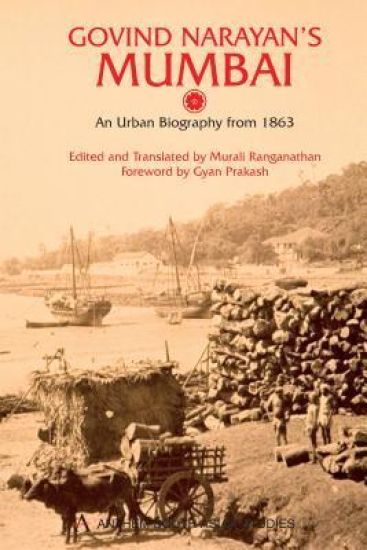
Guiding the reader on a tour of the sights and sounds of an emerging city struggling to shake off colonialism and wrestling with the formation of its own budding identity, Narayan’s beguiling book offers descriptions of Mumbai’s daily life, its people and its institutions: the parts of the whole that come together to create this diverse and vivacious place. This valuable text is a rare and enthralling glimpse into a fascinating period and place otherwise lost to time.
Govind Narayan's Mumbai

Govind Narayan's Mumbai

Gyan Prakash

Anthem Press
2009
nidottu
Guiding the reader on a tour of the sights and sounds of an emerging city struggling to shake off colonialism and wrestling with the formation of its own budding identity, Narayan’s beguiling book offers descriptions of Mumbai’s daily life, its people and its institutions: the parts of the whole that come together to create this diverse and vivacious place. This valuable text is a rare and enthralling glimpse into a fascinating period and place otherwise lost to time.