
Kirjahaku
Etsi kirjoja tekijän nimen, kirjan nimen tai ISBN:n perusteella.
87 kirjaa tekijältä H Beam Piper
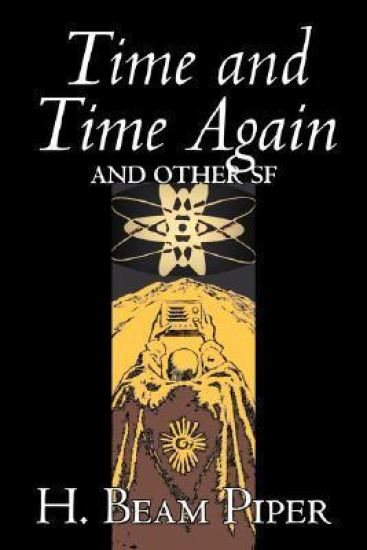
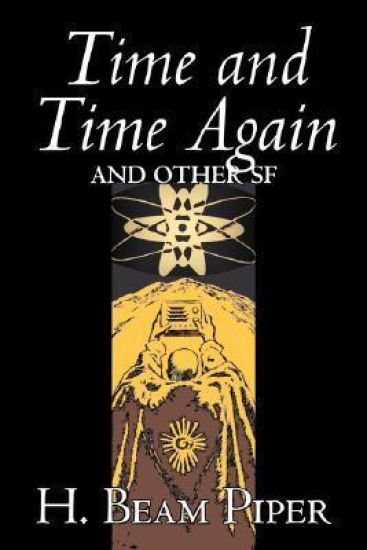
Time and Time Again and Other Science Fiction by H. Beam Piper, Adventure
H Beam Piper
Aegypan
2007
pokkari
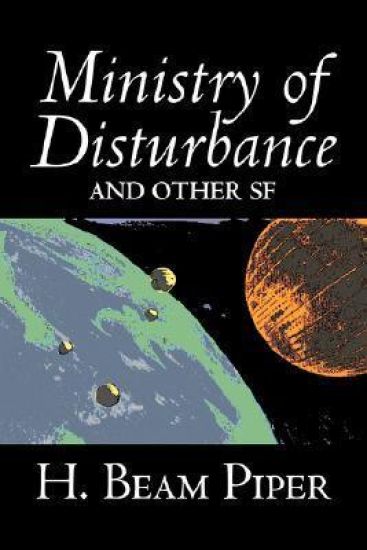
Ministry of Disturbance and Other Science Fiction by H. Beam Piper, Adventure
H Beam Piper
Aegypan
2007
pokkari
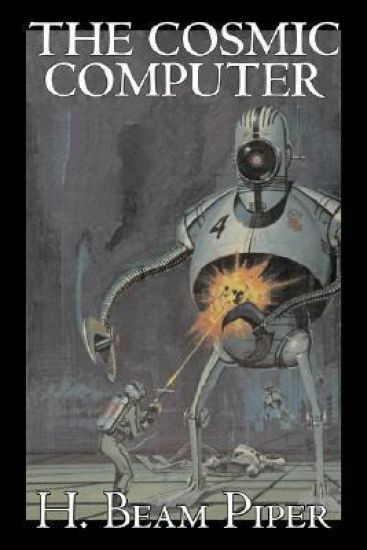
A running theme in Piper's work is that history repeats itself; past events will have direct and clear analogues in the future.When the book was published, he had been writing and selling science fiction for many years to the leading magazines, and that he was highly rated among readers for his skill and imagination. He had published several novels, mostly SF, but also including mysteries and juveniles. But that blurb was written just before he took his own life in the noise and nonsense that come out of divorce . . . sigh. Some things happen so large upon our lives that they seem to blot out all that goes before . . . "There are incredible things still undiscovered; most of the important installations were built in duplicate as a precaution against space attack. I know where all of them are. "But I could find nothing, not one single word, about any giant strategic planning computer called Merlin -- Is there really a Merlin?" That's what Conn Maxwell asked, and the question irked those who heard it. Of course it did Merlin meant everything to the folks on the planet Poictesme: power, pleasures, and profits unlimited. But the leading men of the planet didn't believe him. They couldn't The search for Merlin had become their abiding obsession. Everybody believed that when this super-gigantic computer was located amid the mountains of surplus equipment that was the planet's sole source of revenue, it would mean Utopia for everyone. Conn Maxwell knew different. He had studied the records on Earth and he thought he knew the true facts about this cosmic computer. To tell them would be to panic, so instead he set about a new search in his own way -- with startling results.

A running theme in Piper's work is that history repeats itself; past events will have direct and clear analogues in the future.When the book was published, he had been writing and selling science fiction for many years to the leading magazines, and that he was highly rated among readers for his skill and imagination. He had published several novels, mostly SF, but also including mysteries and juveniles. But that blurb was written just before he took his own life in the noise and nonsense that comes out of divorce . . . sigh. Some things happen so large upon our lives that they seem to blot out all that goes before. . . "There are incredible things still undiscovered; most of the important installations were built in duplicate as a precaution against space attack. I know where all of them are. "But I could find nothing, not one single word, about any giant strategic planning computer called Merlin -- Is there really a Merlin?" That's what Conn Maxwell asked, and the question irked those who heard it. Of course it did Merlin meant everything to the folks on the planet Poictesme: power, pleasures and profits unlimited. But the leading men of the planet didn't believe him. They couldn't The search for Merlin had become their abiding obsession. Everybody believed that when this super-gigantic computer was located amid the mountains of surplus equipment that was the planet's sole source of revenue, it would mean Utopia for everyone. Conn Maxwell knew different. He had studied the records on Earth and he thought he knew the true facts about this cosmic computer. To tell them would be to panic, so instead he set about a new search in his own way -- with startling results.
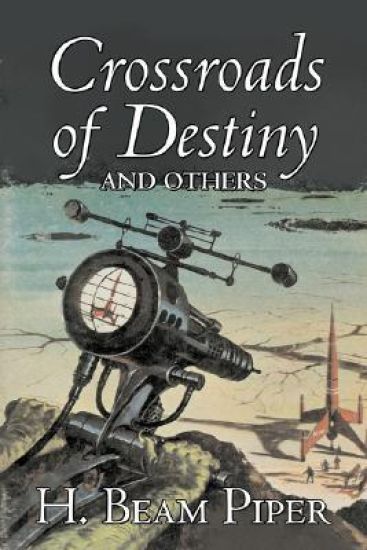
Crossroads of Destiny and Others by H. Beam Piper, Science Fiction, Adventure
H Beam Piper
Aegypan
2007
sidottu
Blurbs for books. Days are we write so many of them we could just . . . well. But it's clear we aren't the only ones who feel this way.H. Beam Piper sold "Crossroads of Destiny" to Fantastic Universe Science Fiction, which published it in their July 1959 issue. "No wonder he'd been so interested in the talk of whether our people accepted these theories " they said of the story. We aren't at all certain what they meant by that, but you'll probably have a clue.The blurb for "Hunter Patrol" (Amazing Stories, May 1959 -- a collaboration with John J. McGuire) is equally oblique: "Readers who remember the Hon. Stephen Silk, diplomat extraordinary, in Lone Star Planet (FU, March 1957), later published as A Planet for Texans (Ace Books), will find the present story a challenging departure -- this possibility that the history we know may not be absolute. . . ."On the other hand, when "Dearest" appeared in Weird Tales, in March, 1951, the folks at that magazine blurbed it, "Many men have dreamed of world peace, but none have been able to achieve it. If one man did have that power, could mankind afford to pay the price?" An interesting thought, we say. And it seems to us that they had a lot more to say about the story than the SF mags did (above).On the other other hand (it makes us feel like such Moties to say that), when True: The Man's Magazine, published "Rebel Raider" in December 1950 they said, "Jeb Stuart left John Singleton Mosby behind Northern lines 'to look after loyal Confederate people.' But before the war was over, Mosby did a lot more than that. . . ." (We think they actually read the piece before they published it, by golly )And on the last hand of all, there's no evidence that anybody at the house that published The Science-Fictional Sherlock Holmes, (1960 -- another collaboration with John J. McGuire) even read "The Return" -- they didn't say a word about it Harrumph.
Time and Time Again and Other Science Fiction by H. Beam Piper, Adventure
H Beam Piper
Aegypan
2007
sidottu
John W. Campbell was a man who really knew what makes SF the appealing thing it is; it's no wonder that he published the story. Also included in this volume are "The Mercenaries" (Astounding Science Fiction, March, 1950), "He Walked Around the Horses" (Astounding Science Fiction, April 1948), "The Return" (Astounding Science Fiction, January, 1954 -- a collaboration with John J. McGuire), and "Temple Trouble" (Astounding Science Fiction, April, 1951).

"ZNIDD SUDDABIT "So the Ulleran challenge begins, with the rantings of a prophet and a seemingly incidental street riot. Only when a dose of poison lands in the governor-general's whiskey does it become clear that the "geeks" have had it up to their double-lidded eyeballs with the imperialist Terran Federation's Chartered Uller Company. Then, overnight, war is everywhere.How it will end is in the (merely) two Terran hands of the new governor-general, a man shrewd enough to know that "it is easier to banish a habit of thought than a piece of knowledge." The problem is, the particular piece of knowledge he needs hasn't been used in 450 years. . . .









"Day of the Moron," by Henry Beam Piper, explores a future grappling with profound societal shifts. Classified as science fiction and space opera, this thought-provoking work delves into themes of alien contact and the potential evolution - or devolution - of humanity. The narrative examines the delicate balance between utopia and dystopia, questioning the very nature of progress and the unforeseen consequences of technological advancement. This enduring work of science fiction invites readers to contemplate the possibilities of the future, prompting reflection on our own path and the challenges that may lie ahead. A classic of the genre, "Day of the Moron" remains a relevant and engaging exploration of humanity's potential, both inspiring and cautionary.This work has been selected by scholars as being culturally important, and is part of the knowledge base of civilization as we know it.This work is in the public domain in the United States of America, and possibly other nations. Within the United States, you may freely copy and distribute this work, as no entity (individual or corporate) has a copyright on the body of the work.Scholars believe, and we concur, that this work is important enough to be preserved, reproduced, and made generally available to the public. We appreciate your support of the preservation process, and thank you for being an important part of keeping this knowledge alive and relevant.