Kirjahaku
Etsi kirjoja tekijän nimen, kirjan nimen tai ISBN:n perusteella.
37 kirjaa tekijältä H L Mencken
Henry Louis Mencken (September 12, 1880 - January 29, 1956) was an American journalist, essayist, satirist, cultural critic, and scholar of American English. He commented widely on the social scene, literature, music, prominent politicians, and contemporary movements. His satirical reporting on the Scopes Trial, which he dubbed the "Monkey Trial," also gained him attention. As a scholar, Mencken is known for The American Language, a multi-volume study of how the English language is spoken in the United States. As an admirer of the German philosopher Friedrich Nietzsche, he was an outspoken opponent of organized religion, theism, populism, and representative democracy, the last of which he viewed as a system in which inferior men dominated their superiors.

Henry Louis Mencken (September 12, 1880 - January 29, 1956) was an American journalist, essayist, satirist, cultural critic, and scholar of American English. He commented widely on the social scene, literature, music, prominent politicians, and contemporary movements. His satirical reporting on the Scopes Trial, which he dubbed the "Monkey Trial," also gained him attention. As a scholar, Mencken is known for The American Language, a multi-volume study of how the English language is spoken in the United States. As an admirer of the German philosopher Friedrich Nietzsche, he was an outspoken opponent of organized religion, theism, populism, and representative democracy, the last of which he viewed as a system in which inferior men dominated their superiors.
He was one of the most influential American writers of the 20th century, and the six collections of his essays and reviews published between 1919 and 1927 as his *Prejudices* are among his most entertaining reading. American satirist and critic HENRY LOUIS MENCKEN (1880-1956) believed that criticism rose to the level of art when it was used as a springboard for the critic's own philosophizing on art and culture. In this Third Series of *Prejudices, * first published in 1922, he brings his unique-and uniquely witty-perspective to such essays as: - "On Being an American" - "Footnote on Criticism" - "Das Kapital" - "Star-Spangled Men" - "The Poet and His Art" - "The Nature of Liberty" - "The Novel" - "The Forward-Looker" - "Types of Men" - "The Dismal Science" - "Matters of State" - "Reflections on the Drama" - and more.
Nothing in H. L. Mencken's long career-during which he authored over thirty books, edited two national magazines, and regularly published a column in The Baltimore Sun -ignited his wrath as much as the sense that the complexity of American life was constricted by the spirit of puritanism. His notion of puritanism had little to do with the religious creed, and much more to do with a moral righteousness that he seemed to encounter at the base of American society. The New Puritanism, his three main essays on the topic appear together for the first time, makes possible a reconsideration of his subtle argument for a society that looks beyond the simplistic constructs of good and evil-fostering tolerance and inclusivity towards imperfection. Henry Louis Mencken (1880-1956) was an author and editor whose reputation preceded him-not always positively. He courted controversy at every turn and projected a confidence that was often interpreted as elitism. The son of a self-made cigar magnate, he was an autodidact with a nose for talent and trouble. Mencken never suppressed an opinion or spared a colleague, yet as co-editor of The Smart Set and the American Mercury he gave more writers their first chance than most gatekeepers of his time. He was a champion of literary quality, as well as the need for a dynamic democracy. When his Diary was published posthumously, revealing racist comments that led to renewed dismay, a number of writers-including Ralph Ellison, Arthur Miller, and Kurt Vonnegut-came to his defense, noting that "no white editor of the day did more to seek out and encourage black writers" and "no editor did more to fight for freedom of expression for all Americans."
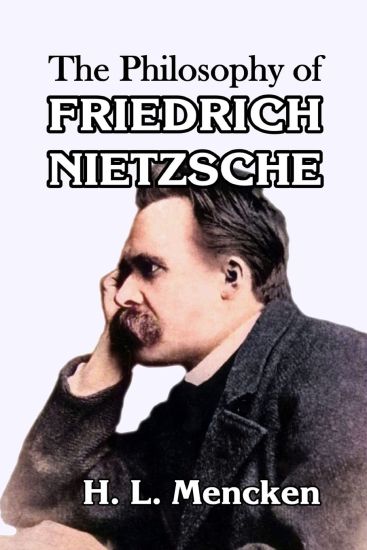
The most powerful and comprehensive overview of the philosophy of famous German philosopher Friedrich Nietzsche ever published in the English language. Written with the aim of putting Nietzsche's sometimes complex ideas into an understandable format, this work remains the best introduction to, and explanation of, the philosophic world of one of Germany's most famous philosophers.Part biographical, this book delves into Nietzsche's background, providing clues as to the development of the major influences upon his life. Then it moves swiftly on to a subject-based study of the major points of Nietzsche's philosophy, using selected quotes from his major works to back up the interpretations.Finally, the last section provides an overview of Nietzsche's meaning in the world of philosophy, and includes a final section on how to study the subject further. However, there is no need, as once Mencken's book has been studied, the reader will be in possession of a complete understanding and appreciation of Nietzsche's writings.This new edition also contains a comprehensive index.
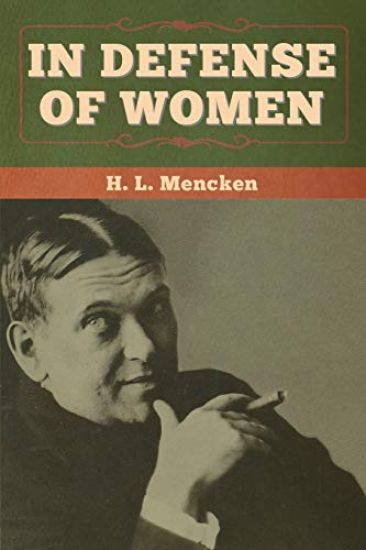
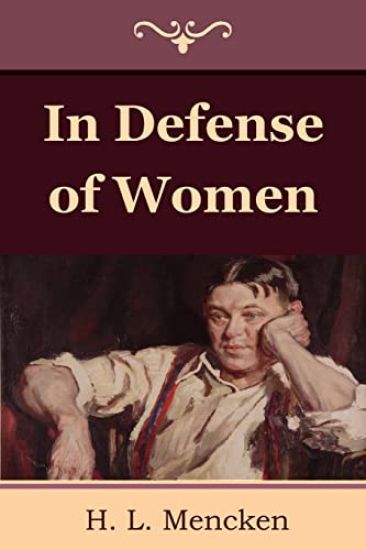
In Defense of Women is H. L. Mencken's 1918 book on women and the relationship between the sexes. Some laud the book as progressive while others brand it as reactionary. While Mencken did not champion women's rights, he described women as wiser in many novel and observable ways, while demeaning average men.According to Mencken's biographer, Fred Hobson: "Depending on the position of the reader, he was either a great defender of women's rights or, as a critic labelled him in 1916, 'the greatest misogynist since Schopenhauer', 'the country's high-priest of woman-haters.'" The original goal of Defense was to help clarify Mencken's views on women, garnered from an inconsistent and confusing reputation in newspaper columns, various reviews, and several plays. Along with Marion Bloom and Kay Laurell, Mencken gathered material for his book not from libraries and universities, but from saloons and hotels.The original title for Defense was A Book for Men Only, but other working titles included The Eternal Feminine as well as The Infernal Feminine. (wikipedia.org)
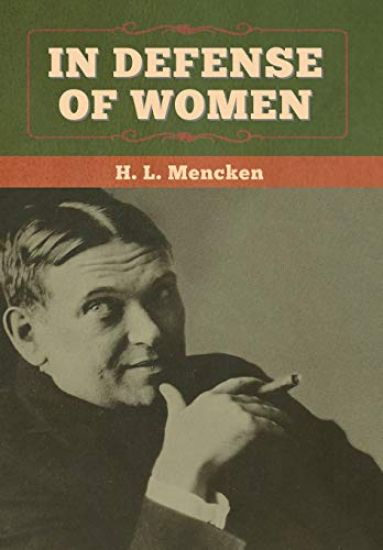
In Defense of Women is H. L. Mencken's 1918 book on women and the relationship between the sexes. Some laud the book as progressive while others brand it as reactionary. While Mencken did not champion women's rights, he described women as wiser in many novel and observable ways, while demeaning average men.According to Mencken's biographer, Fred Hobson: "Depending on the position of the reader, he was either a great defender of women's rights or, as a critic labelled him in 1916, 'the greatest misogynist since Schopenhauer', 'the country's high-priest of woman-haters.'" The original goal of Defense was to help clarify Mencken's views on women, garnered from an inconsistent and confusing reputation in newspaper columns, various reviews, and several plays. Along with Marion Bloom and Kay Laurell, Mencken gathered material for his book not from libraries and universities, but from saloons and hotels.The original title for Defense was A Book for Men Only, but other working titles included The Eternal Feminine as well as The Infernal Feminine. (wikipedia.org)
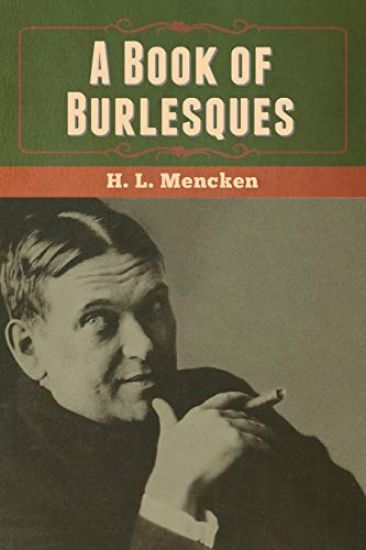
Henry Louis Mencken (September 12, 1880 - January 29, 1956) was an American journalist, essayist, satirist, cultural critic and scholar of American English. He commented widely on the social scene, literature, music, prominent politicians and contemporary movements. His satirical reporting on the Scopes Trial, which he dubbed the "Monkey Trial," also gained him attention.As a scholar, Mencken is known for The American Language, a multi-volume study of how the English language is spoken in the United States. As an admirer of the German philosopher Friedrich Nietzsche, he was an outspoken opponent of organized religion, theism, populism, and representative democracy, the latter of which he viewed as systems in which inferior men dominated their superiors. Mencken was a supporter of scientific progress, and was critical of osteopathic and chiropractic medicine. He was also an ardent critic of economics.Mencken opposed the American entry into both World War I and World War II. Some of the terminology in his private diary entries has been described by some researchers as racist and antisemitic, although this characterisation has been disputed. His attitude to African-Americans reflected the conservative paternalism of his era and "the kind of anti-Semitism that appears in Mencken's private diary may be found elsewhere: for example, in the early letters of Eleanor Roosevelt and Adlai Stevenson." He seemed to show a genuine enthusiasm for militarism, though never in its American form. "War is a good thing," he once wrote, "because it is honest, it admits the central fact of human nature ... A nation too long at peace becomes a sort of gigantic old maid."His longtime home in the Union Square neighborhood of West Baltimore was turned into a city museum, the H. L. Mencken House. His papers were distributed among various city and university libraries, with the largest collection held in the Mencken Room at the central branch of Baltimore's Enoch Pratt Free Library. (wikipedia.org)
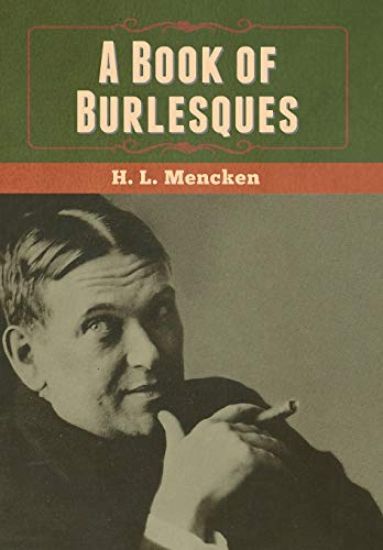
Henry Louis Mencken (September 12, 1880 - January 29, 1956) was an American journalist, essayist, satirist, cultural critic and scholar of American English. He commented widely on the social scene, literature, music, prominent politicians and contemporary movements. His satirical reporting on the Scopes Trial, which he dubbed the "Monkey Trial," also gained him attention.As a scholar, Mencken is known for The American Language, a multi-volume study of how the English language is spoken in the United States. As an admirer of the German philosopher Friedrich Nietzsche, he was an outspoken opponent of organized religion, theism, populism, and representative democracy, the latter of which he viewed as systems in which inferior men dominated their superiors. Mencken was a supporter of scientific progress, and was critical of osteopathic and chiropractic medicine. He was also an ardent critic of economics.Mencken opposed the American entry into both World War I and World War II. Some of the terminology in his private diary entries has been described by some researchers as racist and antisemitic, although this characterisation has been disputed. His attitude to African-Americans reflected the conservative paternalism of his era and "the kind of anti-Semitism that appears in Mencken's private diary may be found elsewhere: for example, in the early letters of Eleanor Roosevelt and Adlai Stevenson." He seemed to show a genuine enthusiasm for militarism, though never in its American form. "War is a good thing," he once wrote, "because it is honest, it admits the central fact of human nature ... A nation too long at peace becomes a sort of gigantic old maid."His longtime home in the Union Square neighborhood of West Baltimore was turned into a city museum, the H. L. Mencken House. His papers were distributed among various city and university libraries, with the largest collection held in the Mencken Room at the central branch of Baltimore's Enoch Pratt Free Library. (wikipedia.org)