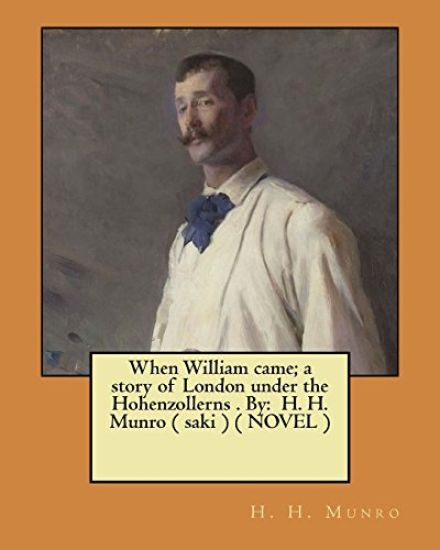
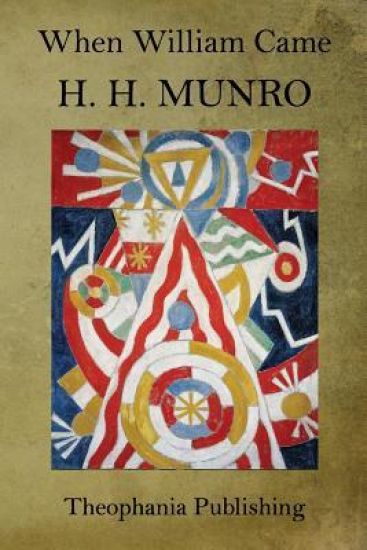
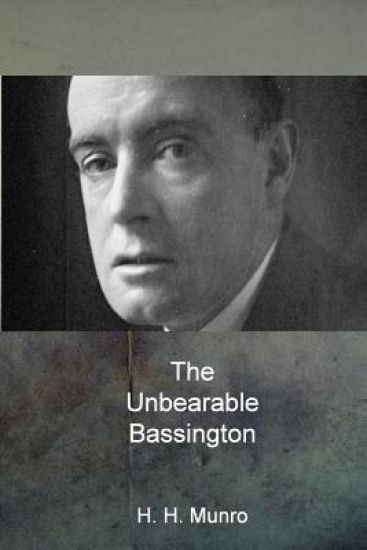
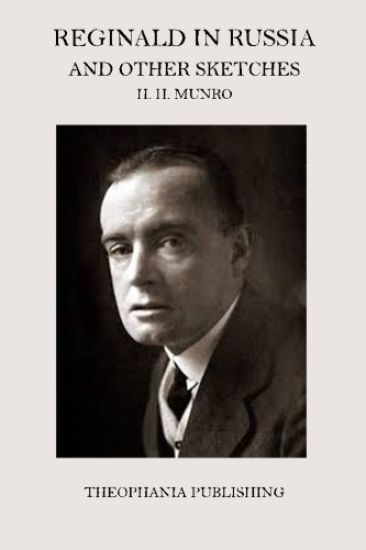
Hector Hugh Munro (18 December 1870 - 14 November 1916), better known by the pen name Saki, and also frequently as H. H. Munro, was a British writer whose witty, mischievous and sometimes macabre stories satirize Edwardian society and culture. He is considered a master of the short story, and often compared to O. Henry citation needed] and Dorothy Parker citation needed]. Influenced by Oscar Wilde, Lewis Carroll and Rudyard Kipling, he himself influenced A. A. Milne, No l Coward and P. G. Wodehouse. Besides his short stories (which were first published in newspapers, as was customary at the time, and then collected into several volumes), he wrote a full-length play, The Watched Pot, in collaboration with Charles Maude; two one-act plays; a historical study, The Rise of the Russian Empire, the only book published under his own name; a short novel, The Unbearable Bassington; the episodic The Westminster Alice (a parliamentary parody of Alice in Wonderland); and When William Came, subtitled A Story of London Under the Hohenzollerns, a fantasy about a future German invasion and occupation of Britain. Early life Hector Hugh Munro was born in Akyab, British Burma, which was then still part of the British Raj, and was governed from Calcutta under the authority of the Viceroy of India. Saki was the son of Charles Augustus Munro, an Inspector General for the Indian Imperial Police, by his marriage to Mary Frances Mercer (1843-1872), the daughter of Rear Admiral Samuel Mercer. Her nephew, Cecil William Mercer, later became a famous novelist as Dornford Yates. In 1872, on a home visit to England, Mary Munro was charged by a cow, and the shock caused her to miscarry. She never recovered and soon died. After the death of Munro's mother, Charles Munro sent his children, including two-year-old Hector, home to England. The children were sent to Broadgate Villa, in Pilton village near Barnstaple, North Devon to be raised by their grandmother and paternal maiden aunts Charlotte and Augusta in a strict and puritanical household. It is said that they were most likely models for a few of his characters, notably 'The Lumber Room' and 'Sredni Vashtar". Leading slightly insular lives Munro and his siblings, during their early years were educated under tutelage of governesses. At the age of 12 the young Hector Munro was educated at Pencarwick School in Exmouth and then as a boarder at Bedford School. In 1887, after his retirement, his father returned from Burma, and embarked upon a series of European travels with Hector and his siblings. Hector followed his father in 1893 into the Indian Imperial Police and was posted to Burma, but successive bouts of fever meant his return home after only fifteen months Writing career In 1896, he decided to move to London to make a living as a writer. Munro started his writing career as a journalist for newspapers such as the Westminster Gazette, the Daily Express, the Morning Post, and magazines such as the Bystander and Outlook. His first book The Rise of the Russian Empire, a historical study modelled upon Edward Gibbon's The Decline and Fall of the Roman Empire, appeared in 1900, under his real name, but proved to be something of a false start. Whilst he was writing The Rise of the Russian Empire, he made his first foray into short story writing and published a piece called 'Dogged' in St Paul's in February 1899. He then moved into the world of political satire in 1900 with a collaboration with Francis Carruthers Gould entitled "Alice in Westminster". Gould produced the sketches, and Munro wrote the text accompanying them, using the pen-name "Saki" for the first time. The series lampooned political figures of the day ('Alice in Downing Street' begins with the memorable line, '"Have you ever seen an Ineptitude?"' - referring to a zoomorphised Arthur Balfour), and was published in the Liberal Westminster Gazette.....
The Novels and Plays of Saki is a collection of works by H. H. Munro, who wrote under the pen name Saki. The book includes a selection of his novels and plays, which are known for their wit, satire, and dark humor. Munro's works often focus on the foibles and absurdities of British society, particularly the upper classes. The collection includes some of Munro's most famous works, such as The Chronicles of Clovis, Reginald, and The Unbearable Bassington. The book provides readers with a glimpse into Munro's unique and biting style, which has made him a beloved and influential author in the world of English literature.This is a new release of the original 1945 edition.This scarce antiquarian book is a facsimile reprint of the old original and may contain some imperfections such as library marks and notations. Because we believe this work is culturally important, we have made it available as part of our commitment for protecting, preserving, and promoting the world's literature in affordable, high quality, modern editions, that are true to their original work.
FRANCESCA BASSINGTON sat in the drawing-room of her house in Blue Street, W., regaling herself and her estimable brother Henry with China tea and small cress sandwiches. The meal was of that elegant proportion which, while ministering sympathetically to the desires of the moment, is happily reminiscent of a satisfactory luncheon and blessedly expectant of an elaborate dinner to come.In her younger days Francesca had been known as the beautiful Miss Greech; at forty, although much of the original beauty remained, she was just dear Francesca Bassington. No one would have dreamed of calling her sweet, but a good many people who scarcely knew her were punctilious about putting in the "dear."Her enemies, in their honester moments, would have admitted that she was svelte and knew how to dress, but they would have agreed with her friends in asserting that she had no soul. When one's friends and enemies agree on any particular point they are usually wrong. Francesca herself, if pressed in an unguarded moment to describe her soul, would probably have described her drawing-room. Not that she would have considered that the one had stamped the impress of its character on the other, so that close scrutiny might reveal its outstanding features, and even suggest its hidden places, but because she might have dimly recognised that her drawing-room was her soul.Francesca was one of those women towards whom Fate appears to have the best intentions and never to carry them into practice. With the advantages put at her disposal she might have been expected to command a more than average share of feminine happiness. So many of the things that make for fretfulness, disappointment and discouragement in a woman's life were removed from her path that she might well have been considered the fortunate Miss Greech, or later, lucky Francesca Bassington. And she was not of the perverse band of those who make a rock-garden of their souls by dragging into them all the stoney griefs and unclaimed troubles they can find lying around them. Francesca loved the smooth ways and pleasant places of life; she liked not merely to look on the bright side of things but to live there and stay there. And the fact that things had, at one time and another, gone badly with her and cheated her of some of her early illusions made her cling the closer to such good fortune as remained to her now that she seemed to have reached a calmer period of her life. To undiscriminating friends she appeared in the guise of a rather selfish woman, but it was merely the selfishness of one who had seen the happy and unhappy sides of life and wished to enjoy to the utmost what was left to her of the former. The vicissitudes of fortune had not soured her, but they had perhaps narrowed her in the sense of making her concentrate much of her sympathies on things that immediately pleased and amused her, or that recalled and perpetuated the pleasing and successful incidents of other days. And it was her drawing-room in particular that enshrined the memorials or tokens of past and present happiness.