Kirjojen hintavertailu. Mukana 12 083 983 kirjaa ja 12 kauppaa.

Kirjahaku

Etsi kirjoja tekijän nimen, kirjan nimen tai ISBN:n perusteella.

4 kirjaa tekijältä H.W. Brands

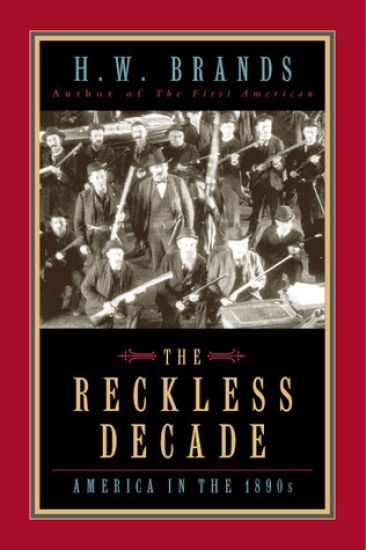
The Reckless Decade

The Reckless Decade

H.W. Brands

University of Chicago Press
2002
nidottu
Just as we do today, Americans of the 1890s faced changes in economics, politics, society, and technology that led to wrenching and sometimes violent tensions between rich and poor, capital and labor, white and black, East and West. In The Reckless Decade, H. W. Brands demonstrates that we can learn a lot about the contradictions that lie at the heart of America today by looking at them through the lens of the 1890s. The 1890s saw the closing of the American frontier and a shift toward imperialist ambitions. Populists and muckrakers grappled with robber barons and gold-bugs. Americans addressed the unfinished business of Reconstruction by separating blacks and whites, Booker T. Washington, W. E. B. Du Bois, and other black leaders clashed over the proper response to continuing racial inequality. Those on top of the economic heap - Rockefeller, Carnegie, and Morgan - created vast empires of wealth, while those at the bottom worked for dimes a day. Brands brings all this to life in a vivid narrative filled with larger-than-life characters facing momentous challenges as they worked toward an uncertain future.
The Strange Death of American Liberalism

The Strange Death of American Liberalism

H.W. Brands

Yale University Press
2003
pokkari
In this provocative book, H. W. Brands confronts the vital question of why an ever-increasing number of Americans do not trust the federal government to improve their lives and to heal major social ills. How is it that government has come to be seen as the source of many of our problems, rather than the potential means of their solution? How has the word liberal become a term of abuse in American political discourse? From the Revolution on, argues Brands, Americans have been chronically skeptical of their government. This book succinctly traces this skepticism, demonstrating that it is only during periods of war that Americans have set aside their distrust and looked to their government to defend them. The Cold War, Brands shows, created an extended—and historically anomalous—period of dependence, thereby allowing for the massive expansion of the American welfare state. Since the 1970s, and the devastating blow dealt to Cold War ideology by America’s defeat in Vietnam, Americans have returned to their characteristic distrust of government. With the collapse of the Soviet Union in 1991, Brands contends, the fate of American liberalism was sealed—and we continue to live with the consequences of its demise.
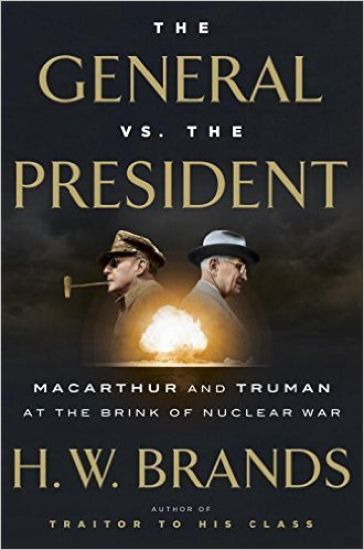
General vs. the President

General vs. the President

H.W. Brands

Casemate UK
2016
sidottu
From master storyteller and historian H. W. Brands, twice a finalist for the Pulitzer Prize, comes the riveting story of how President Harry Truman and General Douglas MacArthur squared off to decide America's future in the post-World War II order.
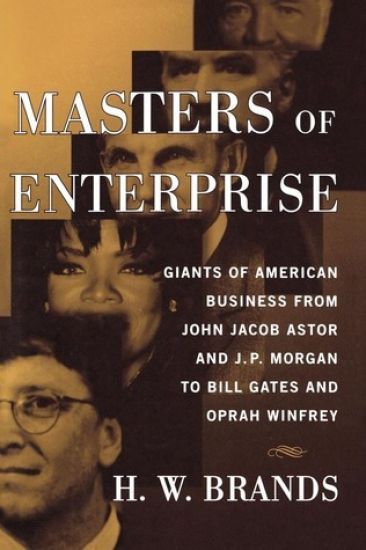
Masters of Enterprise

Masters of Enterprise

H.W. Brands

The Free Press
2008
pokkari
From the early years of fur trading to today's Silicon Valley empires, America has proved to be an extraordinarily fertile land for the creation of enormous fortunes. Each generation has produced one or two phenomenally successful leaders, often in new industries that caught contemporaries by surprise, and each of these new fortunes reconfirmed the power of fanatically single-minded visionaries. John Jacob Astor and Cornelius Vanderbilt were the first American moguls; John D. Rockefeller, Andrew Carnegie, and J. P. Morgan were kingpins of the Gilded Age; David Sarnoff, Walt Disney, Ray Kroc, and Sam Walton were masters of mass culture. Today Oprah Winfrey, Andy Grove, and Bill Gates are giants of the Information Age. America has again and again been the land of dizzying mountains of wealth. Here, in a wittily told and deeply insightful history, is a complete set of portraits of America's greatest generators of wealth. Only such a collective study allows us to appreciate what makes the great entrepreneurs really tick. As H. W. Brands shows, these men and women are driven, they are focused, they deeply identify with the businesses they create, and they possess the charisma necessary to persuade other talented people to join them. They do it partly for the money, but mostly for the thrill of creation. The stories told here -- including how Nike got its start as a business-school project for Phil Knight; how Robert Woodruff almost refused to take control of Coca-Cola to spite his father; how Thomas Watson saved himself from prison by rescuing Dayton, Ohio, from a flood; how Jay Gould nearly cornered the gold market; how H. L. Hunt went from gambling at cards to gambling with oil leases -- make for a narrative that is always lively and revealing and often astonishing. An observer in 1850, studying John Jacob Astor, would not have predicted the rise of Henry Ford and the auto industry. Nor would a student of Ford in 1950 have anticipated the takeoff of direct marketing that made Mary Kay Ash a trusted guide for millions of American women. Full of surprising insights, written with H. W. Brands's trademark flair, the stories in Masters of Enterprise are must reading for all students of American business history.