Kirjojen hintavertailu. Mukana 11 627 220 kirjaa ja 12 kauppaa.

Kirjahaku

Etsi kirjoja tekijän nimen, kirjan nimen tai ISBN:n perusteella.

2 kirjaa tekijältä Hal Elliott Wert

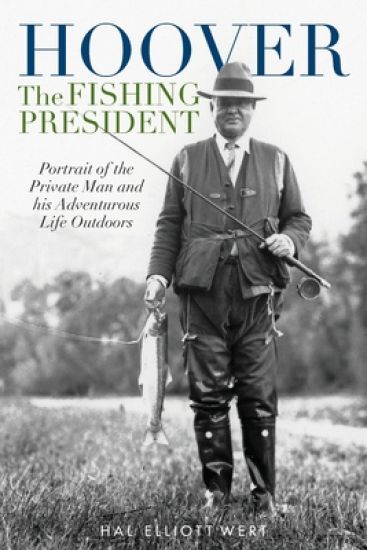
Hoover the Fishing President

Hoover the Fishing President

Hal Elliott Wert

Stackpole Books
2020
pokkari
An intensely private and shy man, Hoover the person was largely unknown to the American public. In this extensively researched biography devoted to the angling side of Hoover, author Hal Elliott Wert examines the often overlooked life of our thirty-first president. In a presidency plagued by the Depression, in a time when the country was poised between the agrarian society of the past and the advent of a modern professional class, Herbert Hoover faced numerous challenges. A thinker and a doer who shaped the way we live today, Hoover found relief from the stresses of his professional life in his pastime, fishing. Herbert Hoover fished near his hometown of West Branch, Iowa, as a boy and then moved to Oregon, where he fished the Rogue, Willamette, McKenzie, and Columbia rivers. As a young man, he attended Stanford and fished and camped throughout the West during breaks. He fished and spent time in the outdoors throughout his life and especially in his years as president. He founded Cave Man Camp at Bohemian Grove north of San Francisco, a yearly getaway for powerful Republicans, and Camp Rapidan in Virginia while he was in the White House. In addition to freshwater fishing, Hoover enjoyed fishing the salt. On trips to Florida later in his life, he stalked bonefish and fished for permit and the larger species, such as sailfish.
Hoover vs. Roosevelt

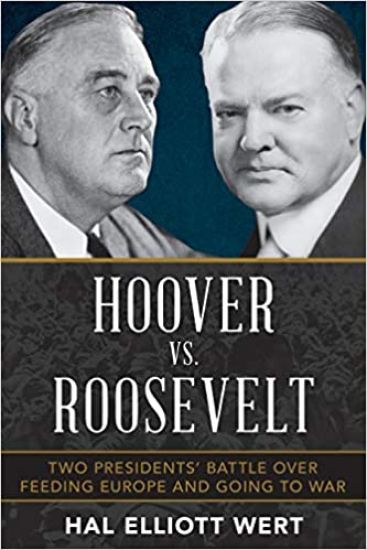
Hoover vs. Roosevelt

Hal Elliott Wert

Stackpole Books
2023
sidottu
In the Depression election of 1932, Franklin Roosevelt crushed Herbert Hoover in one of the most lopsided presidential contests in American history. The White House rivals remained enemies long after: Hoover opposed the New Deal, and FDR found Hoover a convenient punching bag in elections throughout the Thirties. From Coolidge’s death in 1933 to Truman’s departure in 1953, Hoover was the only living former president of either party, and he maintained a strong international reputation, thanks to his achievements as an engineer and his efforts during World War I to organize aid for the starving millions of Europe. And yet, in nearly all accounts of the ferocious debate over American aid to Europe before the U.S. entered World War II, Hoover’s role has been overlooked. Hoover versus Roosevelt tells the story of how the U.S. entered World War II through the lens of Herbert Hoover. The debate over entering World War II before Pearl Harbor remains one of the most contentious in American history. Historian Arthur Schlesinger called it “the most savage political debate of my lifetime”—more vicious, that great scholar of American history thought, than the arguments over McCarthyism and Vietnam. Most accounts have focused on isolationism versus internationalism, Lindbergh versus Roosevelt, but the story is deeper and more complex than that and involves the transition of an older era of international relations—exemplified by Hoover, who believed in the Geneva Accord, the Hague Conventions, and public-private partnerships to address world crises—to the modern era of total war.Widely and deeply researched in an array of rarely used secondary and primary sources, both domestic and international, Hoover versus Roosevelt brings a fresh perspective to a time in our nation’s history when our country was deeply divided over what now seems a “done deal.”