Kirjojen hintavertailu. Mukana 11 244 527 kirjaa ja 12 kauppaa.

Kirjahaku

Etsi kirjoja tekijän nimen, kirjan nimen tai ISBN:n perusteella.

37 kirjaa tekijältä Hal Foster

Fail Better

Fail Better

Hal Foster

MIT PRESS LTD
2025
nidottu
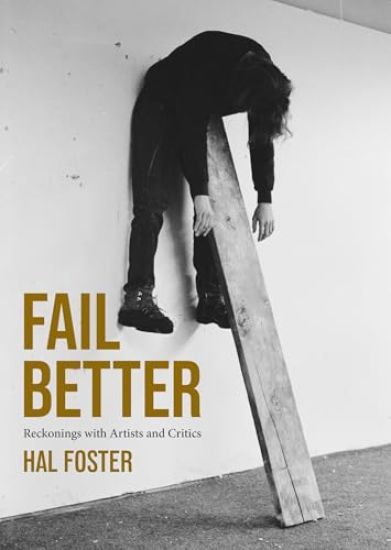
From the distinguished art critic and historian, vital essays on key artists and critics, revealing how they redefined art and criticism over the last six decades. "Serious art anticipates the future as much as it reflects the present," Hal Foster remarked in a 2015 interview. "By the same token serious art history is driven by the present as much as it is informed by the past." In Fail Better, Foster, an art critic and historian whose influential work spans disciplines and decades, brings this peripatetic perspective to contemporary art, art criticism, art history, and his own work over the past 50 years. In these 40 texts--a few reprinted, most revised, some new--Foster reviews artists from Richard Hamilton and Jasper Johns to Gerhard Richter and Ed Ruscha; considers contemporaries from Louise Lawler and Cindy Sherman to Jeremy Deller and Adam Pendleton; and traces the development of criticism since the early 1960s, with essays on such influential figures as Susan Sontag and Rosalind Krauss and institutions like Artforum magazine and the Whitney Museum Independent Study Program. Taking his title from Beckett--"try again, fail again, fail better"--Foster notes that, etymologically, an essay is always an attempt, more or less failed. Critics fail artworks, because there can never be a definitive reading. And art fails its historical moment, because it cannot resolve the contradictions that prompt it. But in these failures Foster finds historical consciousness, and with it the promise of future work, future illumination. In his "reckonings" he turns his own long history of criticism to account, to try again, fail again, fail better--and succeeds in conveying shifting concepts of art and criticism, the work of key artists and critics, and the relationships between criticism, theory, history, and politics over the last six decades.
The Return of the Real

The Return of the Real

Hal Foster

MIT Press
1996
pokkari
In The Return of the Real Hal Foster discusses the development of art and theory since 1960, and reorders the relation between prewar and postwar avant-gardes. Opposed to the assumption that contemporary art is somehow belated, he argues that the avant-garde returns to us from the future, repositioned by innovative practice in the present. And he poses this retroactive model of art and theory against the reactionary undoing of progressive culture that is pervasive today.After the models of art-as-text in the 1970s and art-as-simulacrum in the 1980s, Foster suggests that we are now witness to a return to the real-to art and theory grounded in the materiality of actual bodies and social sites. If The Return of the Real begins with a new narrative of the historical avant-gard, it concludes with an original reading of this contemporary situation-and what it portends for future practices of art and theory, culture and politics.
Prosthetic Gods

Prosthetic Gods

Hal Foster

MIT Press
2006
pokkari
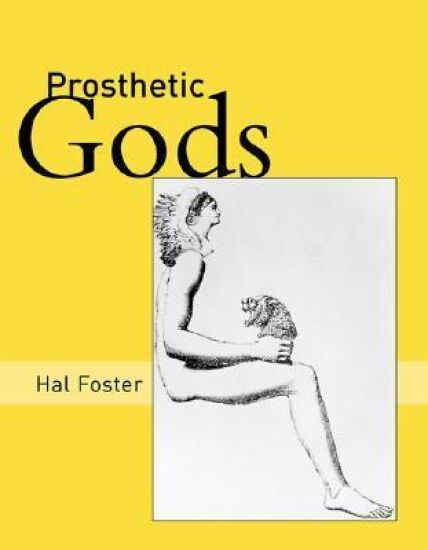
Imagining a new self equal to the new art of modernism; primordial and futuristic fictions of origin in the work of Guaguin, Picasso, F. T. Marinetti, Max Ernst, and others.How to imagine not only a new art or architecture but a new self or subject equal to them? In Prosthetic Gods, Hal Foster explores this question through the works and writings of such key modernists as Gauguin and Picasso, F. T. Marinetti and Wyndham Lewis, Adolf Loos and Max Ernst. These diverse figures were all fascinated by fictions of origin, either primordial and tribal or futuristic and technological. In this way, Foster argues, two forms came to dominate modernist art above all others: the primitive and the machine. Foster begins with the primitivist fantasies of Gauguin and Picasso, which he examines through the Freudian lens of the primal scene. He then turns to the purist obsessions of the Viennese architect Loos, who abhorred all things primitive. Next Foster considers the technophilic subjects propounded by the futurist Marinetti and the vorticist Lewis. These "new egos" are further contrasted with the "bachelor machines" proposed by the dadaist Ernst. Foster also explores extrapolations from the art of the mentally ill in the aesthetic models of Ernst, Paul Klee, and Jean Dubuffet, as well as manipulations of the female body in the surrealist photography of Brassai, Man Ray, and Hans Bellmer. Finally, he examines the impulse to dissolve the conventions of art altogether in the drip paintings of Jackson Pollock, the scatter pieces of Robert Morris, and the earthworks of Robert Smithson, and traces the evocation of lost objects of desire in sculptural work from Marcel Duchamp and Alberto Giacometti to Robert Gober. Although its title is drawn from Freud, Prosthetic Gods does not impose psychoanalytic theory on modernist art; rather, it sets the two into critical relation and scans the greater historical field that they share.
The First Pop Age

The First Pop Age

Hal Foster

Princeton University Press
2014
pokkari
Who branded painting in the Pop age more brazenly than Richard Hamilton, Roy Lichtenstein, Andy Warhol, Gerhard Richter, and Ed Ruscha? And who probed the Pop revolution in image and identity more intensely than they? In The First Pop Age, leading critic and historian Hal Foster presents an exciting new interpretation of Pop art through the work of these Pop Five. Beautifully illustrated in color throughout, the book reveals how these seminal artists hold on to old forms of art while drawing on new subjects of media; how they strike an ambiguous attitude toward both high art and mass culture; and how they suggest that a heightened confusion between images and people is definitive of Pop culture at large. As The First Pop Age looks back to the early years of Pop art, it also raises important questions about the present: What has changed in the look of screened and scanned images today? Is our media environment qualitatively different from that described by Warhol and company? Have we moved beyond the Pop age, or do we live in its aftermath? A masterful account of one of the most important periods of twentieth-century art, this is a book that also sheds new light on our complex relationship to images today.
Brutal Aesthetics

Brutal Aesthetics

Hal Foster

PRINCETON UNIVERSITY PRESS
2020
sidottu
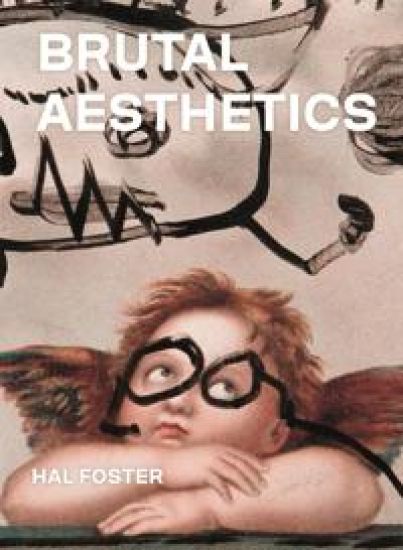
How artists created an aesthetic of “positive barbarism” in a world devastated by World War II, the Holocaust, and the atomic bombIn Brutal Aesthetics, leading art historian Hal Foster explores how postwar artists and writers searched for a new foundation of culture after the massive devastation of World War II, the Holocaust, and the atomic bomb. Inspired by the notion that modernist art can teach us how to survive a civilization become barbaric, Foster examines the various ways that key figures from the early 1940s to the early 1960s sought to develop a “brutal aesthetics” adequate to the destruction around them.With a focus on the philosopher Georges Bataille, the painters Jean Dubuffet and Asger Jorn, and the sculptors Eduardo Paolozzi and Claes Oldenburg, Foster investigates a manifold move to strip art down, or to reveal it as already bare, in order to begin again. What does Bataille seek in the prehistoric cave paintings of Lascaux? How does Dubuffet imagine an art brut, an art unscathed by culture? Why does Jorn populate his paintings with “human animals”? What does Paolozzi see in his monstrous figures assembled from industrial debris? And why does Oldenburg remake everyday products from urban scrap?A study of artistic practices made desperate by a world in crisis, Brutal Aesthetics is an intriguing account of a difficult era in twentieth-century culture, one that has important implications for our own.Published in association with the Center for Advanced Study in the Visual Arts, National Gallery of Art, Washington, DC
Pop

Pop

Hal Foster

Phaidon Press Ltd
2010
nidottu
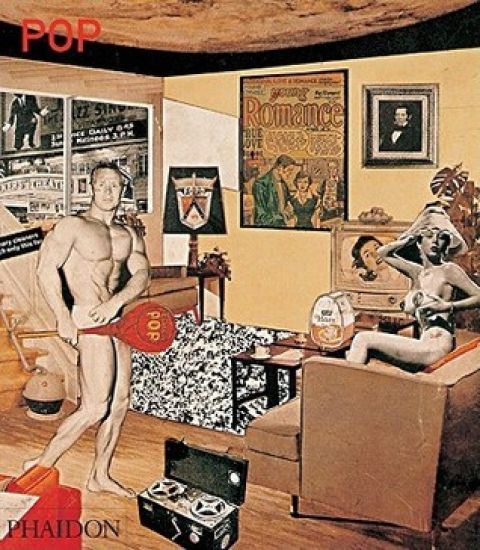
From the late 1950s to the late 1960s the word Pop described art, film, photography and architectural design which engaged with the new realities of mass production and the mass media. Unlike books which present Pop art in isolation, this is a comprehensive survey of Pop in all its forms across America, Britain and Europe. In addition to the key artworks by Andy Warhol, Roy Lichtenstein, Claes Oldenburg, Ed Ruscha, Richard Hamilton, Sigmar Polke, Martial Raysse and many others the book includes works of photography and avant-garde film, as well as what the critic Reyner Banham defined as Pop architecture, ranging from Alison and Peter Smithson’s House of the Future to Archigram’s Walking City and Robert Venturi and Denise Scott Brown’s Learning from Las Vegas.Editor Mark Francis was former Founding Director of the Andy Warhol Museum and editor of ‘Les Années Pop’ (Centre Georges Pompidou, 2001). Survey author Hal Foster is Professor of Art at Princeton University, author of The Return of the Real and editor of the bestselling The Anti-Aesthetic: Essays on Postmodern Culture and Recodings: Art, Spectacle, Cultural Politics.
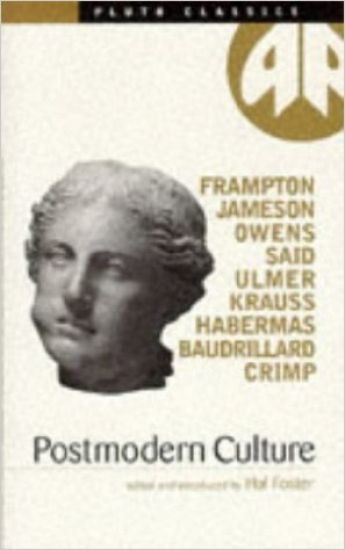
Postmodern Culture

Postmodern Culture

Hal Foster

Pluto Press
1985
pokkari
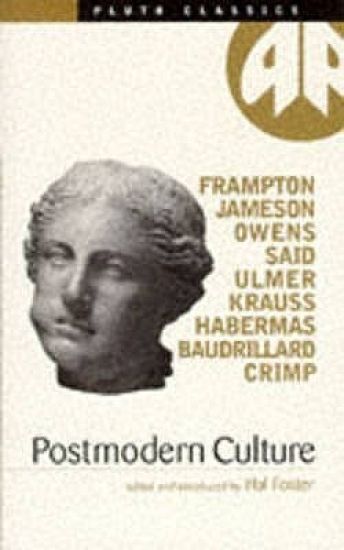
In all the arts a war is being waged between modernists and postmodernists. Radicals have tended to side with the modernists against the forces of conservatism. Postmodern Culture is a break with this tendency. Its contributors propose a postmodernism of resistance – an aesthetic that rejects hierarchy and celebrates diversity. Ranging from architecture, sculpture and painting to music, photography and film, this collection is now recognised as a seminal text on the postmodernism debate.The essays are by Hal Foster, Jürgen Habermas, Kenneth Frampton, Rosalind Krauss, Douglas Crimp, Craig Owens, Gregory L. Ulmer, Fredric Jameson, Jean Baudrillard, and Edward W. Said.
Postmodern Culture

Postmodern Culture

Hal Foster

Pluto Press
1985
sidottu
In all the arts, a war is being raged between modernists and postmodernists. This book attempts to break with the tendency of radicals to side with modernists against conservatism, proposing a postmodernism of resistance, rejecting hierarchy and celebrating diversity. Ranging from architecture, sculpture and painting to music, photography and film, this collection is recognised as a seminal text on the postmodernism debate. The essays are by Foster, Habermas, Frampton, Krauss, Crimp, Owens, Ulmer, Jameson, Baudrillard and Said.
David Smith: The Forgings

David Smith: The Forgings

Hal Foster

Rizzoli International Publications
2014
sidottu
The Forgings, the groundbreaking series of industrially forged steel sculptures that the artist produced in 1955 and 1956, are brought together in one book for the first time, alongside complementary sketchbook drawings of the sculptures. This catalogue, documenting an exhibition at Gagosian Gallery, New York, is the first time that all ten Forgings have been on view together since 1956. The sculptures are accompanied by a series of works on paper leading up to The Forgings, as well as sketchbook drawings of the completed sculptures. With the The Forgings, David Smith translated the spontaneity of a brushed line drawing into sculptural form, manipulating thin steel bars to achieve expressive vertical abstractions. The Forgings were unprecedented as works created solely through an industrial machined process, but were perhaps even more radical as pre-Minimalist forms intended to provoke discrete responses in each viewer.
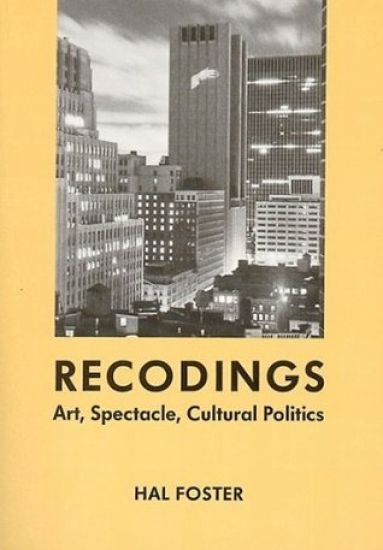
Recodings

Recodings

Hal Foster

The New Press
1998
nidottu
A Village Voice Best Book and a lucid and provocative work that allows us to glimpse stirrings and upheavals in the hothouse of modern art.' - Los Angeles Times'
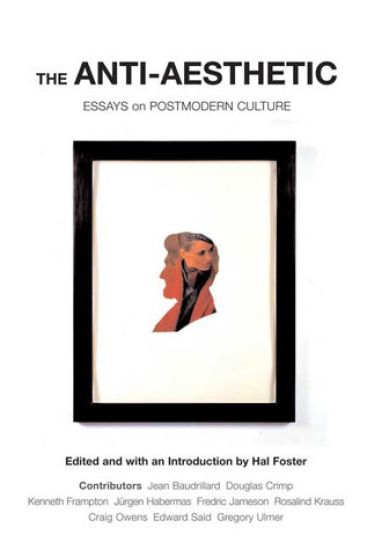
Anti-aesthetic

Anti-aesthetic

Hal Foster

The New Press
2002
nidottu
For the past thirty years, Hal Foster has pushed the boundaries of cultural criticism, establishing a vantage point from which the seemingly disparate agendas of artists, patrons, and critics have a telling coherence. In The Anti-Aesthetic, preeminent critics such as Jean Baudrillard, Rosalind Krauss, Fredric Jameson, and Edward Said consider the full range of postmodern cultural production, from the writing of John Cage, to Cindy Sherman's film stills, to Barbara Kruger's collages. With a redesigned cover and a new afterword that situates the book in relation to contemporary criticism, The Anti-Aesthetic provides a strong introduction for newcomers and a point of reference for those already engaged in discussions of postmodern art, culture, and criticism. Includes a new afterword by Hal Foster and 12 black and white photographs.
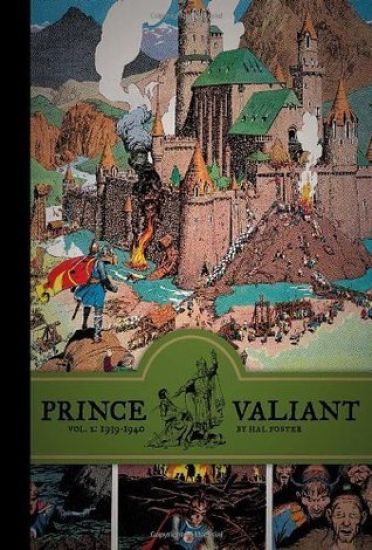
Prince Valiant: v. 2 1939-1940

Prince Valiant: v. 2 1939-1940

Hal Foster

Fantagraphics
2010
sidottu
For 35 years, Hal Foster created epic adventure and romantic fantasy in his legendary Sunday strip, Prince Valiant. Realistic in its visual execution and noble in its subject, depicting a time in which the fabled warriors of history and legends fought together for the greater good, it remains one of the great masterpieces of the medium. In this second volume, Prince Valiant helps his father reclaim his throne in kingdom of Thule, fights alongside King Arthur, and is made a knight of the Round Table in recompense for his bravery and wit. Bored by the peace he helped to create, Val decides to independently pull together the forces to battle the Huns’ descent on Southern Europe. When Val’s army breaches the Huns’ stronghold, however, he discovers that corruption reigns still further west in Rome. Thus Val sets off with Sir Gawain and Tristam of Arthurian legend fame, and the familial kinship of the trio sees them through chivalrous escapades, false imprisonment and daring escapes. By the end of this volume, they go their separate ways, and Val boards a ship to Sicily—yet a storm approaches, throwing him off-course, as adventure follows him everywhere. Fantagraphics is proud to present these strips, which, thanks to the use of original proof sheets and advances in printing technology, are even brighter and crisper than when they were originally published 70 years ago. Foster’s work, painterly and sweeping, is finally treated to the grand depiction it deserves. These illustrative, time-honored comic strips will enthrall old readers and just as easily awe new ones. 112 pages of color comics
Prince Valiant Vol. 3: 1941-1942

Prince Valiant Vol. 3: 1941-1942

Hal Foster

Fantagraphics
2011
sidottu
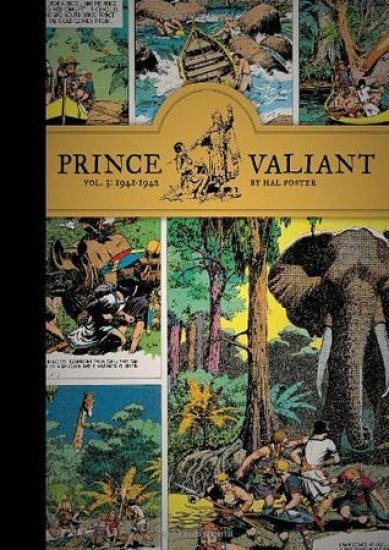
Almost the entirety of 1941's strips feature a single ten-month epic entitled "Fights for the Singing Sword," a globetrotting adventure fueled by Valiant's obsessive search for his bride-to-be Aleta throughout Northern Africa, with stops in Jerusalem, the Arabic deserts, and, inevitably, a harem which Val must infiltrate. Then finally, in "The Misty Isles" Valiant meets Aleta face to face but upon learning that she has had his crew killed (deservedly so, actually, but still), he flees in anger, vowing never to see her again."Homeward Bound," Valiant continues his travels, with stops in Athens (where he meets the boisterous Viking Boltar, who will become his friend for life), North Africa, and Gaul (where Valiant liberates Gawain), before finally returning to Camelot. But his joyous return is short-lived as an alliance of Picts and Vikings threatens Britain's security, and thus Valiant must journey forth with, as his ultimate destination, "The Roman Wall."
Prince Valiant Vol. 6: 1947-1948

Prince Valiant Vol. 6: 1947-1948

Hal Foster

Fantagraphics
2013
sidottu
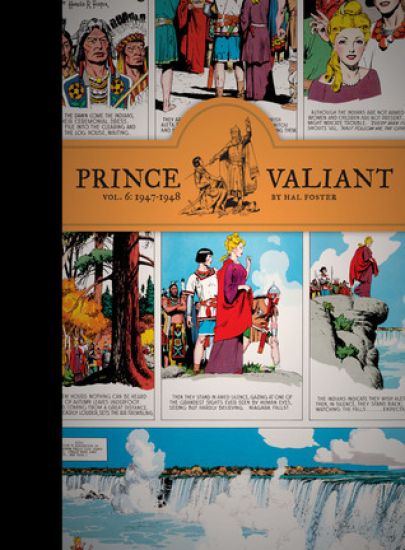
Hal Foster's masterpiece of adventure enters its second decade as Valiant and Aleta journey to "The New World" a 16-month epic that allows Foster to draw some of his spectacular native Canadian backgrounds, and during which Aleta gives birth to Arn and acquires her Indian nurse, Tillicum. Most of the rest of the book is taken up with the action-packed five-month sequence "The Mad King" during which Val, back at Camelot, confronts the evil, fat little King Tourien of Cornwall.This volume will be rounded off with an essay by Foster scholar Brian M. Kane (The Prince Valiant Companion) discussing Foster's depiction of "Indians" as it relates to other interpretations of the times, accompanied by various graphic goodies such as a previously unpublished camping cartoon by Foster from circa 1915, some of Foster's Mountie paintings, Foster's own map of Val's voyage to/from the New World, and more rare photos and art. As always, this volume is shot directly from Foster's personal collection of syndicate proofs, their glorious colors restored to create an unprecedentedly sumptuous reading experience.
Prince Valiant Vol. 7: 1949-1950

Prince Valiant Vol. 7: 1949-1950

Hal Foster

Fantagraphics
2013
sidottu
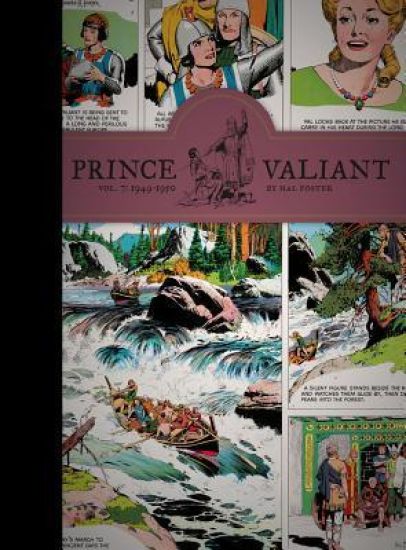
You might think that birth of Prince Valiant's son Arn at the end of the previous volume would have slowed down Val's adventuring, but you would be wrong. In Prince Valiant Vol. 7, after the baby has been christened, Valiant and Gawain are dispatched to investigate reports of black magic in Wales, ending up in pitched battle at the aptly named Castle Illwynde. Then it's off to Scotland to battle the Picts, and then home yet again for Val to visit his growing boy. Valiant now enters the 1950s: The Thule winter is hard and bleak, and a prince who has designs on Aleta must be dealt with. Then it's another epic-length story, "The Missionaries," in which Val and several of his fellow knights and crew travel to Rome on a quest for teachers who might bring Christianity to Thule. The story also features an escape through the Alps, far too many red-headed girls, and a tragic, life-changing event for the young squire Geoffrey (a.k.a. "Arf "). And Foster charmingly ends the book with "The Prince Arn Story," a three-week sequence narrated by the toddler.
Prince Valiant Vol. 9: 1953-1954

Prince Valiant Vol. 9: 1953-1954

Hal Foster

Fantagraphics
2014
sidottu
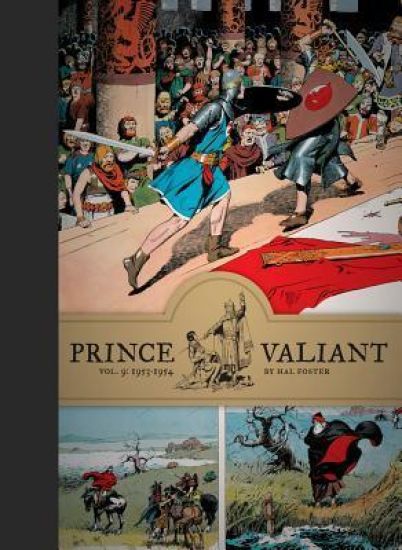
In our ninth volume of the collected illustrative Sunday comic pages, Arn tries his hand at being a warrior, Merlin is bewitched by Nimue, and Tillicum and Boltar have a son named Hatha the first interracial baby born in comics. Most of the second half of this volume follows Gawain and Val s pilgrimage to the holy city of Jerusalem, and Queen Aleta s return to the Misty Isles where treacherous nobles seek her throne and her death. Also featuring a look at Prince Valiant s 1954 escapades on both the large and small screens by Foster scholar Brian M. Kane. As with all the previous volumes in this highly acclaimed series, these pages are reproduced for the first time from Foster s personal set of color engraver s proofs, the most impeccably produced Prince Valiant series ever produced."
Prince Valiant Vol. 10: 1955-1956

Prince Valiant Vol. 10: 1955-1956

Hal Foster

Fantagraphics
2015
sidottu
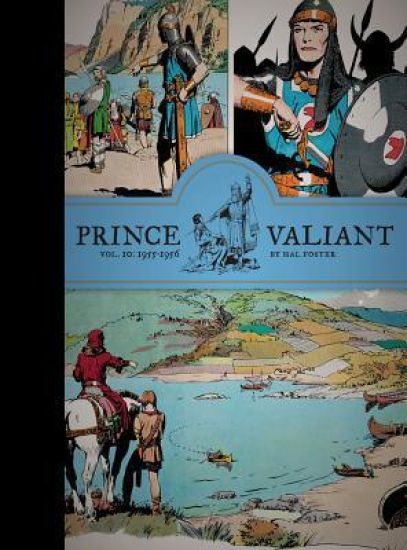
Our tenth volume finds our band of heroes making their way back to the Kingdom of Thule by way of Constantinople and Eastern Russia. Soon they are attacked by a tribe of barbarians who kidnap Aleta for the great Dragada Khan who wants to make her one of his wives. After nearly being killed in battle, Valiant returns to his homeland only to find the threat of hunger hovers over Thule. As Val explores new ways of feeding the kingdom's growing populace, raiders threaten the lives of his family and friends. The volume ends with Val's return to Camelot, a tournament of champions, and the threat of new treachery in Cornwall. This volume also includes an introduction by legendary comics artist Timothy Truman, and a special gallery containing more of Hal Foster's incredible Mountie paintings annotated by comics historian Brian M. Kane.
Prince Valiant Vol. 11: 1957-1958

Prince Valiant Vol. 11: 1957-1958

Hal Foster

Fantagraphics
2015
sidottu
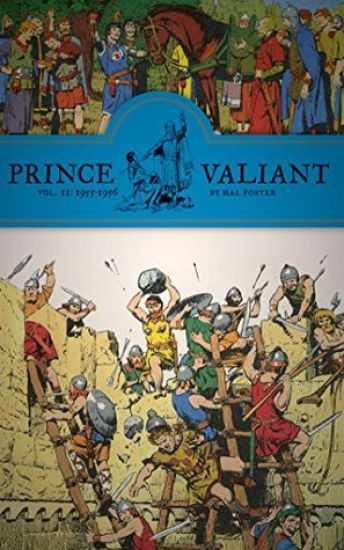
The eleventh volume of Fantagraphics award-winning Prince Valiant series concludes our heroes (TM) adventures in Cornwall, and marks the first appearance of Arvak the Red Stallion. At the Council of Kings, Prince Valiant stands alone in the decision to avoid a ruinous war. Val returns to Aleta, and the two are summoned to Camelot, where Queen Guinevere becomes jealous of Aleta (TM)s popularity. Meanwhile, Val leads a bloody campaign to secure the Eastern marches and learns the tragedies of war. As the book ends, Prince Valiant begins searching for Gawain. There may just be another adventure afoot. Bonus features include a gallery of Foster (TM)s rare and never-before-reprinted advertising art from the 1920s. Hal Foster (TM)s Prince Valiant is the most illustrious heroic saga ever written and drawn for the Sunday newspapers. In full, glorious, restored color, this is the finest reproduction of this enthralling, romantic adventure serial ever published.