Kirjojen hintavertailu. Mukana 11 342 296 kirjaa ja 12 kauppaa.

Kirjahaku

Etsi kirjoja tekijän nimen, kirjan nimen tai ISBN:n perusteella.

3 kirjaa tekijältä Halina Filipowicz

A Laboratory of Impure Forms

A Laboratory of Impure Forms

Halina Filipowicz

Praeger Publishers Inc
1991
sidottu
This is the first comprehensive examination of the works of contemporary Polish playwright Tadeusz Rozewicz. Halina Filipowicz applies a theoretical perspective to more than a dozen plays and situates the important postwar dramatist on the borders of modernism and postmodernism, arguing that in his laboratory of impure forms he reworks the conventions and dramatic ideas of the past into a theatrical language responsive to our times. Filipowicz makes use of biographical and historical information, comparative frameworks, the lessons of deconstruction, and feminist inquiry to assess the writer's passionate and complex reactions to modern civilization. Written over a thirty-year period, Rozewicz's oeuvre includes thirteen plays, nine minidramas, and four works that transgress established categories of drama. Rozewicz's plays, such as The Card Index and White Marriage, have been staged in the United States and many are available in English. This six-chapter volume, which also contains a chronology of the writer's life and work and a calendar of premieres, draws on personal interviews with Rozewicz as well as on unpublished or forgotten plays.The first chapter presents an overview of Rozewicz's innovative dramaturgy in terms of both context and method and discovers a dramatist whose only consistency is his refusal to be faithful to any one of the temporary formulae of a playwright's craft. The following five chapters group the plays thematically and offer critical approaches to interpreting and understanding them. This groundbreaking study will be relevant to students and scholars in Slavic literatures, theatre and drama, comparative drama, comparative literature, and dramatic theory and criticism.
Taking Liberties

Taking Liberties

Halina Filipowicz

Ohio University Press
2015
sidottu
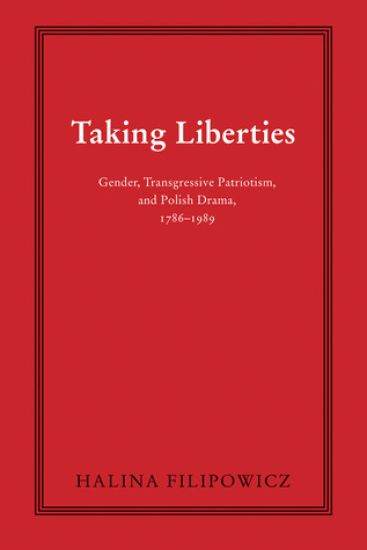
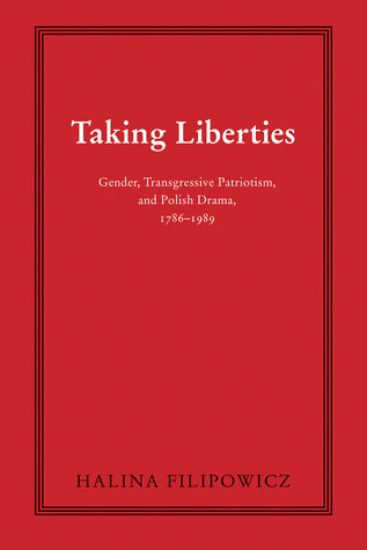
As narrow, nationalist views of patriotic allegiance have become widespread and are routinely invoked to justify everything from flag-waving triumphalism to xenophobic bigotry, the concept of a nonnationalist patriotism has vanished from public conversation. Taking Liberties is a study of what may be called patriotism without borders: a nonnational form of loyalty compatible with the universal principles and practices of democracy and human rights, respectful of ethnic and cultural diversity, and, overall, open-minded and inclusive. Moving beyond a traditional study of Polish dramatic literature, Halina Filipowicz turns to the plays themselves and to archival materials, ranging from parliamentary speeches to polemical pamphlets and verse broadsides, to explore the cultural phenomenon of transgressive patriotism and its implications for society in the twenty-first century. In addition to recovering lost or forgotten materials, the author builds an innovative conceptual and methodological framework to make sense of those materials. The result is not only a significant contribution to the debate over the meaning and practice of patriotism, but a masterful intellectual history.
Taking Liberties

Taking Liberties

Halina Filipowicz

Ohio University Press
2015
pokkari
As narrow, nationalist views of patriotic allegiance have become widespread and are routinely invoked to justify everything from flag-waving triumphalism to xenophobic bigotry, the concept of a nonnationalist patriotism has vanished from public conversation. Taking Liberties is a study of what may be called patriotism without borders: a nonnational form of loyalty compatible with the universal principles and practices of democracy and human rights, respectful of ethnic and cultural diversity, and, overall, open-minded and inclusive. Moving beyond a traditional study of Polish dramatic literature, Halina Filipowicz turns to the plays themselves and to archival materials, ranging from parliamentary speeches to polemical pamphlets and verse broadsides, to explore the cultural phenomenon of transgressive patriotism and its implications for society in the twenty-first century. In addition to recovering lost or forgotten materials, the author builds an innovative conceptual and methodological framework to make sense of those materials. The result is not only a significant contribution to the debate over the meaning and practice of patriotism, but a masterful intellectual history.