Surviving the Millennium traces the rise of the U.S.-Soviet antagonism from its roots in the U.S.-tsarist Russian relationship and critically reexamines U.S. containment strategy during the Cold War. The book then focuses on the new U.S. and Russian interrelationship with Germany, Japan, China, the European Community, and other key actors such as Iran, Turkey, India, the Koreas, and Ukraine. Despite the end of the Cold War, Gardner contends that U.S.-Russian relations are still characterized by games of encirclement and counter-encirclement; that the two powers have yet to move beyond detente and forge a full-fledged entente.
Gardner explores the global ramifications of the NATO-Russian relationship. He argues that NATO enlargement into Central Europe risks the overextension of NATO's political consensus and could provoke Russia and other states that do not expect to become full members of the alliance. He concludes by proposing an alternative system of security for the region.Gardner explores the global ramifications of the NATO-Russian relationship. He examines NATO's Partnership for Peace initiative as it relates to Russia, and he argues that NATO risks provoking Russia and other states that do not expect to become full members of the alliance. He contends that if NATO and Russia cannot reach a compromise over a new system of security in Central and Eastern Europe, then Russia could adopt an increasingly assertive Eurasian stance by more closely aligning with potentially anti-Western states such as Belarus, China, India, Iraq, and Iran. Likewise, the possibility of a renewed division of Europe cannot be ruled out.Gardner asserts that it is absolutely necessary to draw Russia into a concerted relationship with the United States and the European Union. He concludes by formulating a viable system of cooperative-collective security for all Central and Eastern European states backed by conjoint NATO, European, and Russian security guarantees. This is a thoughtful and provocative analysis of great interest to policymakers and students of international relations and contemporary defense issues.
It is increasingly important to understand the complexity of central and southeastern Europe following the enlargement of NATO into Central Europe, the ongoing problems of the Balkans, and the subsequent focus of global attention on the entire region. Gardner brings together exceptional French and Eastern European scholars who present first-hand accounts of their experience and knowledge of the region. Each provides differing political, social, cultural, and economic perspectives on Central and Southeastern Europe.The volume begins with a general discussion of the place of central and southeastern Europe in the greater scheme of European history. This is followed by an examination of the western European and Russian attitudes toward the Balkans, and the largely ignored affects of the Ottoman empire on the Balkans. The importance of culture and the crucial role it played in undermining both the theory and practice of communism is explored. The impact of the media is then examined in two chapters that look at the process of media liberalization in the context of each country's political situation and the particular problems the media faces in the region. The focus shifts to the role of finance capital and its impact in emerging privatized economies. How the global drug wars affect the Balkan region are also explored. The ecological damage to Central and eastern Europe and Russia caused by the communist system is detailed, and the volume ends with a look at the complexity of factors that led NATO to enlarge into Central Europe and intervene in Bosnia and Kosovo. This wide-ranging collection will be of particular interest to scholars and researchers involved with all facets of contemporary central and eastern European life.
The Wake-Up Blast captures over three decades of poetic protest and dissent, reflected through the lens of personal experiences and encounters throughout the world, and explores a wide range of explosive social and political themes. In interweaving the personal, the social and the political, Hall Gardner's poetry captivates readers through rallying cries against fear and violence in a counter-visionary quest to transcend the present global crisis and to achieve mutual understanding among conflicting peoples and states-through engaged dialogue and the medium of poetry.
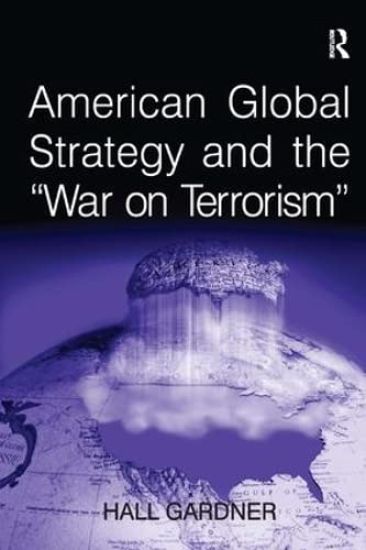
Contemporary international events, and indeed even the US presidential election, demonstrate the continuing need for debate and discourse over the direction and emphases of US foreign policy. Following the success of the original hardback publication, this revised and updated paperback re-conceptualizes the 'war on terrorism' and analyzes the nature of American domestic and international policy-making within the context of historical and structural constraints upon US policy. American Global Strategy and the 'War on Terrorism' addresses a wide range of themes that are crucial to understanding the 9/11 crisis and to formulating an affective American and global foreign and security policy to deal with that crisis. This study should be read by contemporary policy makers and scholars of foreign policy.
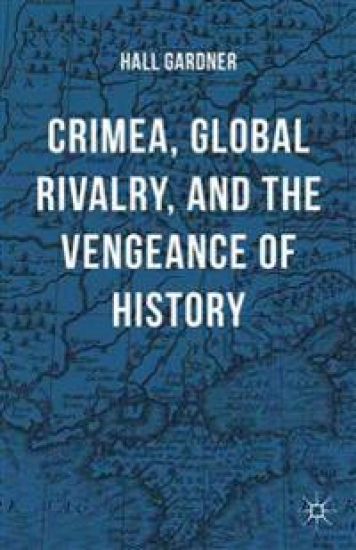
Gardner examines the causes and consequences of Russia's annexation of Crimea. By analyzing alliance formations and the consequences of other annexations in world history, the book urges an alternative US-NATO-European-Japanese strategy toward both Russia and China in the effort to prevent a renewed arms race, if not global war.
Contemporary international events, and indeed even the US presidential election, demonstrate the continuing need for debate and discourse over the direction and emphases of US foreign policy. Following the success of the original hardback publication, this revised and updated paperback re-conceptualizes the 'war on terrorism' and analyzes the nature of American domestic and international policy-making within the context of historical and structural constraints upon US policy. American Global Strategy and the 'War on Terrorism' addresses a wide range of themes that are crucial to understanding the 9/11 crisis and to formulating an affective American and global foreign and security policy to deal with that crisis. This study should be read by contemporary policy makers and scholars of foreign policy.
This title was first published in 2001. The main objective of this study is to analyze the developments in Euro-Atlantic relations in view of the changing nature of the European Union and the United States.
This title was first published in 2001. The main objective of this study is to analyze the developments in Euro-Atlantic relations in view of the changing nature of the European Union and the United States.
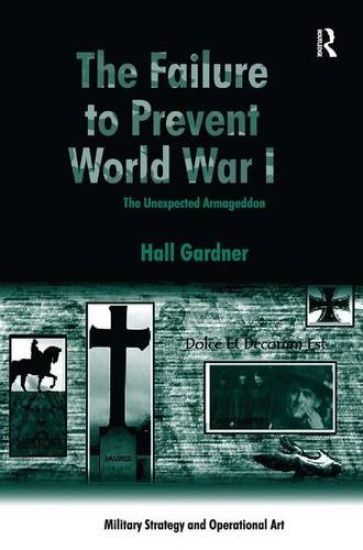
World War I represents one of the most studied, yet least understood, systemic conflicts in modern history. At the time, it was a major power war that was largely unexpected. This book refines and expands points made in the author’s earlier work on the failure to prevent World War I. It provides an alternative viewpoint to the thesis of Christopher Clark, Fritz Fischer, Paul Kennedy, among others, as to the war's long-term origins. By starting its analysis with the causes and consequences of the 1870-71 Franco-Prussian War and the German annexation of Alsace-Lorraine, the study systematically explores the key geostrategic, political-economic and socio-cultural-ideological disputes between France, Germany, Austria-Hungary, Italy, Russia, Japan, the United States and Great Britain, the nature of their foreign policy goals, alliance formations, arms rivalries, as well as the dynamics of the diplomatic process, so as to better explain the deeper roots of the 'Great War'. The book concludes with a discussion of the war's relevance and the diplomatic failure to forge a possible Anglo-German-French alliance, while pointing out how it took a second world war to realize Victor Hugo’s nineteenth-century vision of a United States of Europe-a vision now being challenged by financial crisis and Russia's annexation of Crimea.
This book critically examines elements of America-First nationalism, neo-conservatism, neo-realism, neo-liberalism, environmental theories, and social constructionism by way of developing an “alternative realist” approach to the study of the origins of major power war. The author critiques concepts of “polarity” and “sovereign” decision making and diplomacy before developing the concept of “highly uneven polycentrism.” The book then develops a unique comparative historical approach that seeks to compare and contrast the pre-World War I, pre-World War II, and Cold War eras with the contemporary post-Cold War period. It is argued that the US, as it remains the leading global hegemon, must fully engage in multilateral diplomacy with major friends and rivals alike in the establishment of differing forms of power sharing and joint sovereignty accords—in order to prevent the global system from polarizing into two contending alliances more reminiscent of both the pre-World War I and pre-WorldWar II periods than the “new Cold War.”
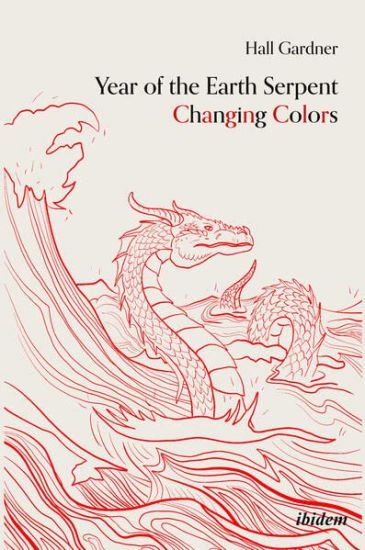
The whole Communist world is in the middle of a democratic revolution. Hall Gardner's novel depicts the protests taking place prior to the June 1989 Tiananmen Square repression--a subject still taboo in China. Hired to teach English, Mylex H. Galvin records his experience in his "Anti-Marco Polo" journal after he meets expats from around the world, while trying to come to grips with the Chinese language, history, and politics. Galvin becomes disillusioned with the poverty and environmental destruction that he finds in China; his barefoot doctor heroes are not capable of treating AIDS; Chinese and African students clash in Nanjing--with no sense of international solidarity. As the democracy movement heats up, he is torn between the love of Tao Baiqing, a Daoist, and Mo Li, a student of English Lit, and unwittingly betrays the ties between the journalist, Hayford, and the democracy activist, Chia Pao-yu--accused of leaking "top secrets" to Hayford. As Galvin studies China's relations with the Western world since Marco Polo, with emphasis on the "hundred years of humiliation," he becomes haunted by nightmares of a "clash of civilizations" and warns against a coming Apocalyptic Color War between the Balding Eagle and the Chinese Dragon--as the latter transmogrifies from Red into shades of Red-Brown-Black.
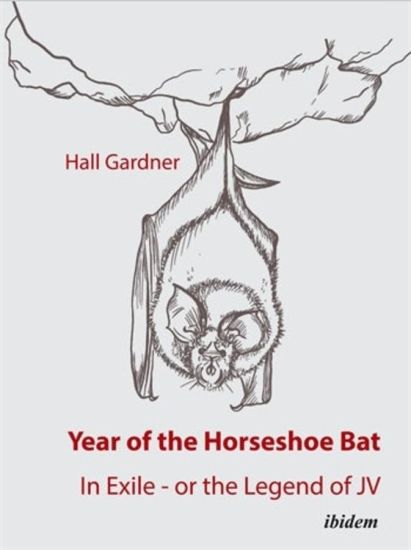
Chia Pao-yu is alive and well! The Beijing University pro-democracy activist is living in exile under an assumed name, Jean Valjaur (JV). As was rumored in the prequel, Year of the Earth Serpent Changing Colors, Chia was not executed for helping to organize the April-June 1989 Tiananmen Square protests. Now in Paris, he witnesses the Bataclan terrorist attacks, the Yellow Vest protests, and survives the COVID-19 (or Horseshoe Bat) pandemic—after having survived the AIDS pandemic in China in the 1980s. He pursues his self-study of Asian influence on Pop artists and Beat poets. He likewise critiques the views of western “Maoists,” like Mylex H. Galvin—whom Chia depicts as a “Wokeist” before his time. During the pandemic lockdown, Chia reflects on the reasons why he became a pro-democracy, pro-environment and anti-nuclear dissident. In Paris, Chia finds work with the Foundation for Human Values Forever (HVF), directed by the charismatic feminist Bereft LaPlante. He meets dissidents like himself who have suffered for their political views and gender. Now a French citizen, Chia participates in Hong Kong protests, and takes part in a conference on the “Future of China” in Washington, D.C. There, he witnesses President Trump’s threat to call in U.S. "G.I. Joes" to repress protests in June 2020—a threat that recalls the June 1989 Tiananmen Square repression by the People’s Liberation Army. Back in Paris, he accidentally learns that the HVF Foundation finances questionable activities not related to humanitarian causes—and quits after a drunken LaPlante, accused of anti-Semitism, attempts to seduce him. He then starts to work for the secretive Society for the Exploration of Cosmic Consciousness (SECC) that publishes a version of his “Planetary Manifesto” that is redacted by Artificial Intelligence. His warning now appears lost in the babble of Social Media: If the U.S. Balding Eagle, the Chinese Red Dragon, and the Russian Double-Headed Eagle cannot soon resolve their differences, then the popular hopes of “Barbies” and “Kens” for global peace will soon be crushed by the boots of "G.I. Joe" and rival militias. Chia soon disappears in a suspected trade-off for a Western spy held by Beijing—at least that is how the Global News Media carries the story.