Kirjojen hintavertailu. Mukana 11 244 527 kirjaa ja 12 kauppaa.

Kirjahaku

Etsi kirjoja tekijän nimen, kirjan nimen tai ISBN:n perusteella.

48 kirjaa tekijältä Hamid Dabashi

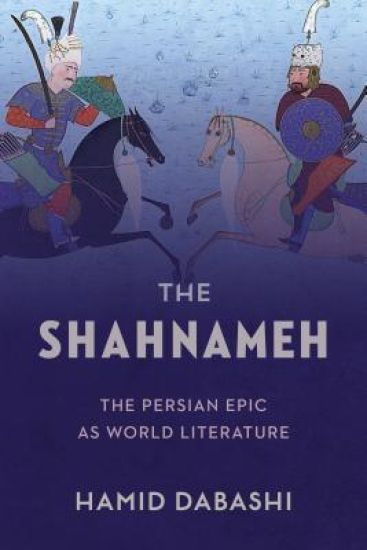
The Shahnameh

The Shahnameh

Hamid Dabashi

Columbia University Press
2019
sidottu
The Shahnameh, an epic poem recounting the foundation of Iran across mythical, heroic, and historical ages, is the beating heart of Persian literature and culture. Composed by Abu al-Qasem Ferdowsi over a thirty-year period and completed in the year 1010, the epic has entertained generations of readers and profoundly shaped Persian culture, society, and politics. For a millennium, Iranian and Persian-speaking people around the globe have read, memorized, discussed, performed, adapted, and loved the poem.In this book, Hamid Dabashi brings the Shahnameh to renewed global attention, encapsulating a lifetime of learning and teaching the Persian epic for a new generation of readers. Dabashi insightfully traces the epic’s history, authorship, poetic significance, complicated legacy of political uses and abuses, and enduring significance in colonial and postcolonial contexts. In addition to explaining and celebrating what makes the Shahnameh such a distinctive literary work, he also considers the poem in the context of other epics, such as the Aeneid and the Odyssey, and critical debates about the concept of world literature. Arguing that Ferdowsi’s epic and its reception broached this idea long before nineteenth-century Western literary criticism, Dabashi makes a powerful case that we need to rethink the very notion of “world literature” in light of his reading of the Persian epic.
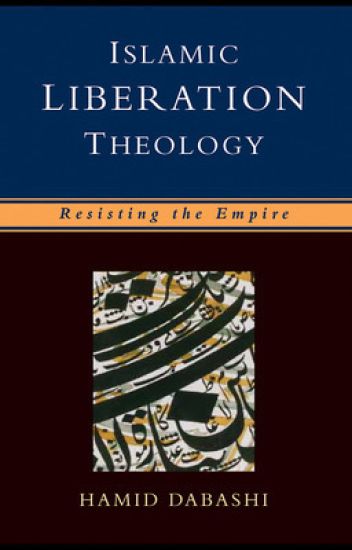
Islamic Liberation Theology

Islamic Liberation Theology

Hamid Dabashi

Routledge
2008
sidottu
This book is a radical piece of counter-intuitive rethinking of the clash of civilizations theory and global politics. In this richly detailed criticism of contemporary politics, Hamid Dabashi argues that after 9/11 we have not seen a new phase in a long running confrontation between Islam and the West, but that such categories have in fact collapsed and exhausted themselves. The West is no longer a unified actor and Islam is ideologically depleted in its confrontation with colonialism. Rather we are seeing the emergence of the US as a lone superpower, and a confrontation between a form of imperial globalized capital and the rising need for a new Islamic theodicy. The combination of political salience and theoretical force makes Islamic Liberation Theology a cornerstone of a whole new generation of thinking about political Islamism and a compelling read for anyone interested in contemporary Islam, current affairs and US foreign policy. Dabashi drives his well-supported and thoroughly documented points steadily forward in an earnest and highly readable style.
Islamic Liberation Theology

Islamic Liberation Theology

Hamid Dabashi

Routledge
2008
nidottu
This book is a radical piece of counter-intuitive rethinking of the clash of civilizations theory and global politics. In this richly detailed criticism of contemporary politics, Hamid Dabashi argues that after 9/11 we have not seen a new phase in a long running confrontation between Islam and the West, but that such categories have in fact collapsed and exhausted themselves. The West is no longer a unified actor and Islam is ideologically depleted in its confrontation with colonialism. Rather we are seeing the emergence of the US as a lone superpower, and a confrontation between a form of imperial globalized capital and the rising need for a new Islamic theodicy. The combination of political salience and theoretical force makes Islamic Liberation Theology a cornerstone of a whole new generation of thinking about political Islamism and a compelling read for anyone interested in contemporary Islam, current affairs and US foreign policy. Dabashi drives his well-supported and thoroughly documented points steadily forward in an earnest and highly readable style.
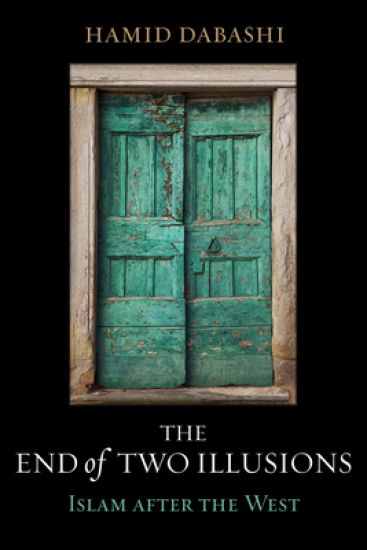
The End of Two Illusions

The End of Two Illusions

Hamid Dabashi

University of California Press
2022
sidottu
Dismantling the myths that divide Islam and the West, this cutting-edge work of critical thinking proposes new ways to reread Islamic and world histories. Extending from the front-page news coverage of our daily lives back into the deepest and most revelatory histories of the last two hundred years and earlier, Hamid Dabashi's The End of Two Illusions is a daring, provocative, and groundbreaking work that dismantles the most dangerous delusions manufactured between two vastly fetishized abstractions: "Islam" and "the West." With this book, Dabashi shows how the civilizational divides imagined between these two cosmic binaries have defined their entanglement—in ways that have nothing to do with the lived experiences of either Muslims or the diverse and changing communities scarcely held together by the myth of "the West." Through detailed historical and contemporary analysis, The End of Two Illusions untangles the motivations that produced this global fiction. Dabashi demonstrates how "the West" was an ideological commodity and civilizational mantra invented during the European Enlightenment, serving as an epicenter for the rise of globalized capitalist modernity. In turn, Orientalist ideologues went around the world manufacturing equally illusory abstractions in the form of inferior civilizations in India, China, Africa, Latin America, and the Islamic world. The result was the projection of "Islam and the West" as the prototype of a civilizational hostility that has given false explanations and flawed prognoses of our contemporary history, with weaponized Islamophobia on one side and militant Islamism on the other as its most palpable manifestations. Dabashi argues it is long past time to dismantle this dangerous liaison, expose and overcome its perilous delusions, and reimagine the world beyond its shimmering mirage. The End of Two Illusions is the most iconoclastic work of critical thought and scholarship to emerge in recent memory, clearing the way toward a far more liberating imaginative geography of the world we share.
Where Is Abbas Kiarostami?

Where Is Abbas Kiarostami?

Hamid Dabashi

University of California Press
2025
sidottu
When Abbas Kiarostami suddenly passed away in July 2016, he was already an iconic figure in world cinema—and his reputation as a master filmmaker has only grown since. In this book, celebrated scholar Hamid Dabashi offers a new way of looking at Kiarostami's artworld, one that questions the very idea of film philosophy. Dabashi's authoritative account of the philosophical resonances of Kiarostami's oeuvre offers an iconoclastic critique of the field's Eurocentrism and, in vivid prose, makes the case for a new method of appreciating the work of this essential figure. The result is a provocative perspective on the totality of Kiarostami's legacy that, with deep roots in Iranian aesthetic and Persian poetic and philosophical traditions, overcomes film's provincial preoccupation with its Western heritage and charts a new path forward for film-philosophy.
Where Is Abbas Kiarostami?

Where Is Abbas Kiarostami?

Hamid Dabashi

University of California Press
2025
pokkari
When Abbas Kiarostami suddenly passed away in July 2016, he was already an iconic figure in world cinema—and his reputation as a master filmmaker has only grown since. In this book, celebrated scholar Hamid Dabashi offers a new way of looking at Kiarostami's artworld, one that questions the very idea of film philosophy. Dabashi's authoritative account of the philosophical resonances of Kiarostami's oeuvre offers an iconoclastic critique of the field's Eurocentrism and, in vivid prose, makes the case for a new method of appreciating the work of this essential figure. The result is a provocative perspective on the totality of Kiarostami's legacy that, with deep roots in Iranian aesthetic and Persian poetic and philosophical traditions, overcomes film's provincial preoccupation with its Western heritage and charts a new path forward for film-philosophy.
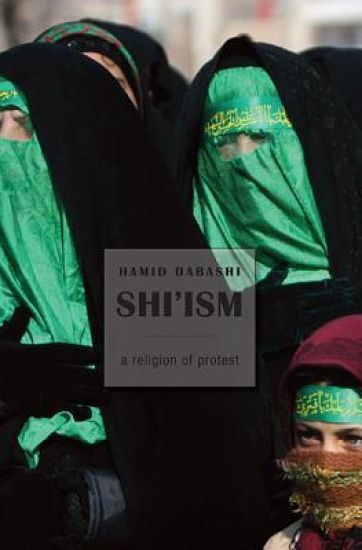
Shi'ism

Shi'ism

Hamid Dabashi

The Belknap Press
2012
nidottu
For a Western world anxious to understand Islam and, in particular, Shi’ism, this book arrives with urgently needed information and critical analysis. Hamid Dabashi exposes the soul of Shi’ism as a religion of protest—successful only when in a warring position, and losing its legitimacy when in power.Dabashi makes his case through a detailed discussion of the Shi’i doctrinal foundations, a panoramic view of its historical unfolding, a varied investigation into its visual and performing arts, and finally a focus on the three major sites of its contemporary contestations: Iran, Iraq, and Lebanon. In these states, Shi’ism seems to have ceased to be a sect within the larger context of Islam and has instead emerged to claim global political attention. Here we see Shi’ism in its combative mode—reminiscent of its traumatic birth in early Islamic history. Hezbollah in Lebanon claims Shi’ism, as do the militant insurgents in Iraq, the ruling Ayatollahs in Iran, and the masses of youthful demonstrators rebelling against their reign. All declare their active loyalties to a religion of protest that has defined them and their ancestry for almost fourteen hundred years.Shi’sm: A Religion of Protest attends to the explosive conflicts in the Middle East with an abiding attention to historical facts, cultural forces, religious convictions, literary and artistic nuances, and metaphysical details. This timely book offers readers a bravely intelligent history of a world religion.
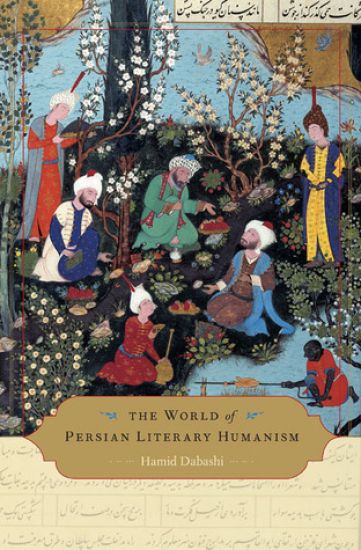
The World of Persian Literary Humanism

The World of Persian Literary Humanism

Hamid Dabashi

Harvard University Press
2012
sidottu
What does it mean to be human? Humanism has mostly considered this question from a Western perspective. Through a detailed examination of a vast literary tradition, Hamid Dabashi asks that question anew, from a non-European point of view. The answers are fresh, provocative, and deeply transformative. This groundbreaking study of Persian humanism presents the unfolding of a tradition as the creative and subversive subconscious of Islamic civilization.Exploring how 1,400 years of Persian literature have taken up the question of what it means to be human, Dabashi proposes that the literary subconscious of a civilization may also be the undoing of its repressive measures. This could account for the masculinist hostility of the early Arab conquest that accused Persian culture of effeminate delicacy and sexual misconduct, and later of scientific and philosophical inaccuracy. As the designated feminine subconscious of a decidedly masculinist civilization, Persian literary humanism speaks from a hidden and defiant vantage point-and this is what inclines it toward creative subversion.Arising neither despite nor because of Islam, Persian literary humanism was the artistic manifestation of a cosmopolitan urbanism that emerged in the aftermath of the seventh-century Muslim conquest. Removed from the language of scripture and scholasticism, Persian literary humanism occupies a distinct universe of moral obligations in which "a judicious lie," as the thirteenth-century poet Sheykh Mosleh al-Din Sa'di writes, "is better than a seditious truth."
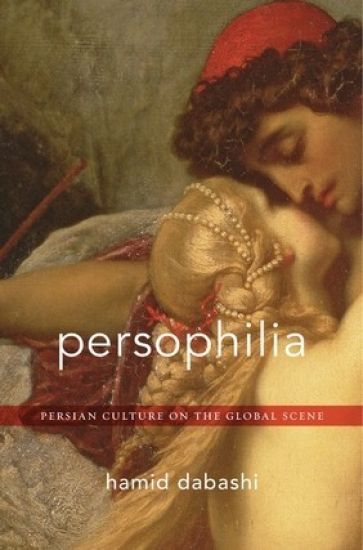
Persophilia

Persophilia

Hamid Dabashi

Harvard University Press
2015
sidottu
From the Biblical period and Classical Antiquity to the rise of the Renaissance and the Enlightenment, aspects of Persian culture have been integral to European history. A diverse constellation of European artists, poets, and thinkers have looked to Persia for inspiration, finding there a rich cultural counterpoint and frame of reference. Interest in all things Persian was no passing fancy but an enduring fascination that has shaped not just Western views but the self-image of Iranians up to the present day. Persophilia maps the changing geography of connections between Persia and the West over the centuries and shows that traffic in ideas about Persia and Persians did not travel on a one-way street.How did Iranians respond when they saw themselves reflected in Western mirrors? Expanding on Jürgen Habermas’s theory of the public sphere, and overcoming the limits of Edward Said, Hamid Dabashi answers this critical question by tracing the formation of a civic discursive space in Iran, seeing it as a prime example of a modern nation-state emerging from an ancient civilization in the context of European colonialism. The modern Iranian public sphere, Dabashi argues, cannot be understood apart from this dynamic interaction.Persophilia takes into its purview works as varied as Xenophon’s Cyropaedia and Nietzsche’s Thus Spoke Zarathustra, Handel’s Xerxes and Puccini’s Turandot, and Gauguin and Matisse’s fascination with Persian art. The result is a provocative reading of world history that dismantles normative historiography and alters our understanding of postcolonial nations.
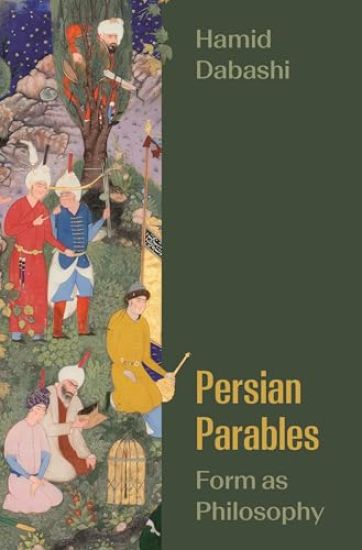
Persian Parables

Persian Parables

Hamid Dabashi

PRINCETON UNIVERSITY PRESS
2026
sidottu
A major reassessment of the parable in Persian literature and its contribution to philosophical and creative thinking In this book, Hamid Dabashi offers a radical reconsideration of the parable in Persian literature, arguing that parabolic thinking is a mode of philosophical reflection. Dabashi eschews the conventional focus on the supposed moral or political allusions in these parables—the “moral of the story”—to allow the radical surfaces of their poetic disposition to reveal themselves. He turns his attention instead to what Kafka called “the fabulous yonder” as the defining moment of the parable. Focusing on a sustained course of Persian parables through the ages, Dabashi shows that the genre is not limited to masterpieces by such iconic poets as Sa’di, Rumi, Attar, and Sana’i. In fact, he argues, parabolic thinking has a much wider domain in Persian literature and philosophy and plays a distinct role within Persian and Islamic traditions. The cumulative result of these parables spread across Persian prose and poetry is an Alam al-Mithal, a parabolic world—a world of parables, similitudes, and verisimilitudes. Dabashi points to the moment in these works when life is absorbed into the formal fabric of the stories, erasing the borderline between fact and fantasy, history and story, the living and the dead, the real and the unreal—and life itself, as we live it, becomes a strange and captivating parable. With this circular self-referentiality, parables enable a way of thinking as a philosophical form.
Persian Parables

Persian Parables

Hamid Dabashi

PRINCETON UNIVERSITY PRESS
2026
pokkari
A major reassessment of the parable in Persian literature and its contribution to philosophical and creative thinking In this book, Hamid Dabashi offers a radical reconsideration of the parable in Persian literature, arguing that parabolic thinking is a mode of philosophical reflection. Dabashi eschews the conventional focus on the supposed moral or political allusions in these parables—the “moral of the story”—to allow the radical surfaces of their poetic disposition to reveal themselves. He turns his attention instead to what Kafka called “the fabulous yonder” as the defining moment of the parable. Focusing on a sustained course of Persian parables through the ages, Dabashi shows that the genre is not limited to masterpieces by such iconic poets as Sa’di, Rumi, Attar, and Sana’i. In fact, he argues, parabolic thinking has a much wider domain in Persian literature and philosophy and plays a distinct role within Persian and Islamic traditions. The cumulative result of these parables spread across Persian prose and poetry is an Alam al-Mithal, a parabolic world—a world of parables, similitudes, and verisimilitudes. Dabashi points to the moment in these works when life is absorbed into the formal fabric of the stories, erasing the borderline between fact and fantasy, history and story, the living and the dead, the real and the unreal—and life itself, as we live it, becomes a strange and captivating parable. With this circular self-referentiality, parables enable a way of thinking as a philosophical form.
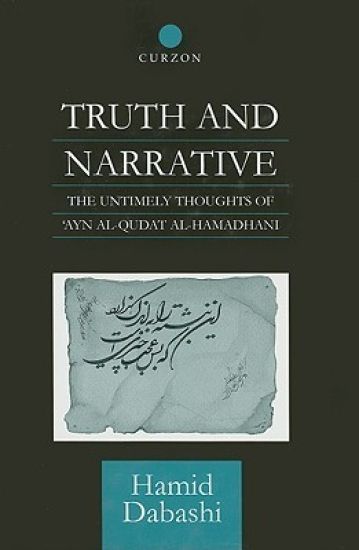
Truth and Narrative

Truth and Narrative

Hamid Dabashi

RoutledgeCurzon
1999
sidottu
'Ayn al-Qudat is one of the great multi-dimensional geniuses of Islamic intellectual history and has even been described as the true father of deconstructionism, yet he remains little known and even less understood in the English speaking world. Hamid Dabashi has filled this gap with a compelling and sophisticated analysis of this seminal 12th century writer and thinker. Prof. Dabashi frees 'Ayn al-Qudat from the static categorizations of mystic, philosopher, theologian, poet or social critic and allows the dynamism and subversive thrust of his life and intellect to emerge. Untimely thoughts provides a clearly written critical introduction to the intellectual, literary, religious and philosophical struggles of the time as expressed by one of Islam's greatest and most radical writers.
Brown Skin, White Masks

Brown Skin, White Masks

Hamid Dabashi

Pluto Press
2011
pokkari
This book is a a critical examination of the role that immigrant intellectuals play in facilitating the global domination of American imperialism. In his pioneering book about the relationship between race and colonialism, Black Skin, White Masks, Frantz Fanon explored the traumatic consequences of the sense of inferiority that colonised people felt. Brown Skin, White Masks picks up where Fanon left off, and extends Fanon's insights as they apply to today's world. Dabashi shows how intellectuals who migrate to the West are often used by the imperial powers to misrepresent their home countries. Just as many Iraqi exiles were used to justify the invasion of Iraq, Dabashi demonstrates that this is a common phenomenon, and examines why and how so many immigrant intellectuals help to sustain imperialism.
Brown Skin, White Masks

Brown Skin, White Masks

Hamid Dabashi

Pluto Press
2011
sidottu
This book is a a critical examination of the role that immigrant intellectuals play in facilitating the global domination of American imperialism. In his pioneering book about the relationship between race and colonialism, Black Skin, White Masks, Frantz Fanon explored the traumatic consequences of the sense of inferiority that colonised people felt. Brown Skin, White Masks picks up where Fanon left off, and extends Fanon's insights as they apply to today's world. Dabashi shows how intellectuals who migrate to the West are often used by the imperial powers to misrepresent their home countries. Just as many Iraqi exiles were used to justify the invasion of Iraq, Dabashi demonstrates that this is a common phenomenon, and examines why and how so many immigrant intellectuals help to sustain imperialism.
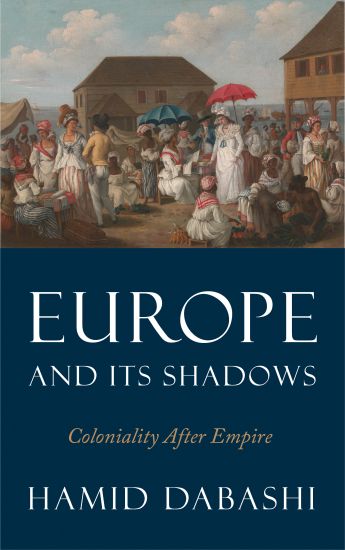
Europe and Its Shadows

Europe and Its Shadows

Hamid Dabashi

Pluto Press
2019
pokkari
Europe has long imagined itself as the centre of the universe, although its precise geographical, cultural and social terrains have always been amorphous. Exploring the fear and fascination associated with the continent as an allegory, Hamid Dabashi considers Europe to be a historically formed barricade against the world. Frantz Fanon’s assessment that 'Europe is literally the creation of the Third World' is still true today; but in more than one sense for the colonial has always been embedded in the capital, and the capital within the colonial. As the condition of coloniality shifts, so have the dividing lines between coloniser and colonised, and this shift calls for a reappraisal of our understanding of nationalism, xenophobia and sectarianism as the dangerous indices of the emerging worlds. As the far-right populists captivate minds across Europe and Brexit upsets the balance of power in the European Union, this book, from a major scholar of postcolonial thought, is a timely and transformative intervention.
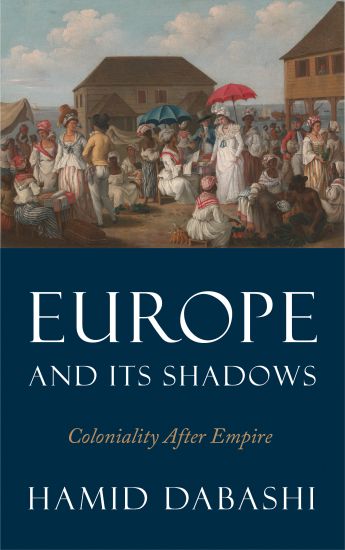
Europe and Its Shadows

Europe and Its Shadows

Hamid Dabashi

Pluto Press
2019
sidottu
Europe has long imagined itself as the centre of the universe, although its precise geographical, cultural and social terrains have always been amorphous. Exploring the fear and fascination associated with the continent as an allegory, Hamid Dabashi considers Europe to be a historically formed barricade against the world. Frantz Fanon’s assessment that 'Europe is literally the creation of the Third World' is still true today; but in more than one sense for the colonial has always been embedded in the capital, and the capital within the colonial. As the condition of coloniality shifts, so have the dividing lines between coloniser and colonised, and this shift calls for a reappraisal of our understanding of nationalism, xenophobia and sectarianism as the dangerous indices of the emerging worlds. As the far-right populists captivate minds across Europe and Brexit upsets the balance of power in the European Union, this book, from a major scholar of postcolonial thought, is a timely and transformative intervention.
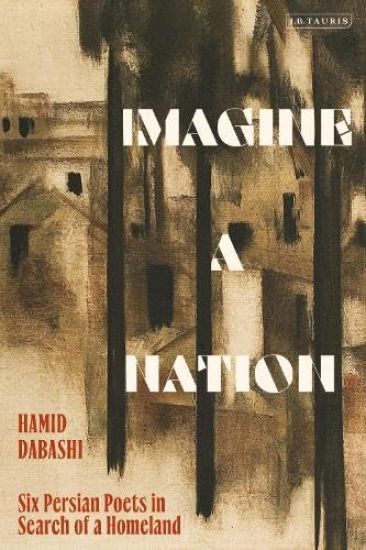
Imagine a Nation

Imagine a Nation

Hamid Dabashi

BLOOMSBURY PUBLISHING PLC
2025
nidottu
From Ferdowsi to Rumi and Hafiz, poetry has played a central role in the historical Iranian cultural imagination. How have contemporary poets contributed to this imagining of a nation, in the context of the twentieth century and its momentous events? In this book, Hamid Dabashi interrogates the oeuvre of six major poets: Nima Yushij (1895-1960), Mehdi Akhavan-e Sales (1929-1990), Ahmad Shamlou (1925-2000) Forough Farrokhzad (1934-1967), Sohrab Sepehri (1928-1980) and finally Esmail Khoi (1938-2021). Reading their works in the context of Iranian political history, from the Constitutional Revolution to the Iranian Revolution and beyond, he interprets their poetry as exercises in imagining an Iran that was still emerging and being contested. Providing an original theoretical and critical interpretation of modern Iran’s most well-known poets, based on his own translations from the Persian originals, this book will be essential reading for students and scholars of Persian literature and Iranian studies.
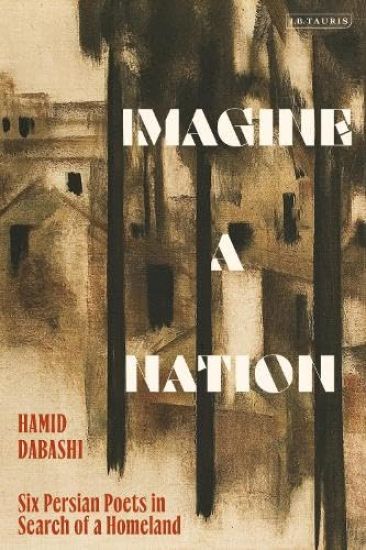
Imagine a Nation

Imagine a Nation

Hamid Dabashi

BLOOMSBURY PUBLISHING PLC
2025
sidottu
From Ferdowsi to Rumi and Hafiz, poetry has played a central role in the historical Iranian cultural imagination. How have contemporary poets contributed to this imagining of a nation, in the context of the twentieth century and its momentous events? In this book, Hamid Dabashi interrogates the oeuvre of six major poets: Nima Yushij (1895-1960), Mehdi Akhavan-e Sales (1929-1990), Ahmad Shamlou (1925-2000) Forough Farrokhzad (1934-1967), Sohrab Sepehri (1928-1980) and finally Esmail Khoi (1938-2021). Reading their works in the context of Iranian political history, from the Constitutional Revolution to the Iranian Revolution and beyond, he interprets their poetry as exercises in imagining an Iran that was still emerging and being contested. Providing an original theoretical and critical interpretation of modern Iran’s most well-known poets, based on his own translations from the Persian originals, this book will be essential reading for students and scholars of Persian literature and Iranian studies.
Authority in Islam

Authority in Islam

Hamid Dabashi

Transaction Publishers
1989
sidottu
From the origins of Muhammad's prophetic movement through the development of Islam's principal branches to the establishment of the Umayyad dynasty, the concept of authority has been central to Islamic civilization. By examining the nature, organization, and transformation of authority over time, Dabashi conveys both continuities and disruptions inherent in the development of a new political culture. It is this process, he argues, that accounts for the fundamental patterns of authority in Islam that ultimately shaped, in dialectical interaction with external historical factors, the course of Islamic civilization.The book begins by examining the principal characteristics of authority in pre-Islamic Arab society. Dabashi describes the imposition of the Muhammadan charismatic movement on pre-Islamic Arab culture, tracing the changes it introduced in the fabric of pre-Islamic Arabia. He examines the continuities and changes that followed, focusing on the concept of authority, and the formation of the Sunnite, Shiite, and Karajite branches of Islam as political expressions of deep cultural cleavages. For Dabashi, the formation of these branches was the inevitable outcome of the clash between pre-Islamic patterns of authority and those of the Muhammadan charismatic movement. In turn, they molded both the unity and the diversity of the emerging Islamic culture. Authority in Islam explains how this came to be.Dabashi employs Weber's concept of charismatic authority in describing Muhammad and his mode of authority as both a model and a point of departure. His purpose is not to offer critical verification or opposition to interpretation of historical events, but to suggest a new approach to the existing literature. The book is an important contribution to political sociology as well as the study of Islamic culture and civilization. Sociologists, political scientists, and Middle Eastern specialists will find this analysis of particular value.
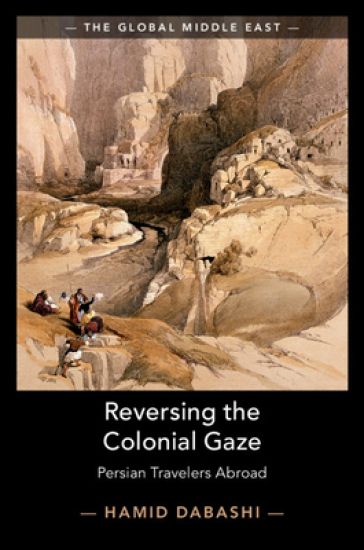
Reversing the Colonial Gaze

Reversing the Colonial Gaze

Hamid Dabashi

Cambridge University Press
2020
sidottu
Exploring the furthest reaches of the globe, Persian travelers from Iran and India travelled across Russian and Ottoman territories, to Asia, Africa, North and South America, Europe and beyond. Remapping the world through their travelogues, Reversing the Colonial Gaze offers a comprehensive and transformative analysis of the journeys of over a dozen of these nineteenth-century Persian travelers. By moving beyond the dominant Eurocentric perspectives on travel narratives, Hamid Dabashi works to reverse the colonial gaze which has thus far been cast upon these rich body of travelogues. His lyrical and engaging re-evaluation of these journeys, complimented by close-readings of seminal travelogues, challenges the systematic neglect of these narratives in scholarly literature. Opening up the entirety of these overlooked or abused travelogues, Dabashi reveals not a mere repetition of cliché accounts of Iranian or Muslim encounters with the West, but a path-breaking introduction to a constellation of revelatory travel narratives that re-imagine and reclaim the world beyond colonial borders.