Kirjojen hintavertailu. Mukana 11 699 587 kirjaa ja 12 kauppaa.

Kirjahaku

Etsi kirjoja tekijän nimen, kirjan nimen tai ISBN:n perusteella.

4 kirjaa tekijältä Hanna Diamond

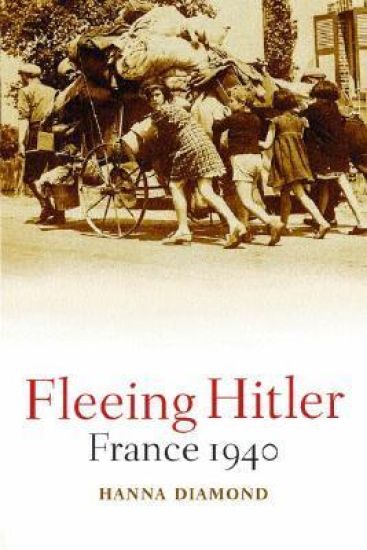
Fleeing Hitler

Fleeing Hitler

Hanna Diamond

Oxford University Press
2007
sidottu
Wednesday 12th June 1940. The Times reported 'thousands upon thousands of Parisians leaving the capital by every possible means, preferring to abandon home and property rather than risk even temporary Nazi domination'. As Hitler's victorious armies approached Paris, the French government abandoned the city and its people, leaving behind them an atmosphere of panic. Roads heading south filled with ordinary people fleeing for their lives with whatever personal possessions they could carry, often with no particular destination in mind. During the long, hard journey, this mass exodus of predominantly women, children, and the elderly, would face constant bombings, machine gun attacks, and even starvation. Using eyewitness accounts, memoirs, and diaries, Hanna Diamond shows how the disruption this exodus brought to the lives of civilians and soldiers alike made it a defining experience of the war for the French people. As traumatized populations returned home, preoccupied by the desire for safety and bewildered by the unexpected turn of events, they put their faith in Marshall Pétain who was able to establish his collaborative Vichy regime largely unopposed, while the Germans consolidated their occupation. Watching events unfold on the other side of the channel, British ministers looked on with increasing horror, terrified that Britain could be next.
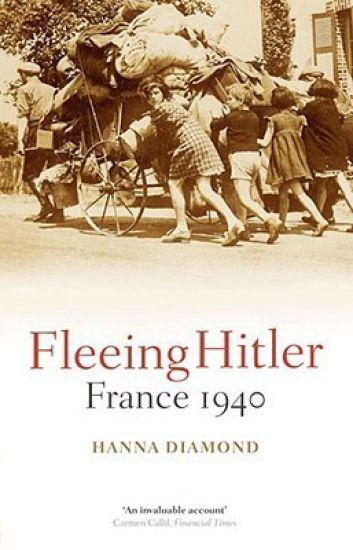
Fleeing Hitler

Fleeing Hitler

Hanna Diamond

Oxford University Press
2008
nidottu
Wednesday 12th June 1940. The Times reported 'thousands upon thousands of Parisians leaving the capital by every possible means, preferring to abandon home and property rather than risk even temporary Nazi domination'. As Hitler's victorious armies approached Paris, the French government abandoned the city and its people, leaving behind them an atmosphere of panic. Roads heading south filled with ordinary people fleeing for their lives with whatever personal possessions they could carry, often with no particular destination in mind. During the long, hard journey, this mass exodus of predominantly women, children, and the elderly, would face constant bombings, machine gun attacks, and even starvation. Using eyewitness accounts, memoirs, and diaries, Hanna Diamond shows how the disruption this exodus brought to the lives of civilians and soldiers alike made it a defining experience of the war for the French people. As traumatized populations returned home, preoccupied by the desire for safety and bewildered by the unexpected turn of events, they put their faith in Marshall Pétain who was able to establish his collaborative Vichy regime largely unopposed, while the Germans consolidated their occupation. Watching events unfold on the other side of the channel, British ministers looked on with increasing horror, terrified that Britain could be next.

Josephine Baker's Secret War

Josephine Baker's Secret War

Hanna Diamond

YALE UNIVERSITY PRESS
2025
sidottu
The full story of Josephine Baker’s wartime and intelligence work in France and North Africa Before the Second World War, Josephine Baker (1906–1975) was one of the most famous performers in the world. She made her name dancing on the Parisian stage, but when war broke out she decided not to return to America. Instead, Baker turned spy for the French Secret Services. In this engaging, deeply researched study, Hanna Diamond tells the full story of Baker’s actions for the French and Allied powers in World War Two. Drawing on previously unseen material, Diamond reveals the vital role Baker played throughout the war, from counterintelligence work for the Allied landings in North Africa to serving in the French Air Force in 1944–45. A woman of colour operating in a white male environment, Baker exploited her celebrity to enable her war work across France, Spain, Portugal, North Africa, and the Middle East. This groundbreaking account is the first to reveal the full significance of Baker’s wartime contribution.
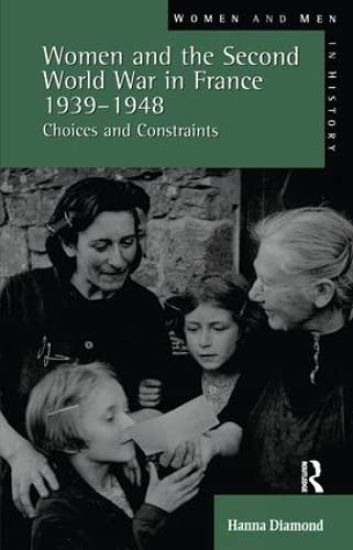
Women and the Second World War in France, 1939-1948
This is the first book (in either English or French) to offer readers an overview of women's experience of the Second World War and its immediate aftermath in France. It examines objectively the part that women played in both collaboration and resistance, synthesising much recent scholarship on the subject in French and English, and drawing on the author's own extensive research (including oral testimony) in Toulouse, Paris, and West Brittany. The findings are complex, and the immensely varied testimony challenges easy generalisation. This will be relevant for courses on French studies, French and European history and Women's studies.