Kirjojen hintavertailu. Mukana 11 342 296 kirjaa ja 12 kauppaa.

Kirjahaku

Etsi kirjoja tekijän nimen, kirjan nimen tai ISBN:n perusteella.

7 kirjaa tekijältä Hannah Lavery

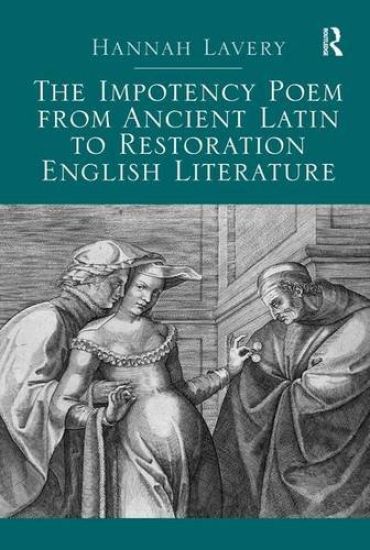
The Impotency Poem from Ancient Latin to Restoration English Literature
The first book length study of the motif of impotency in poetry from early antiquity through to the late Restoration, this book explores the impotency poem as a recognisable form of poetry in the longer tradition of erotic elegy. Hannah Lavery’s central claim is that the impotency motif is adopted by poets in recognition of its potential to signify satirically through its use as symbol and allegory. By drawing together analysis of works in the tradition, Lavery shows how the impotency motif is used to engage with anxieties as to what it means to enact ’service’ within political and social contexts. She demonstrates that impotency poems can be seen on one level to represent bawdy escapism, but on the other to offer positions of resistance and opposition to social and political concerns contemporary to a particular time. Whilst the link between the 'Imperfect Enjoyment' poems by Ovid and Rochester is well known, Lavery here looks further back to the origins of the concept of male impotency as degradation in the works of earlier Roman poets. This is an important context for considering how the impotency poem then first appears in the French and English vernaculars during the sixteenth century, leading to translations and adaptations throughout the seventeenth century. Lavery's close readings of the poems consider both the nature of the literary form, and the political and social contexts within which the works appear, in order to chart the intertextual development of the impotency poem as a distinct form of writing in the early modern period.
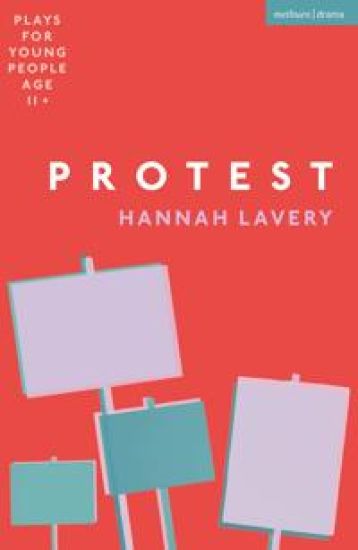
Protest

Protest

Hannah Lavery

BLOOMSBURY PUBLISHING PLC
2023
nidottu
Hope is a superpower.Running is Alice’s happy place – you might even say it’s in her DNA. She’s the best runner at her school but is struggling to prove her worth. Jade is slowly coming to realise that prejudices can be found everywhere, even in the most surprising places. Realising that her education is ill-equipped to encompass her own history and heritage, and taunted by bullies at school, she knows it’s time to tell her own story. Meanwhile, litter is piling up in the local forest, and all over the world an environmental crisis is looming. Chloe is determined to make a change, starting with the town.Three girls prepare to stand up for what they believe in despite the injustices stacked against them in this new play exploring what it takes to make a difference, the power of friendship, and the importance of believing in your own voice.Co-commissioned by Fuel, Imaginate and Northern Stage. Developed and supported by the Scottish Government’s Festivals Expo Fund and Imaginate’s Accelerator programme. Protest is published in Methuen Drama's Plays for Young People series which offers suitable plays for young performers and audiences at schools, youth groups, and youth theatres.
The Impotency Poem from Ancient Latin to Restoration English Literature
The first book length study of the motif of impotency in poetry from early antiquity through to the late Restoration, this book explores the impotency poem as a recognisable form of poetry in the longer tradition of erotic elegy. Hannah Lavery’s central claim is that the impotency motif is adopted by poets in recognition of its potential to signify satirically through its use as symbol and allegory. By drawing together analysis of works in the tradition, Lavery shows how the impotency motif is used to engage with anxieties as to what it means to enact ’service’ within political and social contexts. She demonstrates that impotency poems can be seen on one level to represent bawdy escapism, but on the other to offer positions of resistance and opposition to social and political concerns contemporary to a particular time. Whilst the link between the 'Imperfect Enjoyment' poems by Ovid and Rochester is well known, Lavery here looks further back to the origins of the concept of male impotency as degradation in the works of earlier Roman poets. This is an important context for considering how the impotency poem then first appears in the French and English vernaculars during the sixteenth century, leading to translations and adaptations throughout the seventeenth century. Lavery's close readings of the poems consider both the nature of the literary form, and the political and social contexts within which the works appear, in order to chart the intertextual development of the impotency poem as a distinct form of writing in the early modern period.
Blood Salt Spring

Blood Salt Spring

Hannah Lavery

BIRLINN GENERAL
2022
pokkari
From Hannah Lavery, Edinburgh’s Makar. 'Speaks to and for the conflicted conscience of Scotland ... with a power and authenticity like perhaps no other' – The Scotsman In a moment that is demanding you to constantly choose your side, how do you find your humanity, your own voice, when you are being pushed to find safety in numbers? Blood Salt Spring is a meditation on where we are – exploring ideas of nation, race and belonging. Much of the collection was written in lockdown and speaks to that moment, the isolation and the traumas of 2020 but it also looks to find some meaning and makes an attempt to heal the pain and vulnerabilities that were picked and cut open again in the recent cultural shifts and political wars. Organised into three sections this book takes the reader on a journey from the old inherited wounds, the trauma of tearing open again these chasms within recent discourses and events, to a hopeful spring, where pain and trauma can be laid down and a new future can be imagined. In this collection, the poet has sought to heal these salted wounds, and move out of winter and into spring – into hope. The National Theatre of Scotland has launched a new digital visual album, Blood, Salt, Spring - a digital accompaniment to Hannah Lavery’s collection. You can view the visual album here.
Unwritten Woman

Unwritten Woman

Hannah Lavery

BIRLINN GENERAL
2024
pokkari
Hannah Lavery's Unwritten Woman is a bold and lavish call for us to see the woman in the stories we read and tell ourselves. From her search for the story, in her home city, Edinburgh, through her chilling re-telling of Robert Louis Stevenson's Jekyll & Hyde, elevating the women in that classic tale from being written between the lines, to the woman of colour, shouting from the sidelines of our cultural landscape.
Lament for Sheku Bayoh

Lament for Sheku Bayoh

Hannah Lavery

Salamander Street Limited
2021
pokkari
'No problem here pal. None at all.' In the early hours of the morning, thirty-one-year-old Sheku Bayoh set out to walk home from his friend’s place after watching a boxing match. Just hours later, he had lost his life in police custody. Lament for Sheku Bayoh is a poetic expression of grief for the human behind the headlines and a non-apologetic reflection on racism in Scotland today. 'Timely and necessary' The Stage, 5 Stars
Everything Everyday

Everything Everyday

Hannah Lavery

BIRLINN GENERAL
2026
pokkari
Everything Everyday is a poetic journal of the year that charts winter through to autumn in a richly textured sequence of diary-poems, lyric fragments and a crown of sonnets. Each month’s entry weaves together mythic figures – Tahlequah the mourning orca, Brigid’s mountain dance, Sister Icarus’s fragile flight and Beira’s shore vigils – with the unfolding chronicle of contemporary grief and protest. Readers move from January’s frozen harbour and political flashpoints into spring’s ritual planting of ‘lemon-drop’ seeds, summer’s drum-driven rallies and smoky vigils, and autumn’s oil-slick swans and ash-borne snowdrops. The collection’s formal innovations mirror its thematic urgency: bracketed interjections pulse like heartbeats, dated stanzas resonate like journal entries, and the season-by-season structure creates a mythic ledger of solidarity and hope. Lavery’s work becomes both witness and archive—where personal confession and public ritual converge in an unflinching testament to collective mourning, unbroken resilience, and the ember of promise that refuses to cool. Each poem is an unflinching exploration of memory and identity in an era defined by both loss and possibility. Bold, uncompromising, and deeply resonant, Everything, Everyday invites you to confront the delicate art of living—and loving—in a world that is as beautiful as it is unpredictable.