Kirjojen hintavertailu. Mukana 11 244 527 kirjaa ja 12 kauppaa.

Kirjahaku

Etsi kirjoja tekijän nimen, kirjan nimen tai ISBN:n perusteella.

8 kirjaa tekijältä Hans L. Trefousse

Andrew Johnson

Andrew Johnson

Hans L. Trefousse

WW Norton Co
1997
pokkari
Politically shrewd but fatally unable to adapt to new political realities, Andrew Johnson presided, disastrously, over the tumultuous first years of Reconstruction. In this provocative account, Hans Trefousse gives us "a brilliant, compassionate portrait of a dynamic era of social change and national healing, and of the tragic failure of an American leader" (Library Journal).
Thaddeus Stevens

Thaddeus Stevens

Hans L. Trefousse

The University of North Carolina Press
2005
nidottu
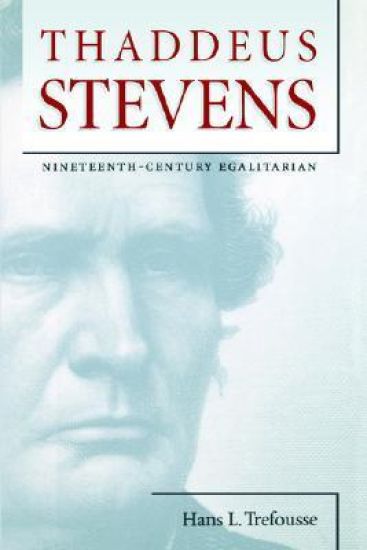
One of the most controversial figures in nineteenth-century American history, Thaddeus Stevens is best remembered for his role as congressional leader of the radical Republicans and as a chief architect of Reconstruction. Long painted by historians as a vindictive 'dictator of Congress,' out to punish the South at the behest of big business and his own ego, Stevens receives a more balanced treatment in Hans L. Trefousse's biography, which portrays him as an impassioned orator and a leader in the struggle against slavery. Trefousse traces Stevens's career through its major phases: from his days in the Pennsylvania state legislature, when he antagonized Freemasons, slaveholders, and Jacksonian Democrats, to his political involvement during Reconstruction, when he helped author the Fourteenth Amendment and spurred on the passage of the Reconstruction Acts and the impeachment of Andrew Johnson. Throughout, Trefousse explores the motivations for Stevens's lifelong commitment to racial equality, thus furnishing a fuller portrait of the man whose fervent opposition to slavery helped move his more moderate congressional colleagues toward the implementation of egalitarian policies.
Carl Schurz

Carl Schurz

Hans L. Trefousse

Fordham University Press
1998
sidottu
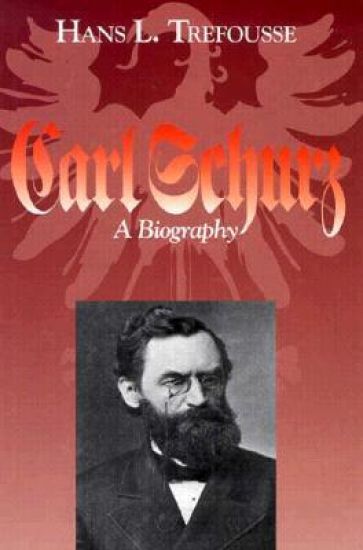
The biography of Carl Schurz is a story of an amazing life. At the age of 19, Schurz, a student at the University of Bonn, became involved in the Revolution of 1848. Participating in the revolutionary army, he managed to escape through a sewer during the siege of Rastatt, flee across the Rhine to France, and come back to rescue his professor, Gottfried Kinkel, from a jail near Berlin. This deed made him famous, and when he came to American in 1852, Schurz was nominated for lieutenant governor of Wisconsin on the Republican ticket. He quickly rose in the party and was the head of the Wisconsin delegation at the 1860 National Convention. He worked hard for the cause, and Lincoln rewarded him with the post of Minister to Spain. At the outbreak of war he returned to join the Union Army, became a Major General, and took part in several important battles. After the war, he moved to Missouri, was elected Senator from that State, and became a role model for his fellow German Americans. In 1871 he became one of the main figures in the Liberal Republican movement, and in 1877 President Rutherford B. Hayes appointed him Secretary of the Interior. After his retirement from the cabinet, Schurz became active in the politics of New York, as an advocate of municipal and civil service reform. He was a leading Mugwump who supported Grover Cleveland in 1884 and at the end of his life became a violent opponent of imperialism. He died in 1906. Carl Schurz, the man, his story, his ideals and his example, are particularly appropriate today because of the light his life sheds on the never-ending problems of immigration, assimilation, and the retention of ethnic identity. Carl Schurz's career furnishes a model example for all of these.
Carl Schurz

Carl Schurz

Hans L. Trefousse

Fordham University Press
1998
pokkari
The biography of Carl Schurz is a story of an amazing life. At the age of 19, Schurz, a student at the University of Bonn, became involved in the Revolution of 1848. Participating in the revolutionary army, he managed to escape through a sewer during the siege of Rastatt, flee across the Rhine to France, and come back to rescue his professor, Gottfried Kinkel, from a jail near Berlin. This deed made him famous, and when he came to American in 1852, Schurz was nominated for lieutenant governor of Wisconsin on the Republican ticket. He quickly rose in the party and was the head of the Wisconsin delegation at the 1860 National Convention. He worked hard for the cause, and Lincoln rewarded him with the post of Minister to Spain. At the outbreak of war he returned to join the Union Army, became a Major General, and took part in several important battles. After the war, he moved to Missouri, was elected Senator from that State, and became a role model for his fellow German Americans. In 1871 he became one of the main figures in the Liberal Republican movement, and in 1877 President Rutherford B. Hayes appointed him Secretary of the Interior. After his retirement from the cabinet, Schurz became active in the politics of New York, as an advocate of municipal and civil service reform. He was a leading Mugwump who supported Grover Cleveland in 1884 and at the end of his life became a violent opponent of imperialism. He died in 1906. Carl Schurz, the man, his story, his ideals and his example, are particularly appropriate today because of the light his life sheds on the never-ending problems of immigration, assimilation, and the retention of ethnic identity. Carl Schurz's career furnishes a model example for all of these.
Impeachment of a President

Impeachment of a President

Hans L. Trefousse

Fordham University Press
1998
sidottu
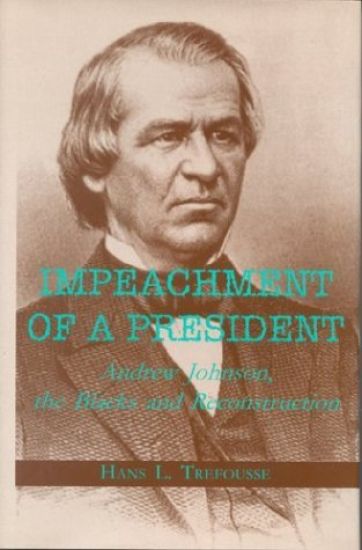
In Impeachment of a President, Hans L. Trefousse focuses on the causes of the failure to convict, the consequences of the acquittal, and the relationship of the impeachment to the ill success of Reconstruction. Drawing on a wealth of material, some only recently made available, Professor Trefousse sheds new light on the President's objectives and character.
Impeachment of a President

Impeachment of a President

Hans L. Trefousse

Fordham University Press
1999
pokkari
In Impeachment of a President, Hans L. Trefousse focuses on the causes of the failure to convict, the consequences of the acquittal, and the relationship of the impeachment to the ill success of Reconstruction. Drawing on a wealth of material, some only recently made available, Professor Trefousse sheds new light on the President's objectives and character.
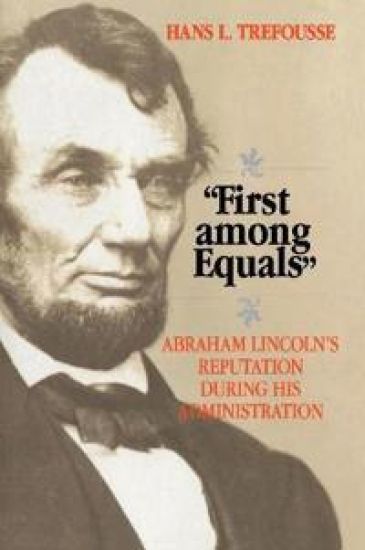
"First Among Equals"

"First Among Equals"

Hans L. Trefousse

Fordham University Press
2005
sidottu
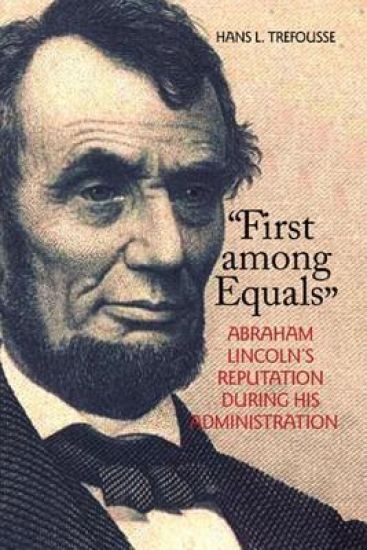
One hundred and forty years after his assassination on April 14, 1865, Abraham Lincoln towers more than ever above the landscape of American politics. In myth and memory, he is always the Great Emancipator and savior of the Union, second in stature only to George Washington. But was Lincoln always so exalted?Was he, as some historians argue, a poor President, deeply disliked, whose legacy was ennobled only by John Wilkes Booth's bullet? In this fascinating book, a leading historian finally takes the full measure of Lincoln's reputation. Drawing on a remarkable range of primary documents— speeches, newspaper accounts and editorials, private letters, memoirs, and other sources—Hans L. Trefousse gives us the voices of Lincoln's own time. From North and South, at home and abroad, here are politicians and ordinary people, soldiers and statesmen, abolitionists and slaveholders alike, in a rich chorus of American opinion. The result is a masterly portrait of Lincoln the President in the eyes of his fellow Americans.
"First Among Equals"

"First Among Equals"

Hans L. Trefousse

Fordham University Press
2010
pokkari
One hundred and forty years after his assassination on April 14, 1865, Abraham Lincoln towers more than ever above the landscape of American politics. In myth and memory, he is always the Great Emancipator and savior of the Union, second in stature only to George Washington. But was Lincoln always so exalted?Was he, as some historians argue, a poor President, deeply disliked, whose legacy was ennobled only by John Wilkes Booth's bullet? In this fascinating book, a leading historian finally takes the full measure of Lincoln's reputation. Drawing on a remarkable range of primary documents— speeches, newspaper accounts and editorials, private letters, memoirs, and other sources—Hans L. Trefousse gives us the voices of Lincoln's own time. From North and South, at home and abroad, here are politicians and ordinary people, soldiers and statesmen, abolitionists and slaveholders alike, in a rich chorus of American opinion. The result is a masterly portrait of Lincoln the President in the eyes of his fellow Americans.