Kirjojen hintavertailu. Mukana 12 016 292 kirjaa ja 12 kauppaa.

Kirjahaku

Etsi kirjoja tekijän nimen, kirjan nimen tai ISBN:n perusteella.

33 kirjaa tekijältä Harald Haarmann

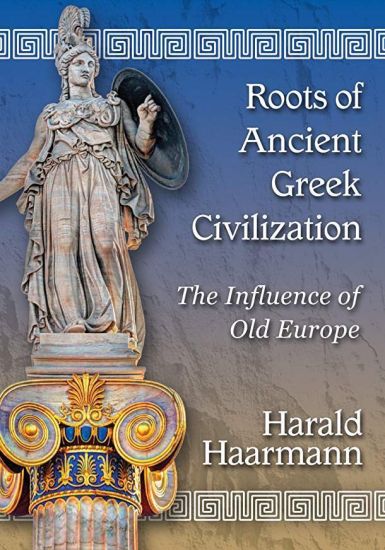
Roots of Ancient Greek Civilization

Roots of Ancient Greek Civilization

Harald Haarmann

McFarland Co Inc
2014
pokkari
Contrary to a prevalent belief of the Western world, that democracy, agriculture, theater and the arts were the attainments of Classical Greek civilization, these were actually a Bronze Age fusion of earlier European concepts and Hellenic ingenuity. This work considers both the multicultural wellspring from which these ideas flowed and their ready assimilation by the Greeks, who embraced these hallmarks of civilization, and refined them to the level of sophistication that defines classical antiquity.
Modern Finland

Modern Finland

Harald Haarmann

McFarland Co Inc
2016
pokkari
Providing a multifaceted view of modern Finland, this book describes its history, culture, language, geography, natural history and the mythology of early peoples. Topics include Fenno-Scandia inhabitants and their environment, traditional naturalism and modern environmentalism, and the salient features of "Finnishness," including an analysis of the Finnish educational system and gender equality. Finland's art, architecture and music are highlighted, along with its peace-keeping missions worldwide. The country's several ethnic groups and their languages are discussed--the Saami, Finns, Finland-Swedes, Russian-speaking peoples, Jews and Gypsies. The author examines Finland's late but rapid development in commerce and industry, with a focus on the history of Nokia Corporation, which grew from a 19th-century manufacturer of pulpwood and rubber boots to a 21st-century international digital communications company.
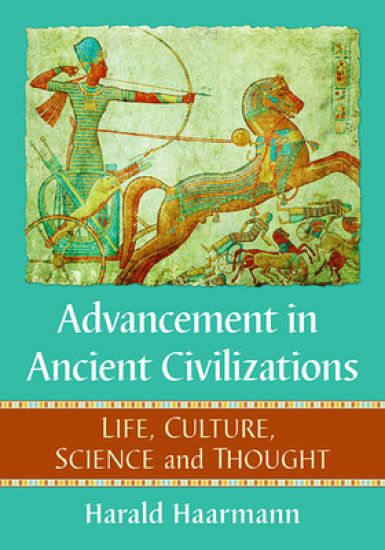
Advancement in Ancient Civilizations

Advancement in Ancient Civilizations

Harald Haarmann

McFarland Co Inc
2020
pokkari
Traditional scholarship on how ancient civilizations emerged is outmoded and new insights call for revision. According to the well-established paradigm, Mesopotamia is considered the cradle of civilization. Following the cliche of ex oriente lux ("light from the East") all major achievements of humankind spread from the Middle East. Modern archaeology, cultural science and historical linguistics indicate civilizations did not originate from a single prototype. Several models produced divergent patterns of advanced culture, developing both hierarchical and egalitarian societies. This study outlines a panorama of ancient civilizations, including the still little-known Danube civilization, now identified as the oldest advanced culture in Europe. In a comparative view, a new paradigm of research and a new cultural chronology of civilizations in the Old and New Worlds emerges, with climate change shown to be a continual influence on human lifeways.
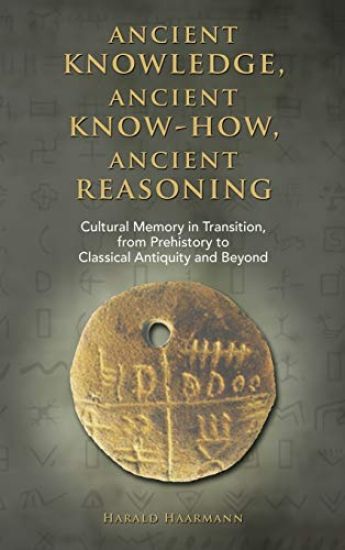
Ancient knowledge, Ancient know-how, Ancient reasoning
This book by renowned anthropologist Harald Haarmann illuminates the acquisition of knowledge, and the meanings underlying forms of knowledge, in a broad temporal scope, ranging from the Neolithic through the modern era. Spiritual knowledge is at the heart of this work, which views myth and religion encoded in Neolithic female figurines and revived in the contemporary "primitive" artwork of artists such as Constantin Brancusi and Henry Moore. Within such a framework, this study employs the knowledge and insights of the relatively new, and very important, interdisciplinary field of archaeomythology, which ties together information from archaeology, DNA studies, mythology, anthropology, classical studies, other ancient language studies, and linguistics. This study does so with a wealth of information in these fields, offering meaningful resolutions to many questions regarding antiquity, and shedding light upon several previously misunderstood phenomena, from the true function of Stonehenge (that its purpose was not astronomical), to the fact that there could not have been a mass movement of agriculturalists from Anatolia to Europe (this is a currently hotly contested issue), to important Eurasian religious beliefs and mythological motifs (with an excellent discussion of shamanism), to systems of writing (with a wonderful discourse upon ancient writing systems), religious expression, and mythology of the exceptionally significant cultures of Old Europe (Neolithic southeastern Europe). The book further discourses upon the legacy of this culture in Minoan and then Greek culture, Old European (pre-Indo-European) lexical items (that is, substrate vocabulary) in Greek, and finally the preservation of Neolithic spirituality in Modern Art. With this interdisciplinary approach, the study demonstrates that all of the subjects of this manuscript are interconnected, in a powerful wholeness. Ancient knowledge, Ancient know-how, Ancient reasoning is an unprecedented study that will appeal across many disciplines, including archaeology, mythology, anthropology, classical studies, ancient language studies, and linguistics. The book also includes many images that will prove helpful to the reader.
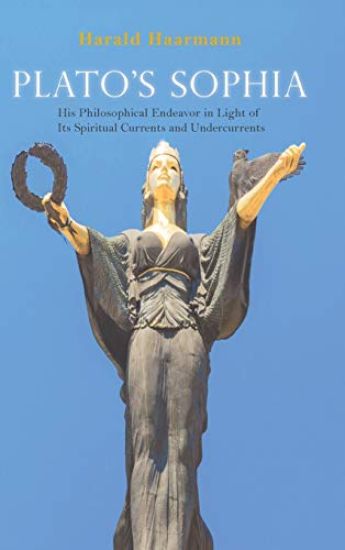
Plato's Sophia

Plato's Sophia

Harald Haarmann

Cambria Press
2019
sidottu
There is no other philosopher in antiquity whose work is as comprehensive as Plato's. However. Plato's writings have often been misinterpreted, and one reason is that during the course of the eighteenth century, philosophy detached itself from the spiritual sphere, as a consequence of the doctrine of the Enlightenment whose representatives established the cult of reason and discarded spirituality. There are manifold spiritual currents and undercurrents in Plato's philosophy. Since Plato's philosophy is oriented to the wholeness of human life, the symbiotic interaction of the philosophical and the spiritual, so obvious in his works, is to be expected. What is surprising is that this symbiosis seems to have been overlooked or intentionally avoided in the mainstream history of philosophy. When we maintain this modern separation of the philosophical from the spiritual and neglect the spiritual currents, our comprehension of Plato's intentions as manifested in his philosophical discourse remains greatly obscured. This study aims at achieving a balance. In Plato's "love for wisdom" (philo-sophia), we may discern the soundings of an intellectual heritage that dates to pre-Greek times, that is to the era of Old Europe (the Danube civilization, respectively), where the wholeness of life was practised for more than 3000 years. In light of the strands of this heritage that left their mark in Plato's work, it is not surprising to learn that, in Indo-European languages, no cognate expression corresponding to the Greek stem soph- can be found. As modern insights from historical linguistics tell us, the isolation of this expression (Sophia) in Greek and its sound structure point to a pre-Greek origin of the term. In other words, the early Greeks embraced an older tradition of reasoning which they considered useful. Plato's Sophiawill be of vital interest for philosophers, cultural scientists, and students of Greek antiquity, as well as for those who take interest in the world of Old Europe and its afterglow.
Highlighting European Values

Highlighting European Values

Harald Haarmann

Springer International Publishing AG
2025
sidottu
This book sheds light on the achievements of the Old European civilization, also known as the Danube civilization, which flourished between 6000 and 3000 BCE. Contrary to popular belief, many elements attributed to Greek origins stem from this pre-Greek culture. Modern research reveals that ancient civilizations developed along two distinct paths: communitarian administration without social hierarchy, as seen in the Danube and Indus civilizations, and state models with hierarchical structures, exemplified by Sumerian and Egyptian cultures. This book highlights how the values and innovations of Old Europe laid the foundation for Greek civilization and, subsequently, Western civilization. By exploring these roots, the study provides modern Europeans with a deeper understanding of their heritage and the diverse origins of their cultural values. The book will appeal to scholars, researchers, and students of political science, history, cultural studies, and anthropology, as well as to everyone interested in a better understanding of European heritage, its values, and the Danube civilization.
Language in Ethnicity

Language in Ethnicity

Harald Haarmann

De Gruyter Mouton
1986
sidottu
The Contributions to the Sociology of Language series features publications dealing with sociolinguistic theory, methods, findings and applications. It addresses the study of language in society in its broadest sense, as a truly international and interdisciplinary field in which various approaches – theoretical and empirical – supplement and complement each other. The series invites the attention of scholars interested in language in society from a broad range of disciplines – anthropology, education, history, linguistics, political science, and sociology. To discuss your book idea or submit a proposal, please contact Natalie Fecher.
Symbolic Values of Foreign Language Use

Symbolic Values of Foreign Language Use

Harald Haarmann

De Gruyter Mouton
1989
sidottu
The Contributions to the Sociology of Language series features publications dealing with sociolinguistic theory, methods, findings and applications. It addresses the study of language in society in its broadest sense, as a truly international and interdisciplinary field in which various approaches – theoretical and empirical – supplement and complement each other. The series invites the attention of scholars interested in language in society from a broad range of disciplines – anthropology, education, history, linguistics, political science, and sociology. To discuss your book idea or submit a proposal, please contact Natalie Fecher.
Lexikon der untergegangenen Sprachen

Lexikon der untergegangenen Sprachen

Harald Haarmann

C.H. BECK
2002
pokkari
Die "toten" Sprachen leben weiter in unserem kulturellen Gedächtnis. Dem Altgrie-chischen und dem Lateinischen verdanken wir einen großen Teil unseres Kulturwortschatzes, dem Phönizischen die Alphabetschrift, und viele andere alte Sprachen wie das Althebräische, Sumerische, Akkadische und Sanskrit haben sich durch Werke der Weltliteratur unsterblich gemacht. Dieses Lexikon beschreibt in mehr als 100 Artikeln die wichtigsten untergegangenen Sprachen. Es informiert über Gebiete und Zeiträume ihrer Verbreitung, ihre Zugehörigkeit zu Sprachfamilien, Schriftsysteme, überlieferte Literatur sowie ihren Einfluß auf bis heute gesprochene Sprachen. Ein Register und Literaturhinweise runden diese kompetente Einführung ab.