Kirjojen hintavertailu. Mukana 11 699 587 kirjaa ja 12 kauppaa.

Kirjahaku

Etsi kirjoja tekijän nimen, kirjan nimen tai ISBN:n perusteella.

47 kirjaa tekijältä Harold Bloom

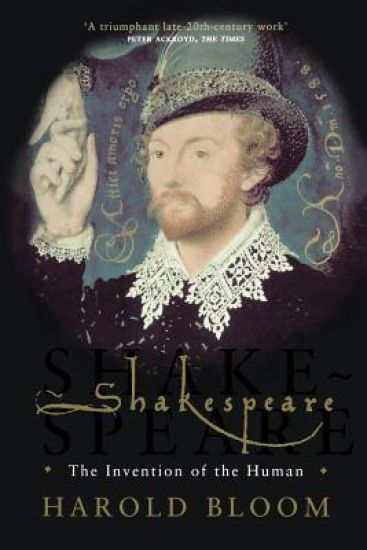
Shakespeare

Shakespeare

Harold Bloom

HARPERCOLLINS PUBLISHERS
2008
nidottu
Harold Bloom, the doyen of American literary critics and author of The Western Canon, has spent a professional lifetime reading, writing about and teaching Shakespeare. In this magisterial interpretation, Bloom explains Shakespeare’s genius in a radical and provocative re-reading of the plays. How to understand Shakespeare, whose ability so far exceeds his predecessors and successors, whose genius has defied generations of critics’ explanations, whose work is of greater influence in the modern age even than the Bible? This book is a visionary summation of Harold Bloom’s reading of Shakespeare and in it he expounds a brilliant and far-reaching critical theory: that Shakespeare was, through his dramatic characters, the inventor of human personality as we have come to understand it. In short, Shakespeare invented our understanding of ourselves. He knows us better than we do: ‘The plays remain the outward limit of human achievement: aesthetically, cognitively, in certain ways morally, even spiritually. They abide beyond the end of the mind’s reach; we cannot catch up to them. Shakespeare will go on explaining us in part because he invented us… ’ In a chronological survey of each of the plays, Bloom explores the supra-human personalities of Shakespeare’s great protagonists: Hamlet, Lear, Falstaff, Rosalind, Juliet. They represent the apogee of Shakespeare’s art, that art which is Britain’s most powerful and dominant cultural contribution to the world, here vividly recovered by an inspired and wise scholar at the height of his powers.
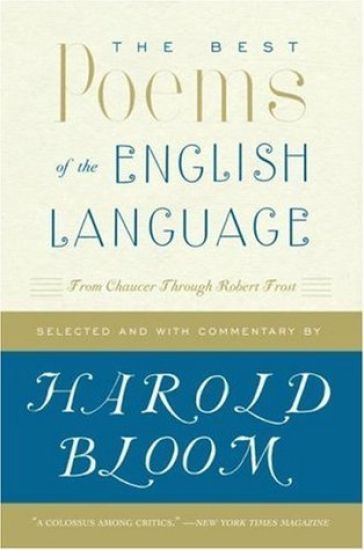
The Best Poems of the English Language

The Best Poems of the English Language

Harold Bloom

HarperPerennial
2007
nidottu
Almost all other poetry anthologies have been edited and annotated by a committee of scholars. This is entirely Bloom's selection with his own inimitable commentary. This comprehensive anthology attempts to give the common reader possession of six centuries of great British and American poetry. The book features a large introductory essay by Harold Bloom called "The Art of Reading Poetry," which presents his critical reflections of more than half a century devoted to the reading, teaching, and writing about the literary achievement he loves most. There are also headnotes by Harold Bloom to every poet in the volume as well as to the most important individual poems. Much more than any other anthology ever gathered, this book provides readers who desire the pleasures of a sublime art with very nearly everything they need in a single volume. It also is regarded by its editor as his final meditation upon all those who have formed his mind.
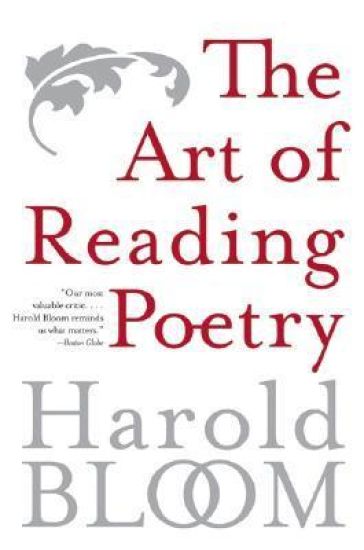
The Art of Reading Poetry

The Art of Reading Poetry

Harold Bloom

HarperPerennial
2005
nidottu
A paperback original, Bloom's stand-alone introduction to The Best Poems of the English Language. A notable feature of Harold Bloom's poetry anthology The Best Poems English Language is his lengthy introductory essay, here reprinted as a separate book. For the first time Bloom gives his readers an elegant guide to reading poetry--a master critic's distillation of a lifetime of teaching and criticism. He tackles such subjects as poetic voice, the nature of metaphor and allusion, and the nature of poetic value itself. Bloom writes "the work of great poetry is to aid us to become free artists of ourselves." This essay is an invaluable guide to poetry. This edition will also include a recommended reading list of poems.
Till I End My Song

Till I End My Song

Harold Bloom

HarperPerennial
2012
nidottu
"By definition, all living poets are excluded from this book. Myself seventy-nine years of age, I grieve still for many of these poets who were my friends. But knowledge, not pathos, is my purpose in gathering this anthology. Lastness is a part of knowing". (Harold Bloom). From Harold Bloom, the foremost literary critic of our time, comes a delightful anthology of the final works of great poets. In "Till I End My Song", Bloom has meticulously curated the last poems of one hundred influential poets. These poems, sometimes the literal end and other times the imagined conclusion to a poetic career, offer a lens through which to contemplate the enduring nature of art and the inevitability of death. Bloom's selections highlight the work of the canonized poets T.S. Eliot, Alexander Pope, W.B. Yeats, Walt Whitman, Emily Dickinson, and William Shakespeare, but also revive interest in distinguished but long-neglected poets, such as Conrad Aiken, William Cowper, Edwin Arlington Robinson, George Meredith, and Louis MacNeice. An authoritative collection of last poems, "Till I End My Song" will reverberate long into the coming silence.
The Western Canon

The Western Canon

Harold Bloom

HARPERCOLLINS PUBLISHERS INC
2025
nidottu
The literary critic defends the importance of Western literature from Chaucer and Shakespeare to Kafka and Beckett in this acclaimed national bestseller.“An impressive work…deeply, rightly passionate about the great books of the past.”—Michael Dirda, The Washington Post Book World Harold Bloom's The Western Canon is more than a required reading list—it is a “heroically brave, formidably learned” defense of the great works of literature that comprise the traditional Western Canon. Infused with a love of learning, compelling in its arguments for a unifying written culture, it argues brilliantly against the politicization of literature and presents a guide to the essential writers of the western literary tradition (The New York Times Book Review).Placing William Shakespeare at the “center of the canon,” Bloom examines the literary contributions of Dante Alighieri, John Milton, Jane Austen, Emily Dickenson, Leo Tolstoy, Sigmund Freud, James Joyce, Pablo Neruda, and many others. Bloom's book, much-discussed and praised in publications as diverse as The Economist and Entertainment Weekly, offers a dazzling display of erudition and passion.
The Anxiety of Influence

The Anxiety of Influence

Harold Bloom

Oxford University Press Inc
1997
nidottu
Bloom's The Anxiety of Influence, an insightful study of Romantic poets and the relation between tradition and the individual artist, has sold over 17,000 copies in paperback since 1984 and remains a central work of criticism for students of literature. For the second edition, Bloom offers a new introduction which explains the genesis of his thinking and the subsequent influence of the book on literary criticism of the past twenty years.
A Map of Misreading

A Map of Misreading

Harold Bloom

Oxford University Press Inc
2003
nidottu
In print for twenty-seven years, A Map of Misreading serves as a companion volume to Bloom's other seminal work, The Anxiety of Influence. In this finely crafted text, Bloom offers instruction in how to read a poem, using his theory that patterns of imagery in poems represent both a response to and a defense against the influence of precursor poems. Influence, as Bloom conceives it, means that there are no texts, but only relationships between texts. Bloom discusses British and American poets including Milton, Wordsworth, Shelley, Keats, Tennyson, Browning, Whitman, Dickinson, Stevens, Warren, Ammons and Ashbery. A full-scale reading of one poem, Browning's "Childe Roland to the Dark Tower Came," represents this struggle between one poet and his precursors, the poem serving as a map for readers through the many versions of influence from Milton to modern poets. For the first time, in a new preface, Bloom will consider the map of misreading drawn by contemporary poets such as Ann Carson and Henri Cole. Bloom's new exploration of contemporary poetry over the last twenty years will illuminate how modern texts relate to previous texts, and contribute to the literary legacy of their predecessors.
The Daemon Knows

The Daemon Knows

Harold Bloom

Oxford University Press
2015
sidottu
Hailed as 'the indispensable critic' by The New York Review of Books, Harold Bloom has for decades been sharing with readers and students his genius and passion for understanding literature and explaining why it matters. In The Daemon Knows, he turns his attention to the writers of his own national literature in a book that is one of his most incisive and profoundly personal to date. Pairing Walt Whitman with Herman Melville, Ralph Waldo Emerson with Emily Dickinson, Nathaniel Hawthorne with Henry James, Mark Twain with Robert Frost, Wallace Stevens with T. S. Eliot, and William Faulkner with Hart Crane, Bloom places these writers' works in conversation with one another, exploring their relationship to the 'daemon'-the spark of genius or Orphic muse-in their creation, and helping us understand their writing with new immediacy and relevance. It is above all the intensity of their preoccupation with the sublime, Bloom suggests, that distinguishes these American writers from their European predecessors. A product of five years of writing and a lifetime of reading and scholarship, The Daemon Knows may be Bloom's most masterly book yet.
Selected Writings of Walter Pater

Selected Writings of Walter Pater

Harold Bloom

Columbia University Press
1982
pokkari
Harold Bloom's selection of Pater's writings brings together in one volume the most important sections and passages from The Renaissance, Imaginary Portraits, Appreciations, Plato and Platonism, Greek Studies, and Sketches and Reviews, as well as "The Child in the House." Pater, the chief aesthetician and literary critic of Victorian England, brought his powerful imagination to bear on a wide range of subjects: from the drama of Euripides to the painters of the Renaissance, from the Romantic poets to the pre-Raphaelites, from Plato to Oscar Wilde. In the twentieth century, Pater's theories of art and literature exerted a strong inluence on the work of Yeats, Pound, Eliot, Joyce, and Stevens.
Poetry and Repression

Poetry and Repression

Harold Bloom

YALE UNIVERSITY PRESS
1980
pokkari
This reinterpretation of the full sweep of English and American romantic poetry offers close readings of poems of Blake, Wordsworth, Shelley, Keats, Tennyson, Browning, Whitman, Yeats, and Stevens. It also reviews the crucial ideas of Emerson, Nietzsche, and in particular Freud, whose psychoanalytic theory of repression and defense Bloom undertakes to revise for purposes of literary criticism. "Bloom offers a fully defined alternative to the principal modes of contemporary criticism, from Freudian literary criticism (which he insists is neither Freudian nor literary criticism) to the New Criticism and structuralist and archetypal approaches. It is an original, vigorous, and passionate study which is both compelling and provocative."-The British Studies Monitor "Show me but one paragraph of Bloom's approaches to texts, and I'm hooked. . . . I find sheer delight in his ingenious ways."-Kenneth Burke "Bloom has made a remarkable contribution to poetic theory."-Phoebe Pettingell, The New Leader
The Anatomy of Influence

The Anatomy of Influence

Harold Bloom

Yale University Press
2012
pokkari
Our most revered critic returns to his signature theme "Literary criticism, as I attempt to practice it," writes Harold Bloom in The Anatomy of Influence, "is in the first place literary, that is to say, personal and passionate."For more than half a century, Bloom has shared his profound knowledge of the written word with students and readers. In this, his most comprehensive and accessible study of influence, Bloom leads us through the labyrinthine paths which link the writers and critics who have informed and inspired him for so many years. The result is "a critical self-portrait," a sustained meditation on a life lived with and through the great works of the Western canon: Why has influence been my lifelong obsessive concern? Why have certain writers found me and not others? What is the end of a literary life?Featuring extended analyses of Bloom's most cherished poets—Shakespeare, Whitman, and Crane—as well as inspired appreciations of Emerson, Tennyson, Browning, Yeats, Ashbery, and others, The Anatomy of Influence adapts Bloom's classic work The Anxiety of Influence to show us what great literature is, how it comes to be, and why it matters. Each chapter maps startling new literary connections that suddenly seem inevitable once Bloom has shown us how to listen and to read. A fierce and intimate appreciation of the art of literature on a scale that the author will not again attempt, TheAnatomy of Influence follows the sublime works it studies, inspiring the reader with a sense of something ever more about to be.
The Shadow of a Great Rock

The Shadow of a Great Rock

Harold Bloom

Yale University Press
2012
pokkari
A richly insightful reading of the King James Bible as a literary masterwork, published for the text's 400-year anniversary The King James Bible stands at "the sublime summit of literature in English," sharing the honor only with Shakespeare, Harold Bloom contends in the opening pages of this illuminating literary tour. Distilling the insights acquired from a significant portion of his career as a brilliant critic and teacher, he offers readers at last the book he has been writing "all my long life," a magisterial and intimately perceptive reading of the King James Bible as a literary masterpiece.Bloom calls it an "inexplicable wonder" that a rather undistinguished group of writers could bring forth such a magnificent work of literature, and he credits William Tyndale as their fountainhead. Reading the King James Bible alongside Tyndale's Bible, the Geneva Bible, and the original Hebrew and Greek texts, Bloom highlights how the translators and editors improved upon—or, in some cases, diminished—the earlier versions. He invites readers to hear the baroque inventiveness in such sublime books as the Song of Songs, Ecclesiastes, and Job, and alerts us to the echoes of the King James Bible in works from the Romantic period to the present day. Throughout, Bloom makes an impassioned and convincing case for reading the King James Bible as literature, free from dogma and with an appreciation of its enduring aesthetic value.
Take Arms Against a Sea of Troubles

Take Arms Against a Sea of Troubles

Harold Bloom

Yale University Press
2021
pokkari
“The great poems, plays, novels, stories teach us how to go on living. . . . Your own mistakes, accidents, failures at otherness beat you down. Rise up at dawn and read something that matters as soon as you can.”So Harold Bloom, the most famous literary critic of his generation, exhorts readers of his last book: one that praises the sustaining power of poetry."Passionate. . . . Perhaps Bloom’s most personal work, this is a fitting last testament to one of America’s leading twentieth-century literary minds."—Publishers Weekly“An extraordinary testimony to a long life spent in the company of poetry and an affecting last declaration of [Bloom's] passionate and deeply unfashionable faith in the capacity of the imagination to make the world feel habitable”—Seamus Perry, Literary Review"Reading, this stirring collection testifies, ‘helps in staying alive.’“—Kirkus Reviews, starred review This dazzling celebration of the power of poetry to sublimate death—completed weeks before Harold Bloom died—shows how literature renews life amid what Milton called “a universe of death.” Bloom reads as a way of taking arms against the sea of life’s troubles, taking readers on a grand tour of the poetic voices that have haunted him through a lifetime of reading. “High literature,” he writes, “is a saving lie against time, loss of individuality, premature death.” In passages of breathtaking intimacy, we see him awake late at night, reciting lines from Dante, Shakespeare, Milton, Montaigne, Blake, Wordsworth, Hart Crane, Jay Wright, and many others. He feels himself “edged by nothingness,” uncomprehending, but still sustained by reading. Generous and clear-eyed, this is among Harold Bloom’s most ambitious and most moving books.
The Man Who Read Everything

The Man Who Read Everything

Harold Bloom

YALE UNIVERSITY PRESS
2026
sidottu
A selection of the lively letters between one of the world’s greatest literary critics and the poets, novelists, and scholars he most admired Bringing together a collection of Harold Bloom’s letters to and from eight of his favorite contemporary writers, Heather Cass White provides an intimate view of one of the most famous literary critics of the last century. In correspondence with Alvin Feinman, Northrop Frye, A. R. Ammons, John Hollander, James Merrill, John Ashbery, Henri Cole, and Ursula K. Le Guin, we see Bloom developing his groundbreaking theory of poetic influence, transforming himself into a public intellectual, and reckoning with the meaning of his own legacy. While Bloom’s public persona was oracular, sure, and often combative, his letters are inquiring and provisional, revealing his overarching obsession with good writing. The presence of love, as the letters show, was always vital to how Bloom worked as a reader. The writers and characters he loved were distant gods as well as his best friends, and what happened in books happened to him. Filled with delightful anecdotes and poignant observations, these letters—many of them published here for the first time—offer a new window onto twentieth-century letters and Bloom’s long and illustrious career.
Genius: A Mosaic of One Hundred Exemplary Creative Minds
What is genius? It is the trait, says Harold Bloom, of standing both of and above an age, the ancient principle that recognizes and hallows the God within us, and the gift of breathing life into what is best in every living person. Now, in a monumental achievement of scholarship, America's preeminent literary critic presents an unprecedented celebration of one hundred of the most creative literary minds in history. From the Bible to Socrates, through the transcendent masterpieces of Shakespeare and Dante, down through the ages to Hemingway, Faulkner, and Ralph Ellison, Harold Bloom explores the many parallels among his chosen geniuses and the surprising ways in which they have influenced one another over the centuries. Accompanied by revealing excerpts from their works that continue to astonish, enchant, and move readers, Bloom's insightful and spirited analyses illuminate and enlarge our common understanding of Western literary and spiritual culture…and offer us a grand yet intimate tour of it in one magnificent volume.
Possessed by Memory

Possessed by Memory

Harold Bloom

Vintage Books
2020
nidottu
In arguably his most personal and lasting book, America's most daringly original and controversial critic gives us brief, luminous readings of more than eighty texts by canonical authors-- texts he has had by heart since childhood. Gone are the polemics. Here, instead, in a memoir of sorts--an inward journey from childhood to ninety--Bloom argues elegiacally with nobody but Bloom, interested only in the influence of the mind upon itself when it absorbs the highest and most enduring imaginative literature. He offers more than eighty meditations on poems and prose that have haunted him since childhood and which he has possessed by memory: from the Psalms and Ecclesiastes to Shakespeare and Dr. Johnson; Spenser and Milton to Wordsworth and Keats; Whitman and Browning to Joyce and Proust; Tolstoy and Yeats to Delmore Schwartz and Amy Clampitt; Blake to Wallace Stevens--and so much more. And though he has written before about some of these authors, these exegeses, written in the winter of his life, are movingly informed by "the freshness of last things." As Bloom writes movingly: "One of my concerns throughout Possessed by Memory is with the beloved dead. Most of my good friends in my generation have departed. Their voices are still in my ears. I find that they are woven into what I read. I listen not only for their voices but also for the voice I heard before the world was made. My other concern is religious, in the widest sense. For me poetry and spirituality fuse as a single entity. All my long life I have sought to isolate poetic knowledge. This also involves a knowledge of God and gods. I see imaginative literature as a kind of theurgy in which the divine is summoned, maintained, and augmented."
The Bright Book of Life

The Bright Book of Life

Harold Bloom

Alfred A. Knopf
2020
sidottu
In his first book devoted exclusively to narrative fiction, America's most original and controversial literary critic and legendary Yale professor writes trenchantly about fifty-two masterworks spanning the Western tradition. Perhaps no other literary critic but Harold Bloom could--or would--undertake a project of this immensity. And certainly no other critic could bring to it the extraordinary knowledge, understanding, and insight that are the hallmark of Bloom's every book. Ranging across centuries and continents, this final book of his career, gives us the inimitable critic on Don Quixote and Book of Numbers; Wuthering Heights and Absalom, Absalom; Les Miserables and Blood Meridian; Vanity Fair and Invisible Man; The Captain's Daughter and The Reef. He writes about works by Austen, Balzac, Dickens, Tolstoy, James, Conrad, Lawrence, Wolff, Le Guin, Sebald, and many more. Whether you have already read these books, or intend to, or simply care about the importance and power of fiction, Harold Bloom serves as an unparalleled guide through the pages of these 52 masterpieces of the genre.
Ruin the Sacred Truths

Ruin the Sacred Truths

Harold Bloom

Harvard University Press
1991
nidottu
Harold Bloom surveys with majestic view the literature of the West from the Old Testament to Samuel Beckett. He provocatively rereads the Yahwist (or J) writer, Jeremiah, Job, Jonah, the Iliad, the Aeneid, Dante’s Divine Comedy, Hamlet, King Lear, Othello, the Henry IV plays, Paradise Lost, Blake’s Milton, Wordsworth’s Prelude, and works by Freud, Kafka, and Beckett. In so doing, he uncovers the truth that all our attempts to call any strong work more sacred than another are merely political and social formulations. This is criticism at its best.
Stories and Poems for Extremely Intelligent Children of All Ages
"If readers are to come to Shakespeare and to Chekhov, to Henry James and to Jane Austen, then they are best prepared if they have read Lewis Carroll and Edward Lear, Robert Louis Stevenson and Rudyard Kipling," writes Harold Bloom in his introduction to this enchanting and much-needed anthology of exceptional stories and poems selected to inspire a lifelong love of reading. As television, video games, and the Internet threaten to distract young people from the solitary pleasures of reading, Bloom presents a volume that will amuse, challenge, and beguile readers with its myriad voices and subjects. Here are old favorites by beloved writers of children's literature, as well as exciting rediscoveries and wonderful works penned by writers better known for their adult classics, such as Herman Melville, Leo Tolstoy, Edith Wharton, and Walt Whitman. Encompassing the natural world and the supernatural; childhood, romance, and death; pets, wild animals, and goblins; mystery, adventure, and humor; the selections reflect the passion and erudition of our most revered literary critic. Arranged by season, Stories and Poems for Extremely Intelligent Children of All Ages is a must-have anthology, sure to delight readers young and old for years to come.