Kirjojen hintavertailu. Mukana 11 342 296 kirjaa ja 12 kauppaa.

Kirjahaku

Etsi kirjoja tekijän nimen, kirjan nimen tai ISBN:n perusteella.

2 kirjaa tekijältä Harold J. Cook

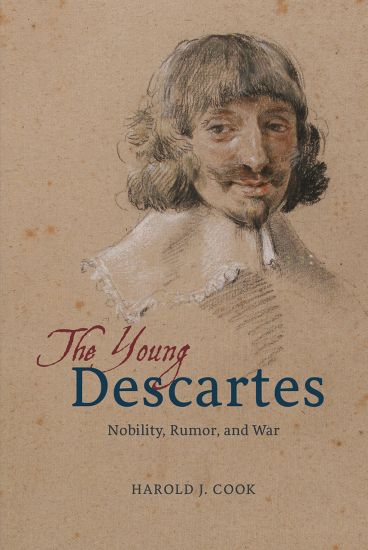
The Young Descartes

The Young Descartes

Harold J. Cook

University of Chicago Press
2018
sidottu
Rene Descartes is best known as the man who coined the phrase "I think, therefore I am." But though he is remembered most as a thinker, Descartes, the man, was no disembodied mind, theorizing at great remove from the worldly affairs and concerns of his time. Far from it. As a young nobleman, Descartes was a soldier and courtier who took part in some of the greatest events of his generation--a man who would not seem out of place in the pages of The Three Musketeers. In The Young Descartes, Harold J. Cook tells the story of a man who did not set out to become an author or philosopher--Descartes began publishing only after the age of forty. Rather, for years he traveled throughout Europe in diplomacy and at war. He was present at the opening events of the Thirty Years' War in Central Europe and Northern Italy, and was also later involved in struggles within France. Enduring exile, scandals, and courtly intrigue, on his journeys Descartes associated with many of the most innovative free thinkers and poets of his day, as well as great noblemen, noblewomen, and charismatic religious reformers. In his personal life he expressed love for men as well as women and was accused of libertinism by his adversaries. These early years on the move, in touch with powerful people and great events, and his experiences with military engineering and philosophical materialism all shaped the thinker and philosopher Descartes became in exile, where he would begin to write and publish, with purpose. But though it is these writings that made ultimately made him famous, The Young Descartes shows that this story of his early life, and the tumultuous times that molded him, are sure to spark a reappraisal of his philosophy and legacy.

Matters of Exchange

Matters of Exchange

Harold J. Cook

Yale University Press
2008
pokkari
A new and unexpected history of the Dutch pursuit of commerce in the 16th and 17th centuries and how it triggered the Scientific Revolution In this wide-ranging and stimulating book, a leading authority on the history of medicine and science presents convincing evidence that Dutch commerce—not religion—inspired the rise of science in the sixteenth and seventeenth centuries. Harold J. Cook scrutinizes a wealth of historical documents relating to the study of medicine and natural history in the Netherlands and elsewhere in Europe, Brazil, South Africa, and Asia during this era, and his conclusions are fresh and exciting. He uncovers direct links between the rise of trade and commerce in the Dutch Empire and the flourishing of scientific investigation. Cook argues that engaging in commerce changed the thinking of Dutch citizens, leading to a new emphasis on such values as objectivity, accumulation, and description. The preference for accurate information that accompanied the rise of commerce also laid the groundwork for the rise of science globally, wherever the Dutch engaged in trade. Medicine and natural history were fundamental aspects of this new science, as reflected in the development of gardens for both pleasure and botanical study, anatomical theaters, curiosity cabinets, and richly illustrated books about nature. Sweeping in scope and original in its insights, this book revises previous understandings of the history of science and ideas.